
Resources
Explore a wide range of valuable resources on GCED to deepen your understanding and enhance your research, advocacy, teaching, and learning.
8,364 Results found
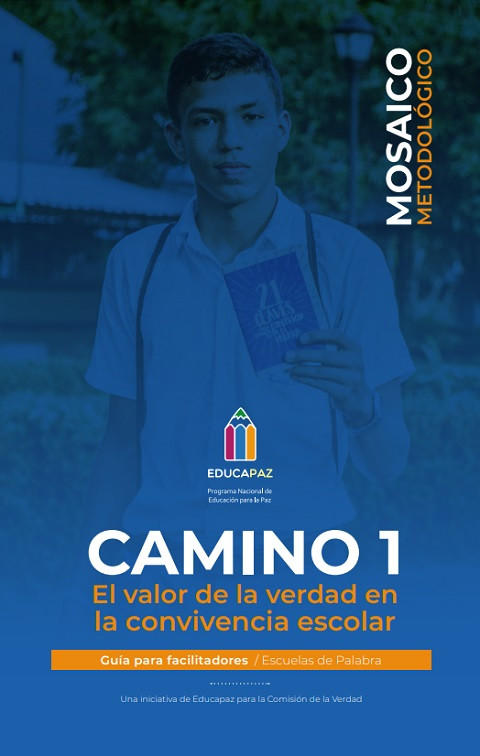 Methodological Mosaic: Path 1; The Value of Truth in School Coexistence Year of publication: 2019 Corporate author: EDUCAPAZ This publication reflects the work carried out by the National Program of Education for Peace EDUCAPAZ and the Truth Commission in Colombia, for education in schools that want to reflect on the value of truth in the reconstruction of memory, forgiveness and reconciliation. This module explores the relationship with school coexistence.
 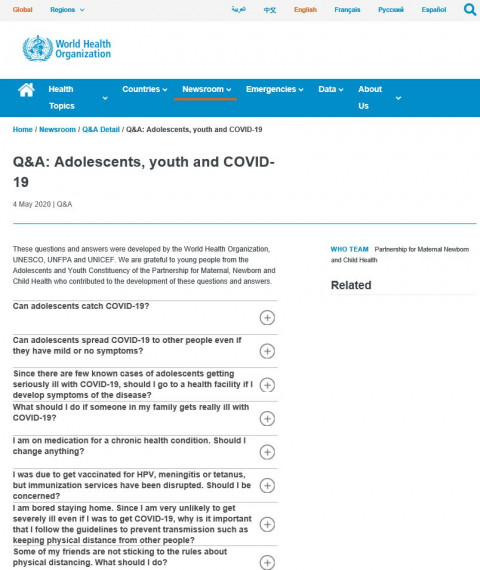 Q&A: Adolescents, Youth and COVID-19 Year of publication: 2020 Corporate author: World Health Organization (WHO) | UNESCO | United Nations Population Fund (UNFPA) | United Nations Children's Fund (UNICEF) As part of UNESCO’s work in promoting better health and well-being for all children and young people, it has contributed to the development of a practical guide in a ‘questions and answers’ (Q&A) format on children and adolescents and COVID-19. This work was led by the World Health Organization, in collaboration with the Adolescents and Youth Constituency of the Partnership for Maternal, Newborn and Child Health, UNESCO, UNFPA, and UNICEF.The Q&A provide children and adolescents with accurate, non-judgmental information and advice around COVID-19, including how to help stop the spread of the virus, what to do if they develop symptoms of the disease, and how to best manage their health and well-being during the confinement period and after. It considers children and young people as critical actors in the response to COVID-19, not as passive beneficiaries.
 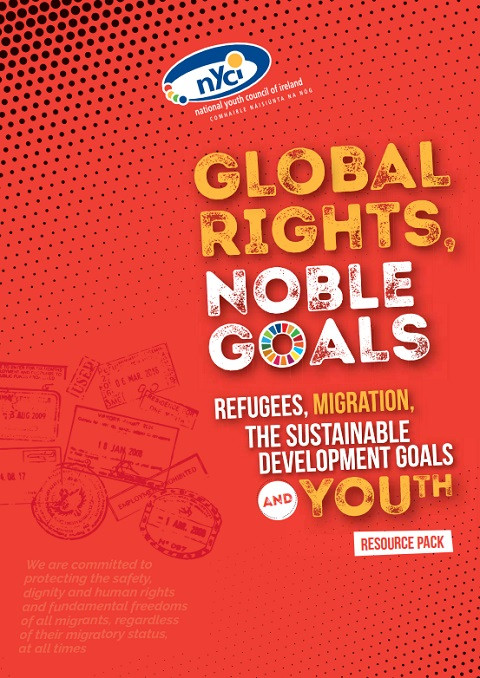 Global Rights, Nobel Goals: Refugees, Migration, the Sustainable Development Goals and Youth; Resource Pack Year of publication: 2016 Author: Valerie Duffy | Leo Gilmartin | Grace McManus | Dermot O’Brien Corporate author: National Youth Council of Ireland (NYCI) This resource pack explores the terms around migration (asylum seeker, refugee, internally displace peoples etc), the reasons that people choose or are forced to migrate and makes connections with the SDGs. It also includes a great selection of activities for young people at different ages and stages.
  Development Education: What Is It and Why Get Involved? Year of publication: 2017 Corporate author: WorldWise Global Schools (WWGS) Global Citizenship Education (GCE) is an educational process aimed at increasing awareness and understanding of the rapidly changing, interdependent and unequal world in which we live. This video explores what we mean by Development Education (DE), as also known as Global Citizenship Education, what value it has for students and what supports are available to help schools doing it.
 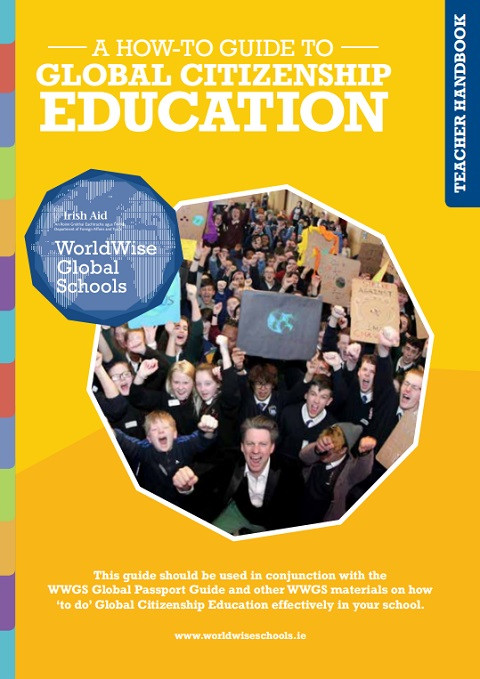 A How-to Guide to Global Citizenship Education: Teacher Handbook Year of publication: 2019 Corporate author: WorldWise Global Schools (WWGS) | Irish Aid This guide is for post-primary schools that are working to embed Global Citizenship Education (GCE) into their school community, and are part of the WorldWise Global Schools (WWGS) Programme. It aims to support schools to integrate Global Citizenship Education and create global citizens in their schools. Whether you are just starting to explore, or you are experienced in Global Citizenship Education, this handbook will help to guide your GCE practice and offer some suggestions as to how you can approach your GCE work and engage with the WWGS programme.
  Action on Global Citizenship: Teacher Toolkit Year of publication: 2017 Author: Gráinne Ryan | Deirdre Walsh Corporate author: Global Action Plan (GAP) Ireland | Irish Aid This toolkit aims to support educators to empower their students in becoming active global citizens in their schools and communities, with a range of activities and resources which align to the Irish Curriculum, whilst using active learning methodologies in an engaging and fun way.
  Internet Bullying: What is It and How to Deal with It? ; Top 10 Cyberbullying Questions Asked by Teens Year of publication: 2020 Corporate author: UNICEF Europe and Central Asia In the article, UNICEF experts, international experts on Internet bullying and child protection, as well as employees of Facebook, Instagram and Twitter, answer questions about how to deal with Internet bullying. Top 10 Cyberbullying Questions: How to understand that I am being harassed on the Internet? How to distinguish a joke from bullying? How does Internet bullying affect a person? Who should I talk to if someone is chasing me on the Internet? Why is it important to report bullying? I am being harassed by the Internet, but I’m afraid to talk to my parents about it. How do I turn to them for help? How can I help my friends report online bullying, especially if they don’t want to do this? The Internet gives me access to a lot of information, but it also means that I can become a victim of online violence. How can you protect yourself from cyberbullying without refusing to use the Internet? How to avoid using my personal information to manipulate or humiliate me on social networks? Is there any punishment for Internet harassment? Internet companies are not trying to solve the problem of cyberbullying. Are they responsible for this? Are there any online tools to combat bullying of children or youth?
  Development Strategy of Uzbekistan: Civil Society; Training and Methodology Complex Year of publication: 2019 Author: M.N. Primov | T. Norboev Corporate author: Uzbekistan. Ministry of Higher and Secondary-Specialized Education | Tashkent Institute of Finance The document is a collection of training materials on the conditions and prospects for the development of civil society in Uzbekistan, as well as the implementation of the main directions of the Action Strategy. The document also the role of local governments of citizens, non-governmental non-profit organizations in improving institutions civil society.A major role in this is played by new socio-political disciplines, which include the “Development Strategy of Uzbekistan. Civil society". This course reveals the basic scientific principles of the formation of civil society and the development strategy of Uzbekistan, analyzes the main stages of transformation, shows the irreversibility of the reforms carried out in the country, and helps to build the civic position of each member of the society. It is organically woven into the humanities system, forming a common logical chain with it; It helps to answer questions of modern policy of our state and to determine the place and role of each person in the grandiose transformations carried out in the country.
 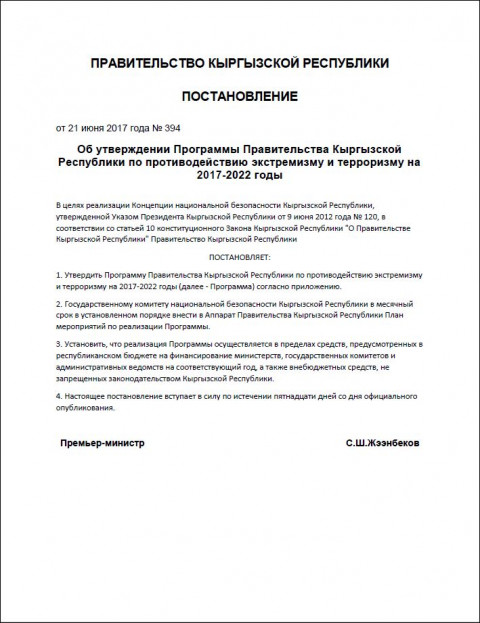 The Program of the Government of the Kyrgyz Republic on Countering Extremism and Terrorism for 2017-2022 Year of publication: 2017 Corporate author: Government of the Kyrgyz Republic The document contains the main provisions of the program of the Government of the Kyrgyz Republic on countering extremism and terrorism for 2017-2022.The program provides a set of measures to ensure effective countering the threats of extremism and terrorism, rigorous observance of human rights and freedoms, the rule of law and others constitutional principles of the Kyrgyz Republic. Purpose of this program is changing the current situation in the field countering extremism and preventing terrorism.Successful implementation of the program depends on coherence government bodies, organizations and institutions of the Kyrgyz Republic to counter extremism and terrorism.
  State Program on Countering Religious Extremism and Terrorism in the Republic of Kazakhstan for 2018 - 2022 Year of publication: 2018 Corporate author: Government of the Republic of Kazakhstan The document contains the main provisions of the State program on countering religious extremism and terrorism in the Republic of Kazakhstan for 2018 - 2022.The geopolitical changes taking place in the world initiate a new spectrum of challenges and risks in the field of national security, which is becoming more diverse and emanating from a greater number of sources of danger. This determines the complexity and relevance of the tasks within the framework of a systematic prevention of threats of religious extremism and terrorism.Under these conditions, the current national system of combating religious extremism and terrorism needs to be further improved in the context of creating a mechanism for reliable protection of individuals, society and the state from extremist manifestations of a violent nature and threats of terrorism.