
Resources
Explore a wide range of valuable resources on GCED to deepen your understanding and enhance your research, advocacy, teaching, and learning.
8,364 Results found
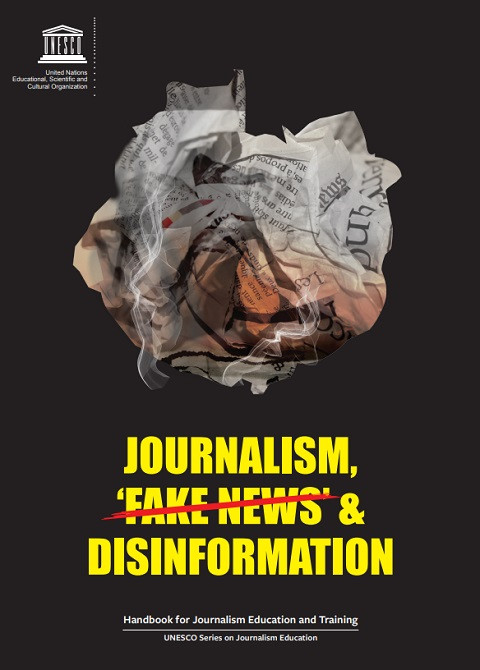 Journalism, Fake News & Disinformation: Handbook for Journalism Education and Training Year of publication: 2018 Author: Julie Posetti | Cherilyn Ireton | Claire Wardle | Hossein Derakhshan | Alice Matthews | Magda Abu-Fadil | Tom Trewinnard | Fergus Bell | Alexios Mantzarlis Corporate author: UNESCO This handbook seeks to provide an internationally-relevant model curriculum, open to adoption or adaptation, which responds to the emerging global problem of disinformation that confronts societies in general, and journalism in particular. Serving as a model curriculum, the publication is designed to give journalism educators and trainers a framework and lessons to help students and practitioners of journalism to navigate the issues associated with ‘fake news’.The contents draw together the input of leading international journalism educators, researchers and thinkers who are helping to update journalism method and practice to deal with the challenges of misinformation and disinformation. The lessons are contextual, theoretical and in the case of online verification, extremely practical. Used together as a course, or independently, they can help refresh existing teaching modules or create new offerings.It is part of the “Global Initiative for Excellence in Journalism Education”, which is a focus of UNESCO’s International Programme for the Development of Communication (IPDC). The Initiative seeks to engage with teaching, practising and researching of journalism from a global perspective, including sharing international good practices.
 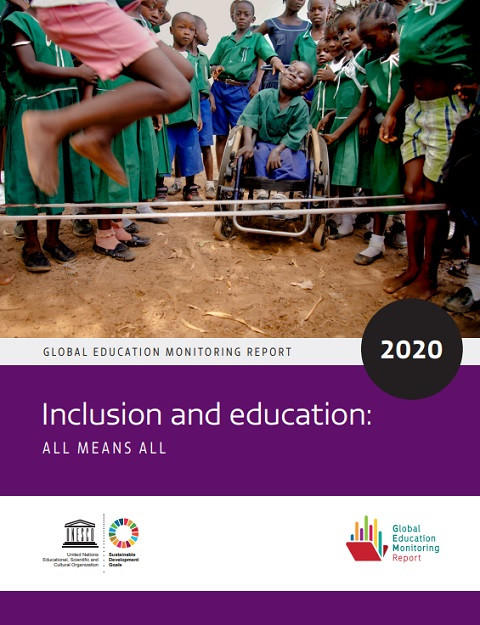 Global Education Monitoring Report 2020: Inclusion and Education; All Means All Year of publication: 2020 Corporate author: Global Education Monitoring Report Team | UNESCO The 2020 Global Education Monitoring Report looks at social, economic and cultural mechanisms that discriminate against disadvantaged children, youth and adults, keeping them out of education or marginalized in it. Spurred by their commitment to fulfil the right to inclusive education, countries are expanding their vision of inclusion in education to put diversity at the core of their systems. Yet implementation of well-meaning laws and policies often falters. Released at the start of the decade of action to 2030, and in the middle of the Covid-19 crisis, which has exacerbated underlying inequalities, the Report argues that resistance to addressing every learner’s needs is a real threat to achieving global education targets. Inclusion and education: All means all identifies the practices in governance and finance; curricula, textbooks and assessments; teacher education; school infrastructure; and relations with students, parents and communities that can unlock the process to inclusion. It provides policy recommendations to make learner diversity a strength to be celebrated, a force for social cohesion. Two new websites complement the fourth edition of the Global Education Monitoring Report. PEER describes how countries approach inclusion, serving as a resource for policy dialogue. SCOPE offers an opportunity to interact with the data and explore selected SDG 4 indicators.
  Democracy and Human Rights: Start with Us; Charter for All Year of publication: 2012 Corporate author: Council of Europe The brochure for children explores the principles of human rights and democracy, what we can all do to make them possible, and how education can be of help.
 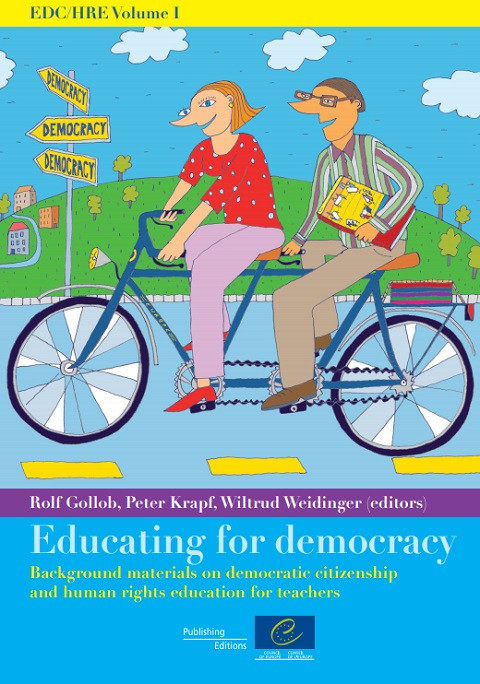 Educating for Democracy: Background Materials on Democratic Citizenship and Human Rights Education for Teachers Year of publication: 2010 Author: Rolf Gollob | Peter Krapf | Ólöf Ólafsdóttir | Wiltrud Weidinger Corporate author: Council of Europe The objective of this manual is to support teachers and practitioners in Education for Democratic Citizenship and Human Rights Education (EDC/HRE). It addresses key questions about EDC and HRE, including competences for democratic citizenship, the objectives and basic principles of EDC/HRE, and a whole school approach to education for democracy and human rights. The manual consists of three parts. Part I outlines the basic principles of EDC/HRE as far as they are helpful and meaningful for the practitioner. Part II gives guidelines and tools to design, support and assess the students’ processes of constructivist and interactive learning. Part III provides toolboxes for teachers and students in EDC/HRE. The other volumes in this series offer concrete teaching models and materials in EDC/HRE for pupils from elementary to upper secondary level.
 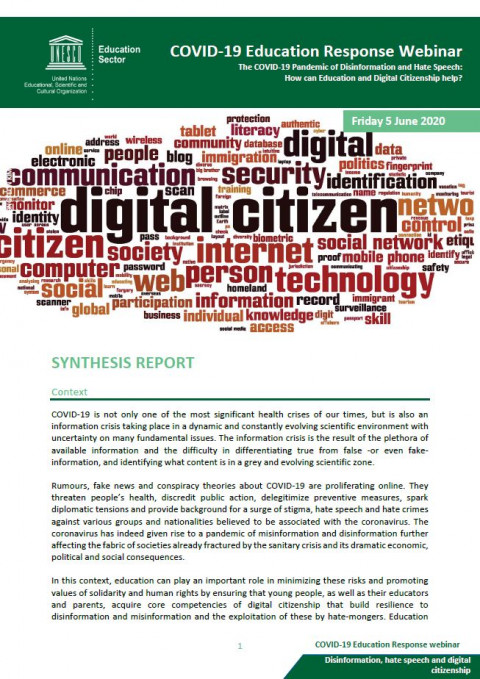 The COVID-19 Pandemic of Disinformation and Hate Speech: How can Education and Digital Citizenship Help? ; Synthesis Report Year of publication: 2020 Corporate author: UNESCO COVID-19 is not only one of the most significant health crises of our times, but is also an information crisis taking place in a dynamic and constantly evolving scientific environment with uncertainty on many fundamental issues. The information crisis is the result of the plethora of available information and the difficulty in differentiating true from false -or even fake- information, and identifying what content is in a grey and evolving scientific zone.In this context, education can play an important role in minimizing these risks and promoting values of solidarity and human rights by ensuring that young people, as well as their educators and parents, acquire core competencies of digital citizenship that build resilience to disinformation and misinformation and the exploitation of these by hate-mongers. Education can also help young people engage in the online environment in a safe, sensitive, critical, ethical and accountable way as well as encourage them to play a role in pioneering educational initiatives that contribute to promoting digital citizenship.
  Children's Global Thinking: Research Investigating the Engagement of Seven-to-Nine-Year Old Children with Critical Literacy and Global Citizenship Education Year of publication: 2014 Author: Rowan Oberman | Fiona O’Shea | Beth Hickey | Claire Joyce Corporate author: Education for a Just World Partnership | St. Patrick's College | Trócaire | Centre for Human Rights and Citizenship Education (CHRCE) The focus of this research is two-fold. Firstly, it investigates how children aged seven to nine years conceptualise global and justice issues. Secondly, it explores children’s engagement with critical literacy strategies as part of a global citizenship education programme. This research project is undertaken with the intention of providing an empirical basis to support the development of pedagogy integrating global citizenship education into different curriculum areas.
 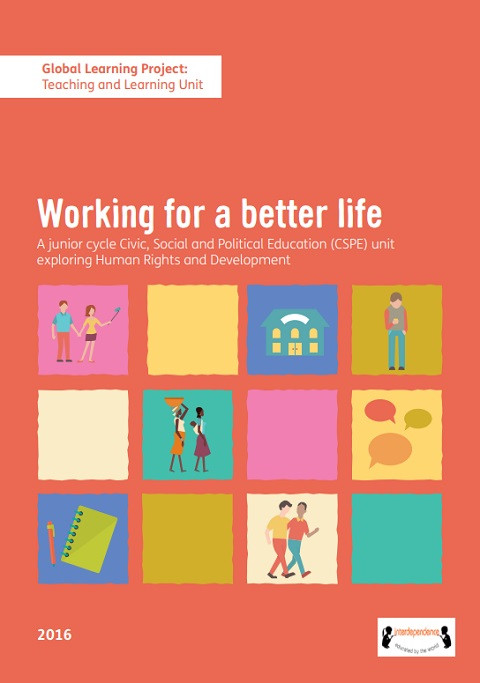 Working for a Better Life: A Junior Cycle Civic, Social and Political Education (CSPE) Unit Exploring Human Rights and Development Year of publication: 2016 Author: Kathryn Moore | Mella Cusack Corporate author: A Partnership with Africa (APA) | City of Dublin Education and Training Board (CDETB) The aim of this Teaching and Learning Unit is to encourage teachers and junior cycle students to question the sources of generalisations about ‘developing countries,’ and to use a human rights framework when engaging with case studies about people who are working to lift themselves out of situations of poverty and inequality. The unit can also be used to support teaching and learning in Civic, Social and Political Education (CSPE), and to contribute to the delivery of Wellbeing at junior cycle level. The unit could also be used in citizenship, social justice or development education module for Transition Year students.
 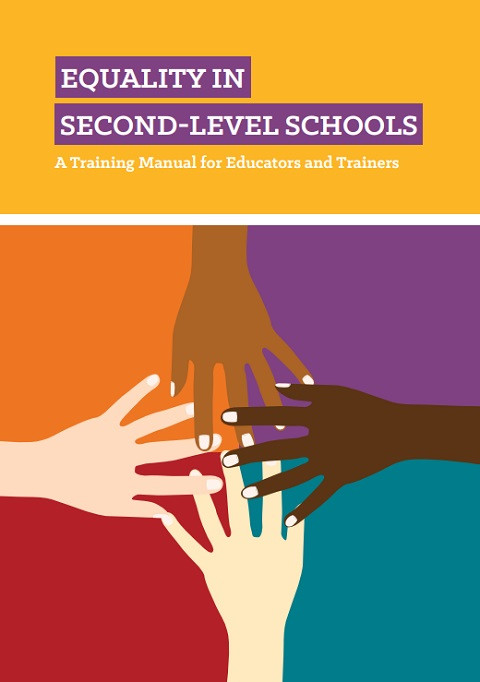 Equality in Second-level Schools: A Training Manual for Educators and Trainers Year of publication: 2014 Author: Mary Gannon | Karen O'Shea Corporate author: Equality Authority | European Union (EU) This resource is based on two and a half days of training delivered to second-level teachers on how to guide discussion and take action on equality in the curriculum and the school. The activities and resources provide ideas and methodologies to engage students in discussing and taking action on equality, human rights and social justice issues in the classroom, the school and the community. These include issues relating to the 9 equality grounds in Irish equality legislation: gender, civil status, family status, sexual orientation, religion, age, disability, race and the Traveller community. Exploring and taking action in these areas supports the development of key skills across curricula including critical and creative thinking, communication, active citizenship and working together.
 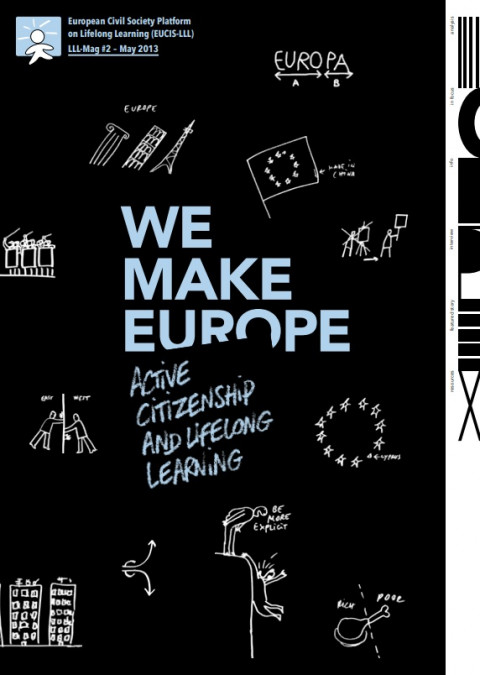 We Make Europe: Active Citizenship and Lifelong Learner Year of publication: 2013 Corporate author: European Civil Society Platform on Lifelong Learning (EUCIS-LLL) This material captures some of the sparks of civic engagement and aimed to contribute to the debates that took place in the context of the European Year of Citizens 2013. Its purpose was to bring together various perspectives and experiences in order to show the wealth and dynamism as well as the limitations and pitfalls of what is active European citizenship nowadays.
 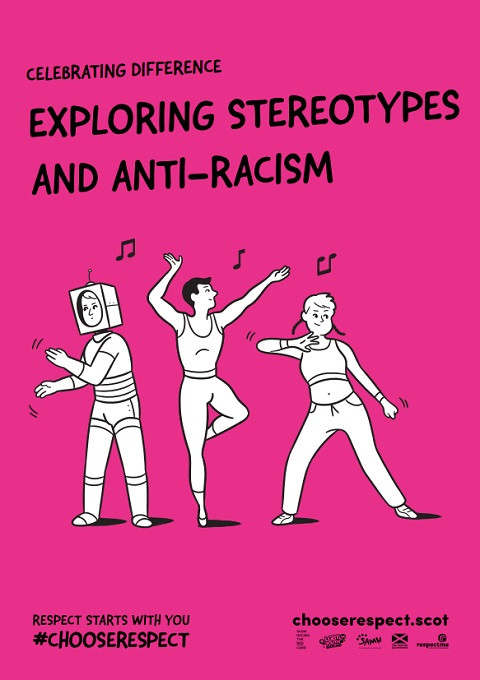 Celebrating Difference: Exploiting Stereotypes and Anti-Racism Year of publication: 2018 Corporate author: respectme This resource has been developed as part of the ‘Celebrating Difference’ campaign, which is run by Respect Me, in partnership with LGBT Youth Scotland, the Scottish Association for Mental Health, Show Racism the Red Card, and the Scottish Government. It contains various lessons about challenging stereotypes.