
Resources
Explore a wide range of valuable resources on GCED to deepen your understanding and enhance your research, advocacy, teaching, and learning.
8,364 Results found
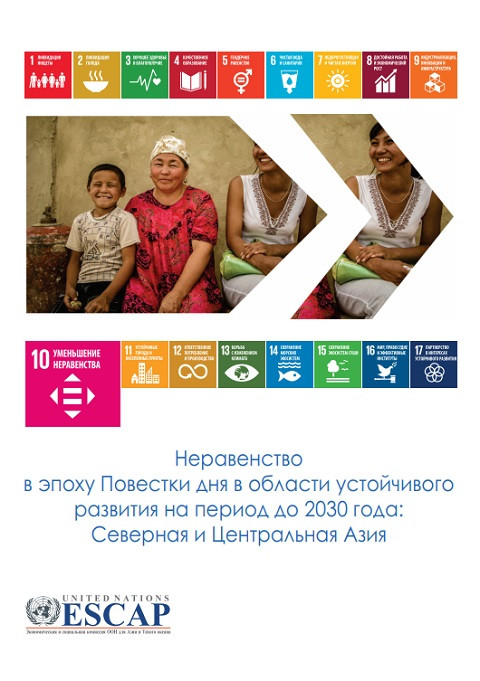 Inequality in the Era of the 2030 Agenda for Sustainable Development: North and Central Asia Year of publication: 2018 Corporate author: UN. Economic and Social Commission for Asia and the Pacific (UN. ESCAP) This study considers issues pertaining to inequality and its causes in North and Central Asia, based on multidimensional indicators that are now available. It reviews where these countries of North and Central Asia stand in terms of reducing both inequality of outcomes and opportunities through cross-country comparisons. Challenges surrounding inequality of opportunities for selected social groups, namely women, young and older people, rural population and migrant workers are examined. Several concerns come to light: (1) Women tend to be both underpaid and underrepresented in decision-making processes, even though they are economically active and educated; (2) Young people are more likely to be unemployed, which could lead to social displacement; (3) Aging population in selected countries could jeopardize current pension systems which currently cover almost all older persons; (4) a rural-urban divide in terms of access as well as quality of public services remain; and (5) working conditions of migrants are precarious.
  Risks in the Fight for Justice and Human Rights in Central Asia: Protecting Civil Society in the Region in 2017 Year of publication: 2018 Corporate author: International Partnership for Human Rights (IPHR) This 2017 report provides an overview of the main trends regarding civil society in five countries of Central Asia: Kazakhstan, Kyrgyzstan, Tajikistan, Turkmenistan and Uzbekistan. The report is mainly based on the results of monitoring conducted by Central Asian organizations in their countries and on regular reports prepared jointly with IPHR as part of the CIVICUS Monitor initiative aimed at monitoring the state of civil society worldwide.
  Strengthening Health System Responses to Gender-based Violence in Eastern Europe and Central Asia: A Resource Package Year of publication: 2014 Corporate author: United Nations Population Fund (UNFPA) | Women Against Violence Europe (WAVE) This collection of materials is the result of a collaboration between UNFPA (United Nations Population Fund), the UNFPA Regional Office for population for the countries of Eastern Europe and Central Asia and the WAVE Network (Women Against Violence in Europe) and is an updated edition of the compilation, revised in 2013-2014. It has been brought in line with new requirements in terms of enhancing the response of the health system to gender inequality; its content has been updated taking into account the latest international developments.
  Violence Against Women and Girls: Kyrgyz Republic (Gender in Society Perception Study; Oct. 2018) Year of publication: 2018 Author: Elena Kim Corporate author: United Nations Entity for Gender Equality and the Empowerment of Women (UN Women) This report is part of the Gender in the Perception of Society (GSPS) study, funded by the UN Peacebuilding Fund, jointly run by UN Women, UNFPA and IOM in the Kyrgyz Republic. The report on the results of the study is dedicated to the topic of violence against women through the prism of two types of widespread practice of forced marriage in the Kyrgyz Republic. The report, which consists of two main sections, focuses on the practice of abducting brides and child marriages. The report attempts to explain the attitude and reaction of society to both phenomena, which deprive women of their rights and opportunities and require changes in opinions, attitudes and institutional priorities.
  Teaching Journalism for Sustainble Development: New syllabi Year of publication: 2015 Author: Banda Fackson Corporate author: UNESCO This work aims to expand the curriculum of UNESCO in education in journalism and includes new curricula covering current topics in the field of journalism education around the world. The document was prepared on the basis of standard curricula, as well as additional UNESCO publications under the general title “Collection of new curricula” in order to effectively respond to new problems faced by specialists and teachers in the field of journalism.
  Statement of International Development NGOs of Korea on the Global Fight against COVID-19 Year of publication: 2020 Corporate author: Korea NGO Council for Overseas Development Cooperation (KCOC) The recent outbreak of COVID-19 has become a global crisis. Since the WHO declared it as a pandemic on March 11, we’ve seen an exponential growth of the numbers of confirmed cases and deaths across the world. No one can predict a peak or duration of the crisis at this point.As the U.S. and European countries with relatively effective healthcare infrastructure are also struggling with the pandemic, the magnitude of damages on developing countries would be unimaginable. It would be extremely difficult for vulnerable states to tackle the crisis by themselves. Now is the time that we forge international solidarity and find solutions together.
  Thinkpiece: Are We Changing the World?; Reflections on Development Education, Activism and Social Change Year of publication: 2015 Author: Stephen McCloskey Corporate author: Centre for Global Education (CGE) This article has been published as part of a one year development education project delivered by the Centre for Global Education and funded by Trócaire. It aims to support reflection and debate on how development educators engage the public on international development issues. The article comes on the back of recent research, most notably Oxfam’s Finding Frames report, which suggests that the development sector is struggling to enhance and sustain citizenship engagement on the structural causes of poverty and inequality. The article probes some of the factors that may underpin this lack of engagement both within the development education sector specifically and the wider development sector more generally. It examines some of the challenges involved in engaging learners in actions on global issues. Some of these challenges relate to the sectors and environmental pressures in which development educators operate which can thwart in-depth engagement with learners.
  Bank of Actions for Global Citizens Year of publication: 2020 Corporate author: Global Citizens Award The Bank of Actions guide can be used by anyone looking for creative inspiration to take action as global citizens. It is designed as a toolkit for engaging the public in global justice issues in meaningful ways that can help bring about positive change in our world.The Bank of Actions has been designed in the context of returned international volunteers participating in the Global Citizen Award programme.
  Palestine & Israel: How Will There Be a Just Peace?; A Citizenship Education Resource for Transition Year and Key Stage 4 based on Human Rights and International Law Year of publication: 2012 Author: Mary Gannon | Elaine Murtagh Corporate author: City of Dublin Vocational Education Committee (CDVEC). Curriculum Development Unit | Centre for Cross Border Studies This resource is an important development in helping post-primary students throughout the island of Ireland to explore the Palestinian Israeli situation within the context of Human Rights and International Law.The resource addresses key issues underlying the origins of the conflict and current obstacles to bringing about a just peace.
  Well-Being and Safety of Women: OSCE-Led Survey on Violence Against Women Year of publication: 2019 Corporate author: Organization for Security and Co-operation in Europe (OSCE) This report presents the cross-regional, comparable findings of the OSCE-led Survey on the Well-being and Safety of Women, which was implemented in 2018 in Albania, Bosnia and Herzegovina, Montenegro, North Macedonia and Serbia, Moldova3 and Ukraine. The research was also conducted in Kosovo.The OSCE-led survey included a quantitative and qualitative component and was undertaken with the goal of providing comparable data on different forms of violence women experience in their childhood and throughout the course of their lives. The research examined violence that women experience in conflict and non-conflict settings, as well as the impact violence has on women, including its lasting consequences. Questions on norms and attitudes connected to violence against women were asked to better understand the underlying causes of violence.The area covered by this research is diverse and has different historical, social and economic contexts. Rather than focusing on the findings from particular locations, the report aims to provide an overview of women’s experiences and to highlight the issues – often similar – that persist and continue to hamper the well-being and safety of women throughout the area covered by the research.