
Resources
Explore a wide range of valuable resources on GCED to deepen your understanding and enhance your research, advocacy, teaching, and learning.
8,364 Results found
 Rethinking Learning: A Review of Social and Emotional Learning for Education Systems Year of publication: 2020 Author: Nandini Chatterjee Singh | Anantha Duraiappah Corporate author: Mahatma Gandhi Institute of Education for Peace and Sustainable Development (MGIEP) This publication titled ‘Rethinking Learning: A Review of Social and Emotional Learning for Education Systems’, published by the UNESCO Mahatma Gandhi Institute of Education for Peace and Sustainable Development (MGIEP) reviews the latest research on Social and Emotional Learning (SEL), its impact on student health and school climate and its transformative role in building happier classrooms. It seeks to inform and impress upon Member States the urgent need to mainstream social and emotional learning in education systems.
  Local Knowledge, Global Goals Year of publication: 2017 Author: Douglas Nakashima | Jennifer Rubis | Peter Bates | Bárbara Ávila Corporate author: UNESCO Local and indigenous knowledge refers to the understandings, skills and philosophies developed by societies with long histories of interaction with their natural surroundings. For rural and indigenous peoples, local knowledge informs decision-making about fundamental aspects of day-to-day life. This knowledge is integral to a cultural complex that also encompasses language, systems of classification, resource use practices, social interactions, rituals and spirituality. These unique ways of knowing are important components of the world’s cultural diversity, and contribute to the achievement of Agenda 2030 and the Paris Agreement.
 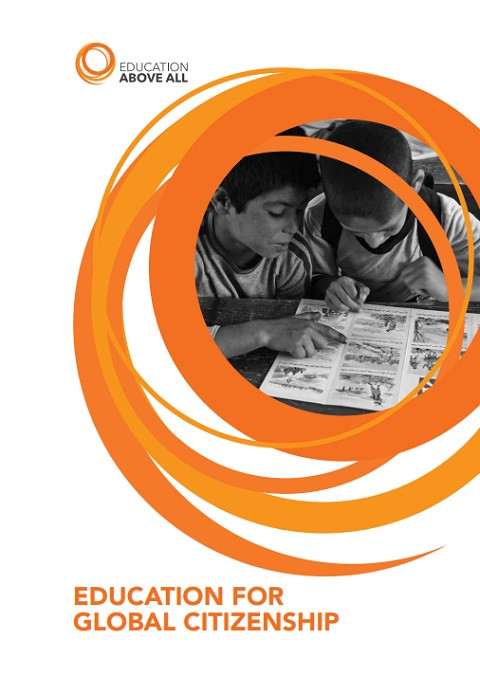 Education for Global Citizenship Year of publication: 2012 Corporate author: Education Above All (Qatar) This book shows that transformative education for local, national and global citizenship and peace can be implemented even under difficult conditions if there is a policy commitment to do so. Authors have provided examples and lessons learned from their own experiences as eminent practitioners in the field. The book is divided into three parts: Part One provides a brief overview of education for global citizenship; including in chapter 1, the subject matter and sub-themes; in chapter 2 the challenges of teaching for personal values and behavior development; and in chapter 3 the importance of having a clearly defined and holistic policy accepted by key stakeholders, and effective implementation.Part Two comprises chapters contributed by practitioners and specialists. Section A of Part Two presents some reflections on the challenges of teaching for values development and behavior change, and on the use of textbooks in this regard. Section B comprises four case studies that focus on or include education for citizenship and civics. Section C presents three cases focused on education for peace, together with a review of peace education in Muslim societies. Section D introduces human rights education and education designed to explore humanitarian law. Section E reviews problems of and possibilities for teaching about a conflictual past. Section F focuses on the development of national and international policy and planning for education to be supportive of peacebuilding and of respect for human rights.Finally, Part Three offers some recommendations for future action
  Ensuring High Quality Primary Education for Children from Mobile Populations: A Desk Study Year of publication: 2017 Author: Stephanie Bengtsson | Caroline Dyer Corporate author: Educate A Child (EAC) | German Federal Ministry for Economic Cooperation and Development (GIZ) This study focuses on provision for primary school-aged children amongst communities of refugees and Internally Displaced People (IDPs), mobile pastoralists and seasonally migrating workers. For refugee and IDP children, policy, coordination and implementation challenges include: inconsistent ratification and enforcement of conventions and agreements protecting refugees and IDPs; the disproportionate impact of forced displacement on low and middle income countries (LMICs); the lack of a shared agenda among a wide range of stakeholders with differing mandates; and inadequate forced displacement terminology. Promising and emerging policy, coordination and implementation strategies include: expanding existing rights documents and agreements and building policy from the ground up; enshrining forcibly displaced people’s rights to education in national laws and policy; genuine engagement with affected communities; utilising the Education Cluster and other existing multi-stakeholder networks for knowledge sharing and collaboration; and collaborating across sectors to address the needs of the whole child. Financing challenges include: unpredictable and low funding for refugee and IDP education; weak capacity to absorb funds at the national and local level; an over-reliance on short-term financing mechanisms; donor dependence and a lack of funding sustainability; and inappropriate distribution of funds within education programming.
  One Youth Can: Changing Gender Norms and Promoting Gender Equality Year of publication: 2017 Author: Tapiwa Manyati | Remmy Shawa Corporate author: Sonke Gender Justice This manual is intended to be a resource for those working with youth on issues of citizenship, human rights, gender, health, sexuality and violence. The content is informed by a commitment to social justice, gender equality and engaged citizen activism. The activities encourage all youth to reflect on their own experiences, attitudes and values regarding sexuality; gender; what it means to be a boy/man or girl/woman; domestic and sexual violence; HIV/AIDS, democracy and human rights. They encourage all youth to take action to help prevent domestic and sexual violence, reduce the spread and impact of HIV and AIDS, and promote gender equality.
  Preparing Our Youth for an Inclusive and Sustainable World: The OECD PISA Global Competence Framework Year of publication: 2018 Corporate author: Organisation for Economic Co-operation and Development (OECD) OECD Programme for International Student Assessment (PISA), the global yardstick for educational success, includes global competence in its metrics for quality, equity and effectiveness in education. The global competence assessment in PISA 2018 is composed of two parts: a cognitive assessment and a background questionnaire. The cognitive assessment is designed to elicit students' capacities to critically examine global issues; recognise outside influences on perspectives and world views; understand how to communicate with others in intercultural contexts; and identify and compare different courses of action to address global and intercultural issues. In the background questionnaire, students will be asked to report how familiar they are with global issues; how developed their linguistic and communication skills are; to what extent they hold certain attitudes, such as respect for people from different cultural backgrounds; and what opportunities they have at school to develop global competence. Answers to the school and teacher questionnaires will provide a comparative picture of how education systems are integrating global, international and intercultural perspectives throughout the curriculum and in classroom activities.
  Refugee Education: The Crossroads of Globalization (Educational Researcher; vol. 45, no. 9) Year of publication: 2016 Author: Sarah Dryden-Peterson Corporate author: Harvard University In this article, the author probes a question at the core of comparative education – how to realize the right to education for all and ensure opportunities to use that education for future participation in society. She does so thorough examination of refugee education from World War II to the present, including analysis of an original dataset of documents (n=214) and semi-structured interviews (n=208). The data illuminate how refugee children are caught between the global promise of universal human rights, the definition of citizenship rights within nation-states, and the realization of these sets of rights in everyday practices.
  Preventing Violent Extremism through Sport: Technical Guide; Criminal Justice Handbook Series Year of publication: 2020 Corporate author: UN. Office on Drugs and Crime (UNODC) The Technical Guide on Preventing Violent Extremism through Sport, developed in consultation with international experts, recognizes the importance of promoting the well-being of children and youth. It applies an approach that encourages prosocial behaviour and good safeguarding and welfare practices, with particular emphasis on educational and social development measures in line with the United Nations Guidelines for the Prevention of Crime.The guide, addressed mainly to policy makers and implementing organizations, has been carefully designed to support effective integration of sport-based learning in primary prevention frameworks. By adopting a five-zone approach to prevent violent extremism namely safe space, empowerment, resilience, social inclusion and education, it supports informed policy development and a Theory of Change that can shape curriculum design and content. To further support global efforts in preventing violent extremism, UNODC is also developing an e-learning module and a practical tool for trainers that will be published soon and will complement this technical guide.
  No Poverty: Educational Resource for Teachers and Facilitators Year of publication: 2017 Corporate author: Concern Worldwide No Poverty – Educational resource for teachers and facilitators contains activities, statistics and information to explore the extent of poverty in the world, it’s causes and consequences as well as the aims of the sustainable development goals which aspire to address this issue. The booklet includes statistics, three activities complete with resources ready to photocopy and key terminology.
 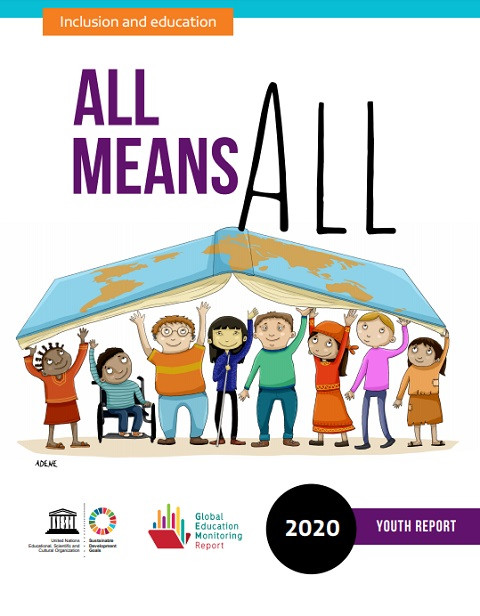 Youth Report 2020: Inclusion and Education; All Means All Year of publication: 2020 Corporate author: UNESCO | Global Education Monitoring Report Team This Youth Report is designed to help you learn about the social, economic and cultural factors that cause vulnerable children, youth and adults to be discriminated against and marginalized in education. It tells the stories of the people who fight to ensure that everyone is included in education, and of those who fought to uphold their own right to education. It brings to life the recommendations of the 2020 Global Education Monitoring Report: Inclusion and education: All means all and calls on youth and teachers to share and discuss the stories and messages, to use them in campaigns and as a teaching tool in class. An open letter to education ministers is included calling, for education systems to be built back more inclusive after the school closures during Covid-19.