
Resources
Explore a wide range of valuable resources on GCED to deepen your understanding and enhance your research, advocacy, teaching, and learning.
8,364 Results found
 Education for Participation: Democracy Schools Year of publication: 2015 Corporate author: Civic Education for Participation Project (CEFP) Egyp This video shows the idea of democratic schools and their foundations. Students who benefit from these schools can delve into political and democratic experiences.
  Programs of Peace Education in Pre-University Education on the Light of Some Countries’ Experiences and the Extent of Benefit in Egypt Year of publication: 2014 Author: Amel Ahmed Hassan Mohamed Corporate author: Association of Arab Educators Education for peace has got an international, regional and local interests, in particular, today's world desperately needs more than ever before to face the problems afflicting the human race, and the conflict expected to increase in the coming years. This situation confirms the importance of achieving peace in all dimensions with oneself, family, society, and the environment.This study aimed to investigate the experiences of some countries in the field of education for peace and to draw some benefits from them. For achieving this aim, the study followed the Descriptive-Analytic Approach because of its appropriateness to the nature of the study. The sample of study dealt with three experiments in the field of education for peace in Northern Ireland, Bosnia and Herzegovina, and Sierra Leone, which were chosen after passing through a relatively long period of conflicts and disputes. By analyzing the three experiments, the similarities and differences among countries were reviewed in terms of, period and nature of conflict, foundations, objectives and content of the programs, teacher training. The study achieved some benefits through reviewing literature and analyzing the three experiences. The suggestions of the study were classified under some themes, including: foundations of peace education, its objectives, contents, and teacher training.
  Education for Social Peace Year of publication: 2018 Author: Idris Sultan Saleh Corporate author: Morocco. Ministry of Awqaf and Islamic Affairs The author reviews the concept of social peace and its importance for individuals and societies. Then he goes on to refer to Islamic religion and its framing of societies with social peace. The article concludes with a discussion of education in the light of social peace.
  Global Citizenship Education in Hong Kong Year of publication: 2015 Author: Jun Xing Corporate author: IACSIT Press Education is in the midst of massive reforms in different parts of the world. Over the last few decades, there is an increasing call for global citizenship education(GCE) in the academy. In this paper, the author will first explain why the concept is a game changer in higher education, and then explorethe opportunities as well challenges for GCE, particularly in the Hong Kong academy, from the perspectives of public policies, curriculum and pedagogy. Finally, the author wants to explore how the pedagogy of service learning (SL) can serve as a powerful vehicle to achieve the intended learning outcomes of GCE while, in the meantime, GCEcan inform the theory and practice of international SL.
 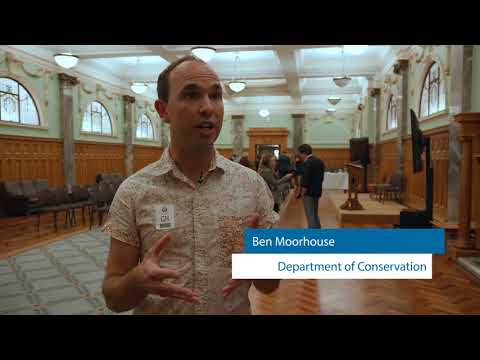 What Does Global Citizenship Education Mean to You? Year of publication: 2018 Corporate author: New Zealand National Commission for UNESCO At our 2018 Global Citizenship Education Awards (GCED) ceremony, hosted at Parliament by Associate Minister for Education Hon Jenny Salesa, people were asked what GCED meant to them.
  Digital Technologies to Advance Global Citizenship Education in Schools Year of publication: 2020 Author: Maria Barry | Gabriela Martinez Sainz Corporate author: Dublin City University. Institute of Education. Centre for Human Rights and Citizenship Education | Trócaire How can technology be used in classrooms to advance Global Citizenship Education? That is the general question that guides the present report as a result of a research project conducted at the Centre for Human Rights and Citizenship Education in partnership with Trócaire. The overall aim of the project was to develop a knowledge base on the contribution of digital technologies (DT) to school-based GCE programmes and teaching. It consisted of a systematic review of the most recent literature and published evidence, a discussion with experts in the field of digital technologies and education, and an exploration of teacher practices in Ireland and beyond.
  The Development Trend and Enlightenment of American National Identity Education (Modern University Education; No. 2) Year of publication: 2020 Author: Zhang Liguo | Guo Liqiang Corporate author: Hunan Higher Education Association | Central South University Influenced by globalization, informationization and cultural diversity, the risk of deconstruction and differentiation of national identity is increasing. In the process of national identity construction, national identity education undoubtedly plays a unique and important role. The United States as one of the countries which carry out education of national identity is more successful, its national identity education presents the concept of education in the process of evolution from “one yuan” to “integration” transformation, education mode transition from “forced” to “invasion”, education field from the “school” to “life” and other typical characteristics of extension, some experience for China’s national identity education has a certain reference and enlightenment. China’s national identity education should adhere to the principle of building common ground while reserving differences. While respecting the diversity of cultures, it should take the forging of common values as the spiritual bond to effectively adjust the contradiction between the unity and diversity of national identity. Adhere to the combination of knowledge and practice, continue to strengthen civic education to shape responsible and active citizens; adhere to the combination of rigor and softness, improve the effectiveness of education with diversified classroom teaching and practical reform; adhere to both internal and external cultivation, deeply understand the core attributes of national identity, and sublimate the understanding and recognition of national identity education with an open vision.
  Research on Digital Competence of EU Citizens: A Comparative Analysis Based on the Dig Comp1.0, 2.0 and 2.1 (International and Comparative Education; No. 6) Year of publication: 2020 Author: Zheng Xudong | Fan Xiaoyu Corporate author: Beijing Normal University The explosive development of digital technology has revolutionized the competences of social citizens. In 2006, EU proposed digital competence, based on it, EU established A Framework for Developing and Understanding Digital Competence in Europe (Dig Comp 1.0). After releasing two revisions of Dig Comp 1.0, the Digital Competence Framework for Citizens (Dig Comp 2.1) was officially released in 2017. Compared with the former versions, Dig Comp 2.1 expanded digital competences areas, revised the competences names, no longer described the specific competences from KSA (knowledge, skill and attitude) perspective, and the proficiency of the competences were divided into more detailed 8 proficiency level. The Dig Comp 2.1 contained the following values: a. the transformation of the concept of digital citizenship education; b. paying attention to the competences of complex problem solving and innovation; c. looking forward to the future development of intelligent society; d. supporting the development of lifelong learning and developing qualified digital citizens. Dig Comp 2.1 has enlightenment for building a learning society in China, and that of improving the digital competences of Chinese citizens.
 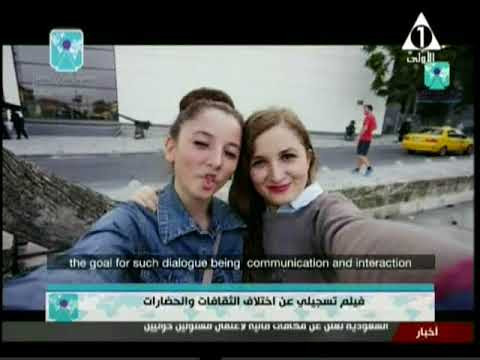 A Documentary about Different Cultures and Civilizations Year of publication: 2017 Corporate author: Egypt News The documentary talks about the differences between cultures and civilizations. It talks about the importance of cross-fertilization between civilizations for a happy life and sustainable development.
  Handout Material for the Course: The Environment and Development Year of publication: 2016 Author: Naif Hamoud Mohammed Al-makishah | Mohammed Al-mohanna Corporate author: King Abdulaziz University The document is a handout used by the teachers in teaching the environment and development course, as it contains valuable information and data for the interconnection between environment and development. The handout notes begins with the concept, types of pollution and their causes, and then discusses the foundations of development and the relationship to the environment.