
Resources
Explore a wide range of valuable resources on GCED to deepen your understanding and enhance your research, advocacy, teaching, and learning.
8,364 Results found
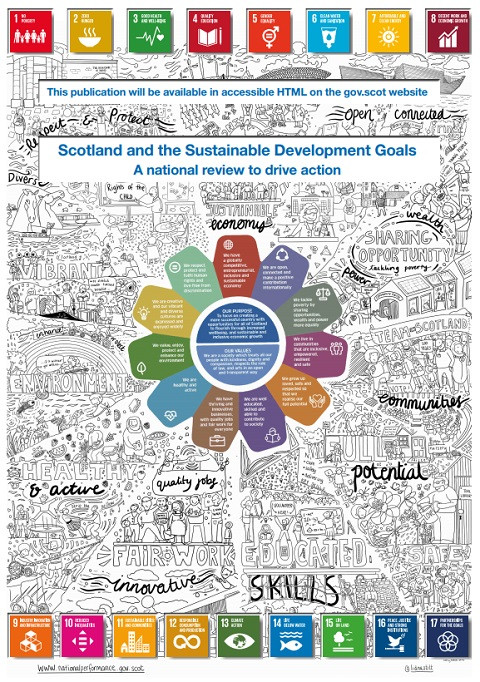 Scotland and the Sustainable Development Goals: A National Review to Drive Action Year of publication: 2020 Corporate author: Government of Scotland The 2030 Agenda for Sustainable Development provides a shared blueprint for peace and prosperity for people and the planet, now and into the future. As part of this, the Sustainable Development Goals (SDGs) are a universal call to action. Scotland signed up to the SDGs in 2015 and this review brings together evidence, actions and stories of how we are making progress to meet the Goals. It contains inspirational examples of how people across Scotland are taking action to make us a more successful country and to ensure we are at the forefront of this international agenda. It also highlights some of the challenges we face. This review, a collaborative effort between the SDG Network Scotland, Scottish Government and the Convention of Scottish Local Authorities (COSLA), scratches the surface of the depth of activity across Scotland. This review provides an overall picture of activity and performance based on the evidence currently available.
  A Study on Contextualization of Global Education Agenda: Focusing on Education Policies of Global Citizenship Education in South Korea (The Journal of Korean Education; Vol.46, No.3) Year of publication: 2019 Author: Insun Jeon Corporate author: Korean Educational Development Institute (KEDI) This study aims to provide a concrete discussion on contextualization of global education agenda with the case of Global Citizenship Education(GCED) policies in South Korea.Design/Methodology: With a theoretical approach based on neoinstitutionalism, this study investigates influential factors in determining the direction and key words of GCED policies in policy-making process. Policy documents of Ministry of Education, the local education authority of Seoul city, Kyeonggi-province, Incheon city and the Asia-Pacific Centre of Education for International Understanding of UNESCO, and the speeches of key stakeholders such as presidents, ministers and superintendents from 2014 to April 2019 are analyzed by using KHcoder for text mining and mapping. Semi-structured interviews are conducted with experts to supplement the text analysis.Findings/Result: The result shows that the influence of key stakeholders on directing GCED policies is significant. By and large, GCED is re-defined by purpose in the socio-political context of South Korea, which contributes to the expansion of GCED but also results in inconsistency and fragmentation.Value: This study shows a limit of the top-down approach to GCED policy decisions, and the necessity to allow more bottom-up proposals, transparency of the policy-making process, the participation of diverse groups and ongoing discussions focusing on the process of contextualization for future GCED.
  A Study on the Support Methods of Education for Sustainable Development in Connection with Global Citizenship Education (Journal of Education & Culture; Vol.24, No.4) Year of publication: 2018 Author: Youngsoon Kim | Hyunhee Yoon Corporate author: Inha University. Education Research Institute The purpose of this study is to explore supportive measures for revitalizing education for sustainable development linked to global citizenship education and to discuss the practical ways of activation in educational field. The researchers interviewed nine experts on global citizenship education and education for sustainable development for the project. It also collected opinions on how to promote sustainable development education linked to global citizenship education. As a result of the research, experts have presented three tasks as a support measure for promoting sustainable development programs associated with global citizenship education. It was to provide classroom support, enhance teacher skills, and establish a network of related institutions. To improve the quality of the classes, practical operational materials are required, such as textbooks, supplementary materials, and the development of class models and programs. In addition, systematic and continuous training is required to enhance the capabilities of teachers. Lastly, it is necessary to share roles of education-related organizations, such as the Education Ministry, education office, civic groups, local governments and schools, and to establish a network system. Based on the above research results, the Commission discussed future tasks required to support the promotion of sustainable development programs related to international citizens ' education.
  Development of Global Citizenship Education Competence Scale for Early Childhood Teacher (The Journal of Korean Teacher Education; Vol.35, No.4) Year of publication: 2018 Author: Jeoungsook Kim | Kyeonghwa Lee Corporate author: Korean Society for the Study of Teacher Education The study aims to develop a scale to identify and measure the early childhood teacher’s competence for global citizenship education. In order to construct the factors of the teacher’s competence for global citizenship education, conceptualization of the competence was made based on the review of literatures, and then the preliminary scale was constructed through 3 time-Delphi survey of 34 expert panels. The content analysis and statistical analysis (content validity, consensus, and convergence) of the data collected through the Delphi survey revealed that the final version of the scale with 2 domains, 5 factors and 33 items was derived. Then, in order to validate the final version of the scale, the tests with early childhood teachers were carried out. The data collected through the final test of 294 early childhood teachers were statistically analyzed through the ratio of content reliability, validity, and reliability. The analysis was confirmed that the scale was a valid and reliable instrument for measuring the early childhood teacher’s competence for global citizenship education. In conclusion, the scale developed in this study consisted of two domains: the competence as a global citizen and the competence as a early childhood teacher to carry out global citizen education for young children. The global citizenship competence consists of 3 factors and 20 items, and the global citizenship education competence for young children consists of 2 factors and 13 items. Lastly, the possibility of using the scale for early childhood teacher education was discussed.
 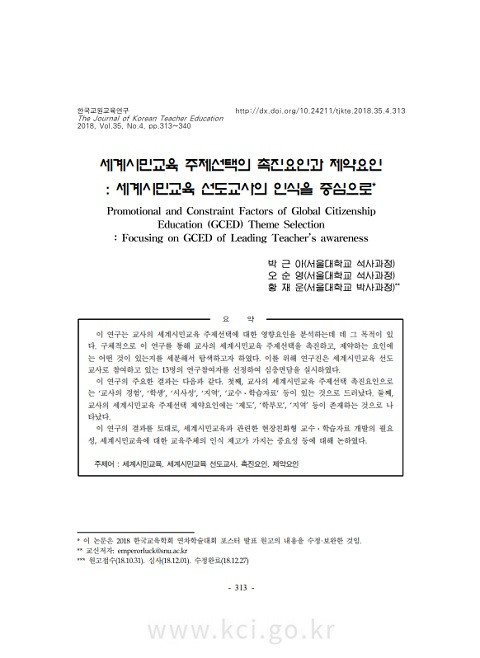 Promotional and Constraint Factors of Global Citizenship Education (GCED) Theme Selection: Focusing on GCED of Leading Teacher’s awareness (The Journal of Korean Teacher Education; Vol.35, No.4) Year of publication: 2018 Author: Keunah Park | Soonyoung Oh | Jaewoon Hwang Corporate author: The Korean Society for the Study of Teacher Education The purpose of this study is to analyze the factors that affect the selection of the themes of Global Citizenship Education (GCED). Specifically, it tried to help teachers to select the themes of GCED and explored specific factors that restrict the selection. For the goal of this study, it interviewed 13 researchers who participated in GCED as leading teachers. It collected data, performed coding of extracting core phrases and analyzed the transcribed interviews. The main analysis results are as follows. First, the factors that promote teachers to choose the themes of GCED were the experience of teachers, students, social issues, areas and teaching and learning materials. Second, the factors that restrict teachers to choose the themes of GCED were institution, parents of students and areas. Based on the result of the study, it described the necessity of developing field-friendly teaching and learning materials in relation to GCED and the importance of raising awareness among the educational players on GCED.
 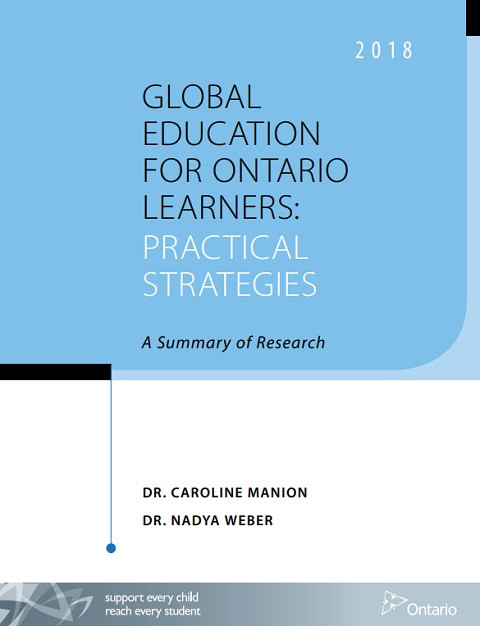 Global Education for Ontario Learners: Practical Strategies; A Summary of Research Year of publication: 2018 Author: Caroline Manion | Nadya Weber Corporate author: Ontario (Canada). Ministry of Education This summary report flows from the policy outlined in Ontario’s Strategy for K–12 International Education (OME, 2015). The report highlights current knowledge about good and/or promising practices in global education in order to suggest practical strategies for improved teaching, learning, and achievement. The intended audience for this piece includes all education stakeholders – community members, parents, learners, system leaders, school leaders, and educators – as active agents of change in support of an education strategy designed to integrate global perspectives, cultures, and experiences in the curriculum and learning environment. The purpose is to enable students to develop the competencies they will need to thrive as citizens in an increasingly globalized world.
 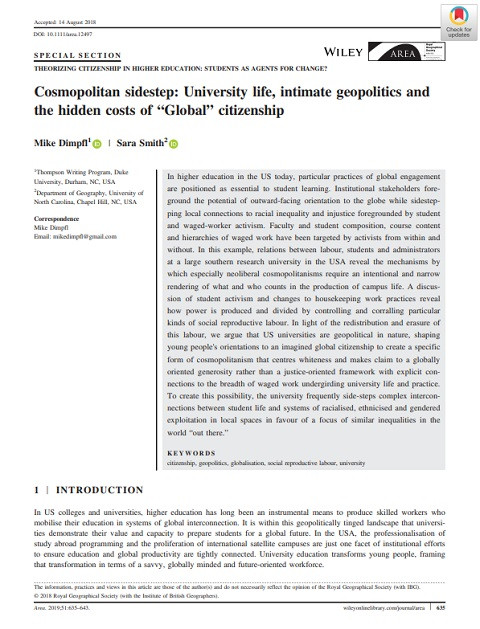 Cosmopolitan Sidestep: University Life, Intimate Geopolitics and the Hidden Costs of “Global” Citizenship (Area; Vol. 51, No. 4) Year of publication: 2018 Author: Mike Dimpfl | Sara Smith Corporate author: Royal Geographical Society | Wiley In higher education in the US today, particular practices of global engagement are positioned as essential to student learning. Institutional stakeholders foreground the potential of outward‐facing orientation to the globe while sidestepping local connections to racial inequality and injustice foregrounded by student and waged‐worker activism. Faculty and student composition, course content and hierarchies of waged work have been targeted by activists from within and without. In this example, relations between labour, students and administrators at a large southern research university in the USA reveal the mechanisms by which especially neoliberal cosmopolitanisms require an intentional and narrow rendering of what and who counts in the production of campus life. A discussion of student activism and changes to housekeeping work practices reveal how power is produced and divided by controlling and corralling particular kinds of social reproductive labour. In light of the redistribution and erasure of this labour, we argue that US universities are geopolitical in nature, shaping young people's orientations to an imagined global citizenship to create a specific form of cosmopolitanism that centres whiteness and makes claim to a globally oriented generosity rather than a justice‐oriented framework with explicit connections to the breadth of waged work undergirding university life and practice. To create this possibility, the university frequently side‐steps complex interconnections between student life and systems of racialised, ethnicised and gendered exploitation in local spaces in favour of a focus of similar inequalities in the world “out there.”
 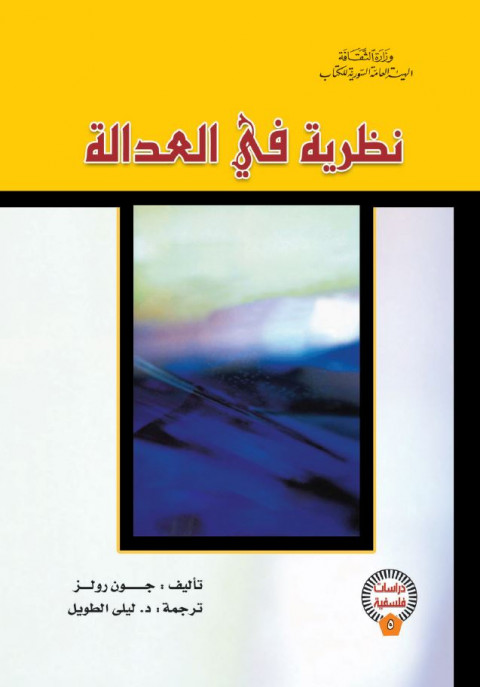 A Theory of Justice (Arabic Edition) Year of publication: 2011 Author: John Rawls Corporate author: Syria. Ministry of Culture This is a book translated by Laila Al Taweel for the American author John Rawls, in which he reviewed justice by examining the institutions and laws that govern it. John asserts that justice is a major component of this universe and cannot be ignored in any way, or even surpassed even in the interests of society's well-being. This translated book is a reference in the Arab world for understanding justice.
 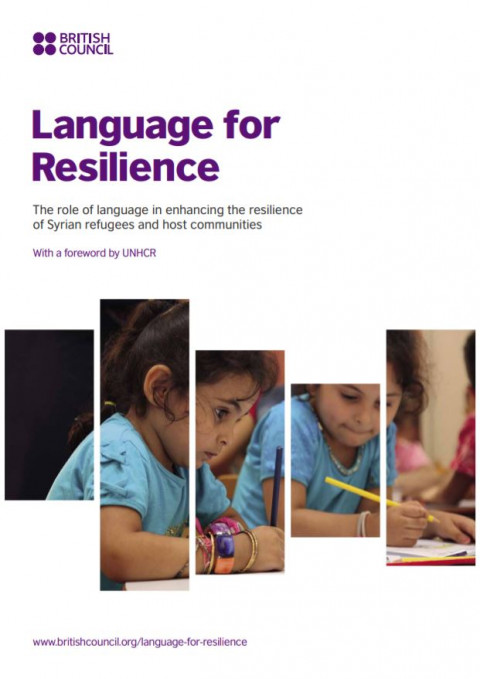 Language for Resilience: The Role of Language in Enhancing the Resilience of Syrian Refugees and Host Communities Year of publication: 2018 Author: Tony Capstick | Marie Delaney Corporate author: British Council | UN. Office of the United Nations High Commissioner for Refugees (UNHCR) The Language for Resilience report examines the impact of language on refugees and host communities affected by the Syrian crisis, identifying the different ways that language skills enhance resilience and providing suggestions for programme responses that address key needs.The report shows that for children and young people attending schools or post-school education, and for educators in host communities handling influxes of refugee students, quality language learning improves attainment and attendance and builds safer and more inclusive classrooms. It also illustrates how creative approaches to language education can support the development of life skills and help meet psycho-social needs.
 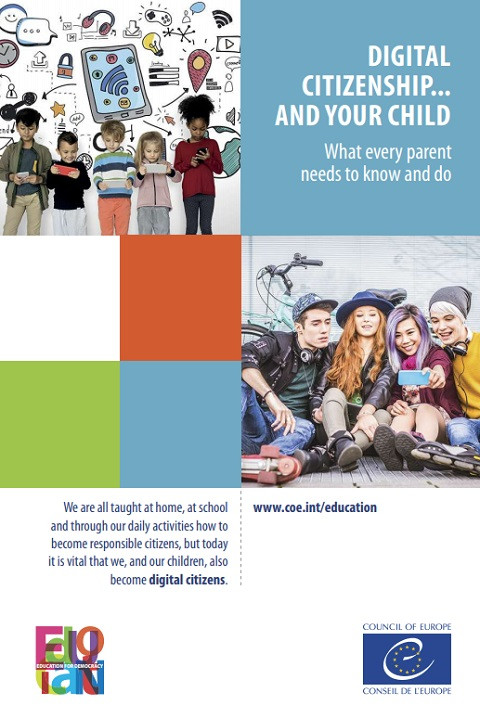 Digital Citizenship... and Your Child What Every Parent Needs to Know and Do Year of publication: 2019 Corporate author: Council of Europe The Council of Europe has created this guide to help you: better understand digital citizenship, and how it shapes online behaviour discuss digital citizenship with your children take steps to help your children master the competences digital citizenship is built on encourage your children’s school to play its role in educating competent young digital citizens.