
Resources
Explore a wide range of valuable resources on GCED to deepen your understanding and enhance your research, advocacy, teaching, and learning.
8,364 Results found
 Step by Step: Social and Emotional Learning Program; Student Workbook (Grade 1 - 11) Year of publication: 2016 Author: José Fernando Mejía | Gloria Inés Rodríguez | Nancy Guerra | Andrea Bustamante | María Paula Chaparro | Melisa Castellanos Corporate author: World Bank This Program offers a series of practical lessons designed to be implemented in the classroom by the teacher. These lessons are based on a carefully chosen developmental perspective of middle childhood and adolescence, to fit the characteristics and needs of each age group or grade, from ages 6 through 17. The lessons are organized into three modules, six general skills and 18 specific skills. Step by Step focuses on six core life skills: self-awareness, self-regulation, social awareness, positive communication, determination, and responsible decision-making.
  Step by Step: Social and Emotional Learning Program; Teacher’s Guide (Grade 1 - 11) Year of publication: 2016 Author: José Fernando Mejía | Gloria Inés Rodríguez | Nancy Guerra | Andrea Bustamante | María Paula Chaparro | Melisa Castellanos Corporate author: World Bank This Program offers a series of practical lessons designed to be implemented in the classroom by the teacher. These lessons are based on a carefully chosen developmental perspective of middle childhood and adolescence, to fit the characteristics and needs of each age group or grade, from ages 6 through 17. The lessons are organized into three modules, six general skills and 18 specific skills. Step by Step focuses on six core life skills: self-awareness, self-regulation, social awareness, positive communication, determination, and responsible decision-making.
  Asia-Pacific Teacher Exchange for Global Education Year of publication: 2019 Corporate author: APCEIU | Korea R. Ministry of Education Asia-Pacific Teacher Exchange for Global Education (APTE) is a bilateral teacher exchange programme between the Republic of Korea and Asia-Pacific partner countries, hosted by the Ministry of Education of the Republic of Korea and implemented by the Asia-Pacific Centre of Education for International Understanding under the auspices of UNESCO (APCEIU) in collaboration with the Ministries of Education of the partner countries. Launched with two partenr countries -- Mongolia and the Philippines -- in 2012, APTE has grown into a well-known regional programme, now working with seven partner countries in the Asia-Pacific region -- Cambodia, Indonesia, Malaysia, Mongolia, Philippines, Thailand, and Vietnam.
 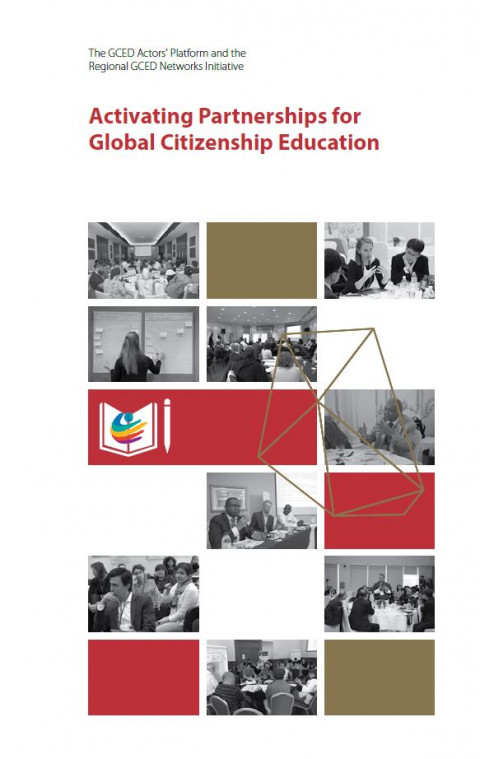 The GCED Actors' Platform and the Regional GCED Networks Initiative: Activating Partnerships for Global Citizenship Education Year of publication: 2020 Corporate author: APCEIU This brief publication introduces and summarizes the flagship GCED Network initiatives supported by APCEIU implemented globally and regionally.UNESCO Headquarters and APCEIU co-convened the launch of the GCED Actors’ Platform in which gathered key partners across the globe and representing five Regional GCED Networks. These five Regional GCED Networks include Sub-Saharan Africa, Arab States, Asia-Pacific, Europe and North America, and Latin America and the Caribbean are formed to identify regional priorities and implement regional strategies to promote GCED. The publication also showcases successful independent activities by organizations part of the GCED Network initiative.
  Inaugural Meeting of the GCED Actors' Platform: Final Report Year of publication: 2020 Corporate author: APCEIU This final report gives an overview of discussions and outcomes from the “Inaugural Meeting of the GCED Actors’ Platform” on 2 September 2019 in Seoul, Republic of Korea, held back-to-back with the 4th International Conference on GCED (3-4 September 2019, Seoul) In line with the call for closer collaboration on GCED inter-regionally, the GCED Actors’ Platform was launched by UNESCO Headquarters and APCEIU in 2019. Convening regional coordinators and different partners working on GCED, the “Inaugural Meeting of the GCED Actors’ Platform” provided an open space for the participants to discuss ways to coordinate activities and promote synergies.The regional representatives have imparted their own experiences and challenges on the ground and shared best practices of facilitating GCED.
  How to Return from School Alive Year of publication: 2020 Author: Nikita Makarenko 246 million children are abused in schools around the world every year. The author explains why Uzbekistan urgently needs to develop an anti-bullying strategy in educational institutions by the beginning of the new school year.
  Integration or Inclusion in Education? Year of publication: 2020 Author: Dilmurod Yusupov How to create true inclusive conditions for children with disabilities and developmental disabilities so that they can receive a quality education and subsequently find decent work? Analysis of a draft document on the development of inclusive (integrated) education prepared by INR.
  New Trends in Intercultural Dialogue in the Context of Regional Geopolitics Year of publication: 2013 Author: Munzifa Babadjanova Intercultural and inter-religious dialogue between civilizations is the beginning of a new path to a better future. The dialogue on international issues, on various issues of cultures and civilizations determines the elimination of misunderstandings, brings together positions and creates the basis for greater protection of the rights of nations and states by establishing equality and peace in the international arena. Of particular relevance is the spread of cultural standards, the preservation of ethnocultural diversity and distinctive traditions, combined with the development of dialogue and contacts.
 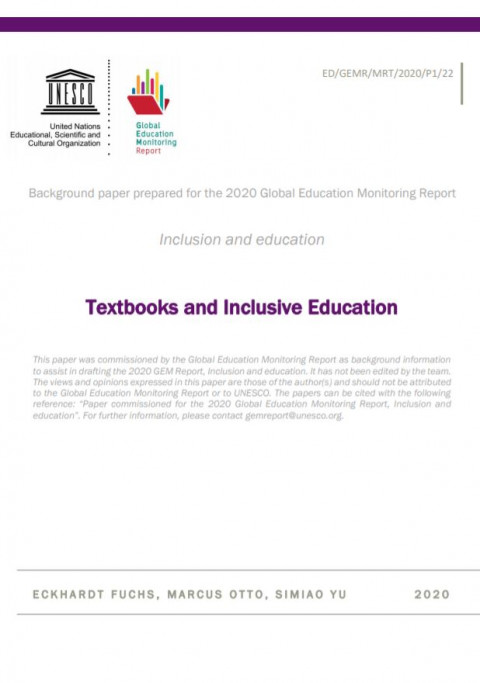 Textbooks and Inclusive Education: Background Paper Prepared for the 2020 Global Education Monitoring Report, Inclusion and Education Year of publication: 2020 Author: Eckhardt Fuchs | Marcus Otto | Simiao Yu Corporate author: UNESCO | Global Education Monitoring Report Team This report, based on an analysis of a sample of textbooks from 28 countries, shows that the subject of inclusion has become increasingly significant in terms of both structure and subject matter, and particularly in the contexts of human rights and citizenship. Social diversity is also increasingly taken into account and reflected upon, albeit with varying emphasis on the differing dimensions of diversity, given that genuinely intersectional perspectives via which these are linked only occur in isolated and rudimentary cases. With regard to inclusiveness in the gender-related dimension, the overall picture of the textbook sample under analysis here is a heterogeneous one; further, the incorporation of LGTBQIA+ perspectives remains insufficient. Nevertheless, the textbooks examined here do show increasing critical reflection on the social discrimination of different groups, and, ultimately, we do observe a significant trend towards a more pronounced consideration and representation of different social groups and minorities.
 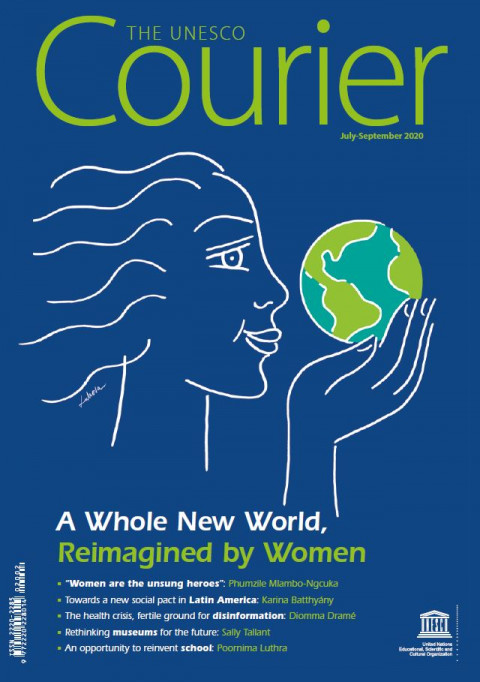 A Whole New World, Reimagined by Women (The UNESCO Courier no. 2, July-September 2020) Year of publication: 2020 Corporate author: UNESCO In this issue, the UNESCO Courier gives women a voice. Political scientists, journalists, sociologists, researchers, writers, and teachers have drawn the contours of the post-pandemic era – whether it is the future of museums, changes in schools, the rise of disinformation, or the challenges of scientific research.This issue paints a sobering picture of our times – highlights the fault-lines exposed by the health crisis, and shows the magnitude of the challenges ahead. It also underlines the potential for scientific, cultural and educational co-operation that this unprecedented event has revealed. If the reflections, the desire for change, and the movements of mutual aid that have emerged are not short-lived, the world really could become a more united, more sustainable and more egalitarian place.