
Resources
Explore a wide range of valuable resources on GCED to deepen your understanding and enhance your research, advocacy, teaching, and learning.
8,364 Results found
 Learning to Read the World?: Teaching and Learning about Global Citizenship and International Development in Post-Primary Schools Year of publication: 2011 Author: Audrey Bryan | Meliosa Bracken Corporate author: Irish Aid This is the first published study of its kind in an Irish context, offering combined insights into the status and practice of Development Education in post-primary schools as well as an interrogation of how development issues are represented in the formal curriculum. It adopted a qualitative approach, enabling a rich description of what Development Education looks like in an Irish context and how it is understood in post-primary schools, as well as an in-depth exploration of teachers’ experiences and views about ‘doing’ Development Education in post-primary settings. Combining an analysis of curriculum materials (including 75 lesson plans and a similar number of textbooks) as well as in-depth interviews with 26 in-career teachers currently teaching Development Education in a broad and diverse cross-section of post-primary schools, the study provides a comprehensive portrait of Global Citizenship Education in Irish second-level schools. The overall aim of the research was to identify the strengths, possibilities and limits in existing pedagogical and curricular approaches to Development Education across a range of subjects at post-primary level in Ireland.
  The Sustainable Development Goals and Youth: Resource Pack Year of publication: 2015 Author: Valerie Duffy | Leo Gilmartin | Fionn Scott Corporate author: National Youth Council of Ireland (NYCI) | Irish Aid This resource encourages young people and those who work with young people to learn about the new Sustainable Development Goals (SDGs) and think about how these Goals can be incorporated into our everyday lives. It supports the exploration of key local, national and global issues to see and understand how we are linked together.
  Peace and Justice: It’s up to Youth; Resource Pack Year of publication: 2017 Author: Valerie Duffy | Ismael Hayden | Dermot O’Brien Corporate author: National Youth Council of Ireland (NYCI) | Irish Aid This resource for youth workers on Peace, Justice and the SDGs focuses on Goal 16. It provides activities and opportunities for young people (and those who work with young people) to engage more on key issues of our time, to reflect on root causes and consequences, and to clear a path for this generation to lay strong foundations for present and future pathways to peace, justice, equality, and human rights.
 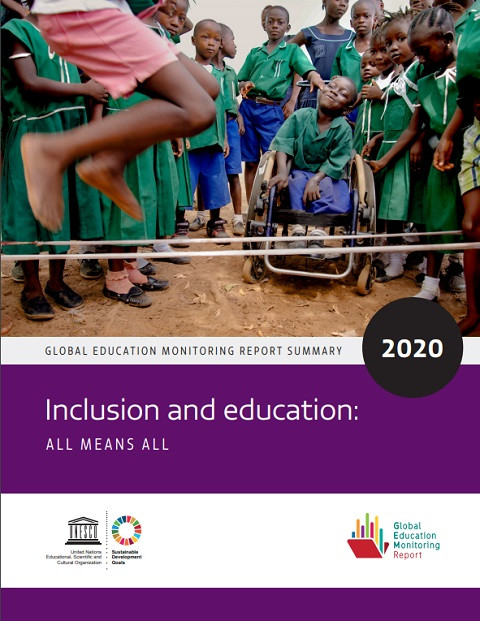 [Summary] Global Education Monitoring Report Summary 2020: Inclusion and Education; All Means All Year of publication: 2020 Corporate author: UNESCO | Global Education Monitoring Report Team The 2020 Global Education Monitoring Report looks at social, economic and cultural mechanisms that discriminate against disadvantaged children, youth and adults, keeping them out of education or marginalized in it. Spurred by their commitment to fulfil the right to inclusive education, countries are expanding their vision of inclusion in education to put diversity at the core of their systems. Yet implementation of well-meaning laws and policies often falters. Released at the start of the decade of action to 2030, and in the middle of the Covid-19 crisis, which has exacerbated underlying inequalities, the Report argues that resistance to addressing every learner’s needs is a real threat to achieving global education targets.
 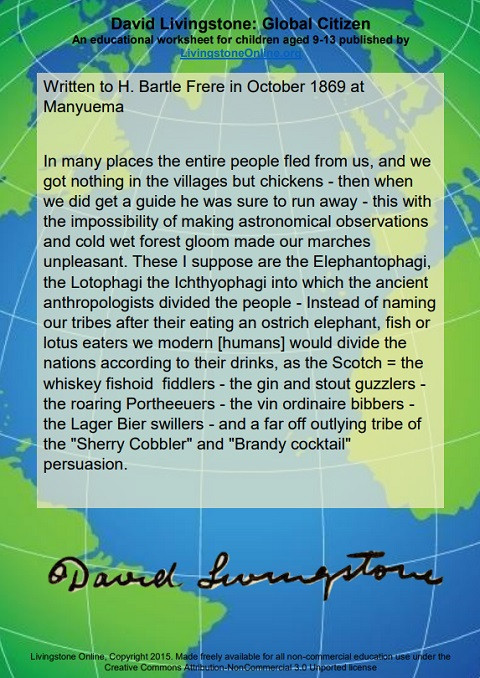 David Livingstone: Global Citizen Year of publication: 2015 Author: Kate Simpson | Megan Ward Corporate author: Livingstone Online This material urges students to explore the term global citizenship and what it means to them. Students can use Livingstone’s letter to practice their deep reading skills, finding out what the letter reveals about nineteenth-century perspectives on global life.
  Global Citizenship Education in South Korea through Civil Society Organizations: Its Status and Limitation (Asian Journal of Education, Vol.17, Special Issue) Year of publication: 2016 Author: HeeJung Raina Sim Corporate author: Asia Development Institute of Seoul National University This study aims to analyze global citizenship education (GCED) content programming offered by civil society organizations (CSOs) in South Korea. Drawing from Andreotti’s (2006) two strands of proposed concept on GCED, the paper identifies the current status and limitations of the GCED programs offered in Korea; thus, draws recommendation for the future GCED program development. The study finds that many GCED programs are heavily focused on humanistic towards a justice-oriented perspective or ‘soft’ approach rather than balancing the fundamental structures that enable learners to recognize global power imbalances, or critical approach. The study argues that providing a well balanced program that integrates two strands of GCED is imperative as CSOs to play a key role through non-formal and informal education that complements formal education’s provision. The study thus suggests that a complex web of cultural and material local/global contexts needs to be examined during the GCED program design in order to further foster ‘critical’ practice of GCED that was identified by Andreotti.
  Shifting the Agenda on Education & Extremism Year of publication: 2018 Corporate author: Think Global This research report aims to build an understanding of young people’s idea of diversity, identity and extremism as well as how schools and young people can be better supported to promote social cohesion and engage in active citizenship opportunities.
  The Legitimacy of Diversity in Education: A Reflection on Inclusion Year of publication: 2011 Author: Luc Prud’homme | Raymond Vienneau | Serge Ramel | Nadia Rousseau Corporate author: Éducation et francophonie | Association canadienne d’éducation de langue française The objective of this article is to explore the theme of diversity in the classroom from the perspective of scholastic inclusion, or its alternative, scholastic and social exclusion. The article examines concepts that foster the positive and constructive recognition of diversity in the school setting, along with the social and cultural dimension of inclusion and the pedagogy of inclusion.
  Raising Awareness and Promoting Global Citizenship to Realize the 2030 Agenda Year of publication: 2019 Author: Laurel Wayne-Nixon | Tanya Wragg-Morris | Anjali Mishra | Dawson Markle | Shannon Kindornay Corporate author: British Columbia Council for International Cooperation (BCCIC) | Conseil canadien pour la coopération internationale (CCCI) Socializing the 2030 Agenda for Sustainable Development among citizens, parliamentarians, government institutions, civil society, academia, the private sector, trade unions and others provides a basis for stakeholders to identify their priorities and contribute to sustainable development as global citizens. Based on a review of good practices emerging from around the world, this policy brief offers recommendations on how governments can raise awareness of the 2030 Agenda and support global citizenship.
 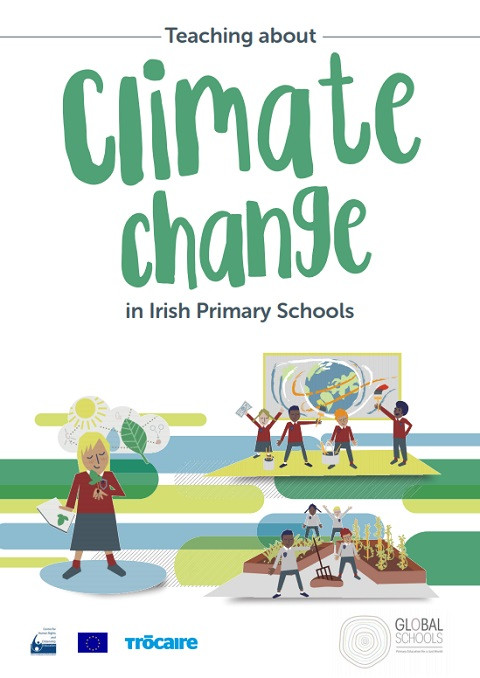 Teaching about Climate Change in Irish Primary Schools Year of publication: 2017 Author: Fionnuala Flynn Corporate author: Trocaire | Centre for Human Rights and Citizenship Education (CHRCE) | Global Schools This resource is a useful and practical tool for educators and policy makers on climate change education that puts forward a whole school approach. It sets out some of the key elements of climate change education and offers practical tips and tools for teachers and schools.