
Resources
Explore a wide range of valuable resources on GCED to deepen your understanding and enhance your research, advocacy, teaching, and learning.
8,364 Results found
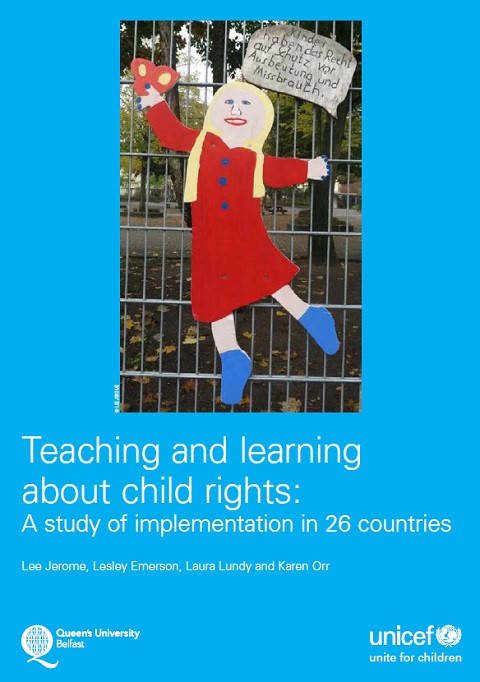 Teaching and Learning about Child Rights: A Study of Implementation in 26 Countries Year of publication: 2015 Author: Lee Jerome | Lesley Emerson | Laura Lundy | Karen Orr Corporate author: Queen’s University Belfast | United Nations Children's Fund (UNICEF) This research contributes to the global debate on child rights education (CRE). It explores implementation of CRE in early childhood education, primary and secondary schools in 26 countries with a UNICEF National Committee presence. It includes a literature review, results from an on-line survey completed by national experts, seven country case studies and a series of benchmarking statements for CRE implementation.
 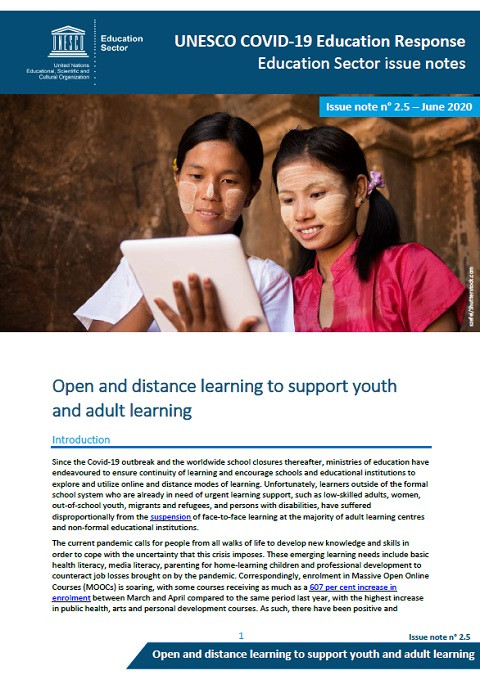 UNESCO COVID-19 Education Response: Open and Distance Learning to Support Youth and Adult Learning (Education Sector Issue Note; No. 2.5 – June 2020) Year of publication: 2020 Corporate author: UNESCO Institute for Lifelong Learning (UIL) A new UNESCO issue note, produced by the UNESCO Institute for Lifelong Learning (UIL), aims to support education policy-makers and planners in ensuring open and distance learning to support youth and adult learning in the context of the current pandemic, now and in its aftermath.Since the COVID-19 outbreak and the worldwide school closures that followed, ministries of education have endeavoured to ensure continuity of learning and encourage schools and educational institutions to explore and utilize online and distance modes of learning. Unfortunately, learners outside of the formal school system who are already in need of urgent learning support, such as low-skilled adults, women, out-of-school youth, migrants and refugees, and persons with disabilities, have suffered disproportionally from the suspension of face-to-face learning at the majority of adult learning centres and non-formal educational institutions.The current pandemic calls for people from people from all socio-economic backgrounds, wherever they live in the world, to develop new knowledge and skills in order to cope with the uncertainty that this crisis imposes. These learning needs include basic health literacy, media literacy, parenting for home-schooling children and professional development to counteract job losses brought on by the pandemic. Correspondingly, enrolment in massive open online courses (MOOCs) is soaring. As such, there have been positive and demand-driven trends in exploring alternative options, such as open and distance learning (ODL), to ensure the continuity and expansion of non-formal education and adult learning.This issue note takes stock of opportunities and challenges in using ODL, both online and offline as defined in the UNESCO Issue Note on Distance Learning Strategies, for youth and adult learners outside the formal education system. After examining key issues and illustrating promising cases from public and private sectors, it provides key messages for policy interventions to support inclusive lifelong learning for youth and adults during and after the current pandemic.UNESCO Education Sector’s issue notes cover key topics related to the COVID-19 education response.
  Responding to Covid-19: Online Classes in Korea - A Challenge Toward the Future of Education Year of publication: 2020 Corporate author: Korea R. Ministry of Education Korea is effectively responding to the outbreak of COVID-19 by adopting a whole-of-government approach, under the leadership of the Central Disaster and Safety Countermeasures Headquarters to prevent and contain the pandemic with the principle of “openness, transparency and democratic process.” The nationwide introduction of the online classes to respond to COVID-19 was a huge challenge and a path that we have never trodden before. The Ministry of Education of the Republic of Korea introduced Korean education with the world in response to COVID-19 and shared experiences and challenges of distance learning and online education. COVID-19 is a universal challenge which requires joint response, and the global community should be committed to strong solidarity and close cooperation to overcome this crisis and take a leap forward to a brighter future.
 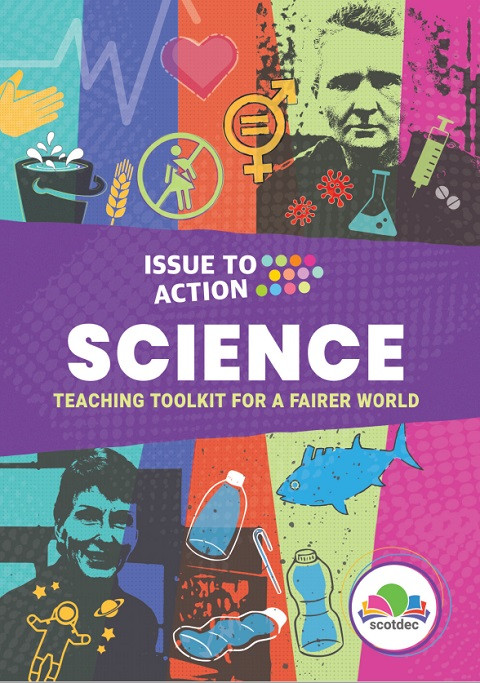 Issue to Action: Science; Teaching Toolkit for a Fairer World Year of publication: 2020 Author: Tracey Shaw | Claire Tatar | Krissie Davis Corporate author: Scotdec | European Union (EU) Global Citizenship Education is essential in enabling young people to access and participate in shaping modern society. All teachers and subjects have a role to play in educating young people to enable them to participate as fully as possible in building a fair and just world for all. Global Citizenship provides a wealth of real-life contexts for learning Science. By using relevant and meaningful topics, young people are more motivated to learn and understand the key role Science plays in driving change for a more sustainable future. The materials in this resource have been written by Science teachers and tested in Scottish classrooms. They focus on sustainability, plastic waste, health and wellbeing and women in Science.
  Spotlight on Gender, COVID-19 and the SDGs: Will the Pandemic Derail Hard-Won Progress on Gender Equality? Year of publication: 2020 Author: Priya Alvarez | Emma-Louise Anderson | Nazneen Damji | Gaëlle Ferrant | Rosina Gammarano | Steve Kapsos | Ann Beth Moller | Amy Patterson Corporate author: United Nations Entity for Gender Equality and the Empowerment of Women (UN Women) COVID-19 has been declared a public health emergency of international concern and a global pandemic by the World Health Organization. This global threat to health security underscores the urgent need to accelerate progress on achieving Sustainable Development Goal (SDG) 3 and the need to massively scale up international cooperation to deliver on SDG 3. It also reveals what is less obvious, but no less urgent: how health emergencies such as COVID-19, and the response to them, can exacerbate gender inequality and derail hard-won progress not only on SDG 3 but on all the SDGs.This paper presents the latest evidence on the gendered impact of the pandemic, highlights potential and emerging trends, and reflects on the long-term impact of the crisis on the achievement of the 2030 Agenda for Sustainable Development.The paper begins by presenting key facts and figures relating to the gendered impacts of COVID-19 followed by reflecting on the health impacts of COVID-19 on SDG 3 targets. Then, the paper explores the socioeconomic and political implications of COVID-19 on women and gender across five of the Goals: SDG 1 (poverty), 4 (quality education), 5 (gender equality), 8 (decent work and economic growth), and 10 (reduced inequalities).
  Global Citizenship Education in Europe: A Comparative Study on Education Policies across 10 EU Countries Year of publication: 2016 Corporate author: Global Schools | European Union (EU) This research, realised in the framework of the EU-funded project Global Schools, is a comparative qualitative analysis of educational policies of 10 European countries (Austria, Bulgaria, Czech Republic, France, Ireland, Italy, Latvia, Spain, Portugal, England) that support the introduction of Global Citizenship Education (GCE) in primary school curriculum. The analysis focuses on four main topics: 1) identification of key actors and definition of their roles; 2) conceptual and terminology analysis; 3) levels and modes of implementation of GCE in primary school; and 4) identification of barriers to introducing GCE in the primary school system.The research has highlighted that political actors, not only governmental ones, play a crucial role in implementing GCE policies, as well as in promoting GCE more generally, and in facilitating links between different actors, who in some countries may otherwise have little institutional coordination with schools. The conceptual analysis points out that, besides the choice of different wording of GCE national terms, the main topics composing GCE are very similar. The specific terminology often reflects the history, will and political discourse of the organisations promoting GCE in the different countries.
  Delivering Education at Home in African Member States Amid the Covid-19 Pandemic: Country Status Report Year of publication: 2020 Corporate author: Association for the Development of Education in Africa (ADEA) Since its emergence in late 2019, the coronavirus disease 2019 (COVID-19) has evolved into a pandemic, heavily affecting the lives of billions of people across the world with an anticipated huge impact on the global economy and Africa in particular. Education is one of the sectors heavily affected, with the closure of learning institutions in many African countries likely to negatively affect the education quality.In order to obtain a clearer view of the status of learning during this period, and to better support countries in the immediate, short and long term, ADEA engaged some of the most affected African countries in March 2020 to map the national situation in the education sector. The foregoing is a synopsis of the feedback from Burkina Faso, Côte d’Ivoire, Egypt, Ghana, Kenya, Mauritius, Morocco, Rwanda, Senegal, South Africa, Tunisia, and Zambia in terms of national strategies, platforms and tools or applications, gaps and challenges, partner engagement, good practices and lessons learnt with some recommendations.
  The 2019 US Cities Sustainable Development Report Year of publication: 2019 Author: Alainna Lynch | Anna LoPresti | Caroline Fox Corporate author: Sustainable Development Solutions Network (SDSN) The 2019 US Cities Sustainable Development Report is SDSN’s third city-level report ranking 105 US cities on progress towards the UN’s Sustainable Development Goals for 2030 (SDGs). The results show that there will be significant work to do across the board if the SDGs are to be achieved by 2030, as cities on average scored only 48.9%.
  2019 Europe Sustainable Development Report: Towards a Strategy for Achieving the Sustainable Development Goals in the European Union; Includes the SDG Index and Dashboards for the European Union and Member States Year of publication: 2019 Corporate author: Institute for European Environmental Policy | Sustainable Development Solutions Network (SDSN) The 2019 Europe Sustainable Development Report is the first independent quantitative report on the progress of the European Union and its member states towards Sustainable Development Goals (SDGs). The report was prepared by teams of independent experts at the Sustainable Development Solutions Network (SDSN) and the Institute for European Environmental Policy (IEEP).
 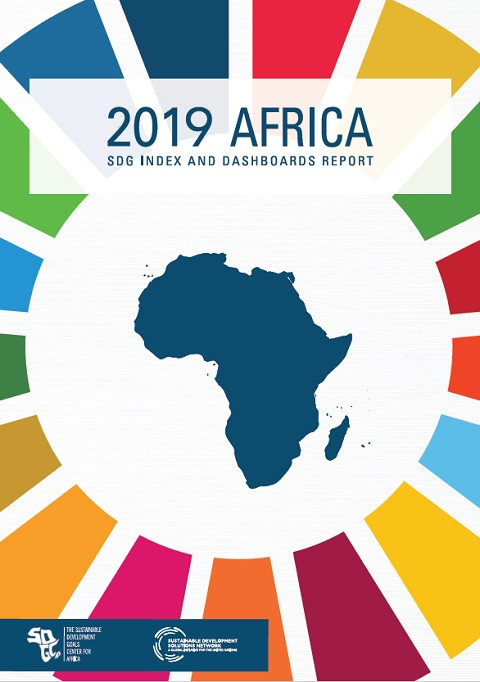 2019 Africa: SDG Index and Dashboards Report Year of publication: 2019 Author: Eve de la Mothe Karoubi | Olive Dushime | Grayson Fuller | Enock Nyorekwa Twinoburyo | Abigail Simkoko | Gary Verburg Corporate author: SDG Center for Africa | Sustainable Development Solutions Network (SDSN) The 2019 Africa SDG Index and Dashboards Report is a call for action not only to meet the SDGs but also to ensure timely and high-quality data on SDG indicators. The report focuses on the efforts that African governments are taking to incorporate the SDGs into their national strategies, budgets, public engagements, and coordination among branches of government.