
Resources
Explore a wide range of valuable resources on GCED to deepen your understanding and enhance your research, advocacy, teaching, and learning.
8,364 Results found
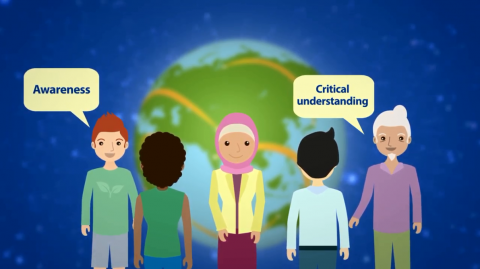 What is Global Education Year of publication: 2019 Corporate author: North-South Centre of the Council of Europe Pedagogical video about the concept of global education and the approach of the North-South Centre of the Council of Europe.
 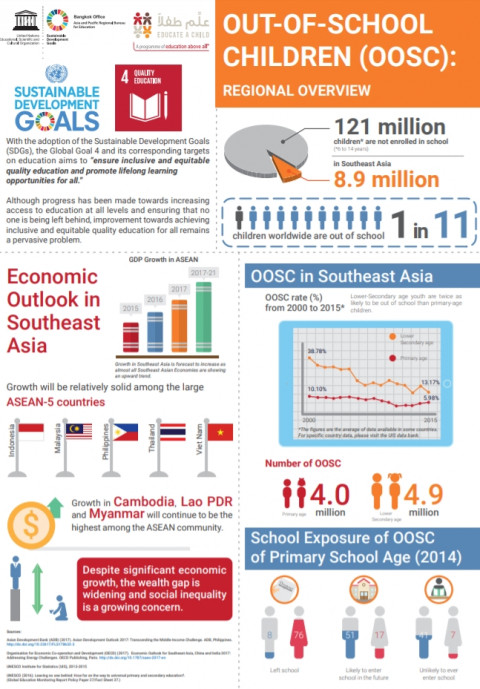 Out-of-School Children (OOSC): regional overview Year of publication: 2017 Corporate author: UNESCO Bangkok This leaflet provides a regional overview of out-of-school children (OOSC) situation in Southeast Asia including school exposure of OOSC of primary school age. To provide learning opportunities for OOSC in the region, UNESCO Bangkok has launched the project titled “Strengthening Education Systems for Out of School Children” with the support of Educate a Child (EAC). Information on country activities implemented under the project is included in the leaflet.
 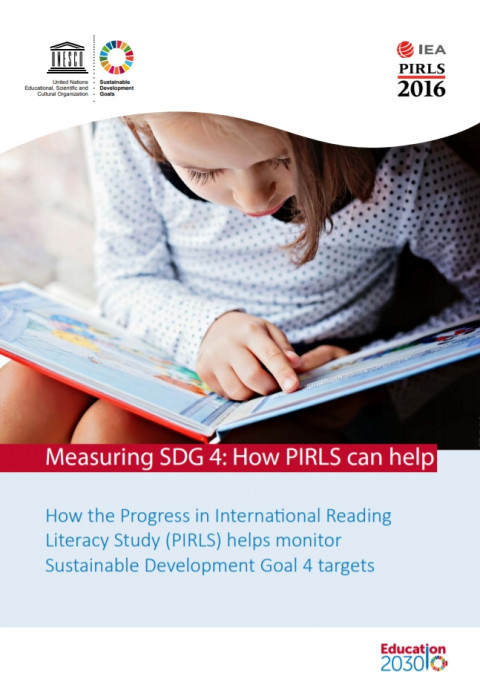 Measuring SDG 4: how PIRLS can help; how the Progress in International Reading Literacy Study (PIRLS) helps monitor Sustainable Development Goal 4 targets Year of publication: 2017 Corporate author: International Association for the Evaluation of Educational Achievement (IEA) This booklet has been prepared for the international release of the 2016 Progress in International Reading Literacy Study (PIRLS) and ePIRLS at UNESCO. PIRLS is one of the International Association for the Evaluation of Educational Achievement’s (IEA) core largescale international assessment projects, successfully administered every five years since 2001. It provides internationally comparative data on how well children read by assessing grade 4 students’ reading achievement and offers policyrelevant information for improving teaching and learning. Initiated in 2016, ePIRLS is an extension of PIRLS that monitors how well grade 4 students read, interpret, and critique online information in an environment that looks and feels like the Internet.
 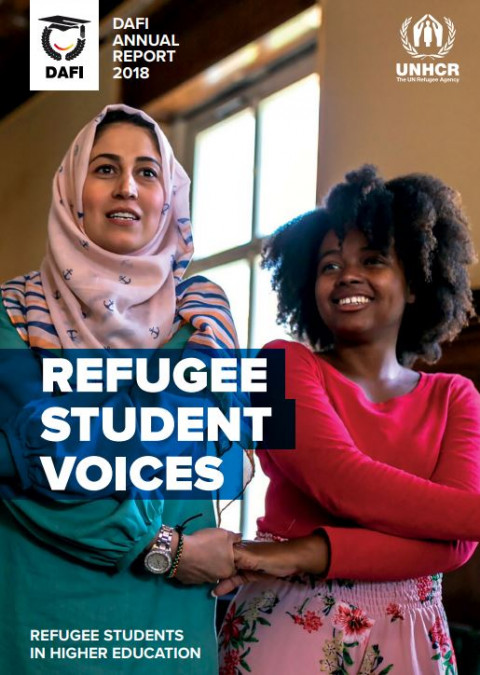 DAFI ANNUAL REPORT 2018- Refugee Student Voices: Refugee Student In Higher Education Year of publication: 2019 Corporate author: UN. Office of the United Nations High Commissioner for Refugees (UNHCR) The DAFI refugee scholarship programme was launched in 1992 by UNHCR and the German government. The programme has supported over 15,500 young refugees to date and is currently implemented in 51 countries, the vast majority of which are in the Global South.The DAFI programme aims to secure refugee students’ inclusion in national education systems, prioritising enrolment in public higher education institutions. Participation in public institutions enables refugee students to study alongside their host country peers and pursue nationally accredited degree programmes, as well as bringing resources into public higher education institutions.
 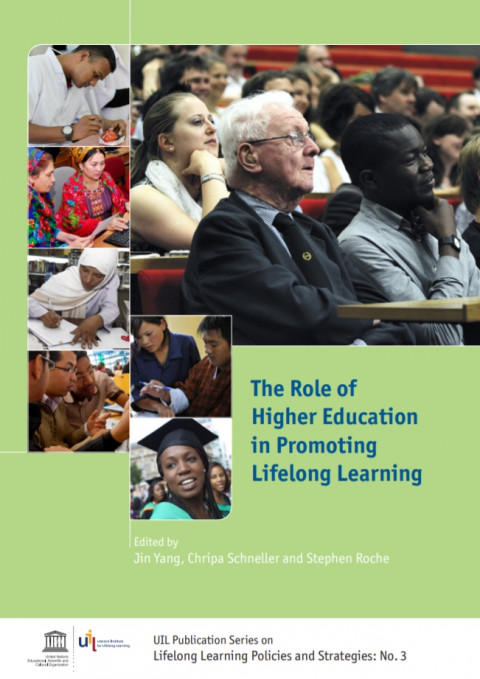 The Role of Higher Education in Promoting Lifelong Learning Year of publication: 2015 Author: Yang Jin, Schneller.Chripa, Roche.Stephen Corporate author: UNESCO Institute for Lifelong Learning (UIL) UNESCO’s vision of lifelong learning encompasses all contexts (formal, non-formal and informal) and ages (‘from cradle to grave’) of learning. The UNESCO Institute for Lifelong Learning and its predecessor, the UNESCO Institute for Education, have promoted policy and practice in this field for more than four decades. The decision to produce this volume was prompted by an observation that lifelong learning – both as a concept and in its many practical manifestations – is becoming a staple of education policy discourse around the globe. At the same time, we noted that understandings of lifelong learning differ widely, not only between countries, but also across the sub-sectors of education systems.This book, which emerged from a seminar held in 2012 to mark the 60th anniversary of the UNESCO Institute for Lifelong Learning, addresses various ways that higher education can promote lifelong learning, paying due consideration to regional disparities and specificities. These include responses to the learning needs of senior citizens in China, the challenge of implementing recurrent education in Japan, European efforts to develop a common approach to life-long learning at university, and how a lifelong learning approach is put into practice in higher education in Australia. It is hoped that this book will help the reader gain a better understanding of the theoretical frameworks and practical implementation of lifelong learning in higher education, both within their own region and globally.
 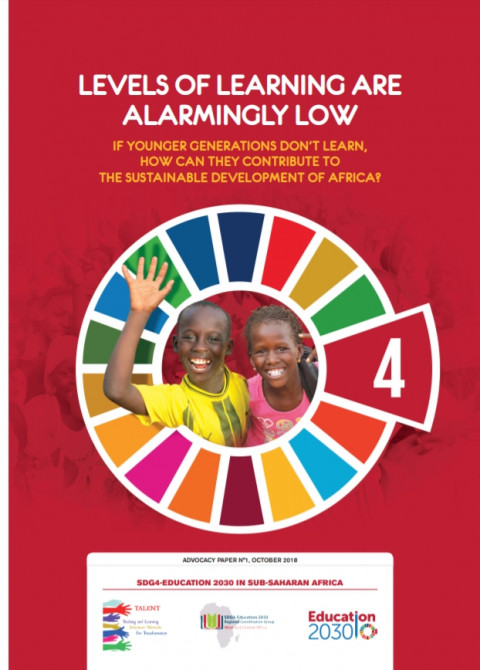 Levels of learning are alarmingly low: if younger generations don't learn, how can they contribute to the sustainable development of Africa? Year of publication: 2018 Corporate author: UNESCO Dakar | Regional Coordination Group on SDG 4-Education 2030 in West and Central Africa | Teaching and Learning Educators’ Network for Transformation With the adoption of The 2030 Agenda for Sustainable Development, UN member states and partner organizations have agreed to ensure inclusive and equitable quality education and promote lifelong learning opportunities for all by 2030. Building on the unfinished agendas of the Millennium Development Goals and Education for All, quality education and learning are at the very core of both SDG4 and CESA 16-25 (see box 1). Five of the seven SDG4 targets are specifically designed with the intention of addressing the global learning crisis. Moreover, CESA 16-25 specifically calls on African Union member states to address issues of quality and equity in education, particularly at the pre-primary level, a neglected area in terms of investment and policy, and at the primary level where geographical disparities indicate that girls and women, the poorest and those leaving in remote areas are still left behind. The next question is whether these international and regional commitments have been translated into national policies and strategies that can address the alarmingly low levels of learning.
 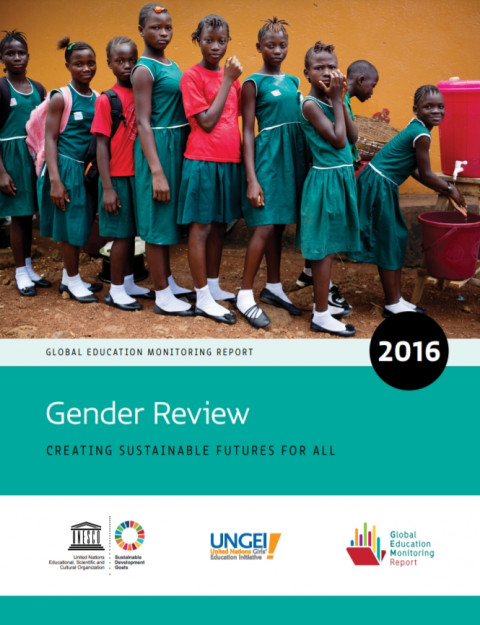 Creating sustainable futures for all; Global education monitoring report, 2016; gender review Year of publication: 2016 Author: Sachs, Jeffrey D Corporate author: Global Education Monitoring Report Team Education and gender equality are central concerns in the new sustainable development agenda. The Education 2030 Framework for Action, agreed by the global education community in November 2015 to accompany the SDG agenda, recognizes that gender equality is inextricably linked to the right to education for all, and that achieving gender equality requires an approach that ‘ensures that girls and boys, women and men not only gain access to and complete education cycles, but are empowered equally in and through education’ (UNESCO, 2016a, p. 8). Women, girls, boys and men all need to be given opportunities for active participation in society, for their voices to be heard and their needs met (UN Women, 2016a). To facilitate and achieve this, better evidence-based knowledge and understanding of gender issues in and through education are needed. The Gender Review of the 2016 Global Education Monitoring Report (GEM Report) recognizes and largely focuses on the challenges facing girls and women because of the disproportionate overall disadvantage they continue to experience in and beyond education. But it also understands that gender disadvantage can be experienced by boys and men, and that gender equality involves males, relationships and power. Gender inequality affects us all. Achieving gender equality must involve us all.
 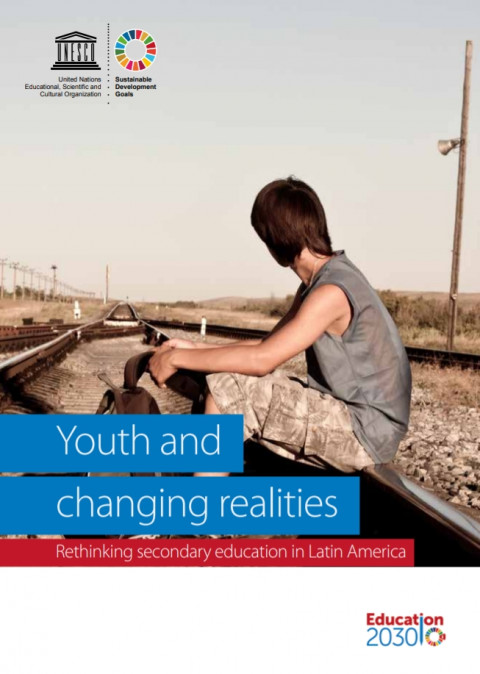 Youth and changing realities: rethinking secondary education in Latin America Year of publication: 2017 Author: López.Néstor, Opertti.Renato, Vargas Tamez.Carlos Corporate author: UNESCO International Bureau of Education (IBE) | UNESCO IIEP Office for Latin America and the Caribbean Youth are central to UNESCO’s mandate. The more than one billion youth and adolescents in the world today hold the key to our shared future and to global sustainable development. With a focus on Latin America, this publication addresses the need to regain young learners’ trust in education and to arrive at more positive social constructions of youth among educators, parents and education authorities. In so doing, this study looks at educational experiences as meaning makers that shape youth cultures and identities as well as their attitudes toward education and its potential to improve individual and collective well-being.
  Exploring ICCS 2016 to measure progress toward target 4.7 Year of publication: 2018 Author: Sandoval-Hernández.Andrés, Miranda.Daniel Corporate author: Global Education Monitoring Report Team The objective of this report is to analyse data from the last cycle of the International Civic and Citizenship Study (ICCS 2016) (Schulz et al., 2017)in order to demonstrate its potential for monitoring specific aspects of the SDG target 4.7. Furthermore, given the theme of the 2019 Global Education Monitoring (GEM) Report, this document will pay special attention to those questions addressed to students, teachers and school principals that are directly related to immigration.
 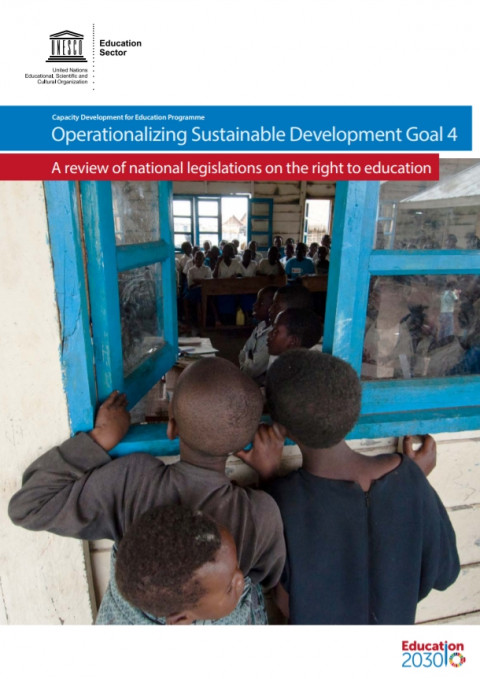 Operationalizing Sustainable Development Goal 4: a review of national legislations on the right to education Year of publication: 2017 Author: Santini, Delphine Corporate author: UNESCO As part of a wider Capacity Development for Education (CapED) Programme on operationalizing SDG4 at the country level, this paper examines the instrumental role that legislation on the right to education can play in view of achieving the SDG4 targets in Least Developed Countries. It does it by reviewing national legal frameworks relating to the right to education in 11 countries, suggesting some lessons of global interest, both for policy-making and normative work.