
Resources
Explore a wide range of valuable resources on GCED to deepen your understanding and enhance your research, advocacy, teaching, and learning.
8,364 Results found
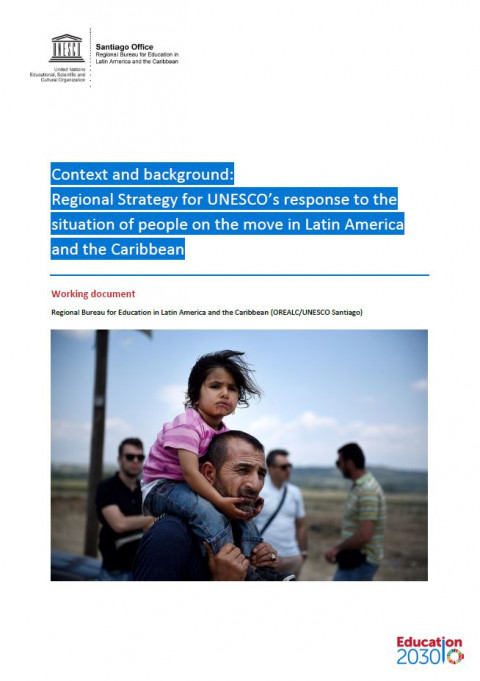 Context and Background: Regional Strategy for UNESCO’s Response to the Situation of People on the Move in Latin America and the Caribbean Year of publication: 2019 Corporate author: UNESCO Santiago The UNESCO offices in Latin America and the Caribbean, under the coordination of the Regional Bureau for Education in Latin America and the Caribbean OREALC/UNESCO Santiago, have proposed the development of a regional strategy that provides a response from UNESCO based on the needs of the region’s countries for guaranteeing the right to education of migrants, refugees, asylum seekers and returnees. The purpose of this document is to present key information for the development of the regional strategy. It reviews a set of information that contextualizes human mobility in Latin America and the Caribbean, recognizing contemporary trends, identifying their driving factors and describing the main demographic qualities that characterize them.The authors then address the needs for protection of individuals in the context of mobility in the region, particularly those associated with the exercise of their fundamental rights and processes of inclusion in social protection systems in the destination society. They then present the right to education as a multiplier right in contexts of human mobility, reviewing the main obstacles faced by migrants, refugees, asylum seekers and returnees. Finally, the text presents a discussion of UNESCO’s role in this context based on the review of international regulatory instruments and frameworks, institutional frameworks, the work agenda at the regional level and the migratory institutional structure in Latin America and the Caribbean.
 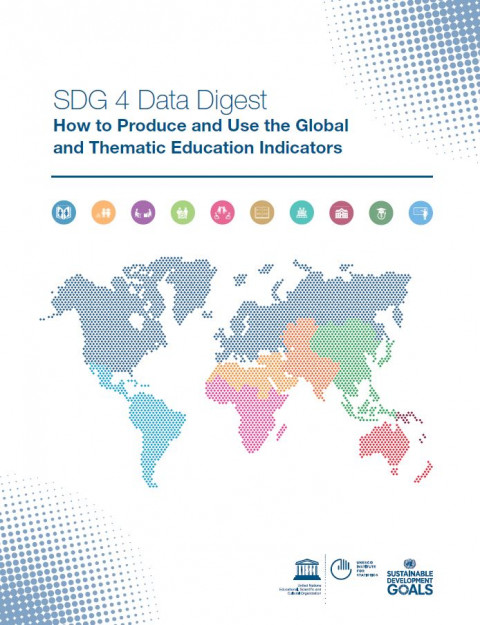 SDG 4 Data Digest: How to Produce and Use the Global and Thematic Education Indicators Year of publication: 2019 Corporate author: UNESCO Institute for Statistics (UIS) This edition of the SDG 4 Data Digest from the UNESCO Institute for Statistics (UIS) aims to help countries develop and report the indicators needed to deliver on the promise of Sustainable Development Goal 4 – a quality education for all by 2030.It stresses the urgency: every child in the generation that should finish secondary education by the deadline should be in a primary classroom right now. Yet if current trends continue, and without a rapid shift from “business as usual”, one in six children aged 6 to 17 will still be out of school in 2030 while just six in ten youth will be completing secondary education. Moreover, there is an urgent need to improve the quality of education on offer. According to UIS estimates, 55% of children and adolescents of primary and lower secondary school age are not achieving minimum proficiency levels in reading and 60% are not acquiring critical skills in mathematics The investment case for education is clear and has been repeated time and time again: education reduces poverty, improves health and nutrition, advances equity and drives national prosperity. But education systems cannot function effectively without a clear picture of progress – or the lack of it – and without knowing who is missing out on education and why.To help ll such gaps, the Digest focuses on new methodologies to help countries build a full and accurate understanding of their own education successes and challenges while generating the internationally comparable data needed for global monitoring. Through these methodological tools, countries can track and accelerate progress on their own education priorities and contribute to the global achievement of SDG4.
 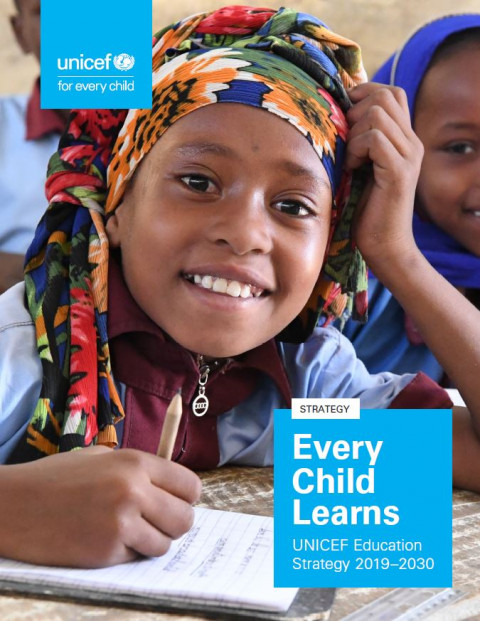 Every Child Learns: UNICEF Education Strategy 2019–2030 Year of publication: 2019 Corporate author: United Nations Children's Fund (UNICEF) The gap between the levels of learning that education systems are providing and what children, communities and economies need, is growing. The breadth and depth of this learning crisis constitute the greatest global challenge to preparing children and adolescents for life, work and active citizenship. The lesson of the learning crisis is clear: the conventional assembly of education inputs is not improving learning outcomes. This presents a fundamental challenge to the way that governments, development partners and communities are managing and supporting education systems. A new, more radical approach that focusses on enhancing learning outcomes is long overdue and forms the basis for this strategy.The report also outlines the shift towards a greater focus on improving learning outcomes, including supporting the breadth of skills that allow young people to become agile, adaptive learners and citizens, equipped to navigate personal, social, academic, economic and environmental challenges.
 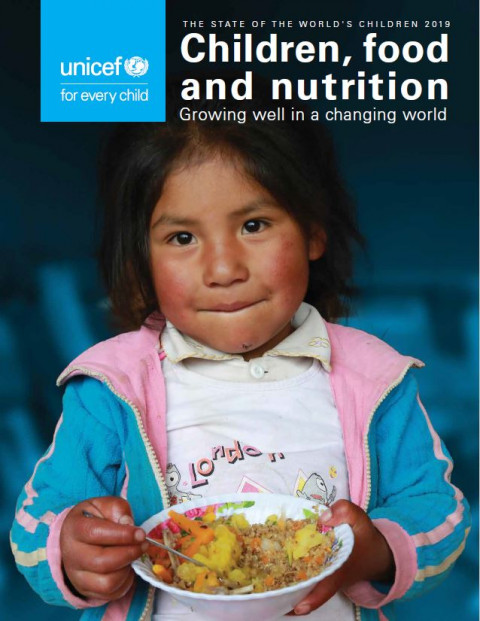 Children, Food and Nutrition: Growing Well in a Changing World Year of publication: 2019 Corporate author: United Nations Children's Fund (UNICEF) This 2019 edition of The State of the World’s Children (SOWC) examines the issue of children, food and nutrition, providing a fresh perspective on a rapidly evolving challenge. Despite progress in the past two decades, one third of children under age 5 are malnourished – stunted, wasted or overweight – while two thirds are at risk of malnutrition and hidden hunger because of the poor quality of their diets. At the center of this challenge is a broken food system that fails to provide children with the diets they need to grow healthy. This report also provides new data and analyses of malnutrition in the 21st century and outlines recommendations to put children’s rights at the heart of food systems.
 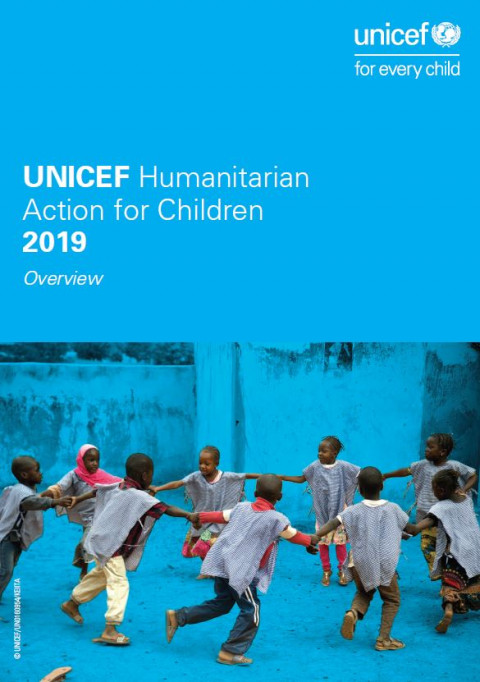 Humanitarian Action for Children 2019: Overview Year of publication: 2019 Corporate author: United Nations Children's Fund (UNICEF) This edition of UNICEF’s report on requirements for humanitarian action highlights major emergencies affecting children and families around the world, and the results achieved by UNICEF and partners in response to those crises. Noting that more violent conflicts are raging today than at any time since the adoption of the Convention on the Rights of the Child 30 years ago, the report also describes UNICEF initiatives to improve the quality of its humanitarian response in 2019 – particularly in high-threat contexts. Additional information about humanitarian action and UNICEF funding appeals at the country and regional levels is available online atwww.unicef.org/appeals.
 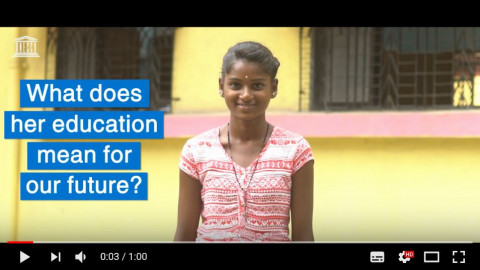 Her Education, Our Future Year of publication: 2019 Corporate author: UNESCO Too many girls and women are still held back by social norms and traditional school practices influencing their educational right and opportunities. But we know that their education is the most powerful investment to make for our collective future. Her education, our future is UNESCO’s new drive to accelerate action for girls’ and women’s education by leveraging political and financial commitments, as well as leadership for women and girls.Join #HerEducationOurFuture and be a part of our collective movement to advance girls’ and women’s education. Learn more: http://on.unesco.org/HerEducation
  Counting on the World to Act: A Roadmap for Governments to Achieve Modern Data Systems for Sustainable Development Year of publication: 2019 Corporate author: Sustainable Development Solutions Network Thematic Research Network on Data and Statistics (SDSN TReNDS) Eradicating poverty and hunger, ensuring quality education, instituting affordable and clean energy, and more – the Sustainable Development Goals (SDGs) lay out a broad, ambitious vision for our world. But there is one common denominator that cuts across this agenda: data. Without timely, relevant, and disaggregated data, policymakers and their development partners will be unprepared to turn their promises into reality for communities worldwide. With only eleven years left to meet the goals, it is imperative that we focus on building robust, inclusive, and relevant national data systems to support the curation and promotion of better data for sustainable development. In Counting on the World to Act, TReNDS details an action plan for governments and their development partners that will enable them to help deliver the SDGs globally by 2030. Our recommendations specifically aim to empower government actors – whether they be national statisticians, chief data scientists, chief data officers, ministers of planning, or others concerned with evidence in support of sustainable development – to advocate for, build, and lead a new data ecosystem.
 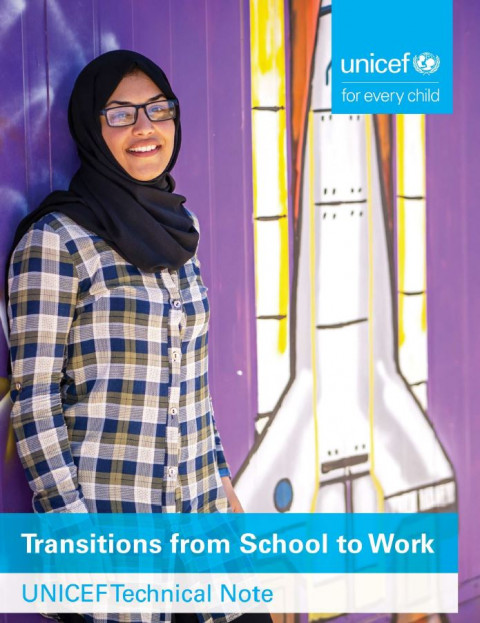 Transitions from School to Work: UNICEF Technical Note Year of publication: 2019 Corporate author: United Nations Children's Fund (UNICEF) This report provides guidance on ways that UNICEF can support governments and partners to help adolescents to make a smooth transition from school to decent work. To prepare them for life, work, citizenship and life-long learning, UNICEF encourages governments and partners to expand access to learning and skills development for all children and adolescents – from pre-primary to upper-secondary age, and particularly for the most marginalized. UNICEF further advocates strengthening systems to enable them to develop a breadth of skills across the life course and through multiple learning pathways, such as formal, non-formal, on the job and community based.
 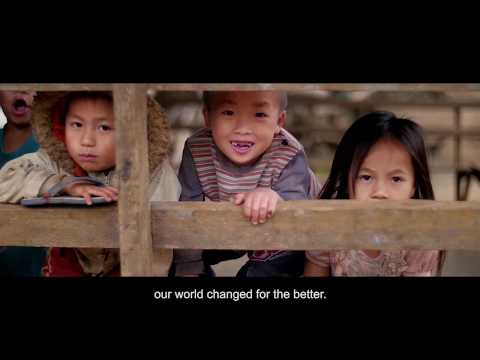 Education Transforms Lives Year of publication: 2019 Corporate author: UNESCO Education transforms lives every day and in every corner of society. This video explores the power of education and UNESCO’s role in leading and coordinating the Education 2030 Agenda, which is part of a global movement to eradicate poverty through 17 Sustainable Development Goals by 2030. Education is the right of every woman, man and child.Together, we’re shaping the global citizens of tomorrow, empowered on the path of education to build a more sustainable future. UNESCO – Building peace in the minds of men and women. www.unesco.org/education
  “Nobody Has Ever Asked About Young People’s Opinions”: Young People’s Perspectives on Identity, Exclusion and the Prospects for a Peaceful Future in Central Asia Year of publication: 2012 Corporate author: Saferworld This report offers a number of recommendations for the governments of Central Asian countries, as well as for international donor organizations that provide financial assistance to these states. Recommendations include suggestions priorities and approaches related to institutional and state construction; proposals on creating favorable conditions for enhancing youth participation in political processes; suggestions on how to instill in young people the skills necessary to participate in democratic processes; how to strengthen social unity through building intercommunal dialogue and intergenerational dialogue; as well as how to fight extremism.