
Resources
Explore a wide range of valuable resources on GCED to deepen your understanding and enhance your research, advocacy, teaching, and learning.
8,364 Results found
 Access to Information: A New Promise for Sustainable Development Year of publication: 2019 Corporate author: UNESCO The central aim of this study is to unpack the major trends in the field of ATI laws and their implementation. In order to understand the trends, the report examines the activities of trendsetters. It focuses on awareness-raising by UNESCO, Member State recommendations in the Universal Periodic Review, the commitments of the Open Government Partnership, actions of civil society organizations, and the standard-setting activities of such regional intergovernmental organizations as the Council of Europe, the African Union and the Organization of American States.
 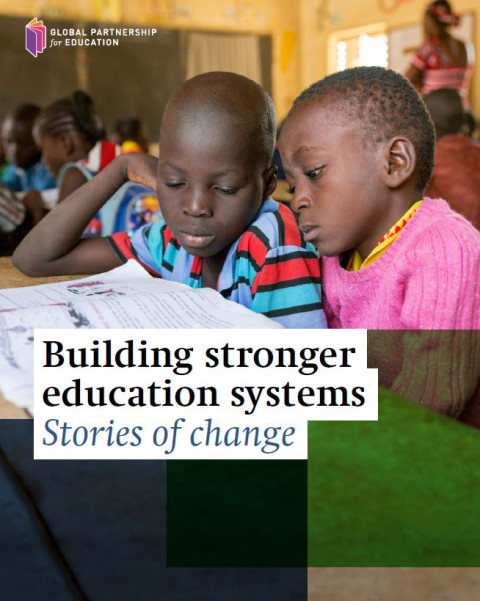 Building Stronger Education Systems: Stories of Change Year of publication: 2019 Corporate author: The Global Partnership for Education (GPE) A compilation of results stories which show the progress that GPE's developing country partners are making in getting more children, especially girls, in school and learning. The brochure includes stories from Afghanistan, Benin, Burkina Faso, Djibouti, Eritrea, Ethiopia, Guyana, Kenya, Pakistan, Papua New Guinea and Sudan.
 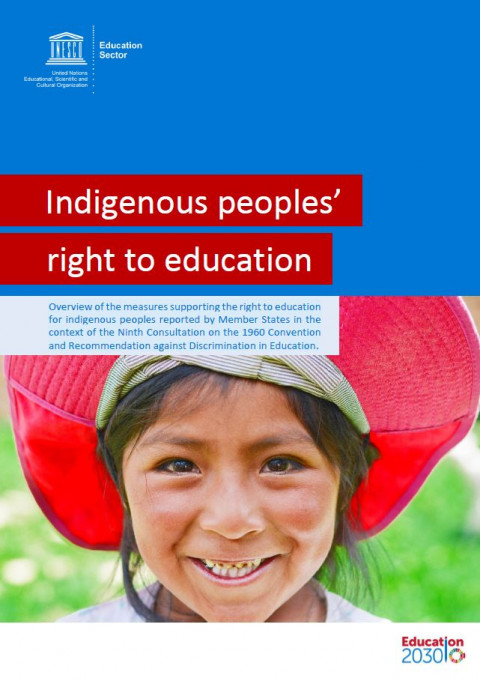 Indigenous Peoples’ Right to Education Year of publication: 2019 Corporate author: UNESCO Among the many inequalities that indigenous peoples face, the lack of access to quality education is particularly blatant. The 2030 Agenda commitment to ‘leave no one behind’, brings new impetus to ensure that indigenous peoples’ priorities are heard. In 2017, UNESCO adopted the Policy on engaging with indigenous peoples. Concurrently, as part of its mandate, UNESCO monitors the implementation of the 1960 Convention and Recommendation against Discrimination in Education. During the Ninth Consultation on the implementation of this instrument, several Member States reported upon measures they have taken in relation to the right to education for indigenous peoples. This document (Indigenous Peoples’ Right to Education: Overview of the Measures Supporting the Right to Education for Indigenous Peoples Reported by Member States in the Context of the Ninth Consultation on the 1960 Convention and Recommendation against Discrimination in Education) compiles practical examples extracted from these reports for information sharing and advocacy.
  Conference on Globalization and Scientific Research Methods: Recommendations Year of publication: 2014 Corporate author: Generation of Scientific Research Center The world today lives under the misleading of globalization, which has not only been confined to the economic and social aspect, but has gone beyond that to affect the methods of thought and scientific research. Scientific papers ”in Beirut on 25-26-27 April 2014. The working papers of the conference were distributed on ten scientific sessions dealing with the subject of globalization in all its aspects and it revolved around six axes. The first axis started with the“ conceptual framework ”through stopping at globalization and scientific research. The second manifestations of the institutional impact The third axis focused on globalization and scientific research in the field of social and human studies. The fifth axis sheds light on globalization and scientific research in the field of literary and intellectual studies. Finally, the sixth and final axis dealt with globalization and scientific research. In the field of Islamic studies. At the end of the conference, the researchers unanimously agreed on a set of recommendations contained in the final statement issued by the scientific committee of the conference.Sorour Talbi Lebanon / Algeria; President of the Conference. a. Dr. Tariq Al-Saadi - Lebanon; Abdullah Al-Assaf (Syria / Saudi Arabia) Dr. Nour El Hoda Hammad - Egypt. Prof.Dr. Mustafa Rahouma - Libya. Prof.Dr. Milad Moftah - Libya. Dr.. Salem bin Khalfan bin Humaid Al-Khaifi - Sultanate of Oman. Dr.. Farag Mohamed Nasr Lama - Libya. Dr.. Salem Ahmed Al - Ajeel - Libya. Dr.. Jihad Al - Gharam - Palestine. a. Ghazlan Hashemi - Algeria. Dr.. Boumediene Belkhther - Algeria. a. Omar Abdullah Al Krouche - Iraq. a. Omaima Zein - Lebanon. The Conference's recommendations are as follows:
 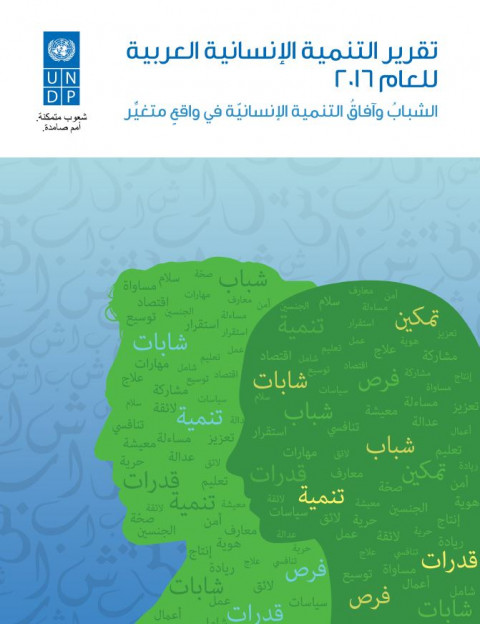 Arab Human Development Report 2016: Youth and Development Prospects Year of publication: 2016 Corporate author: UNDP Arab States AHDR 2016 examines challenges and opportunities facing youth in the Arab region, especially since 2011, and seeks to provide an overview on youth in the region and stimulate a broad dialogue between youth and key stakeholders on the future of development in the region, focusing on the role of youth as critical partners at this very point in time.The point of departure of the report is the demographic fact that the current youth generation is the largest youth cohort this region has had over the past 50 years, making up 30% of its population of 370 million. The report argues that Arab countries can achieve a great leap forward in development, reinforce stability and secure such gains in a sustainable manner, if they adopt policies that give youth a stake in shaping their societies and put them at the centre—politically, socially and economically.The AHDR 2016 calls upon Arab countries to invest in their young people and empower them to engage in the development process as an urgent and critical priority in its own right and prerequisite to achieving sustainable development –a call that is particularly timely as Arab countries embark on formulating their plans to meet the goals of the Sustainable Development Agenda 2030. The report also calls for a youth-oriented development model that focuses simultaneously on building young people’s capabilities and expanding opportunities available to them, considering the achievement of peace and security at national and regional levels as a prerequisite for a future fit for youth.
 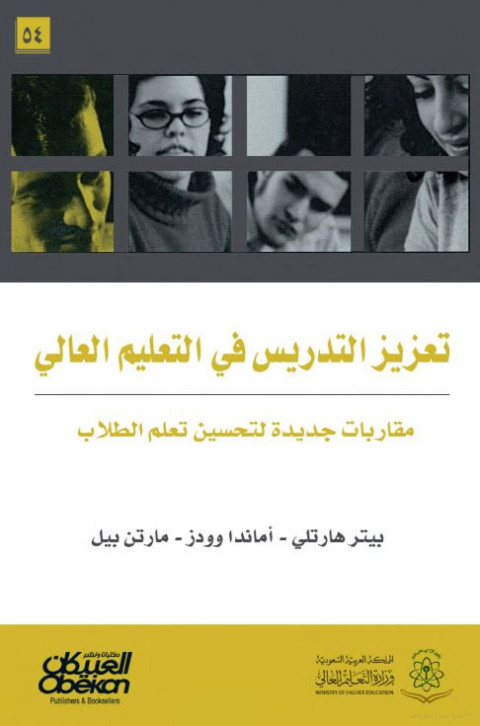 Strengthening Teaching in Higher Education: New Approaches to Improving Student Learning Year of publication: 2012 Author: Peter Hartley | Amanda Woods | Martin Bell Corporate author: Al-Obeikan Publishing This book includes a collection of motivational ideas and challenging reports from the lecturers and practitioners of higher education who use research methods and repeated to improve learning and teaching.In presenting a realistic and accessible description of new developments, it summarizes how to apply learning theory and best practice in the daily teaching process, and provides advice on overcoming implementation problems.
 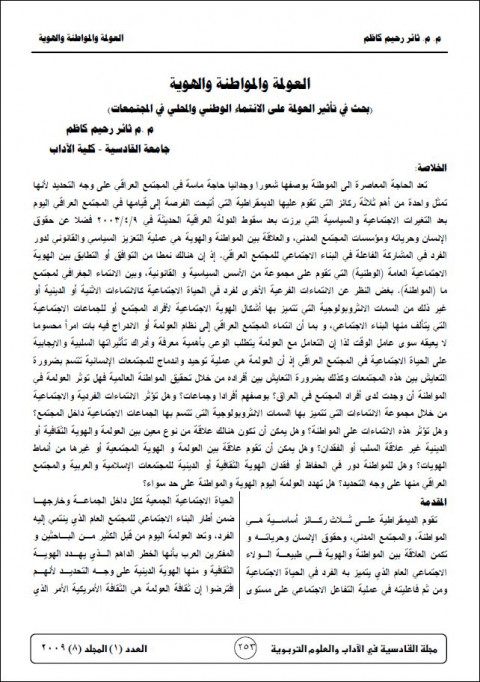 Globalization, Citizenship and Identity (Research on the Impact of Globalization on National and Local Affiliation in Societies) Year of publication: 2009 Author: Thaer Rahim Kazem Corporate author: Al-Qadisiyah University There was a serious need to the citizenship as a psychological feeling in the Iraqi society. Because it represent the one of the most important three standards in the democratic operation as methods we must use in our social live. When we get a chance to build it in the Iraqi society. After the social and political changes that tack place after the 9 April 2003. The relationships between the citizenship and identity refer to the process by which we could strength the individual legal and political role to create the effective participate in the social live and social structure of the Iraqi society. Because there was an equalize between the general collective identity and the citizenship. We need these feelings when Iraqi society joins the globalization system under the pressure of the USA. And that required being aware in the negative effectiveness of the globalization and its positive ones. And the necessary of the living to gather in the global society. That makes the universal citizenship possible. This state creates many questions in the mind of the Arab and Moslemsre searchers. Such as could we keep our social and cultural identity? Are the citizenship help us to maintain the social and cultural identity? And other many questions that dealing with this objectives.
 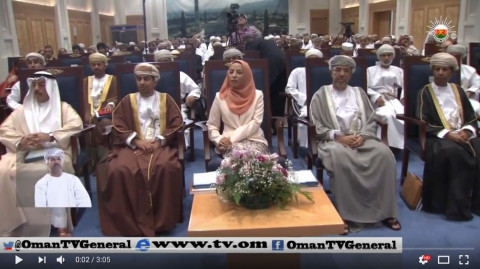 Forum on "Human Citizenship and its Role in Convergence and Human Harmony" Year of publication: 2015 Corporate author: OmanTvGeneral The Sultan Qaboos Higher Center for Culture and Science held the Scientific Forum on Human Citizenship and its Role in Convergence and Human Harmony, within the framework of the Fourth Week of Convergence and Human Harmony, where the forum is an opportunity for all participants to learn about the Sultanate's leading experience in civilizational dialogue and support the values of tolerance, cooperation and peaceful coexistence according to the constants. His principles were laid down by His Majesty Sultan Qaboos bin Said.
  World Reference Levels Year of publication: 2019 Corporate author: UNESCO World Reference Levels (WRL) is a tool that facilitates the comparison of qualifications and skills.It helps those with a stake in the outcomes of learning - authorities, institutions, employers and individuals - to understand, compare and recognize skills, qualifications, other kinds of credential and learning achievements, both on a national level and across borders.The WRL is developed by UNESCO in collaboration with experts, international partners and regional organizations that oversee regional qualification frameworks. The tool is based on research of level descriptors in a wide range of qualification frameworks and job evaluation programmes, and was designed to complement and work together with other systems of managing and recognizing qualifications and outcomes.
 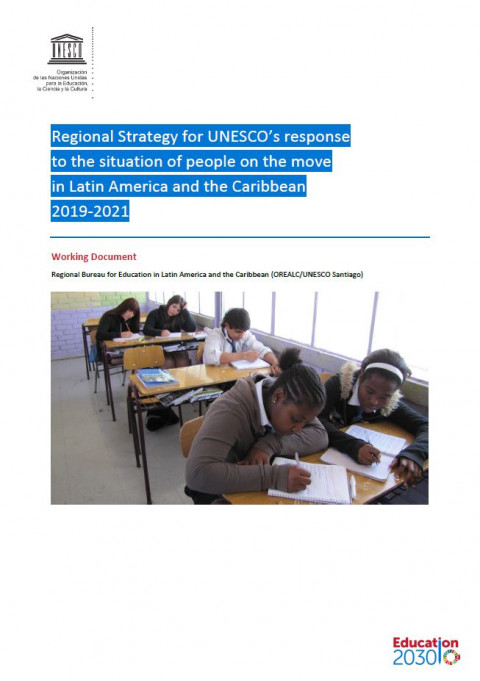 Regional Strategy for UNESCO’s Response to the Situation of People on the Move in Latin America and the Caribbean 2019-2021: Working Document Year of publication: 2019 Corporate author: UNESCO Santiago This document introduces the three priority strategic areas, defined in coherence with those analyzed in the document Background for a Regional Strategy of UNESCO, as well as the components and initiatives of each of them. In addition, the following strategic dimensions are established: coordination and implementation mechanisms, advocacy and communications, planning and financing, and finally, the consolidation of resources, tools and existing publications of UNESCO, a product of the aforementioned intersectoral consultation process.