
Resources
Explore a wide range of valuable resources on GCED to deepen your understanding and enhance your research, advocacy, teaching, and learning.
8,364 Results found
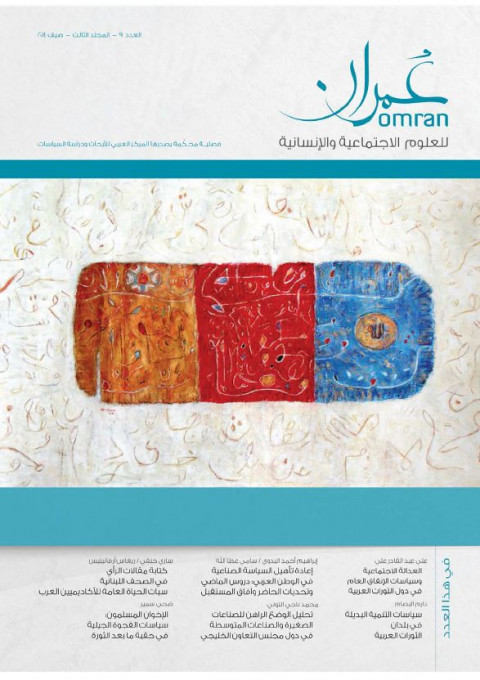 Social Justice and Public Expenditure Policies in the Arab Revolutions Year of publication: 2014 Author: Ali Abdul Qadir Ali Corporate author: Arab Center for Research and Policy Studies This paper examines the challenges faced by Arab spring states when formulating public expenditure policies that meet the revolutions’ demands. In an attempt to establish democratic regimes, the Arab revolutions dictated the creation of pluralist political institutions with concomitant implications for economic institutions. The paper suggests that the challenge of formulating a public expenditure policy in line with the revolutions’ aspirations for social justice lies in the inability of international development agencies, such as the IMF, to propose new and innovative ideas for formulating development policy. However, there are successful applied examples of distributive public expenditure policies for creating social justice. The paper reviews these examples in addition to the results of a survey identifying the size of the middle class in samples of Arab spring states. The survey demonstrates that the middle class represents a majority of population in these countries, suggesting that the transition to electoral democracy requires adopting distributional public expenditure policies in which the middle class voter occupies a central role.
  Terrorism: Theoretical Concepts Year of publication: 2009 Author: Moayad Abdel | Sadi Radi Corporate author: Educational and Psychological Research Center Not surprisingly, the phenomenon of aggression and the use of violence in human societies is as old as man itself, good and evil, but it is strange that violence in human societies turns into a permanent reality that controls the future prospects and influences its choices - which requires searching for the roots of this phenomenon and investigating the factors of its formation in This research is not determined in the context of the current circumstances and circumstances that suggest that they are responsible for the outbreak of these conflicts and the reversal of their leadership and aggravation of their tendencies, but requires exploration of their social motives and access to the depths of the remote and disclose the circumstances A political.
  A Culture of Peace and Its Role in Achieving Stability and Development in Sudan Year of publication: 2015 Author: Abdel Nasser Majzoub Makki Corporate author: Sudan University of Science and Technology The problem of thesis concerned in how to develop peace culture elements to boost stability and development in Sudan, and to develop educational systems, and activated the role of the native administration in peace culture dissemination, and accept other. Thesis aimed to know the elements of social peace and its role in stability and development in Sudan. Thesis hypotheses come out with the statement, that; statically there is relation between peace culture and stability, and development, its ratio estimated 95, 6% from the samples. Researcher used descriptive and historical methods to investigate hypotheses, depended in collecting data on pre-studies, workshops, seminars, questionnaire, and interviews. Research comes out with important results as below; There are many elements threats peace culture in Sudan, as education system, native administration, weapons, and tribal conflicts. Education and training has a great impact upon behavior, and pivotal in compacts poverty, and conflicts, so it has effective role in peace dissimilation.
 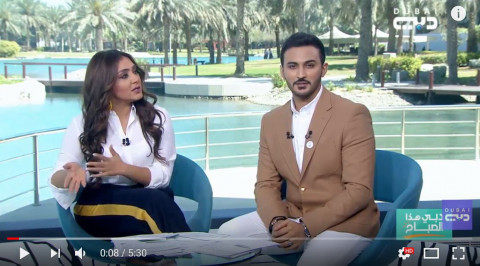 The Impact of Learning a Foreign Language on the Arabic Language Year of publication: 2018 Corporate author: Dubai TV Morning program under the supervision of the media Maya Hajij, deals with topics of interest to Arab youth.From the UAE, we present the most important modern technology and what the world aspires in the coming years.Youth topics are the priorities of every Arab youth, from health and family, through education and job opportunities to tourism and leisure.In addition to humanitarian topics we address to highlight the ongoing efforts of young people to prove themselves in society.
  The Impact of the Change in the International System on the Foreign Policies of the Arab Countries 1990-2005 Year of publication: 2008 Author: Ali Awad Al Sharaa This paper investigates the changes in the international order since 1990 and analyzes its impact on the foreign policies of the Arab countries, building on the assumption that the new World Order (Uni polar) has not left much space of maneuver before the middle and small states to have independent foreign policy. The study investigates the impact by analyzing two cases :the Palestinian issue in the foreign policies of the Arab countries, and the Euro-Arabian partnership (the euro Mediterranean partnership).
  Addressing Global Genocide (Iraq a Addressing Global) Year of publication: 2018 Author: Entidhar Rasheed Zwyer The subject of the research is to deal with the most prominent crimes of global genocide and the abuse of peoples and communities to human beings and to expose his life and his rights to violation during successive periods of time in various societies, especially Iraqi society, which has been subjected to repeated abuses during successive periods of time led to the killing and absence of hundreds Thousands of young people and innocent people, so it was highlighted in this research on these massacres and what are the procedures International and domestic efforts to reduce this phenomenon and try to eliminate it and reduce it at least.
  Political Participation and Political Empowerment of Women with Disabilities, Challenges and Remedial Mechanisms in the Arab World Year of publication: 2019 Author: Fatima Bou Dirham Political, economic, social, cultural and administrative, in addition to all forms of corruption, these underdeveloped societies in all fields, need to make optimal use of all financial, human and human resources in particular, without discrimination between males and females, especially since the category of women represents half of this society in terms of Demographic. Or more than that in some Arab societies that are experiencing increasing demographic growth for health and other social reasons, these societies do not believe much in the developmental and productive roles of women, but confine them to the reproductive, social and educational role in the Arab family circle and the issue becomes more complex, when we know that many of these States go beyond and exceed the texts of constitutions they have enacted and ratified, on the equal rights and duties of women and men and ignore the growing and growing roles of women in development.To address this issue, I proceed from a basic problem: What are the most important obstacles and challenges facing the issues of political participation and political empowerment of women in the Arab world and what are the mechanisms of treatment? In the light of this problem, I formulate the following hypotheses: The first hypothesis: The most important obstacles and challenges facing the issues of political participation and political empowerment of women in the Arab world are the political, economic, cultural, media, legal, administrative, and privacy of women. The second hypothesis: The treatment mechanisms come from the same nature and sources of obstacles and challenges.
 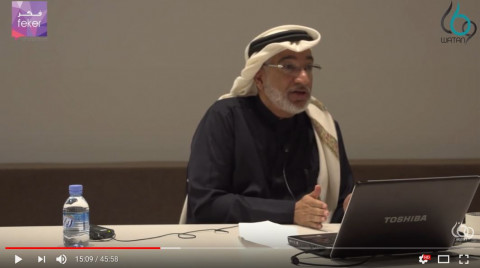 The Concept of Citizenship Between the Islamic State and the Contemporary State Year of publication: 2015 Corporate author: Watan Foundation In cooperation with Fikr Foundation for Training and Studies and Ruya Student Club, Dirasat organized a seminar held at the Student Center in Education City in Qatar. In the State of Qatar, a number of researchers.
  Principles of Human Rights According to American and Islamic Understanding: A Parallel Study Year of publication: 2012 Author: Abdullah Mohammed Ali Malih Corporate author: Sharjah Police Headquarters. Police Research Center Human rights are an important topic in Islamic law, which was addressed by many researchers in their writings. Islam laid down controls with respect to the respect and preservation of human dignity and untouched.However, this research compiled the human rights in the balance of Sharia briefly and then compared it with the Bill of Rights of the US Constitution Issued in 1791 to demonstrate the greatness of Islamic law and preceded by all modern legislation in urging respect for and preservation of human dignity, and surrounded by guarantees to ensure that human rights, regardless of color or gender.The Ministry of Interior of the United Arab Emirates has adopted these principles through the values it adopted in launching the strategic plan 2011-2013 through the second value of justice and human rights, and the research concluded a set of results, including the recognition of Islam to the right to a fair trial, and protect it from all Dominating or arbitrary in the implementation of the proceedings against him, is not tortured and detract from his offer or ability, as stipulated in the US Constitution document section VI and VIII.The study emphasized the importance of observing social, political and ideological human rights such as the right to life, the right to liberty, the right to equality, the right to justice, the right to protect their privacy, the right to build a family, the rights of a wife, the rights of a child, the right of a shepherd, the right to a fair trial, the right to protection from arbitrary power, the right to protection from torture and the right to an individual. The protection of his presentation and reputation, the right of the individual to political asylum, the right to freedom of movement and residence, the rights of minorities in Islamic societies, the right to participate in public life, the right to freedom of thought, belief and expression, the right to freedom of religion, the right to claim, communication and human rights In war, the division of wealth and the right to justice and the right to property and the right to protect the worker and the duty and the right to sufficiency of the necessities of life.
 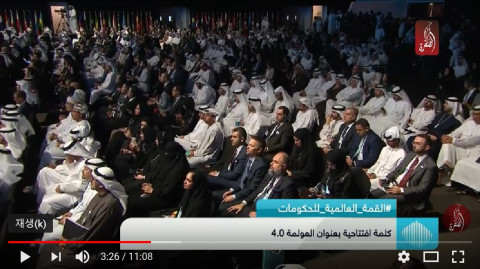 Speech by Professor Klaus Schwab Entitled Globalization 4.0 at the Opening Session of the #World Summit of Governments 2019 Year of publication: 2019 Corporate author: Al Dhafra TV Professor Klaus Schwab, Founder and CEO of the World Economic Forum: We must move to globalization in line with the modern world and the Fourth Industrial Revolution.