
Resources
Explore a wide range of valuable resources on GCED to deepen your understanding and enhance your research, advocacy, teaching, and learning.
8,364 Results found
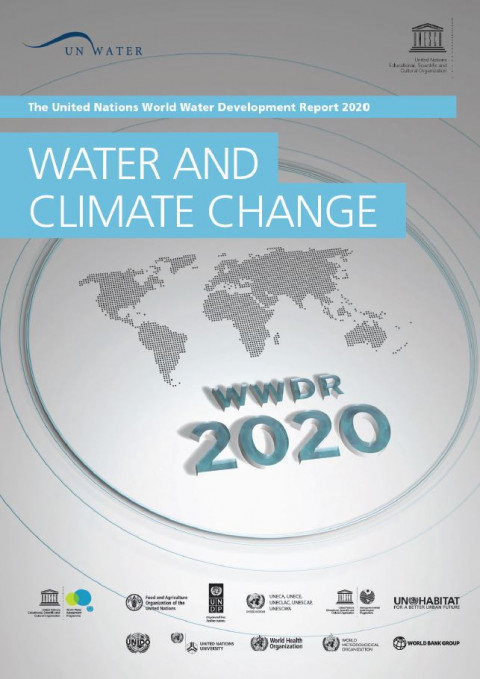 The United Nations World Water Development Report 2020: Water and Climate Change Year of publication: 2020 Corporate author: UNESCO World Water Assessment Programme (WWAP) The 2020 edition of the UN World Water Development Report addresses the critical linkages between water and climate change in the context of sustainable development. It also serves as a guide for concrete actions to address these challenges. It outlines actions, supported by examples from across the world, in three areas: first, enabling people to adapt to the impacts of climate change; second, improving the resilience of livelihoods; and, third, reducing the drivers of climate change. Critically, measures to improve the efficiency of water use in agriculture is inextricably linked to multiple SDGs. These include those related to zero hunger (SDG 2), availability and access to water (SDG 6), climate action (SDG 13), and promoting the sustainable use of ecosystem services (SDG 15).The Report concludes that reducing both the impacts and drivers of climate change will require substantial changes in the way we use and reuse the Earth’s limited water resources. The experience and expertise needed to achieve this goal are brought together in the Report through UN-Water’s Members and Partners. It will support policy makers in tackling the challenges of climate change by harnessing the wide-ranging opportunities that improved water management offers for adaptation, mitigation and resilience in a rapidly changing world.
 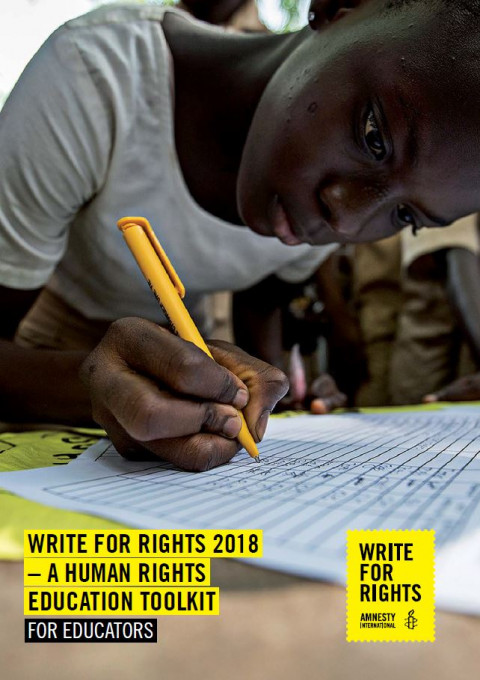 Write for Rights 2018: A Human Rights Education Toolkit for Educators Year of publication: 2018 Corporate author: Amnesty International The annual Write for Rights (W4R) campaign is one of Amnesty International’s biggest human rights events. In 2018 the campaign focuses on women human rights defenders who have suffered human rights violations or are at great risk because of the positions they have taken on certain human rights issues.This Human Rights Education toolkit was created to support teachers’ participation with their students in the W4R campaign. It provides a broad perspective on human rights issues and offers the opportunity to open young people’s minds to global concerns. By learning about and writing persuasive letters to help end human rights violations and achieve justice, teachers and students contribute to the international human rights movement and see for themselves how words can make a difference in the world.This toolkit was created for students aged 13 and above and is primarily designed for use in a school setting: both inside the classroom as well as in clubs or school-wide events. Activities can also be adapted for use in other, non-formal education contexts such as youth groups and community settings. The toolkit contains general activities on human rights and highlights six women human rights defenders from the W4R campaign who have made extraordinary contributions to the advancement of human rights around the world.
 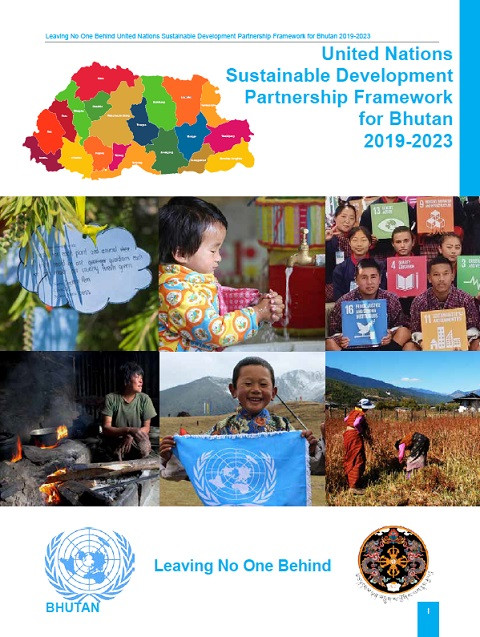 United Nations Sustainable Development Partnership Framework for Bhutan 2019-2023: Leaving No One Behind Year of publication: 2019 Corporate author: UN Bhutan This Partnership Framework 2019-2023 is the common strategic framework for UN activities in Bhutan, working closely with the different agencies to effectively meet the needs of the current stage of development in the country. Strongly committed to the promotion of “A Just, harmonious and sustainable Bhutan where no one is left behind”, this document highlights strategic priorities, integrated programming, and continued partnership between the Royal Government of Bhutan, its development partners, key stakeholders, as well as between UN agencies to overcome the many inequalities still present in Bhutan.
 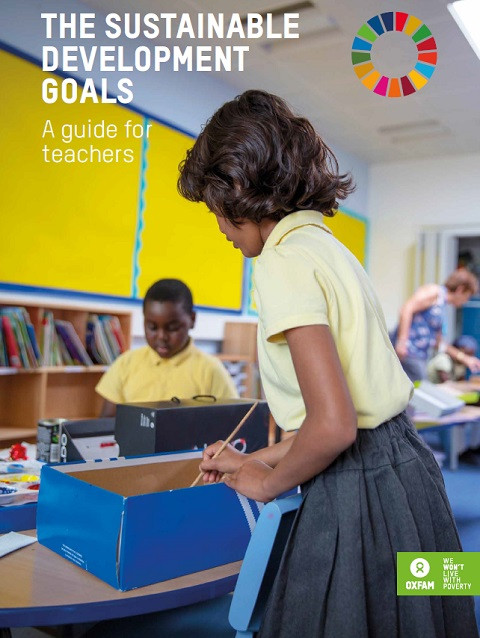 The Sustainable Development Goals: A Guide for Teachers Year of publication: 2019 Corporate author: Oxfam GB This guide supports teachers and educators working with young people to deepen their understanding of education about and for the SDGs and to see how global citizenship education (GCE) approaches and methodologies can underpin good practice. The guide also explores the benefits and challenges of using the SDG framework with learners in schools.
 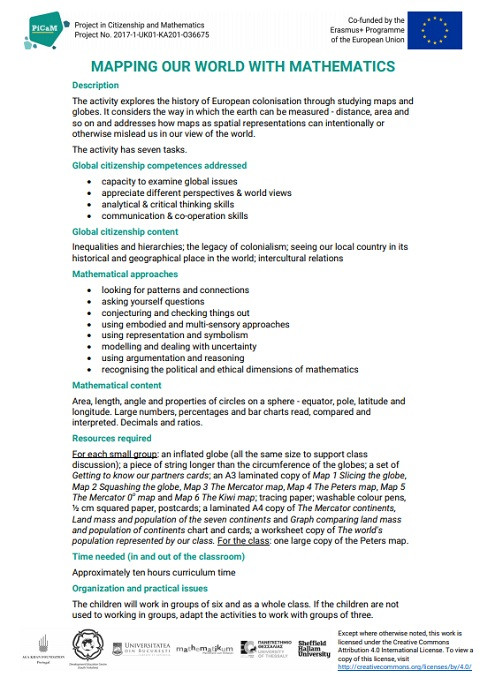 Mapping our World with Mathematics Year of publication: 2019 Corporate author: Project in Citizenship and Mathematics(PiCaM) | Erasmus+ This activity explores the history of European colonisation through studying maps and globes. It considers the way in which the earth can be measured - distance, area and so on and addresses how maps as spatial representations can intentionally or otherwise mislead us in our view of the world. The activity has seven tasks.
 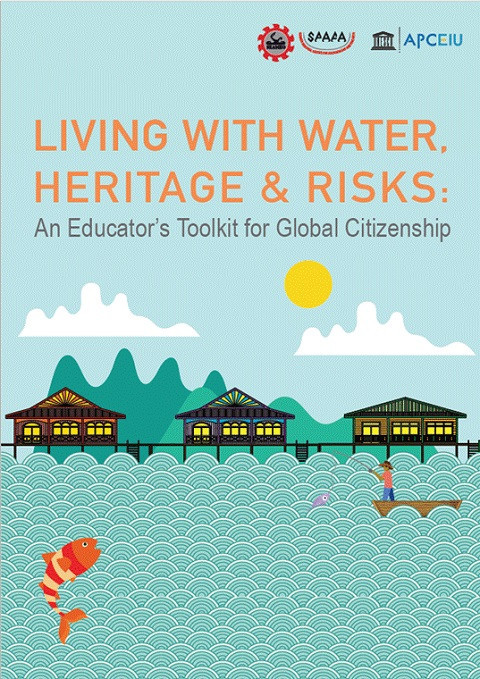 Living with Water, Heritage & Risks: An Educator’s Toolkit for Global Citizenship Year of publication: 2019 Corporate author: APCEIU | SEAMEO. Regional Centre for Archeology and Fine Arts (SPAFA) Designed to help young global citizens gain an awareness of the culture-nature connection in heritage conservation, this toolkit provides visual learning aids and ideas to explore water heritage in Southeast Asia. It is composed of an Educator's Booklet, Activity Sheets, and Inquiry-Based and Self-Learning Photocards. Learners are encouraged to THINK, SHARE and ACT in ways that will enable them to become critical thinkers who can make compassionate and ethical decisions.
 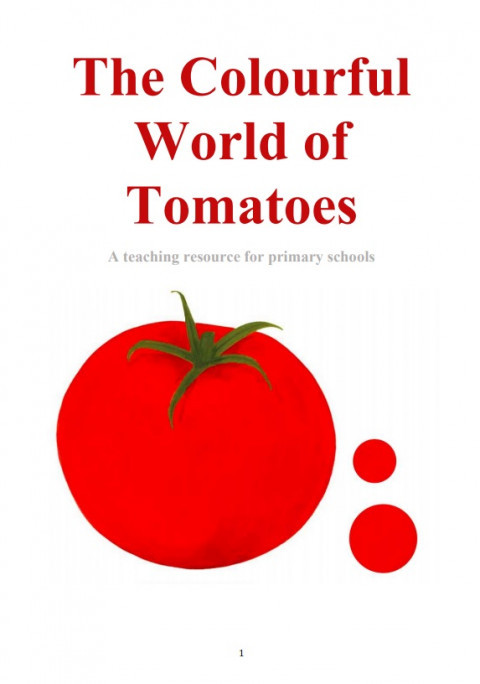 The Colourful World of Tomatoes: A Teaching Resource for Primary Schools Year of publication: 2016 Corporate author: Südwind | Cumbria Development Education Centre(CDEC) This resource allows children from 6 to 10 years to get to know the tomato from different perspectives. All exercises are based on the principle of global learning and are varied, interactive and experience-oriented.Thus it is possible for the children not only to look at this diverse topic from different perspectives, but also to immerse themselves in the tomato world. Activity’ objectives:• The students expand their knowledge about tomatoes and vegetables growing in times of globalisation.• Students learn about unknown types of tomatoes.• They recognise why different varieties are important.
 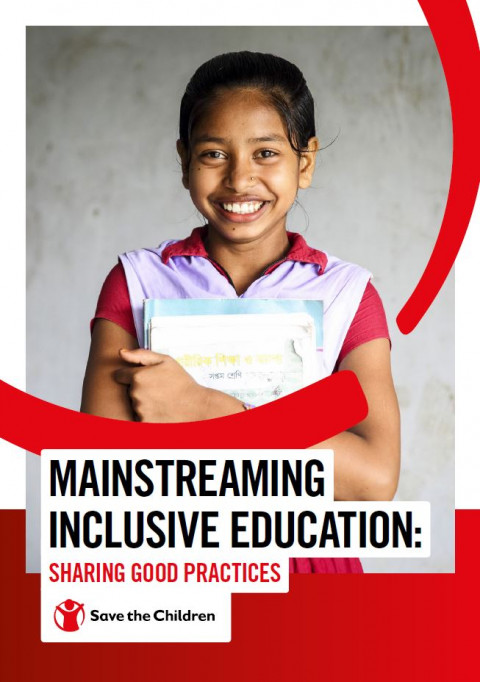 Mainstreaming Inclusive Education: Sharing Good Practices Year of publication: 2019 Corporate author: Save the Children The primary aim of this documentation is to provide a deeper understanding of how projects have applied more inclusive concepts in not only changing the lives of children with disabilities, those living in poverty or children from ethnic minority populations, their families and communities, but in catalysing changes in policies and practices to the education system to benefit all learners.The stories follow a common structure describing the background of the project, a description of an approach that has worked especially well in the project, followed by stakeholder and partner engagement, participation of children, key milestones and significant challenges, scalability and sustainability, recommendations for replication and contact links for project tools and materials. A selection of practical tools and models have been attached as annexes.
 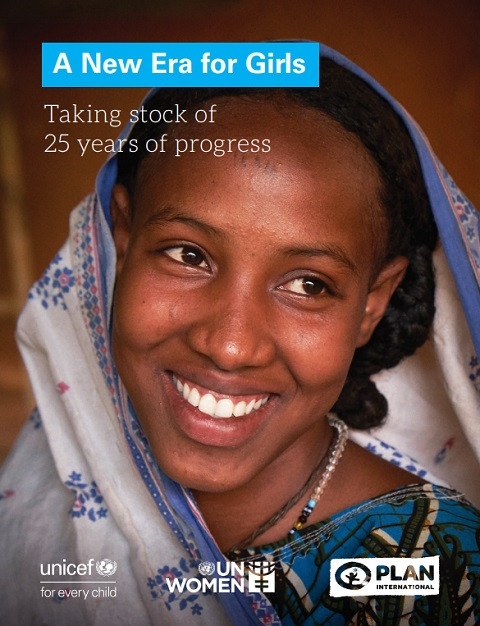 A New Era for Girls: Taking Stock on 25 Years of Progress for Girls Year of publication: 2020 Corporate author: United Nations Children's Fund (UNICEF) | United Nations Entity for Gender Equality and the Empowerment of Women (UN Women) | Plan International The analysis presented in this report demonstrates that while girls' lives are better today than they were 25 years ago, the gains are uneven across all regions. The report calls on global, national and regional stakeholders to expand opportunities for girls and young women to be the changemakers and designers of the solutions to their challenges and opportunities; invest in the skills development of adolescent girls so they can compete in today's labour market; improve girls' health and nutrition; and end violence in all its forms against them.
 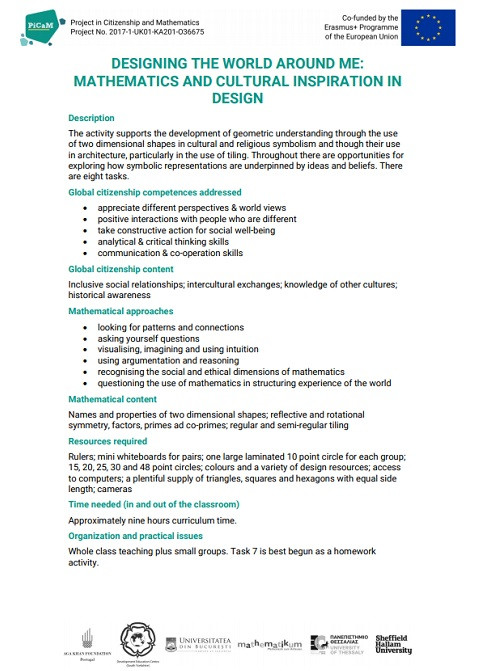 Designing the World Around Me: Mathematics and Cultural Inspiration in Design Year of publication: 2017 Corporate author: Project in Citizenship and Mathematics(PiCaM) | Erasmus+ This activity supports the development of geometric understanding through the use of two dimensional shapes in cultural and religious symbolism and though their use in architecture, particularly in the use of tiling. Throughout there are opportunities for exploring how symbolic representations are underpinned by ideas and beliefs.