
Resources
Explore a wide range of valuable resources on GCED to deepen your understanding and enhance your research, advocacy, teaching, and learning.
8,364 Results found
 Research on the Thought of Global Citizenship Education Year of publication: 2006 Author: Chen Yicang Based on the literature review, the thesis tries to expound the thought of global citizenship education, by ascending to the its origin and development, exploring the characteristics of the conceptions of global citizenship and education for global citizenship, and examining its influences.The paper is comprised of a preface and four parts. Part 1 mainly examines the origin and development of the thought of global citizenship education. The characteristcs of the thought in different stages are analyzed according to the threestage division of the history: pre-modern times, mordern times and post-modern times. Part2 explores into the characteristics of the conception of global citizenship after analyzing the features of modern citizenship, examining the challenges of globalization for the modern citizenship.Part3 mainly examines and analuzes the conception of education for global citizenship.Part4 provides a brief evaluation of the thought of education for citizenship on the basis of summarizing the characteristics of the thought of education for global citizenship, and examining the effect of the thought upon the educational theory and practice.
  Research Report on Basic Education Policies for Ethnic Minorities in China Year of publication: 2010 Corporate author: UNESCO Beijing This report is a survey of the implementation of basic education policy research towards ethnic minority in the framework of "Improving the educational level and culturally sensitive education of ethnic minority groups". In 2010, based on the text analysis report of the basic education policy which has been formulated and implemented for ethnic minorities by the Chinese government, the objectives and tasks of the field research were determined. The field research was conducted on the twelve project sites of three provinces. Through field investigations and questonnaire surveys, six research groups completed twelve case study reports. Based on the contents of the 12-case research report, this report is formed and then proposes suggestions for improving and the next action plan.
  GCED towards Responsible villagers of the Global Village Year of publication: 2015 Author: Teng Zhiyan, Chen Xiaoting Global citizenship education has attracted an increasing attention in global era. This essay briefly introduce the definition of global citizenship education and how to develop it in today's society. This article believe that cultivating global citizens not only is a trend, but also is an important result of globalization.
  The Concept, Values and Implementation Models of GCED Year of publication: 2013 Author: Lu Lihua, Jiang Junhe “Global Citizenship education” aims to cultivate global citizens with an international perspective and global awareness. At present, there are more and more countries focusing on developing the core education value including” equity and justice”, “survival and development” and “democracy and rationality” and builds the global citizenship education network.
 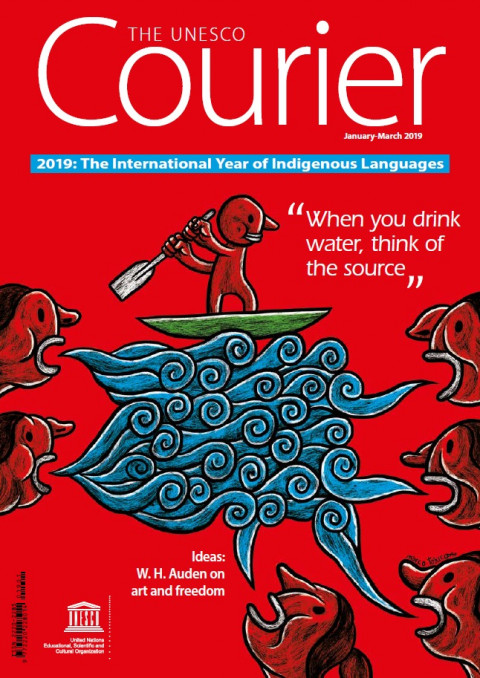 2019: The International Year of Indigenous Languages (The UNESCO Courier. January-March 2019) Year of publication: 2019 Corporate author: UNESCO With the designation of 2019 as the International Year of Indigenous Languages (IYIL2019), officially launched at UNESCO on 28 January, the international community reaffirms its commitment to supporting indigenous peoples in their efforts to preserve their knowledge and enjoy their rights. Since the adoption of the Declaration on the Rights of Indigenous Peoples (link is external) by the United Nations General Assembly on 13 September 2007, considerable progress has been made in this regard. Nevertheless, indigenous peoples still have a long way to go before they emerge from marginalization and overcome the many obstacles they face. One-third of the world’s people living in extreme poverty belong to indigenous communities, just as in a number of countries, legislation that promotes the rights of indigenous peoples remains incompatible with other laws that deal with issues such as agriculture, land, conservation, forestry, mining and other industries, according to Victoria Tauli-Corpuz (link is external), United Nations Special Rapporteur on the Rights of Indigenous Peoples. The Wide Angle section in this issue of the Courier is dedicated to these indigenous peoples. It takes its title from the Chinese proverb: “When you drink water, think of the source”, to remind us that indigenous knowledge, the source of all knowledge, deserve a prominent place in modernity. The issue also marks the celebration of International Mother Language Day (link is external), 21 February.
 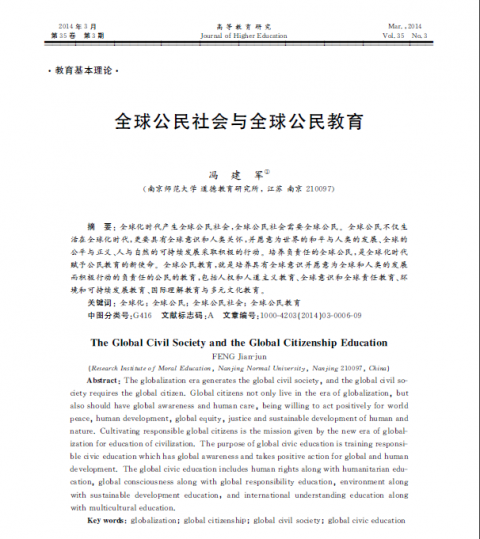 The Global Civil Society and the Global Citizenship Education Year of publication: 2014 Author: Feng Jianjun The globalization era generates the global civil society, and the global civil society requires the global citizen. Global citizens not only live in the era of globalization, but also should have global awareness and human care, being willing to act positively for world peace, human development, global equity, justice and sustainable development of human and nature. Cultivating responsible global citizens is the mission given by the new era of globalization for education of civilization. The purpose of global civic education is training responsible civic education which has global awareness and takes positive action for global and human development. The global civic education includes human rights along with humanitarian education, global consciousness along with global responsibility education, environment along with sustainable development education, and international understanding education along with multicultural education.
 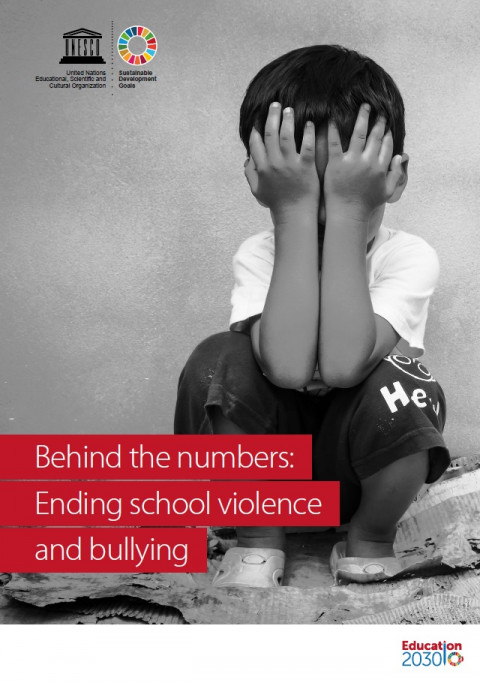 Behind the Numbers: Ending School Violence and Bullying Year of publication: 2019 Corporate author: UNESCO School-related violence in all its forms, including bullying, is an infringement of children’s and adolescents’ rights to education and health and well-being. No country can achieve inclusive and equitable quality education for all if learners experience violence in school.This report provides an overview of the most up-to-date evidence on school violence and bullying. It includes global and regional prevalence and trends, factors that influence vulnerability to school violence and bullying, and consequences. The publication brings together for the first time in one place a wealth of quantitative data from two large-scale international surveys: the Global School-based Student Health Survey (GSHS) and the Health Behaviour in Schoolaged Children (HBSC) study. The surveys cover 144 countries and territories in all regions of the world, and from a wide range of other global and regional surveys. The publication also includes an analysis of factors that contribute to effective national responses, based on a series of case studies commissioned by UNESCO of countries that have succeeded in reducing the prevalence of school violence and bullying or have maintained low levels of school violence over time.
 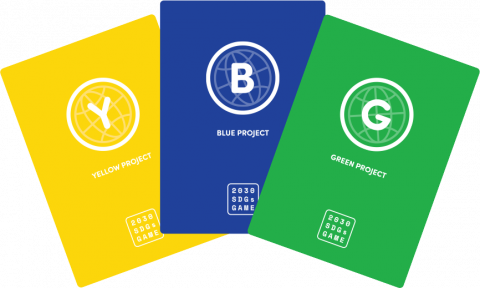 2030 SDGs GAME Year of publication: 2016 Corporate author: Imacocollabo The 2030 SDGs Game is a multiplayer, in-person, card-based game that simulates taking the “real world” into the year 2030. Designed in Japan in 2016, this experience has become a powerful and impactful social phenomenon in Japan, earning extensive media coverage and reaching over 12,000 participants last year. 2030 SDGs Game events are held in corporate, governmental, educational, and community settings, and now has over 100 trained facilitators in a rapidly growing community within Japan. Now, due to a growing demand to bring the game to the rest of the world, we have created an English edition and are beginning to introduce it to a wider audience overseas. The game is designed to be played with anywhere from 5 to 50 players. (That number can be expanded to a maximum of around 200 with multiple parallel ‘worlds’ operating at the same time.) Play time is approximately 1 hour; with the necessary explanation and reflection afterward, it requires a minimum of 90 minutes, and generally works best in a 2 ½ hour time frame.
  On Citizenship Education Year of publication: 2003 Author: Wan Minggang Cultivation of citizens is the basis of all educational objectives and the State's basic requirement for eductaion. Citizenship education has become a hot issue at tracting the solicitude of modern Western political philosophy and educational theories. The citizenship education is characterized by its representative theories of liberalist citizenship education, corporatist citizenship education and muticulturalist citizenship eduction. The construction of socialist politics and civilization not only involves the designing and optimization of socialist democratic system, but also concerns the cultivation of citizens with strong sense of participation and practical ability. Therefore, the aim of citizenship eduction must be clearly included in the objectives of basic education and the content of citizenship education must be reflected in relevant courses. The objectives of citizenship education should be used to integrate moral education, ideological and political education, social education and relevant educational activities in basic education.
  A General Discussion on Educational Equity Of the Disabled Year of publication: 2003 Author: Li Shu With the values of democracy in education, equity for educational services attracts ever greater attention. A large portion of the disadvantaged, whether the disabled are treated equally inthis field reflects the extent to which a country realizes its democratic values. This article discusses educational equity for the disabled in terms of three aspects.