
Resources
Explore a wide range of valuable resources on GCED to deepen your understanding and enhance your research, advocacy, teaching, and learning.
8,376 Results found
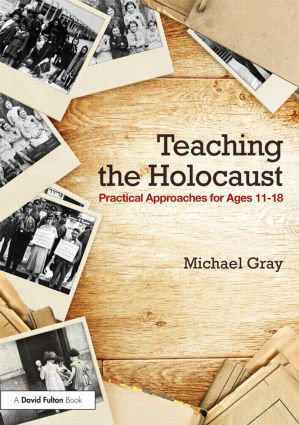 Teaching the Holocaust : Practical approaches for ages 11-18 Year of publication: 2015 Author: Michael Gray Teaching the Holocaust is an important but often challenging task for those involved in modern Holocaust education. What content should be included and what should be left out? How can film and literature be integrated into the curriculum? What is the best way to respond to students who resist the idea of learning about it? This book, drawing upon the latest research in the field, offers practical help and advice on delivering inclusive and engaging lessons along with guidance on how to navigate through the many controversies and considerations when planning, preparing and delivering Holocaust education. Whether teaching the subject in History, Religious Education, English or even in a school assembly, there is a wealth of wisdom that will make the task easier for you and make the learning experience more beneficial for the student. (By the publisher)
  The challenges of Holocaust introduction and remembrance - particular and universal aspects in formal and informal interdisciplinary curricula in Israel and abroad Year of publication: 2011 Author: Nitza Davidovich | Dan Soen | Anat Hezkelovich In the present framework, an attempt was made to compare Holocaust instruction in Israel and in France. The comparison between the formal and informal curricula in both countries shows that both systems share this study's basic assumption concerning the inherent potential of teaching the Holocaust to the younger generation. Nevertheless, each country has a clear goal toward which it directs its students. The State of Israel, the Jewish state, perceives the Holocaust mainly through nationalist and Zionist eyes, directing the younger generation to learn particular lessons. The French model, in contrast, represents a shortened version ... devoted to the universal lessons of the Holocaust. But in the end, both systems would benefit by adopting some of the elements of the other. (By the author) Teaching about the Holocaust : Major educational predicaments, proposals for reform, and change - An international perspective Year of publication: 2013 Author: Zehavit Gross The aim of this article is to analyze the findings of a research project on how the Holocaust is taught around the world. The project analyzes central issues and educational events that occur while teaching the Holocaust "behind the classroom door," in public schools in different countries. Researchers from 10 nations participated in the project: Germany, Austria, Switzerland, Poland, Estonia, Scotland, Australia, the United States, Canada and Israel. One of the major findings of this research was that although the official establishment is very interested in teaching the subject of the Holocaust, teachers can find it hard to teach because of resistance by their students, who occasionally react in class with cynical, racist, anti-Semitic and antidemocratic remarks. In all the countries, researchers indicate three principal ways of handling the question of the Holocaust: education, teacher training, and research. (By the author) Intercultural Education : Special Issue : Holocaust Education : Promise, Practice, Power and Potential (Vol 24) Issue 1 & 2 Year of publication: 2013 Corporate author: International Association for Intercultural Education | Routledge "Intercultural Education is a global forum for the analysis of issues dealing with education in plural societies. It provides educational professionals with the knowledge and information that can assist them in contributing to the critical analysis and the implementation of intercultural education." This issue is about the promise, practice, power and potential of Holocaust Education. "Why are we learning this ?" : Does studying Holocaust Encourage better citizenship values ? Year of publication: 2008 Author: Henry Maitles The relationship between learning about the Holocaust and the development of positive values may seem common sense, but in reality there is a complex level of development and understanding. The research reported here, which was sponsored by the Scottish government, was designed to ascertain whether learning about the Holocaust has an impact on young people’s general citizenship values and attitudes; does learning about the Holocaust allow them to extrapolate from the events of the Holocaust to present-day issues, such as racism and discrimination? The study followed a cohort of approximately 100 pupils (aged 11–12) who had studied the Holocaust and compared their values one year later both to their earlier attitudes and to those of their peers who had not studied the Holocaust. As we might expect, the results were not always as predicted, particularly when it came to the pupils’ understanding of anti-Semitism or genocide; in general, however, the study’s core group maintained more positive values than they had before their lessons on the Holocaust and showed more positive values than their peers who had not studied the Holocaust. (By the author) Does addressing prejudice and discrimination through Holocaust education produce better citizens? Year of publication: 2007 Author: Paula Cowan | Henry Maitles Previous research on teaching the Holocaust, primarily case studies in either the primary or the secondary sectors, suggests that Holocaust education can contribute to pupils' citizenship values in a positive way. Yet, in common with other initiatives, this evidence focuses exclusively on the short term impact of Holocaust education. Our ongoing longitudinal research is concerned with both the immediate and longer term effects of Holocaust education on pupils' values and attitudes. Initially focused on primary pupils aged 11–12 years, it has followed them into the first year of secondary to examine whether the general improvements in attitudes found in the first stage of the research has been maintained. Further, we are able to compare their attitudes with pupils in their year who did not study the Holocaust in their primary schools. This article draws conclusions from this study. (By the author) The Coverage of the Holocaust in High School History textbooks Year of publication: 2009 Author: David H. Lindquist The Holocaust is now a regular part of high school history curricula throughout the United States and, as a result, coverage of the Holocaust has become a standard feature of high school textbooks. As with any major event, it is important for textbooks to provide a rigorously accurate and valid historical account. In dealing with the Holocaust, however, textbook authors face particular challenges. The Holocaust had complex causes, both immediate and long-term; different groups played roles in perpetrating or assisting it; and the meticulous accuracy required in detailing its occurrence imposes many demands on authors. Unlike many other events listed in history textbooks, students have often heard of the Holocaust and may bring considerable prior conceptions of it to the classroom but many of these impressions may come from sources for whom historical accuracy is of little concern. Textbooks are often the first recourse for teachers and students interested in dispelling inaccurate notions and seeking to acquire valid knowledge. In addition, the existence of Holocaust denial makes it crucial that textbook narratives should be completely accurate because deniers often contend that the presence of any error calls into question the actual occurrence of the Holocaust. This article presents the results of a study the author conducted of the treatment of the Holocaust in major history textbooks. While the textbooks provide substantial coverage of the Holocaust, there are also problems in the coverage that can foster inaccurate perspectives about the event. The author recommends that substantive changes be made in future editions of these textbooks to ensure that accurate, comprehensive Holocaust units are presented to students. (By the author) Authentic Pedagogy and the Holocaust: A Critical Review of State Sponsored Holocaust Curricula Year of publication: 2005 Author: Samuel Totten | Karen L. Riley Over the past decade and a half, states in all regions of the United States have formed Holocaust councils, advisory groups, and other agencies for the purpose of developing educational programs in response to a growing interest in the Holocaust. Some states have called upon educators and Holocaust agencies within the state to develop curricula and/or resource materials for use in social studies and English classrooms. Furthermore, many states now either strongly recommend the teaching of the Holocaust or mandate that it be taught in their public schools. In the present paper, we present a critical analysis of the instructional strategies advocated in state–sponsored Holocaust curricula. We ground our evaluation within the framework of authentic pedagogy—particularly the work of Fred Newmann. More than an attempt to simply criticize these works, we offer constructive alternatives to inadequate and/or poorly designed instructional strategies. Fundamental to the intent of this paper is its usefulness as a guide for evaluating instructional activities designed to support the teaching of content knowledge about the Holocaust. (By the author) Never again ! Does Holocaust education have an effect on pupils' citizenship values and attitudes? Year of publication: 2006 Corporate author: Scottish Executive. Department of Social Research As the education for citizenship agenda continues to make an impact on schools, this research sets out to examine whether teaching the Holocaust, in the upper primary, either as part of a study on World War 2 or as a topic on its own, has an impact, both immediate and longer term, on pupils’ citizenship values and attitudes, and particularly those values and attitudes relating to various minority or disadvantaged groups in Scotland. (By the author)
  Holocaust Memorial Days : An overview of remembrance and education in the OSCE region Year of publication: 2015 Corporate author: OSCE. Office for Democratic Institutions and Human Rights (ODIHR) This publication provides an overview of governmental and non-governmental practices in the OSCE area to commemorate the Holocaust. It is intended to promote remembrance and education by publicizing and facilitating the exchange of good practices. The publication shows that most OSCE governments, as well as many local and municipal authorities, schools, civil society organizations, religious groups and others, are actively involved in Holocaust commemoration activities. While many of these activities take place throughout the year, there is a particular focus on promoting Holocaust remembrance, research and education during Holocaust Memorial Days. Across the world, 27 January, the International Day of Commemoration in Memory of the Victims of the Holocaust, is devoted to educating future generations about the Holocaust. This overview provides a snapshot of the types of Holocaust education activities that have been developed to mark Holocaust Memorial Days, while also identifying where and how the Holocaust is taught in schools throughout the region. (By the publisher)