
Resources
Explore a wide range of valuable resources on GCED to deepen your understanding and enhance your research, advocacy, teaching, and learning.
8,376 Results found
 Addressing Anti-Semitism: Why and How? A Guide for Educators These guidelines provide suggestions for teachers and other educators who feel the need to address issues pertaining to contemporary anti-Semitism. Recognizing that the context may vary in every country, or even in individual classrooms, this document provides educators with a general overview of common manifestations of contemporary anti-Semitism, as well as with some key educational principles and strategies for addressing this complex and challenging subject. The Holocaust and the United Nations Outreach Programme Detailed information on the Holocaust and the United Nations Outreach Programme can be found at this website. Educational materials as well as professional development opportunities are presented.
 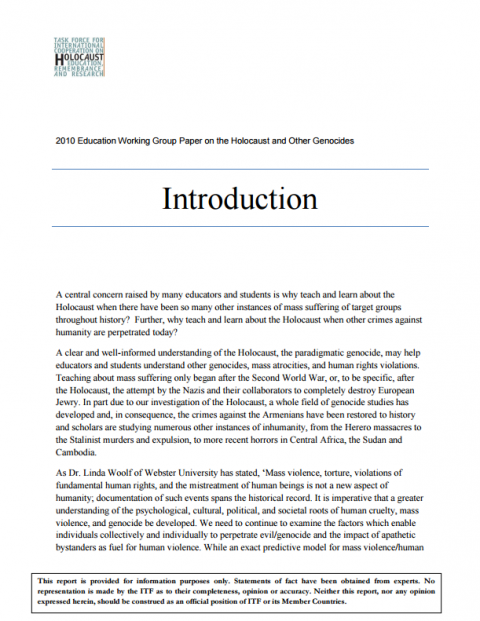 Holocaust and Other Genocides In this series of documents, the IHRA's Education Working Group offers ideas and recommendations to educators who wish to teach about the Holocaust and its relationship to other genocides and crimes against humanity. Teaching Guidelines of the International Holocaust Remembrance Alliance The website of the International Holocaust Remembrance Alliance, an intergovernmental body dedicated to Holocaust education, remembrance and research, contains much practical information on all aspects of Holocaust education.
 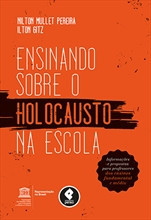 Teaching about the Holocaust in schools: Information and proposals for teachers of primary and secondary education This textbook aims at helping teachers of primary and secondary education to address the Holocaust theme in their classes. This book contains suggested activities, lists of books and films references to help pupils to make connections between the Holocaust and others genocides but also to develop critical thinking and respect for human rights.
 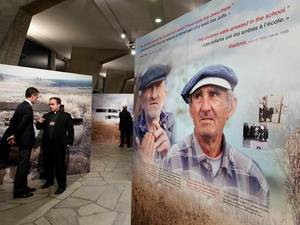 UNESCO Education about the Holocaust The website of UNESCO is a good place to begin an exploration of Holocaust and human rights education. It provides an international structural framework for examining the connection between the Holocaust and genocide and human rights issues. Case Study - Pakistan: Education, Religion and Conflict Year of publication: 2015 Author: Raza Rumi Corporate author: Tony Blair Faith Foundation | McGill University Pakistan is in the midst of crisis. It is threatened by virulent extremist groups and is suffering from a failing education system that is poorly funded and politically manipulated. It promulgates an undefined Islamo-nationalist ideology that lays the foundations for widespread acceptance of ideologically motivated violence. Reforms to the curriculum have been legislated but are badly implemented by the country's politicians; the international community has largely turned a blind eye to these shortcomings. Unless aid and advocacy are specifically focused on far-reaching educational reform that directly tackles extremism, the long-term consequences will be extremely severe.
  Education in the twenty‐first century: Conflict, reconstruction and reconciliation1 Year of publication: 2005 Author: Alan Smith Corporate author: Taylor & Francis This paper is an attempt to map out an emerging and increasingly important field of study concerning the relationship between education and conflict. The paper argues that actions through various ‘entry points’ at each of these levels carry the potential to exacerbate or ameliorate conflict and suggests that a systemic analysis of investments in education systems from a conflict perspective should be a routine part of educational planning. Education as a Security Issue Author: Ian Jamison Corporate author: Tony Blair Faith Foundation The use of education as both tool and target of religious extremists globally is perhaps one of the most important generational challenges we face today. To ensure that the next generation is open to a more pluralistic world, we must ensure that their education equips them to safely encounter the 'Other'. This not only means improving knowledge, understanding and interaction, but also critically requires investment in developing essential soft skills that can ensure these are properly employed.
 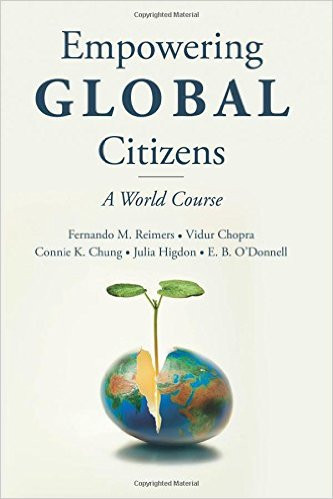 Empowering Global Citizens: A World Course Year of publication: 2016 Author: Fernando Reimers | Vidur Chopra | Connie K. Chung | Julia Higdon | E. B. O'Donnell The world is changing rapidly and shcools must evolve to prepare young people to invent the future. Reinventing education requires thinking anew about how to help students develop competencies that will empower them as architects of their own lives and contributing members of their communities. Drawing on a synthesis of research and practice in global citizenship education, this book presents The World Course - a rigorous and coherent curriculum to foster student agency, empathy, and deep knowledge and skills to recognize the biggest global challenges and opportunities of our times, and to advance sustainability, human rights, and peace. Integrating current thinking on twenty-first-centry competencies and deeper learning, and deploying pedagogies that cultivate student responsibility, imagination, and creativity, such as project-based learning and design thinking, this book is a blueprint to reinvent education to empower global citizens.