
Resources
Explore a wide range of valuable resources on GCED to deepen your understanding and enhance your research, advocacy, teaching, and learning.
8,376 Results found
 Evaluation Study: Lessons learned from Danish and other international efforts on Countering Violent Extremism (CVE) in development contexts Year of publication: 2015 Corporate author: Danish International Development Assistance (DANIDA) This evaluation study collates lessons being learned from Danish efforts and those of other development actors on Countering Violent Extremism (CVE) that can inform evidence based policy making and increase shared understanding on CVErelated programming in development contexts.
  Reaching the Youth: countering the Terrorist Narrative Year of publication: 2012 Author: Thomas Koruth Samuel This monograph studies the issue of the dynamics of youth and terrorism, paying close attention to the methods used by terrorists to entice the youth, the message or the narrative of the terrorists, and the possible counter-narrative that could be subsequently developed.
  Homegrown terrorism and transformative learning: an interdisciplinary approach to understanding radicalization Year of publication: 2010 Author: Alex S. Wilner | Claire-Jehanne Dubouloz Since 2001, a preponderance of terrorist activity in Europe, North America and Australia has involved radicalized Westerners inspired by Al Qaeda. Described as ‘homegrown terrorism’, perpetrators are citizens and residents born, raised, and educated within the countries they attack. While most scholars and policy-makers agree that radicalization plays a central role in persuading Westerners to embrace terrorism, little research properly investigates the internal and cognitive processes inherent to radicalization. Transformative learning theory, developed from the sciences in education, health and rehabilitation, provides an unconventional and interdisciplinary way to understand the radicalization process. The theory suggests that sustained behavioural change can occur when critical reflection and the development of novel personal belief systems are provoked by specific triggering factors.
 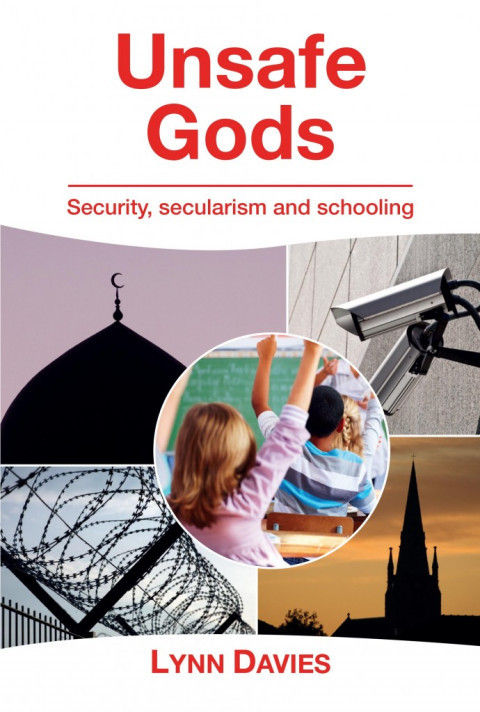 Unsafe Gods: Security, secularism and schooling Year of publication: 2014 Author: Lynn Davies This book makes the compelling argument that religion can be complicit in conflict and that a new secularism is vital to foster security. Using insights from complexity science, it shows how dynamic secularism can be used to accommodate diverse faiths and beliefs within worldly politics. Exploration of the interplay of religion and education in the context of security and notions of safe schools offers new understandings of how religions learn – or instead remain frozen accidents that hinder societies from adapting to change. The book shows how turbulence and amplification underscore the necessity for an education that is critical even of patriarchal religious texts and that recognizes the power of satire and humour.
  Neither Villains Nor Victims: Towards an Educational Perspective on Radicalisation Year of publication: 2015 Author: Stijn Sieckelincka, Femke Kaulingfreksb, Micha de Wintera This study questions whether the perspectives of security and intelligence serve educators well enough in the early stages of radicalization. Assigned to signal deviant behaviour, educators are unwittingly drawn into a villain-victim imagery of their students. This imagery seems to impede a genuine educational outlook on radicalization. Key notions of this outlook may be ‘critically addressing ideals’ and ‘forming pedagogical coalitions’.
  Terrorism, Religious and Ethnic Intolerance Issues in the Syllabuses and Textbooks of Bengali and English Medium and Madrasah Education in Bangladesh an Appraisal Year of publication: 2014 Author: NM Sajjadul Hoque The author argues that education is a catalyst for social change and a powerful instrument for overcoming social and security problems. In other words, the author believes that syllabuses and textbooks of both the general and madrasa education streams of Bangladesh have a significant role in educating people to counter terrorism as well as religious and ethnic intolerance. This paper attempts, however, by reviewing the current syllabuses and textbooks of general and madrasa education streams, and also by assessing peoples’ opinions in Bangladesh, to know whether the syllabuses and text books are adequately addressing, or not, the issues of terrorism and religious and ethnic intolerance.
  Controversial Issues - Teachers' attitudes and practices in the context of citizenship education Year of publication: 2004 Author: Christopher Oultona | Vanessa Dayb | Justin Dillon | Marcus Graced A survey of the literature suggests that the principles and methods relating to the teaching of controversial issues are themselves controversial. This irony is more relevant to teachers now than ever before. This paper explores the issue of teachers' readiness to use controversial issues in the classroom, and reports on research involving focus groups and questionnaires. We suggest that many teachers are under‐prepared and feel constrained in their ability to handle this aspect of their work.
  Discussing Controversial Issues in the Classroom Year of publication: 2012 Author: Michael Hand | Ralph Levinson Discussion is widely held to be the pedagogical approach most appropriate to the exploration of controversial issues in the classroom, but surprisingly little attention has been given to the questions of why it is the preferred approach and how best to facilitate it. Here we address ourselves to both questions.
  Education Reform in Pakistan Year of publication: 2014 Corporate author: International Crisis Group In April 2010, the eighteenth constitutional amendment committed Pakistan to free and compulsory education for all children between the ages of five and sixteen. Yet millions are still out of school, and the education system remains alarmingly impoverished. The madrasa (religious school) sector flourishes, with no meaningful efforts made to regulate the seminaries, many of which propagate religious and sectarian hatred. Militant violence and natural disasters have exacerbated the dismal state of education. The public education system needs to foster a tolerant citizenry, capable of competing in the labour market and supportive of democratic norms within the country and peace with the outside world.
  Website of Memorial and Museum of Auschwitz-Birkenau The Auschwitz-Birkenau German Nazi Concentration and Extermination Camp was added to the UNESCO World Heritage List in 1979. The website of the Auschwitz-Birkenau State Museum gives access to historical information and documentation about the camp and provides educators and students with various educational resources.