
Ressources
Explorez une large gamme de ressources sur le GCED afin d’approfondir votre compréhension et de renforcer vos activités de recherche, de plaidoyer, d’enseignement et d’apprentissage.
8,354 résultats trouvés
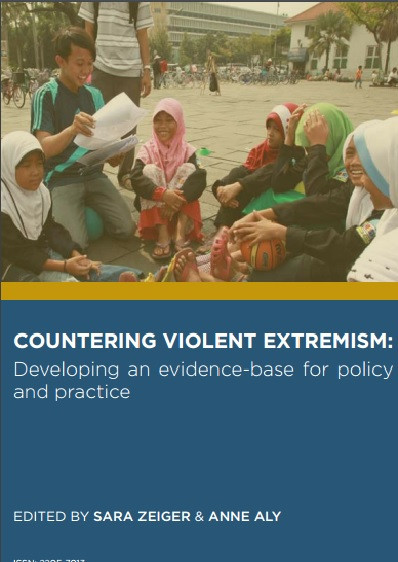 COUNTERING VIOLENT EXTREMISM: Developing an evidence-base for policy and practice Année de publication: 2015 Auteur: Sara Zeiger | Anne Aly Auteur institutionnel: Hedayah | Curtin University Ce rapport présente une gamme des documents présentés à la Conférence annuelle de recherche sur la lutte contre l’extrémisme violent (CVE), qui a eu lieu du 7 au 8 décembre 2014 à Abou Dhabi, aux Emirats Arabes Unis. Il présente deux études de cas sur l’implication des acteurs non étatiques au sein de la communauté, à savoir les familles, les dirigeants communautaires et les jeunes.
  Abu Dhabi Memorandum on Good Practices for Education and Countering Violent Extremism Année de publication: 2014 Auteur: Sara Zeiger Auteur institutionnel: Hedayah Foundation Le contenu de cette note est basé sur les discussions qui ont eu lieu les 3 et 4 Novembre 2014 dans un atelier d'experts sur les orientations de la recherche dans la lutte contre l'extrémisme violent, organisé par Hedayah à Abu Dhabi aux Emirats Arabes Unis. Cette table ronde d'experts de deux jours avait comme objectif de réunir des chercheurs, des décideurs et des praticiens autour d’une discussion close sur les orientations actuelles de la recherche contre l’extrémisme violent. Ils ont examiné les résultats des recherches actuelles dans la lutte contre l'extrémisme violent (CVE) ; déterminé les lacunes importantes ; identifié les nouvelles menaces et les menaces émergentes de l'extrémisme violent ; et établi un programme recommandé de recherche à l’intention des chercheurs de Hedayah et tous les chercheurs qui travaillent sur la lutte contre l’extrémisme violent, pour les deux années à venir.
  L’ABC de l’éducation à la citoyenneté mondiale Année de publication: 2016 Auteur institutionnel: Organisation des Nations Unies pour l'éducation, la science et la culture (UNESCO) Les progrès considérables des technologies de l’information et de la communication (TIC) ont permis aux individus de se rapprocher et d’interagir les uns avec les autres, où que ce soit et à tout moment. Cela a contribué à intensifier le sentiment et le fait d’être interconnectés et de vivre au-delà des frontières. En outre, l’augmentation des migrations transnationales rend les communautés locales inévitablement plus hétérogènes et accroît la nécessité d’apprendre à vivre ensemble. De plus, les tensions et les conflits entre populations, ainsi que les défis liés au développement durable, tel que le changement climatique ont des origines et des conséquences qui dépassent les frontières nationales. Cela et, exige plus de coopération et à la mise en œuvre d’actions collectives aux niveaux local et mondial. Securitisation, Counterterrorism and the Silencing of Dissent: The Educational Implications of Prevent Année de publication: 2016 Auteur: Aislinn O'Donnell Auteur institutionnel: Society for Educational Studies | Taylor & Francis Le présent document décrit quelques impacts de la législation antiterroriste, y compris la prévention, sur l’approche pédagogique et les établissements d'enseignement. Le concept de « radicalisation » qui figure au cœur de la stratégie « Prévenir » est contesté dans le domaine de la lutte contre le terrorisme. Toutefois, les éducateurs sont maintenant en mesure d'identifier et d’orienter les élèves « en voie de radicalisation ». Sur la base de l'expérience de l'enseignement dispensé aux prisonniers de l'IRA et de l'INLA dans la République d'Irlande, l'auteur décrit un ensemble de principes philosophiques et éthiques qui devraient soutenir l'éducation. On fait valoir l’idée que l'éducation ne doit pas être subordonnée aux questions de sécurité et de renseignement pour des raisons pragmatiques, éducatives et éthiques. Engaging and Educating Women and Girls in the Prevention of Violent Conflict and Violent Extremism Année de publication: 2014 Auteur: Kathleen Kuehnast Auteur institutionnel: United States Institute of Peace (USIP) Dr. Kathleen Kuehnast, directrice du Centre pour le genre et la construction de la paix (Center for Gender and Peacebuilding) à l’Institut américain pour la paix (United States Institute of Peace), témoigne de l'importance d'impliquer et d'éduquer les femmes et les jeunes filles dans les zones de conflit afin de prévenir et de contenir les conflits violents et l'extrémisme violent.
 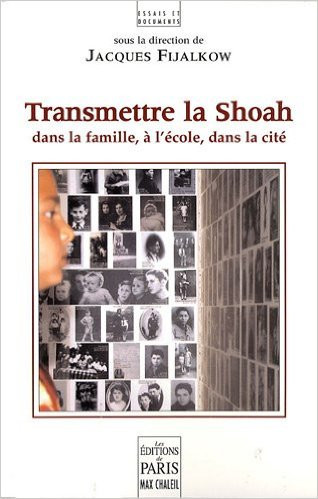 Transmettre la Shoah : Dans la famille, à l'école, dans la cité This volume deals with transmission of the history and the memory of the Shoah within the family as well as in school, in museums, in cultural productions (cinema, literature and art), and in legislation. Two countries are in the centre of the analysis : France and Israel. France with its history of the "Vel d'Hiv" and the Rivesaltes and Chambon-sur-Lignon camps. And Israel against the background of the Eichmann trial and the aftermath of "Shoah" by Lanzmann. Several contributions deal with transmission, knowledge and social representations of the Shoah. (By the editor) L'enseignement de la Shoah dans l'education nationale francaise (1945-1990) The author analyzes the place reserved for teaching about the Jewish genocide during World War II in the secondary education curriculum in France and how the subject is treated in history textbooks from 1945 to 1990. According to the author, developments and policy changes can be seen since the 1980s. (By Refdoc.fr) Quand les mémoires déstabilisent l’école. Mémoire de la Shoah et enseignement This work is based primarily on the subject of the Holocaust, but it attempts to define cross-cutting issues in the category of teaching “sensitive” subjects, assuming we can build a common paradigm. To do this, it brings together the perspectives of historians, philosophers, teachers and participating witnesses, inviting us to return to the fundamental questions underlying the act of transmission. Each contribution brings us to reflect on what it is we are trying to transmit, and suggests a systematic exploration of the difficulties inherent in these transmissions: the magnitude and complexity of the historical problem, the extreme moral and political exigencies, the intricate intermingling of memory, the historian’s work, and civic commitment. What to do with negative commemorations? We cannot forget, repent, deny or trivialize. We can only question our modern societies and their ambivalence. (By the author - Translation) L’enseignement de l’histoire et les mémoires douloureuses du XXe siècle. Enquête sur les représentations enseignantes This article discusses the teaching of sensitive topics related to the memory and history of the 20th century, mainly the issues of the extermination of Jews and the wars of national liberation. The survey, conducted between 2000 and 2003 at the Academie de Versailles, highlights the specific difficulties in this teaching from primary school to secondary school, in different disciplines ‒ literature, history and philosophy. The report also leads to an analysis of the representations that are formed on these subjects, both by students and teachers. (By the author - Translation)
 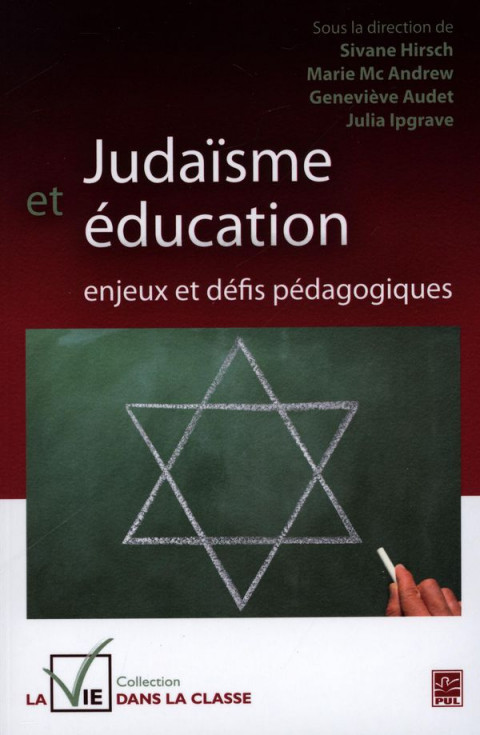 Judaïsme et éducation : enjeux et défis pédagogiques The question of relations between ethnic groups defined by different markers, including religion, is more than ever necessary in our plural societies. This original work focuses on the role of education in the dynamics of relations between the Jewish community and fellow citizens of all origins in Quebec, Canada and in other countries. Indeed, while the Jewish communities are often well established in their host societies, they often remain little known to the population and especially of the majority groups. The authors address three issues that may challenge the stakeholder community and school, but also the general public interested in "living together" and its challenges : Education on Jewish communities in public schools; Education on the Holocaust and innovative practices in this regard; Moving Jewish schools and their impact. (By the publisher - Translation)