
News
Follow the newest trends and news in GCED.
1,676 Results found
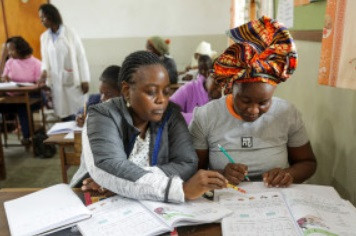 Mozambique's strides in adult education: A path to lifelong learning and national development 30 November 2023 27 October 2023 Mozambique has faced challenges in providing basic education to both young people and adults and until recently, adult education opportunities were limited to basic literacy and numeracy. To help tackle this issue, UNESCO has been supporting the Government since 2009 to advance adult literacy, make lifelong learning more accessible and of higher quality, and improve prioritization of adult education at the policy and planning level. “I enrolled in this course because I realized that I needed education,” says Olga Alberto Mugabe, a beneficiary of the UNESCO-supported new curriculum for youth and adults. She works selling vegetables locally and she started attending the ‘Wuxa Learning Centre’ to improve her literacy. When Olga first joined, she could not read or write but today, when her clients make orders via text messages, she can identify who is making orders for the cabbages and lettuces that she sells. “Today, when I am home alone and someone sends a message, I can read and understand.” UNESCO’s Capacity Development for Education programme (CapED) has supported the Government to develop a new curriculum for youth and adults, which is currently being rolled out nationwide. The curriculum offers complete primary education equivalent to grades one to six for youth and adults. As well as covering core subjects including mathematics and life skills, it also has a multilingual approach incorporating Portuguese and five Mozambican languages to support learners who do not speak Portuguese as their first language.The curriculum, which has already been piloted in several adult education centers, aims to benefit some 6,000 adult learners by 2025. To date, the CapED Programme has supported some 500 educators to be trained to implement the new curriculum. The roll out of the curriculum is also being supported by development partners who are providing financial support to print textbooks and learning materials. Olga Alberto Mugabe studying at the Wuxa Learning Centre Efforts at the sector-wide policy and planning levelTo date, a key achievement is that the Government has recognized the importance of adult education, in the framework of the implementation of the new Education System Law approved in 2018, adult education has been included in the Education Sector Plan 2020-2029. In 2023, the Programme supported the Government to update the Central Level Operation Plan (2023-2025), which defines key strategic action, targets and indicators to implement the Sector Plan. Looking ahead, CapED will continue supporting the development of the operational plan at the provincial level and will provide capacity development support to Ministry staff at central and decentralized level and learning center managers to better monitor and evaluate the plan's implementation. This year, more than 13 million of students from primary, secondary and adult education programmes were enrolled in the system under leadership of the Ministry of Education,The efforts in the field of adult education are echoed by a strategy launched by the President in 2021 to boost adult education and increase national literacy rates. The drive resulted in a significant increase in the number of adult learners and learning centres. The Government is also considering the establishment of more learning centres in areas where there are large geographical distances between primary and secondary schools and is exploring the expansion of distance learning opportunities. Looking ahead there are plans to further develop the curriculum to offer education equivalent to lower secondary level, providing learners with the equivalent of nine years of education. Additionally, efforts are underway to adapt secondary education materials for adult distance learning and improve coordination between adult education and technical and vocational education and training (TVET). https://www.unesco.org/en/articles/mozambiques-strides-adult-education-path-lifelong-learning-and-national-development?hub=701
 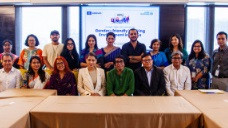 Gender-friendly Working Environment in Media 30 November 2023 22 October 2023 (Last update: 23 October 2023) Gender disparities persist in Bangladeshi media, hindering women's safety & inclusion. UNESCO Dhaka prioritizes gender equality in media. "Media organizations need to internally make changes to their structure and practices at the very least. For a start, they can improve the way they recruit staff. If they take gender awareness into consideration it will change the balance of male and female staff. Then through media networking they will share these stories and learn from each other." - Miraj Ahmed Chowdhury, Managing Director, Digitally Right - A remark from Miraj Ahmed Chowdhury, Managing Director, Digitally Right; when he gave a speech at a consultation on gender and media organized by UNESCO Dhaka Office in collaboration with UN Women. Likewise, Azmeri Haque Badhan, the Cannes Film Festival-winning actor stated, "First of all, the regulatory structure should be rectified and everyone should be made aware of gender concerns. There should be additional seminars held to raise such awareness."Gender inequality in organizations is a complex phenomenon that can be seen in organizational structures, processes, and practices. Likewise, a gender-enabling environment in the workplace or safeguarding support by the organizational framework of the media houses safety of women journalists and women staff is often a big question in the national media and creative industry of Bangladesh. The work environment for media professionals is not particularly hospitable to women. In line with UNESCO’s Global Priority Gender, striving to achieve improved gender equality in the media is a priority for UNESCO Dhaka in Bangladesh. As a part of a series of consultations with the creative sector and media in Bangladesh, UNESCO in partnership with UN Women organized a roundtable discussion on `Gender-friendly Working Environment in Media’ on, 31 August 2023 at Hotel Amari. During the discussion, Ms. Susan Vize, Officer in Charge, UNESCO Dhaka Office, commented when inaugurating the discussion, "As media professionals, everyone gathered today has a critical role to play in influencing both the current agenda and also future generations.”Ms. Gitanjali Singh, Country Representative, UN Women, observed “UNESCO and UN Women are jointly supporting dialogues on the importance of a gender-friendly working environment in media and the recommendations from today will enable us to advocate with media houses to strengthen equality dimensions in policy, codes, and guidelines, with action plans and clear targets for implementation and monitoring and ensure safe working conditions.” Here are a collection of the thoughts and suggestions from the participants:"Economic disparity and gender inequality are closely intertwined. It is necessary to conduct thorough research to identify the right response.’’ “Additionally, the workplace environment for media professionals is not particularly welcoming for women given the circumstances as a whole. In addition to advocating for policies, all popular content generated must be reviewed via a gender lens.” “Owner-authority and decision-makers of the media need to be included in these discussions." "We don't truly comprehend gender, because there isn't any chance to raise awareness of it at any level of our educational system. If we include courses on gender equality, civic sense, and creativity in our curriculum, perhaps one day we will be more gender-sensitive.’’ “There are now very few women working in the media or creative industries. In order to highlight both the positive and negative narrative of the media environment, it is crucial that we conduct research and collect data on various media landscapes. It will assist the media in freeing themselves of click-bait profits.” The event was also graced by Masum Reza, scriptwriter; Peya Jannatul, lawyer & model; Krishnendu Chattopadhaya, Director; Manoj Kumar Pramanik, Actor & Film Teacher; Subrina Irine, Director at Runout Films; Reaz Ahmed, Executive Editor, Dhaka Tribune; Meer Ahsan Habib, columnist and communication specialist; Israt Jahan Urmi, Journalist, DBC News; Munima Sultana, Special Correspondent, The Financial Express; Samiksha Koirala, Ph.D., Assistant Professor of Journalism and Media, Department of Political Science and Sociology, North South University, Tabassum Islam Shusmi, Lecturer, ULAB; Abu Sayed Sumon, National Program Officer-Gender & Human Rights, UNFPA including other distinguished representatives from the media and creative industry of Bangladesh as the discussants. The discussants shared their valuable insights and experiences on the issues and highlighted the pressing need to work on gender-friendly work environments in the media. https://www.unesco.org/en/articles/gender-friendly-working-environment-media?hub=701
  Connecting cultures through education: A YouTuber’s journey in impacting today’s education for girls 30 November 2023 23 October 2023 (Last update: 22 November 2023) In celebration of the International Day of the Girl Child on 11 October, renowned YouTuber Liry Onni shared the story of how education helped bridge two cultures in her life and how it paved way for her success as a content creator. We sat down for a question-and-answer with Liry Onni, a leading Argentine content creator with Korean roots, who has forged a successful career in networking and became influential on YouTube, with her channel gaining over 2.9 million subscribers. Her story is a testament to the power of education in a person's life and how it can bridge different cultures. As a woman, Liry was privileged to be able to access quality education and fulfill her dream. In the context of International Day of the Girl Child, it is important to remember that millions of girls around the world face barriers to accessing education — in 2023, we still see 122 million girls to be out of school. Through the content that she creates, Liry seeks to raise awareness on the role of universal and inclusive education in changing this reality and providing opportunities especially to girls. https://youtu.be/yInO0fMVAC8 Q: You mentioned that education has played a pivotal role in your life and career as a content creator. Can you share with us a few anecdotes on how education has influenced your personal and professional journey, and most especially how it helped bridge the differences between your Korean and Latin American roots? A: Education gave me not only knowledge, but also the perseverance, confidence and skills necessary to navigate between two very different worlds: Argentine and Korean. It taught me to value both cultures and to find the beauty and richness in each. As a content creator, I combine what I learned in my education with my personal experiences to build bridges and promote cross-cultural understanding. Education gave me the tools to thoroughly research and understand the topics I share —especially when I report on cultural issues or news about Korea; I have a solid foundation to convey the information in an accurate and contextualized manner. I am deeply grateful for the opportunity to have had access to a quality education, and I feel the urge to return that favor to society by sharing and educating others. Q: Based on UNESCO statistics revealed in their SDG 4 mid-term progress review, 122 million girls do not have access to education. How does this number shape your motivations to advocate for girls education? What specific actions do you think people can take to help change this situation and help promote education for girls around the world, i.e., through Korean education and culture? A: That number left me speechless. Every one of those girls has dreams and aspirations, just like I did when I was growing up. I believe we can all make a difference, whether it's supporting organizations that work on girls' education, promoting gender equality in our communities, or simply informing ourselves and speaking out on the issue. Korean culture deeply values education and perseverance. By sharing stories and values of Korean culture, I hope to inspire more people to value and support girls' education around the world. Q: Your work as a YouTuber has built a global community of over 2.9 million subscribers, mainly Spanish speakers who are interested in Korean culture. How do you think your platform can be used to raise awareness and promote the importance of education, especially in relation to Korean culture, and what messages would you like to convey to your followers and viewers on this topic?A: My platform is a powerful tool to educate and raise awareness. Through my videos, I share not only aspects of Korean culture, but also the value of education and how it can transform lives. I want my followers to see that education is a key tool for understanding and respecting other cultures. In addition, I want to convey the message that we all have a role to play in ensuring that education is accessible to everyone, regardless of gender or background. If I can inspire at least one person to take action or value education more, I will consider myself successful. https://www.unesco.org/en/articles/connecting-cultures-through-education-youtubers-journey-impacting-todays-education-girls?hub=701
 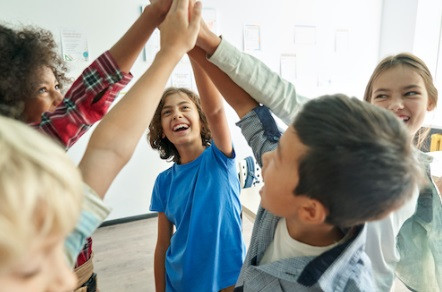 The bookend model: Using SEL to support before- and after-school programs 24 November 2023 16 October 2023 by Damion Morgan/ Social Emotional Learning Specialist, Windsor Public Schools Before- and after-school programs with SEL components offer critical support and safe spaces where students build confidence and a sense of belongingKey points: SEL is critical for students, and it should be a key part of before- and after-school programs SEL should be embedded throughout every program, starting with students’ arrival See related article: It’s critical to promote mental health supports at the start of the school year Incorporating social and emotional learning (SEL) throughout the school day has risen in popularity over the last few years, especially to counteract the increasing rates of anxiety and depression in students since the COVID-19 pandemic. Lost in the discussion, however, is the importance of before- and after-school programs–the bookends of the school day. These before- and after-school programs dedicate a significant amount of time to activities that can help students develop social-emotional skills. In fact, a 2021 survey of program providers found that in addition to academic enrichment, 86 percent of programs give young people the time to interact with their peers and build social skills. Plus, students themselves report that 80 percent of the programs give the students time to talk with peers and adults about how they’re feeling. Yet, staff may not approach every interaction with intention to foster social and emotional growth.Before- and after-school programs offer critical support, including caring and supportive mentors, as well as safe spaces where students build confidence and a sense of belonging. They also provide opportunities to work collaboratively, problem solve, and think critically. SEL skills are not separate from those activities–SEL is not sprinkled on the cupcake; it’s part of the cupcake. Before- and after-school programs must make every interaction more intentional to complement classroom learning.These programs help children develop strong social skills, gain self-control and confidence, improve work habits and grades, and build healthy relationships with peers–all the things we want young people to have to be successful. But to ensure that these programs are set up for success, there are two essential questions every program coordinator should ask: “How well do I know my students?” and “How can I ensure my program meets their needs?” Running an effective programSEL should be embedded throughout every program, starting with students’ arrival. How do you greet students when they show up? When a student hears a caring adult say their name, it instills a sense of belonging, supporting self-awareness. An overview of the schedule at the beginning of the program is important. Kids need to learn how to self-manage and regulate their emotions. For a young person who is excited for the craft part of the program, understanding what else is on the agenda is key to them mastering the skills of self-management and self-awareness.The actual activity is when the rubber meets the road. As program directors and administrators, we need to analyze the activities–how much time are they alone, in small groups and in large groups. It is important to outline the program activities so students have an opportunity to participate in all three options and balance between them. As students develop, they must know how to interact at all three levels. If you find that some students don’t perform in large groups, you may have to reevaluate how well you know your students. For example, if behavior problems spike when you do large groups, maybe the answer is that you have too many students in these groups.Finally, do you have a clearly defined dismissal policy? This is an ideal opportunity to introduce students to social awareness. When your program has an established system of welcoming and dismissing students, it demonstrates consistency. It also helps young people see how their individual behavior fits into the overall success of the program. This is a key component of social awareness, where students understand how they fit into the larger community in various ways. Additionally, it’s a way to model other ways they use social awareness for example while leaving a store or restaurant. It’s a reminder that the SEL skills developed in school are useful in all aspects of life.For students, SEL is not just limited to the classroom. Before- and after-school programs play an equally important role. With every interaction between staff and students, these bookends to students’ days provide the opportunities to hone these competencies and grow, if there is consistency and intention in programs’ approach. https://www.eschoolnews.com/sel/2023/10/16/sel-before-and-after-school-programs/
 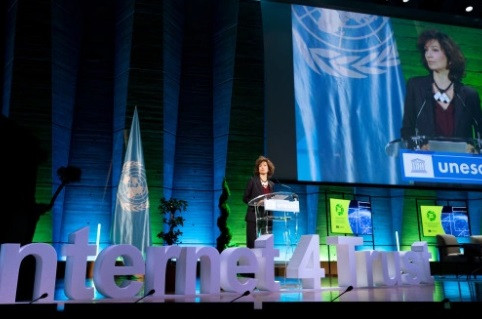 At UNESCO, a call to regulate digital platforms in the face of online disinformation and hate 20 November 2023 23 February 2023 UNESCO’s Internet For Trust Conference has brought together 4,300 participants to discuss regulatory solutions to the ongoing crisis of online information – the first ever such global conference. Speakers from UNESCO Director-General Audrey Azoulay, to the Brazilian President Luiz Inácio Lula da Silva and 2021 Nobel Peace Prize winner Maria Ressa underlined the urgent need for common global guidelines to improve the reliability of information while protecting human rights. "The blurring of boundaries between true and false, the highly-organized denial of scientific facts, the amplification of disinformation and conspiracies – these did not originate on social networks. But, in the absence of regulation, they flourish there much better than the truth. Only by taking the full measure of this technological revolution can we ensure it does not sacrifice human rights, freedom of expression and democracy. For information to remain a common good, we must reflect and act now, together."- Audrey Azoulay, UNESCO's Director-General - The Internet For Trust Conference serves as a high point in a global dialogue launched by UNESCO to develop first global guidelines for the regulation of social media to improve the reliability of information and promote human rights online. The Organization involved all stakeholders: governments, independent regulators, digital companies, academia and civil society. The guidelines will be launched by UNESCO in September 2023. “Without facts, you can’t have truth”"Lies spread faster than facts. For some reason, facts are really boring. Lies – especially when laced with fear, with anger, with hate, with tribalism – us against them. They spread. It’s like throwing a lit match into kindling."- Marie Ressa, Novel Peace prize-winning journalist - She went on to caution that if we continue to tolerate social media algorithms which reward lies, future generations will inherit a world in which truth has been dangerously devalued. “Without facts, you can’t have truth, without truth, you can’t have trust, and we have no shared reality”. In his message to the Conference, the President of Brazil, Luiz Inácio Lula da Silva recalled the violent attacks on democratic institutions in Brazil on January 8. "What happened that day was the culmination of a campaign, initiated much earlier, and that used lies and disinformation as ammunition. To a large extent, this campaign was nurtured, organized, and disseminated through digital platforms and messaging apps. This is the same method used to generate acts of violence elsewhere in the world. It must stop."- Luiz Inácio Lula da Silva, President of Brazil - Regulation coordinated and anchored in human rightsThe Director-General of UNESCO pointed out the proliferation of regulatory initiatives - at least 55 countries are working on these. But she advocated a coherent, global approach, based on human rights. “If these regulatory initiatives are developed in isolation, with each country working in their own corner, they are doomed to fail. Information disruption is by definition a global problem, so our reflections must take place at the global scale,” she said. "Discussions, such as the ones we are having now in Paris, are immensely important. It’s important to figure out a common set of guidelines on how to regulate this digital space. Technology cannot be misused to suppress people, to surveil or harass, or to shut down the internet."- Katrín Jakobsdóttir, Prime Minister of Iceland - YouTube influencer Felipe Neto shared his own experiences with extremist content pushed by algorithms, as one of the world’s most-subscribed content creators. "Of course we don’t want to shut down the platforms – we don’t want to fight them. It’s about accountability, stopping impunity, bringing them to the table and saying ‘you need to be responsible for the mistakes you’ve made and that you’re going to make'."- Felipe Neto, Brazilian YouTube influencer - The Director-General closed by urging all countries to join UNESCO’s efforts to transform the internet into a tool which is truly at the service of the public and that helps assure the right to freedom of expression; a right which includes the right to seek and receive information. https://www.unesco.org/en/articles/unesco-call-regulate-digital-platforms-face-online-disinformation-and-hate?hub=701
  How can young people become actors of peace? 14 November 2023 8 November 2023 On the celebration of the UNESCO Associated School Networks' 70th anniversary, more than 10.000 students from 68 countries were gathered for a series of three digital Campuses in three languages. Peace, intercultural dialogue and understanding, sustainable development, and quality education. These are the foundations of the UNESCO Associated School Network (ASPnet), who is commemorating its 70th anniversary.With many regions of the world facing war and armed conflict, actions on how to build lasting peace remain crucial more than ever. To this end, UNESCO Campus organized a series of campuses, in three different languages, to reach English, French and Spanish-speaking students and teachers. A unique opportunity to celebrate the first day of the 42nd UNESCO General Conference. The dialogues between the experts, students, and teachers led to a list of actions and activities that not only promote peace but enrich our understating on how to be multi-level active global citizens. Starting from an international point of view, cooperation of different actors, such as international organizations and civil society groups, is essential. Firmin Edouard Matoko, Special Advisor Africa for the Director-General at UNESCO emphasised on cultivating a culture of peace. Historically, peace was defined as the absence of armed conflict and hostilities. However, peace is composed of values, attitudes, and behaviours, which we can all learn from a young age. Peace is a continuous action, in which everyone can contribute to. "Peace is not only the absence of war. All situations of personal or collective conflict, social or economic insecurity and environmental instability contribute to the absence of peace. Each generation has a mission to accomplish: to guarantee peace for the generations to follow."- Firmin Edouard Matoko, Special Advisor Africa, Director-General, UNESCO - Important goals can also be achieved at the national and community level. Actions for peace are essential in conflict and post-conflict zones. In this kind of situation an operation of mediation is vital to settle the situation.To inspire students and to enlighten them about the sheer of mediation, Saurea Didry Stancioff, West Africa Program Manager at Promediation, shared her experience. Mediation is a key tool to establish trust and dialogue between the contending parties of a conflict. The mediation process can help build the first blocks to establish lasting peace, through creating a bridge of dialogue to find innovative solutions. Talking about the local point of action, Panji Haryo Purnomo, Teacher of Pradita Dirgantara High School, School leader of Fostering Global Citizens through the Memory of the World, provided students and teachers with an example of a successful local peace initiative. His commitment to education and his unwavering dedication to nurturing the youth through knowledge and culture have fostered a sense of peace among his community in Boyolali, Indonesia. Through conflict resolution, the empowerment of youth and the preservation of a shared cultural heritage is fundamental. "Peacebuilding is not abstract; it's made of actions and conversations. Let's be ambassadors of peace, champions of dialogue, and preservers of heritage. Together, we can turn the dream of peace into a tangible reality."- Panji Haryo Purnomo, Teacher of Pradita Dirgantara High School, School leader of "Fostering Global Citizens through the Memory of the World" - The multiple questions by students and teachers led to a lively discussion on how each one of us can act for peace. Within our day-to-day lives, the experts left the participants with the inspiration on how each one of us can act for peace. For Firmin Edouard Matoko, it is to embrace diversity and seeing it as a strength. For Saurea Didry Stancioff, each of us can start by active listening. Lastly, for Panji Haryo Purnomo, it starts with respect for everyone and everybody. Fostering peace exists and can be done at multiple levels. All it takes is the courage to start. This event has made possible thanks to TECH4ALL and with the support of France. https://www.unesco.org/en/articles/how-can-young-people-become-actors-peace?hub=701
  Online disinformation : UNESCO unveils action plan to regulate social media platforms 14 November 2023 6 November 2023 Audrey Azoulay, Director-General of UNESCO sounded the alarm on Monday about the intensification of disinformation and hate speech online, which constitutes "a major threat to stability and social cohesion". To put an end to this scourge she unveiled UNESCO's action plan, the result of extensive worldwide consultations and is backed by a global opinion survey underlining the urgent need for action. "Digital technology has enabled immense progress on freedom of speech. But social media platforms have also accelerated and amplified the spread of false information and hate speech, posing major risks to societal cohesion, peace and stability. To protect access to information, we must regulate these platforms without delay, while at the same time protecting freedom of expression and human rights."- Audrey AzoulayUNESCO Director-General - UNESCO's action plan is the result of a consultation process on a scale unprecedented within the United Nations system, with over 10,000 contributions from 134 countries collected over the last eighteen months. Over forty pages, it outlines the principles which must be respected as well as the concrete measures which must be implemented by all stakeholders: governments, regulatory authorities, civil society and the platforms themselves. Representatives from independent regulators have already welcomed UNESCO's initiative, and several of them - notably in Africa and Latin America - have indicated that they are ready to begin implementing these measures. To this end, UNESCO will organize the first World Conference of Regulators in mid-2024. The Organization will also support its Member States in transposing this action plan into their own laws and regulations. To this end, UNESCO is mobilising dedicated funding, including 1 million Euros already pledged by the European Commission. 7 fundamental principles to be respectedUNESCO's measures are organised around 7 principles which must be respected so that: The impact on human rights becomes the compass for all decision-making, at every stage and by every stakeholder. Independent, public regulators are set up everywhere in the world, with clearly defined roles and sufficient resources to carry out their mission. These independent regulators work in close coordination as part of a wider network, to prevent digital companies from taking advantage of disparities between national regulations. Content moderation is feasible and effective at scale, in all regions and in all languages. Accountability and transparency are established in these platforms’ algorithms, which are too often geared towards maximizing engagement at the cost of reliable information. Platforms take more initiative to educate and train users to think critically. Regulators and platforms take stronger measures during particularly sensitive moments like elections and crises. Freedom of expression must be protected"Our work has been guided by one central requirement: the protection at all times of freedom of expression and all other human rights. Restricting or limiting speech would be a terrible solution. Having media outlets and information tools that are independent, qualitative and free, is best long-term response to disinformation", the Director-General underscored.In particular, platforms must have teams of qualified moderators, in sufficient numbers and speaking all the main languages of their social media, so that they can carry out reliable and effective control of content that is posted online. They must ensure the transparency of the moderation process, including when it is automated through algorithms. They must also facilitate their use, in all the main languages of the country in which they operate, and report on complaints from users.Sections of this strategy are also dedicated to the measures needed to guarantee electoral integrity - notably through electoral risk assessments, clear content-flagging and greater transparency of political advertising and its targeting - and to respond to emergency situations, such as armed conflicts and disasters.Elements specific to the cultural sector have also been included, highlighting the risks faced by artists and the need for online access to "diverse cultural content" as a fundamental human right to be safeguarded - with reference to the Declaration unanimously adopted by UNESCO Member States at the MONDIACULT Conference in September 2022. Global survey confirms the urgent need for actionThe publication of UNESCO's action plan is accompanied by an opinion poll conducted by IPSOS for UNESCO, with over 8,000 respondents across 16 countries where elections will be held in 2024. It shows that 85% of citizens are worried about the impact of online disinformation, at a time when social media platforms have become the primary source of information for a large majority of them.The same survey indicates that 87% of citizens believe that this misinformation has already had a major impact on their country's political life and fear that it will influence the results of their country's elections in the next year. As a result, 88% are calling on governments and regulators to resolve this problem quickly by regulating social media. https://www.unesco.org/en/articles/online-disinformation-unesco-unveils-action-plan-regulate-social-media-platforms?hub=701
  Asia-Pacific Living Heritage Lesson Plan Contest: Announcement of winners 13 November 2023 31 October 2023 Six among 24 exemplary lesson plans from 10 regional countries are to be supported with grants for piloting at schools in the months ahead. Six schools in Asia-Pacific will receive grants from UNESCO to pilot their exemplary lesson plans employing living heritage in this year's UNESCO Asia-Pacific Living Heritage Lesson Plan Contest. The regional expert’s panel for living heritage and education deliberated in October 2023, reviewing a total of 146 entries from 96 schools in 23 countries.In addition, a total of 18 lesson plans from 10 countries – Bhutan, China, India, Indonesia, Republic of Korea, Malaysia, Nepal, The Philippines, Singapore and Viet Nam – will receive Commendation Certificates to praise their innovative efforts. UNESCO also acknowledges, with appreciation, compelling submissions from Afghanistan, Cambodia, Islamic Republic of Iran, Kazakhstan, Kyrgyzstan, Lao PDR, Republic of the Marshall Islands, Nigeria, Pakistan, Sri Lanka, Thailand, and Uzbekistan. The vast geographical span of schools submitting their lesson plans to this year’s contest demonstrates today’s mainstreamed interest and growing awareness in the benefits of using local living heritage in enhancing the relevance of education for a new generation.The complete list of 2023 distinguished lesson plans comprises:The Living Heritage Advocate Grant Heritage in the Hands of Young: Oral Traditions Intangible Cultural Heritage Documentation and Mapping (Subject: History/Grade 10), Gelephu Middle Secondary School, Bhutan The Pedagogical Innovator Grant Conical Hat of Vietnam (Subject: Mathematics and Science/Grade 6–7), Gia Thanh Secondary School, Viet Nam The Sustainable Development Contributor Grant Human in their Environment (Subject: Introduction to the Philosophy of the Human Person/Grade 12), Malinta National High School, The Philippines Intangible Cultural Heritage Elements that Unify two Koreas (Subject: Korean Language, Social Studies, P.E., Arts, Practical Art/Grade 6), Yiseo Elementary School, Republic of Korea The Special Expert Grant Formulating a Community Action Plan (Subject: Community Engagement, Solidarity and Citizenship/Grade 12), Parañaque National High School-Main, The Philippines Protecting the Environment in the Community (Subject: Science/Grade 8), Azpetia National High School, The Philippines Each of the six schools that will receive the grant of US$1,000 will be tasked to actualize the lesson plans in classrooms and produce a short video clip on the process and lesson learned for UNESCO to showcase on its website and social media. Additionally, by December 2023, all 25 lesson plans will be accessible by schools and teachers across the world on UNESCO’s global clearinghouse on Living Heritage and Education, at: https://ich.unesco.org/en/clearinghouse-education. Commendation Certificates AwardedIn addition to the six winners of grants, 18 distinguished lesson plans have been acknowledged with Commendation Certificates by multinational education and culture experts in this year’s contest: Saykha Offering (Subject: English), Tsirangtoe Central School, Bhutan Setting Up a Herbarium, Learning about Medicinal Herbs and their Cultural and Traditional Uses in the Community (Subject: Science/Grades 7–9), Zilukha Middle Secondary School, Bhutan Shamanistic Worship and Propitiation to the Spirits (Subject: Bhutan History and Civics and Citizenship Education/Grade 8), Bajothang Higher Secondary School, Bhutan Beauty of Intangible Cultural Heritage (Subject: Foundations of College Art Education/ Freshman Year), Anhui Medical University, China The Folk Custom of Building the Peace Kiln for the Mid-Autumn Festival in Jingdezhen (Subject: Mathematics/Grade 7), Jingdezhen No.13 Secondary School, China When Xiabu Meets Batik (Subject: Art/Grade 5–6), ChongQing Shuren Primary School, China Agricultural Practices (Subject: Biology/Grade 8), Paramita Heritage School, India Living Heritage – Quilting in the Kalbelia Community of Rajasthan (Subject: Social Science/Grade 9), St. Stephen's Senior Secondary School, India My City: Varanasi (Subject: Environmental Studies/Grade 2), Sunbeam School Lahartara, India Bringing Back the Javanese Saka Calendar through Ethnomathematics (Subject: Mathematics/Grade 7–12), Binus School Bekasi, Indonesia Song, Play, and Dance (Subject: Interdisciplinary for Indonesian Language, Balinese Culture, Music and Physical Education/Grade 3), Green School Bali, Indonesia Teaching Sound Wave with Sundanese Traditional Instruments (Subject: Physics/Grade 8), Binus School Bekasi, Indonesia Wau – The Malays Traditional Kite: Introduction, Wau Bulan Appreciation, Wau Making and Flying Workshop and Wau Corner (Subject: Traditional Games/Grades 4–5), SMU (A) Tarbiah Islamiah (SABK), Malaysia Himalayan Aromatic Incense-Making and Meditation Workshop (Subject: Economics and Social Studies/ Grades 8–9, 11–12), Pragati Pathshala, Nepal Influence of Biodiversity on the Stability of Ecosystems (Subject: Science/Grade 10), Philippine Normal University Mindanao, The Philippines Understanding the Nature of Religion: From the Perspective of the Tripeople (Christians, Muslims, & Lumads) of Kidapawan City, North Cotabato (Subject: Humanities and Social Sciences/Grade 12), Kidapawan City National High School, The Philippines Bongsan Talchum that Helps the Community Become More Sustainable (Subject: Korean Language and Literature, Social Studies, P.E., Arts/Grade 6), Kimje Buk Elementary School, Republic of Korea Exploring Community Gardens – How and why are they so precious to humans? (Subject: Geography/Grade 9), Admiralty Secondary School, Singapore BackgroundThe UNESCO Asia-Pacific Living Heritage Lesson Plan Contest is supported by the International Networking Centre for Intangible Cultural Heritage in Asia-Pacific Region (ICHCAP), and the Asia-Pacific Centre of Education for International Understanding (APCEIU). This strategic partnership aims to expand the regional impact of bringing living heritage into the classroom in both formal and nonformal education arenas.Integrating living heritage into school teaching and learning not only enriches education but also adds vibrancy to the experiences of both students and teachers. This approach contributes significantly to preserving this heritage for current and future generations, ensuring its continuity and relevance. Moreover, the post-pandemic era has underscored the vital role that living heritage plays in safeguarding the well-being and resilience of communities. It offers a sense of identity, connection, and comfort during challenging times, reminding us of the importance of celebrating and preserving the traditions and practices that bind us together and sustain our collective spirit.Outstanding lesson plans are recognized for their exemplary adherence to various conservation criteria, including the judicious use of pedagogical methods that effectively engage students, a strong connection with local communities, seamless integration of living heritage elements into the teaching and learning process, and a notable contribution to improving the sustainability of not only the immediate environment but also the broader community and beyond. These accolades highlight the value of educational initiatives that not only impart knowledge but also foster a profound appreciation for cultural heritage and environmental stewardship, ultimately shaping a more sustainable and culturally enriched future. For further information about the UNESCO Asia-Pacific Living Heritage Lesson Plan Contest and related projects, visit: https://bangkok.unesco.org/theme/intangible-cultural-heritageand https://www.unesco.org/en/fieldoffice/bangkok/clt/intangible-cultural-heritage. https://www.unesco.org/en/articles/asia-pacific-living-heritage-lesson-plan-contest-announcement-winners?hub=701
 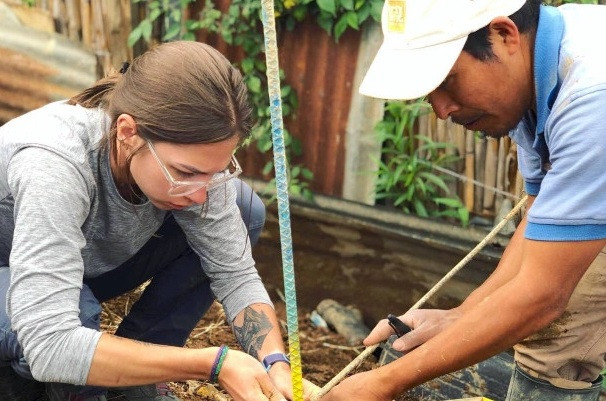 UNESCO-Japan Prize on education for sustainable development awards projects from Guatemala, Japan and Zimbabwe 13 November 2023 2 November 2023 The Prize honours exceptional projects and programmes undertaken by institutions, organizations or other entities in the field of education for sustainable development. The 2023 UNESCO-Japan Prize on education for sustainable development has been awarded to: Long Way Home from Guatemala for their project ‘Hero School’, Kanazawa University from Japan for their project ‘Intergenerational Learning on ESD to revitalize remote communities inside Japanese UNESCO Biosphere Reserves and Geopark’ and the Zimbabwe Institute of Permaculture from Zimbabwe for their project ‘SCOPE’. Chosen by an international jury, the three initiatives showed outstanding work and dedication in incorporating sustainability into their education systems and engaging their communities. Long Way Home, GuatemalaLong Way Home was chosen for its project “Hero School”, which aims to provide affordable and high-quality education to marginalized communities while integrating sustainable values into lesson plans and curriculum. Such sustainable values include climate change mitigation, improved access to quality education and clean water, food security, gender equality, and improved human rights.Students actively contribute to the community's well-being by constructing essential living conditions and structures such as smoke-reducing stoves, drinking water cisterns, safe waste disposal latrines, landslide-preventing tire retaining walls, and earthquake-resistant safe housing.The project garnered the jury's recognition for its transformative impact and educational approach. Their efforts in empowering students, training teachers in sustainable values, and addressing economic and environmental challenges in a holistic way were commended, particularly in providing marginalized communities with knowledge and resources for sustainable self-reliance. Kanazawa University, JapanKanazawa University in Japanhas successfully contributed to the revitalization of remote communities with a decreasing and aging population, in Japan's UNESCO Biosphere Reserves and Geopark.Through their project “Intergenerational Learning on ESD to revitalize remote communities inside Japanese UNESCO Biosphere Reserves and Geopark” they have fostered` intergenerational bonds and collaborated between local villagers, and students, transforming each resident into an "educator" and the entire village into a living learning hub.Notably, the project garnered recognition from the jurors as an exemplary model of intergenerational and intercultural learning, contributing to the rejuvenation of rural areas in Japan. The jurors commended their promotion of sustainable practices among students and their practicality levering the knowledge of residents to spur eco-entrepreneurship and create new job opportunities. Zimbabwe Institute of Permaculture, ZimbabweThe SCOPE Programme, run by the non-profit organization Zimbabwe Institute of Permaculture, through their whole school approach – integrated land use design considers schools as self-contained ecosystems that are addressed holistically. Making all the school land productive, transforming degraded and ornamental spaces into productive food gardens that meet local needs.Students, teachers, and the community all work together to cultivate and harvest a variety of crops, improving food quality and lowering dependency on synthetic nutrients. Facilitating an inclusive transgenerational learning process that allows stakeholders to collaborate on the development of their school and its teaching and learning environment. The international jury noted SCOPE's outstanding contributions to sustainable resource management. Sustainable techniques such as seed conservation, crop diversity, mulching, rainwater harvesting, and school planting were commended for revitalizing school grounds into thriving self-sustaining agricultural and learning environments. About the UNESCO-Japan Prize on ESDFunded by the Government of Japan, the prize was established by UNESCO’s Executive Board in October 2014, and was renewed in November 2019 for a period of six years (2020-2025) with a biennial cycle. Selection criteria looks for strong potential in transformation, innovative quality and ability to embrace all three dimensions of sustainability: The economy, society and the environment. Laureates of the 2023 prize were recommended by an independent international jury. The three laureates were selected among the 92 nominations submitted by the governments of 51 Member States and 7 organizations in official partnership with UNESCO. https://www.unesco.org/en/articles/unesco-japan-prize-education-sustainable-development-awards-projects-guatemala-japan-and-zimbabwe?hub=701
 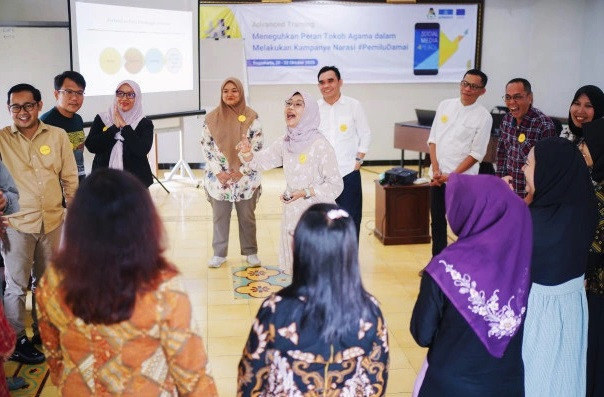 Social Media 4 Peace Training for Religious Leaders ahead of the 2024 Indonesian Elections 13 November 2023 3 November 2023 UNESCO and Gusdurian Network Indonesia(GNI) held a training for religious leaders on promoting peacebuilding narratives online for peaceful 2024 elections in Indonesia. On 20-22 October 2023, UNESCO, in collaboration with the GNI, held an advanced four-day training for 20 religious leaders. The event brought together digital media practitioners and senior religious leaders, who are involved in their communities as lecturers, directors of religious schools, and represent different religions and areas in Indonesia, including North Maluku, South Sulawesi, East Kalimantan, East and West Java.Participants were trained on how to identify mis/disinformation and hate speech, enhance digital security, engage in strategic communications and advocacy for peace. The workshop included fundamental theory on freedom of expression standards as well as practical team exercises. The event opened a space to exchange experiences and create a network for future collaboration in promoting peace and intercultural dialogue. Training Religious Leaders in Indonesia"The provided materials were very useful to better understand freedom of expression standards online. It inspired me to organize a forum for the Christian Youth Group in South Sulawesi, to raise awareness of the issues and support initiatives that contribute to building peace online. " - Ms Erny Tonapa, a priest from South Sulawesi - "The training program was essential. Aside from supporting my work as a social activist, social media has become a strategic space to campaign for peaceful messages, especially ahead of the 2024 political year. "- Mr Suaib, the GUSDURian Regional Coordinator for Sulawesi, Maluku, and Papua, who lives in Makassar, South Sulawesi - Indah Trianingsih, a faith leader from Lembaga Naluri Budaya Leluhur (Ancestral Cultural Intuition Institute), joined the training because she wanted to gain a deeper understanding of the issues related to disinformation, hate speech, content moderation and governance. "After this training, I will share my experience with my community, as I gained a deeper understanding of the ins and outs of the digital world, to ensure that our faith community members support a peaceful election campaign."- Ms Indah Trianingsih, a participant from Lembaga Naluri Budaya Leluhur (Ancestral Cultural Intuition Institute) - Moving forward, the event will be followed by three more trainings, targeting 60 young and aspiring religious leaders in Yogyakarta, Cirebon (West Java) and Manado (North Sulawesi),areas that have been deemed as prone to conflict in the context of elections. The events will culminate in a large-scale hybrid festival towards the end of 2023. The series of trainings are part of the UNESCO Social Media 4 Peace project, funded by the European Union. This project aims strengthen the resilience of societies to potentially harmful content online, in particular hate speech and disinformation, while protecting freedom of expression and promoting peace through digital technologies. https://www.unesco.org/en/articles/social-media-4-peace-training-religious-leaders-ahead-2024-indonesian-elections?hub=701