
News
Follow the newest trends and news in GCED.
1,676 Results found
 Asia and the Pacific Chapter of the 2003 Convention’s Global Network of Facilitators strengthened with 18 new members recruited (12-17 October 2023) 13 November 2023 6 November 2023 https://youtu.be/-0idlOEUWgI As the Global Network of Facilitators of the 2003 Convention for the Safeguarding of the Intangible Cultural Heritage (ICH) expands to address emerging demands and priorities across the globe, 18 experts from 12 countries have been selected for the Asia and the Pacific Chapter. From 12-17 October 2023, the newly recruited members went through an ‘initiation’ by participating at the Training of Trainers (ToT) workshop, organized by UNESCO and CRIHAP. Hosted by Chengdu Municipality Government under the framework of the 8th Chengdu ICH Festival, the ToT was meant to serve as an occasion for new network members to deepen their knowledge and expertise concerning ICH safeguarding, to build rapport and explore collaboration opportunities. TOT participants at the closing ceremony © CRIHAP At the opening ceremony, Mr. Zhang Jing, Deputy Director-General of CRIHAP, emphasized CRIHAP’s commitment to aligning with UNESCO’s global capacity-building strategy, enhancing the capabilities of trainers in living heritage and contributing to the advancement of ICH safeguarding in the Asia-Pacific region. Ms. Duong Bich Hanh, Programme Specialist for Culture of UNESCO Multisectoral Regional Office for East Asia underscored that the successful implementation of UNESCO’s global capacity-building strategy heavily relies on the global network of facilitators and welcomed new facilitators to the family. ‘Where I come from and where you can find my ICH’ ice-breaking activity © CRIHAP The five-day intensive program was led by Linina Phuttitarn, a global network’s member since 2018. In order to provide new facilitators with opportunities to strengthen their facilitation skills, most sessions were delivered as a co-creation between the lead trainer and one or more incoming facilitators. A series of presentations, panel discussions and group works took place to equip the new facilitators with 2003 Convention’s key concepts, principles and latest developments, debate on important thematic topics linking ICH safeguarding and education, economic development, rural-urban connection, etc. Fun activities and the use of digital tools helped participants to stay engaged and active throughout the workshop. Exploring one another’s ICH © CRIHAP Workshop participants used very positive words to describe their impression about the workshop, such as ‘unforgettable’, ‘joyful’, ‘well-conceived and implemented’, ‘interactive’ and ‘inspirational’. A number of key takeaways was also shared during the workshop and through the post-workshop survey. First and foremost, the participants appreciated the opportunities to engage in thought-provoking discussions about the significance of safeguarding intangible cultural heritage. The lead facilitator Ms. Linina Phuttitarn commented, ‘together, we delved into a wide range of concepts and principles, and we shared our diverse experiences related to the safeguarding of living heritage. Through this co-creation approach that encouraged an empathic peer support system, we have established a new ground to collaborate and share ideas for our future capacity training programs’. Ms. Anna Yau from Hong Kong SAR, China echoed, ‘the workshop does not only equip us with the knowledge of the convention, but also think deeply about some critical issues’. Developing a workshop plan as a group assignment © CRIHAP Participants also appreciated the opportunities to share their personal experiences and strategies on how to document, promote, and transmit various aspects of their cultural heritage. The exchange of ideas enriched the collective understanding of these practices. Ms. Ng Xin Yi from Malaysia appreciated the fact that ‘the participants are passionate and willing to share’, while Ms. Gunjan Joshi from India recapped that ‘the workshop was a beautiful experience of learning and sharing altogether!’.Participants seized the opportunity to establish connections and partnerships that will stay for the years to come. Ms. Maria Gulraize Khan ‘felt like having a support group in place’ while Ms. Mina Mmidzadeh from Iran appreciated the good opportunity to ‘get to know each other for further networking and cooperation which is a very important factor to fulfill the aims of establishing the global network of facilitators’. Colleagues from the 2003 Convention Secretariat, 6 UNESCO Field Offices and 3 Category 2 Centers on ICH safeguarding in Asia and the Pacific – CRIHAP, ICHCAP and IRCI – also attended the workshop and engaged in discussions with facilitators on future activities. Learning bamboo weaving from a master © CRIHAP The workshop integrated an on-site investigation to Dao Ming Bamboo Village, Chongzhou City, where the participants observed and communicated with local communities on their bamboo weaving techniques, target customers, the business models and marketing. All participants also had an opportunity to witness a great diversity of our world’s living heritage presented at the opening ceremony of the 8th Chengdu International ICH Festival. They were also introduced to China’s legal framework and safeguarding practices through participating in the Forum ‘Retrospection and Prospection of the 20 years implementation of the 2003 Convention for the Safeguarding of the Intangible Cultural Heritage’, organized by CRIHAP. Fun time during the field trip © CRIHAP https://www.unesco.org/en/articles/asia-and-pacific-chapter-2003-conventions-global-network-facilitators-strengthened-18-new-members?hub=701
 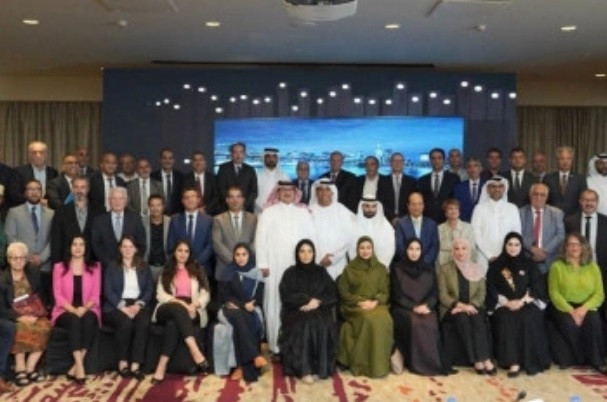 Futures of Education dialogue in the Arab Region 13 November 2023 9 November 2023 UNESCO supported dialogue on the futures of education in the Arab region at a forum entitled "The Future of Education and Human Rights Education in the Arab Region: Towards a New Social Contract” organized in Cairo 18-19 October 2023. The event took inspiration from the 2021 report of the International Commission on the Futures of Education, with the aim of developing a shared vision of a new social contract for education in the region. It was co-organized by the Arab Network for National Human Rights Institutions, the Arab Institute for Human Rights, the League of Arab States, the Office of the United Nations High, the Commissioner for Human Rights, the National Council for Human Rights in Egypt, and UNESCO. Some 150 participants – representatives of ministries of education, regional experts and representatives of regional and international organizations – joined the Arab Regional Dialogue Forum to explore particular challenges facing the Arab region. The forum particularly focused on the integration of human rights education in pedagogical approaches and in the management of educational institutions, with the overall objective of outlining a new social contract for education in the Arab region. The event took place against the backdrop of the tragic developments in the Palestinian-Israeli conflict. Research Specialist from UNESCO’s Future of Learning and Innovation Division, Elena Toukan, outlined the main principles and recommendations in the “Reimagining our Futures Together: a new social contract for education” report. She highlighted that “reimagining education depends on building a new social contract for education that can repair past injustices while transforming the future. It requires a reinvestment and a recommitment to those shared principles that will lead us towards sustainable, peaceful, and just futures – centering the right to education as a common good and a shared endeavor. This involves examining how learning is organized – the design of our education systems, how we organize schools, universities and all the places and times that educational opportunities are present.” In addition to presenting the content of the report, Dr. Toukan also shared how its messages have been taken up worldwide since its release two years ago. The report has been officially translated into over 15 languages, sparking national and regional-level dialogue. The Futures of Education Report has been a key reference for high-level education policy fora, including the 2022 Transforming Education Summit at the UN, over 120 policy and/or research events organized around the world, and has inspired new avenues for research proposals and dialogue in schools and universities around the world. Human rights: A pathway for renewing the social contract for educationOn the first day of the forum, several plenary sessions addressed important topics related to education, the role of educational institutions, and their contribution to enhancing human rights education within curricula, ensuring justice and equality for all. It featured presentations from each of the 16 countries represented, including Algeria, Bahrain, Iraq, Jordan, Lebanon, Morocco, Saudi Arabia, Syria, and Tunisia. The participation of civil society organizations alongside ministry representatives, enriched and widened dialogue on numerous dimensions of education, including lifelong learning, gender equality, education in refugee contexts, and the impacts of conflict and climate change. The Second day was dedicated to working group sessions, presenting over a dozen working papers on crucial issues for the futures of education. Rapporteurs in each session consolidated ideas, presenting a collection of 22 key recommendations arising from the two days of dialogue involving all of the Forum’s participants. This forum built on an earlier regional seminar "The Futures of Education in the Arab Countries: Policies, Approaches, and Directions for Action” organized in May 2022 by the Arab Institute for Human Rights, and which was followed by a series of regional consultations on the futures of education to conceptualize a new social contract for education in Arab countries. This latest Forum is a key milestone for regional stakeholders to deepen dialogue on the integration of human rights education, as an integral part of renewing the social contract for education adapted to needs within the Arab States region. https://www.unesco.org/en/articles/futures-education-dialogue-arab-region?hub=701
 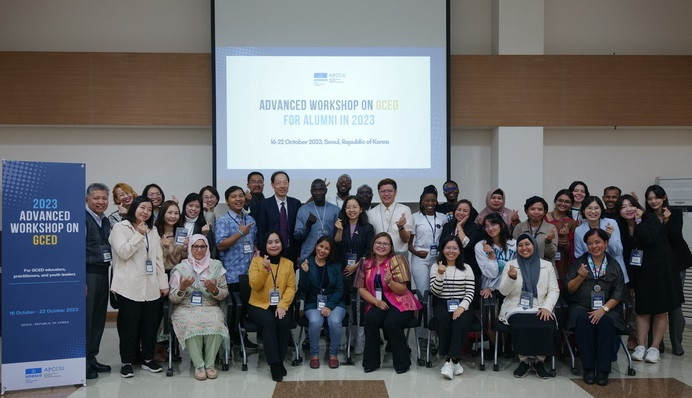 Advanced Workshop on GCED for Alumni in 2023 10 November 2023 22 October 2023 APCEIU held the 'Advanced Workshop on Global Citizenship Education (GCED) for Alumni in 2023' from October 16th (Monday) to 22nd (Sunday). This workshop brought together 27 educators and youth leaders from 13 countries who have diligently implemented GCED projects in their local communities over the past three years. Participants, who have been practising GCED in various social and educational settings, engaged in in-depth workshops that included poster presentations, case study forums, and participation in 'The 8th International Conference on Global Citizenship Education’, and also shared their experiences and discussed the diverse possibilities, impacts, and future directions of GCED. On the first day, during the poster presentation session, participants displayed various visual materials such as posters, brochures, pamphlets, reports, or case study videos to introduce and share their educational activities and projects. Additionally, through four case study forums, all participants shared their experiences in teacher education, global citizenship education practices in classrooms and communities, and youth-led global citizenship education activities. They presented the effects and influences of their activities on students, fellow educators, schools, and local communities based on their years of experience. After the presentations, there were discussion sessions where they shared advice and ideas for future activities. On October 18th and 19th, during the two-day conference, 'The 8th International Conference on Global Citizenship Education,' participants engaged as speakers, panelists, debaters, and attendees. Through presentations, debates, and exchanges with GCED experts, educators, and practitioners worldwide, participants had the opportunity to learn about various GCED practices, policies, and development strategies globally. This allowed them to broaden their perspectives and identify potential future collaborative partnerships for their future activities. Following the conference, participants engaged in workshops with themes such as ''Critical Digital Citizenship' and 'Creating Peaceful and Safe Learning Spaces.' During the 'Critical Digital Citizenship' workshop, participants utilized the Media and Information Literacy (MIL) guidebook developed by APCEIU, which allowed them to integrate digital citizenship into their GCED projects, critically examining the competencies and roles that contemporary global citizens should possess. Also, participants discussed the significance of creating peaceful and safe learning spaces and practical plans educators should pursue in that learning culture in diverse educational settings. On the last day, participants shared their impressions, insights, practical applications, and future plans based on the three elements of GCED, known as '3H' (Head, Hand, and Heart - Cognitive, Socio-Emotional, and Behavioral). They expressed that this workshop allowed for a deeper understanding of the true meaning of GCED. They emphasized that they had the meaningful opportunity to experience interconnectedness and a sense of solidarity, reflect on their past educational activities, and contemplate their roles as global citizens and practitioners, strengthening their determination to promote GCED. Participants committed to continue networking with fellow educators and youth leaders, promoting and practising global citizenship education.
 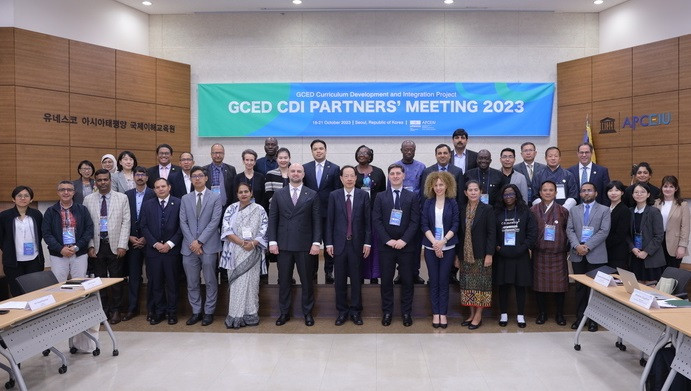 GCED CDI Partners’ Meeting 2023: The Technical Meeting on GCED CDI Project 10 November 2023 20 October 2023 APCEIU hosted the ‘Technical Meeting on Global Citizenship Education Curriculum Development and Integration Project (GCED CDI): Achievements and Challenges’ as part of the GCED CDI Partners’ Meeting 2023 from 20 to 21 October 2023 in Seoul, South Korea.Following the 8th International Conference on GCED from 18 to 19 October, which made up the Capacity Building and Knowledge Sharing component of the Partners’ Meeting, the Technical Meeting provided a platform for the partner countries at various stages of the Project to share their experiences, lessons learned, and future plans with one another. The first part of the Technical Meeting began with welcoming remarks from Mr. Lim Hyun Mook, the Director of APCEIU. This was followed by congratulatory remarks from H.E. Tarash Papaskua, Ambassador of the Republic of Georgia to the Republic of Korea. Representatives from the embassies of Bangladesh, Nepal, and Thailand also attended to show their support for the Project partners who had gathered in Seoul. On the first day, representatives from the Project’s 3rd round (2021-2023) showcased their final project outputs. From Georgia, Ms. Natia Natsvlishvili, Head of the International Relations and Strategic Communication Department, National Center for Teacher Professional Development, shared the GCED materials they had translated into Georgian as well as the online course for teachers they had developed. Representing Indonesia, Mr. Rachmadi Widdiharto, Director of Primary Education, Directorate of Teacher for Primary Education, Ministry of Education, Culture, Research, and Technology, presented the teaching modules and project-based lesson guidelines they had developed. Representing Lao PDR, Dr. Anoulom Vilayphone, Director General, of the Research Institute for Educational Sciences, showcased the GCED framework, GCED-integrated civic educational curriculum, and teacher’s manual they had developed. Ms. Alberta Abena Owusu, Senior Assistant Registrar, Institute for Educational Planning and Administration, representing Ghana as a 4th round (2022-2024) country, also presented on their draft trainer’s manual for teacher training on GCED.The first day concluded with presentations on project monitoring and evaluation by Professor Aaron Benavot from Albany-State University of New York and Professor Esther Care from the University of Melbourne. On the second day, the Project’s 4th round countries had a chance to share their midterm project outputs and future strategies. Representing Bangladesh, Mr. Muhammed Kabir Uddin, Deputy Secretary (School-2), Ministry of Primary and Mass Education, shared their plans to map existing GCED elements in the curriculum, carry out capacity-building for teacher trainers, and develop video clips to use in teacher training and in the classroom. Representing Bhutan, Dr. Dawa Gyaltshen, Curriculum Developer-I, School Curriculum Division, Ministry of Education and Skills Development, presented their draft GCED curriculum framework, integration guide, and lesson exemplars for Social Studies, Values Education, Health and Physical Education, Arts and Language. Representing Ghana again, Ms. Genevieve Mensah, Curriculum Officer, the National Council for Curriculum and Assessment, shared the development of their GCED resource pack for primary teachers as well as a trainers’ manual. Representing Malaysia, Dr. Lai Chee Toh, a researcher at Penang Arts Education Society Arts-ED, presented their plans to develop a teachers’ guide on GCED integration in the upper primary curriculum using transformative pedagogy. Lastly, delegates from the Project’s 5th round countries (2024-2026) shared their countries’ contexts and ideas for the GCED CDI Project: presenting were Mr. Noureddine Bendouqi, Inspector/Coordinator of English, CPGE Morocco, Ministry of Education, Preschool, and Sports from Morocco; Mr. Baikuntha Prasad Aryal, Director General, Curriculum Development Centre, Ministry of Education, Science and Technology from Nepal; Mr. Asim Ijaz Cheema, Section Officer (Training) / Secretary, SDG-4 & Gender Cells, School Education Department Punjab from Pakistan; and Dr. Phanthalert Chalermchai, Director of Social Studies Institute, Office of the Basic Education Commission, Ministry of Education Thailand.The participants of the Technical Meeting are expected to improve on their plans for and beyond the GCED CDI Project based on the ideas shared and feedback received. https://www.unescoapceiu.org/post/4910
 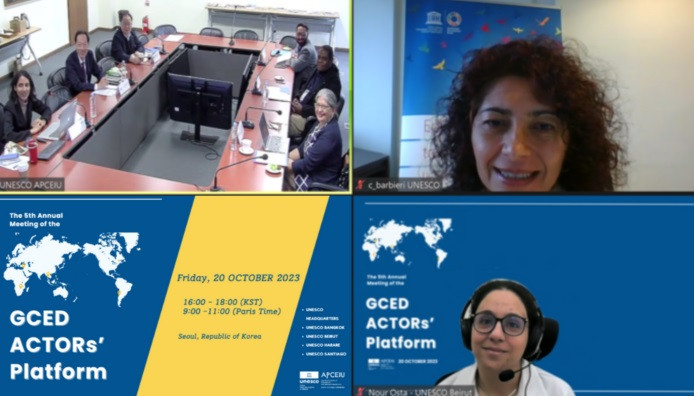 5th Annual GCED Actors' Platform Meeting 10 November 2023 20 October 2023 Together with UNESCO, APCEIU co-hosted the 5th GCED Actors' Platform Meeting on 20 October 2023. Following a three-year hiatus from in-person gatherings, this meeting brought together regional coordinators from four Regional GCED Networks, encompassing the Arab States, Asia-Pacific, Latin America and the Caribbean, and Sub-Saharan Africa in Seoul to share their achievements in advancing Global Citizenship Education (GCED) in their respective regions over the past year and discuss current challenges and potential ways to strengthen GCED implementation on both regional and global levels. The meeting commenced with the opening remarks from Mr Hyun Mook Lim, Director of APCEIU. In his remarks, Mr Lim reiterated the objectives of the GCED network and expressed optimism for generating fresh momentum to advance GCED within the various regions.Following the opening remarks, Ms Cecilia Barbieri, Chief of the Section of Global Citizenship and Peace Education at UNESCO HQs, welcomed the participants and gave a presentation on the future directions of GCED. Additionally, she underscored the significance of the revision of the 1974 recommendation and provided insights into UNESCO's strategies for upcoming years. APCEIU then offered an overview of the GCED Network programme since its inception.Regional coordinators from 4 regions were also invited to share the latest GCED programmes/initiatives and opportunities for implementing GCED and suggestions for joint GCED actions. Dr Faryal Khan from the UNESCO Bangkok Office gave updates on the GCED activities in the Asia-Pacific region, including the GCED publication targeting different Learners. Dr Charles Chikunda from the UNESCO Harare Office presented on the GCED activities in Sub-Saharan Africa, including the integration of GCED and Southern Africa Liberation History in the curriculum. Mr Cristián Bravo, from the UNESCO Santiago Office, presented on GCED activities in the LAC region, such as capacity building MOOC. Similarly, Ms Nour Osta from the UNESCO Beirut Office provided updates on the GCED activities in the region, including the integration of GCED into higher education institutions. The participants also engaged in a discussion session led by Director Lim of APCEIU. Participants discussed strategies to enhance the integration of Global Citizenship Education within their specific regions. Other Key topics explored during this session encompassed the significance of youth voices and the role of academia in integrating GCED, the importance of synergies among existing networks, fostering a shared understanding of GCED, and potential future partnerships between different offices and networks. https://www.unescoapceiu.org/post/4915
 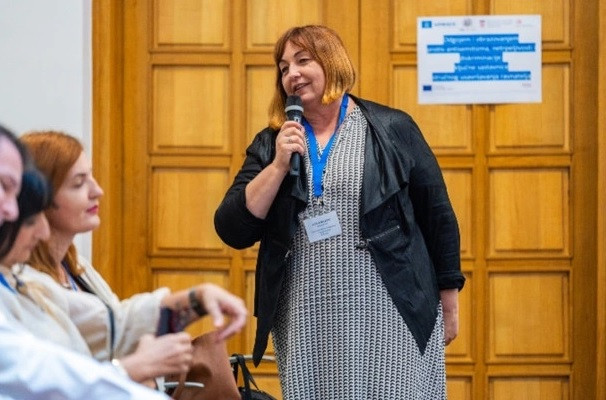 UNESCO trains educators in the EU to better address antisemitism, intolerance and discrimination 10 November 2023 6 October 2023Last update:31 October 2023 Antisemitism is on the rise in Europe and globally, threatening Jewish individuals and communities, as well as the very fabric of democracy and the security of societies. Challenging this growing threat starts with education. UNESCO launched a series of tailored workshops in EU member states to help educators and policy-makers effectively act against antisemitic hate and discrimination in and out of classroom.The first training in a row united 50 school directors and teacher trainers across Croatia on 26 September 2023 in Zagreb. This initiative, in partnership with the Ministry of Science and Education and the OSCE Office for Democratic Institutions and Human Rights, is part of a 2-year project on tackling antisemitism through education, funded by the European Union. Urgency to actReports show that every second European considers antisemitism a problem, with 44% of young Jewish Europeans experiencing antisemitic harassment. The European Commission's Strategy for combating antisemitism highlights education as a key element of the prevention and response. It specifically supports the professional training of educators, teacher trainers and policy makers on addressing antisemitism and in cooperation with UNESCO and the OSCE/ODIHR.“Antisemitism is a threat first and foremost to the Jews, but also to democracy and the values we share. This training will empower school directors and educators to have a decisive impact on the next generation of Croatians by ensuring they will understand the values of democracy and equality”, said Katharina von Schnurbein, EU Envoy on antisemitism, in her opening remarks. Main barriersBoth teachers and learners are not safe from anti-Jewish or other bias-based stereotypes, prejudice, and conspiracy theories. Educators may lack specific knowledge on the topic, which affects their confidence to act on antisemitic incidents in schools – especially when they are not the homeroom teachers of the students in question. Logically, integrating education about intolerance and discrimination into their respective subjects can also require sufficient time and resources.The workshop explored what educators need to know about the problem and change in their teaching approaches to make school spaces safe and inclusive for all and strengthen students' resilience against antisemitism. Sessions also covered policy frameworks, pedagogical strategies and follow-up initiatives for integrating education about antisemitism into curricula and lessons.The workshop benefited from the strong partnership of the Ministry of Science and Education of Croatia which brought together participants from across the country.“Addressing antisemitism is an immediate security imperative and a long-term investment in promoting human rights and global citizenship. We are all responsible for constant sensitization and education of youth and adults. Teaching about the Holocaust has an important place in teaching against antisemitism, because if we allow forgetfulness to take hold of our young generations, in ignorance antisemitism could reach dangerous proportions”, said Radovan Fuchs, Minister of Science, Education and Sports of Croatia. Possible solutionsOne of the solutions to address growing antisemitism is to include an accurate representation of Jewish history, life and culture across various subjects. To explain the real dangers of antisemitism, participatory teaching approaches are just as critical.“Reflecting on your own biases and talking with students about their attitudes without preaching is always the right choice. Listening to other people’s perspectives, getting to know others is the best way to dismantle stereotypes and prejudice[IA1] [NL2] [IA3] ”, says Ksenija Rumora, primary school teacher in Osijek, Croatia, and one of our workshop participants.Enforcing clear action policies against antisemitic and other types of prejudice-based incidents in schools is integral to the solution. However, the linkages between this crucial obligation and the real consequences antisemitism has on education and students’ wellbeing are often unclear to the teachers.“Education is our first and most powerful line of defense to prevent, deconstruct and counter hatred and discrimination. UNESCO’s mission is to prepare well-informed, bold and transformational school leaders that can build the structures, ethos and values needed to address the growing threat of antisemitism and other forms of hate”, said Siniša Šešum, Head of Antenna in Sarajevo, UNESCO Regional Bureau for Science and Culture in Europe. https://www.unesco.org/en/articles/unesco-trains-educators-eu-better-address-antisemitism-intolerance-and-discrimination?hub=87862
 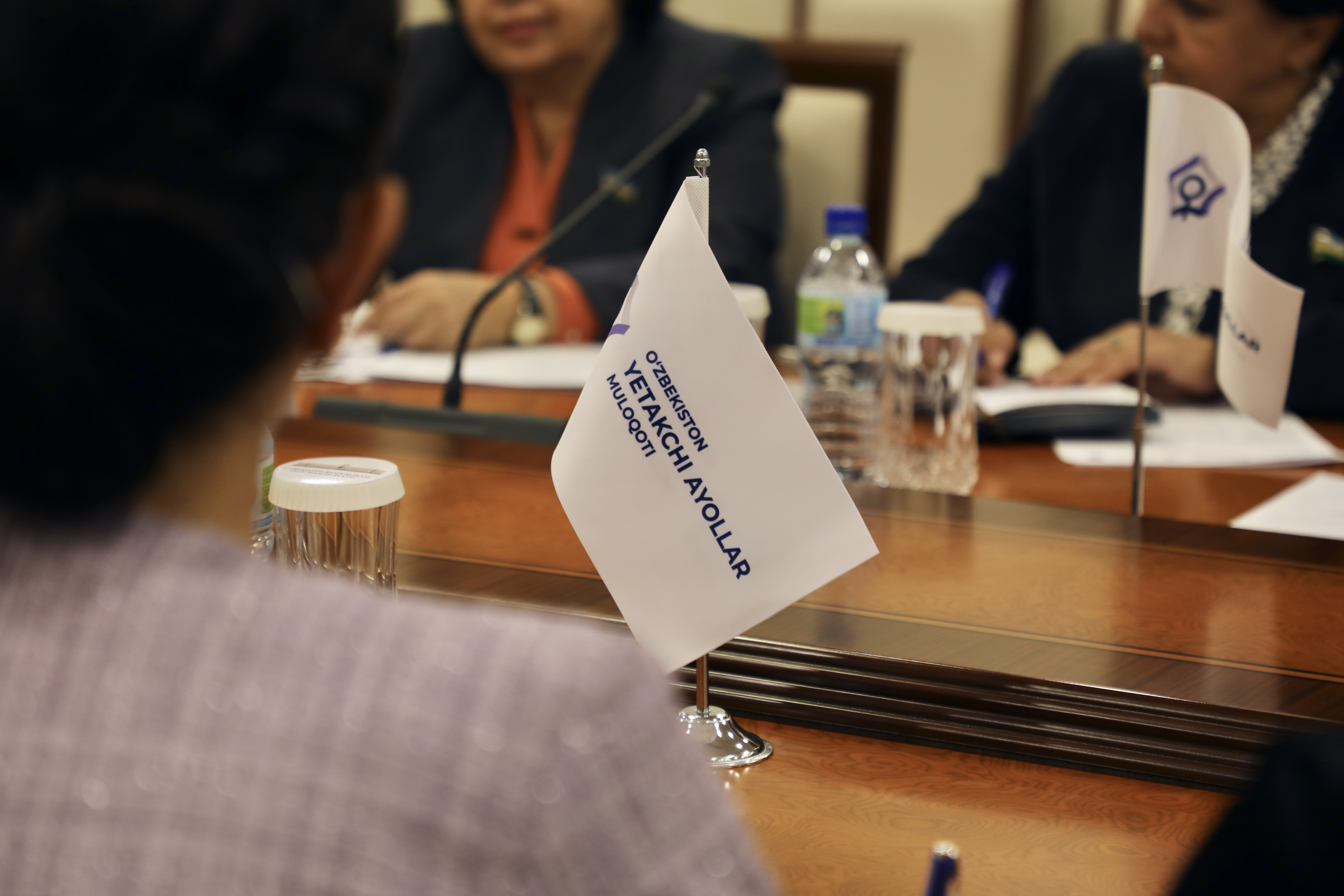 Kickoff of Uzbekistan's National Women Leaders Caucus 2023: Another Step Toward Gender Equality and Empowerment 6 November 2023 On 17 October 2023, the first meeting of the members of the "National Women Leaders Caucus” of Uzbekistan in 2023 was held at the Senate.The meeting was organized as part of a joint project of the Senate and the UN Development Programme "Achieving Equality by Supporting the Implementation of the National Gender Strategy of Uzbekistan".It convened members of the Senate Committee on Women and Gender Equality Affairs, the United Nations Development Programme, members of the National Women Leaders Caucus, as well as representatives of ministries and agencies. At the event, the speakers presented information about the platform and its effective use, as well as plans for its further improvement.In particular, Malika Kadirkhanova, chairperson of the Senate Committee on Women and Gender Equality Affairs, emphasized that the main tasks of the Caucus members are to identify the main problems of women in each region in areas such as entrepreneurship, science, information technology, sports and culture, mass media.Also, the senator specifically emphasized the critical importance of the platform in supporting women leaders with limited capacity, in helping to end gender stereotypes and inappropriate social norms that cause gender-based violence and inequality, and in developing programs for government agencies aimed at radically improving the status of women in each region. At the event, Anas Fayyad Qarman, Deputy Resident Representative of the United Nations Development Programme in Uzbekistan, said the UNDP is ready to provide practical assistance in increasing the potential of women leaders, in particular, in strengthening gender principles in political parties, increasing the political activness of women, as well as improving the public speaking culture of leading women and the skills of communicating with the population. During the event, thoughts and opinions were exchanged on the issues of supporting women to come up with new approaches, ideas and initiatives, ensuring their active participation in the reforms, updates, and political processes implemented in our country, place and role of the "National Women Leaders Caucus" of Uzbekistan in these processes. URL: https://www.undp.org/uzbekistan/press-releases/kickoff-uzbekistans-national-women-leaders-caucus-2023-another-step-toward-gender-equality-and-empowerment
  제 5회 세계시민교육 네트워크 플랫폼(GAP) 회의 개최 3 November 2023 Together with UNESCO, APCEIU co-hosted the 5th GCED Actors' Platform Meeting on 20 October 2023. Following a three-year hiatus from in-person gatherings, this meeting brought together regional coordinators from four Regional GCED Networks, encompassing the Arab States, Asia-Pacific, Latin America and the Caribbean, and Sub-Saharan Africa in Seoul to share their achievements in advancing Global Citizenship Education (GCED) in their respective regions over the past year and discuss current challenges and potential ways to strengthen GCED implementation on both regional and global levels. The meeting commenced with the opening remarks from Mr Hyun Mook Lim, Director of APCEIU. In his remarks, Mr Lim reiterated the objectives of the GCED network and expressed optimism for generating fresh momentum to advance GCED within the various regions. Following the opening remarks, Ms Cecilia Barbieri, Chief of the Section of Global Citizenship and Peace Education at UNESCO HQs, welcomed the participants and gave a presentation on the future directions of GCED. Additionally, she underscored the significance of the revision of the 1974 recommendation and provided insights into UNESCO's strategies for upcoming years. APCEIU then offered an overview of the GCED Network programme since its inception. Regional coordinators from 4 regions were also invited to share the latest GCED programmes/initiatives and opportunities for implementing GCED and suggestions for joint GCED actions. Dr Faryal Khan from the UNESCO Bangkok Office gave updates on the GCED activities in the Asia-Pacific region, including the GCED publication targeting different Learners. Dr Charles Chikunda from the UNESCO Harare Office presented on the GCED activities in Sub-Saharan Africa, including the integration of GCED and Southern Africa Liberation History in the curriculum. Mr Cristián Bravo, from the UNESCO Santiago Office, presented on GCED activities in the LAC region, such as capacity building MOOC. Similarly, Ms Nour Osta from the UNESCO Beirut Office provided updates on the GCED activities in the region, including the integration of GCED into higher education institutions. The participants also engaged in a discussion session led by Director Lim of APCEIU. Participants discussed strategies to enhance the integration of Global Citizenship Education within their specific regions. Other Key topics explored during this session encompassed the significance of youth voices and the role of academia in integrating GCED, the importance of synergies among existing networks, fostering a shared understanding of GCED, and potential future partnerships between different offices and networks. URL:https://www.unescoapceiu.org/post/4915
 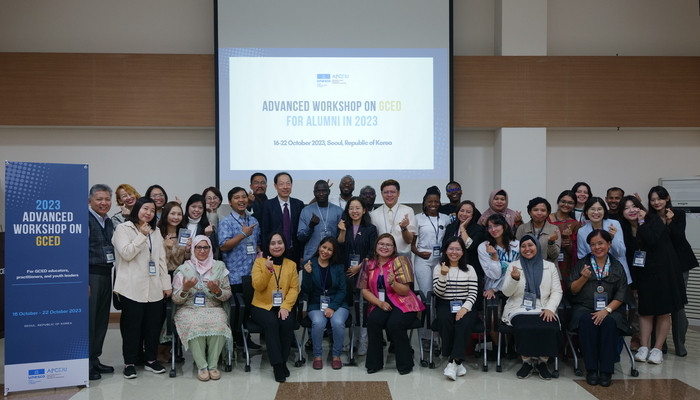 Advanced Workshop on GCED for Alumni in 2023 2 November 2023 APCEIU held the 'Advanced Workshop on Global Citizenship Education (GCED) for Alumni in 2023' from October 16th (Monday) to 22nd (Sunday). This workshop brought together 27 educators and youth leaders from 13 countries who have diligently implemented GCED projects in their local communities over the past three years. Participants, who have been practising GCED in various social and educational settings, engaged in in-depth workshops that included poster presentations, case study forums, and participation in 'The 8th International Conference on Global Citizenship Education’, and also shared their experiences and discussed the diverse possibilities, impacts, and future directions of GCED. On the first day, during the poster presentation session, participants displayed various visual materials such as posters, brochures, pamphlets, reports, or case study videos to introduce and share their educational activities and projects. Additionally, through four case study forums, all participants shared their experiences in teacher education, global citizenship education practices in classrooms and communities, and youth-led global citizenship education activities. They presented the effects and influences of their activities on students, fellow educators, schools, and local communities based on their years of experience. After the presentations, there were discussion sessions where they shared advice and ideas for future activities. On October 18th and 19th, during the two-day conference, 'The 8th International Conference on Global Citizenship Education,' participants engaged as speakers, panelists, debaters, and attendees. Through presentations, debates, and exchanges with GCED experts, educators, and practitioners worldwide, participants had the opportunity to learn about various GCED practices, policies, and development strategies globally. This allowed them to broaden their perspectives and identify potential future collaborative partnerships for their future activities. Following the conference, participants engaged in workshops with themes such as ''Critical Digital Citizenship' and 'Creating Peaceful and Safe Learning Spaces.' During the 'Critical Digital Citizenship' workshop, participants utilized the Media and Information Literacy (MIL) guidebook developed by APCEIU, which allowed them to integrate digital citizenship into their GCED projects, critically examining the competencies and roles that contemporary global citizens should possess. Also, participants discussed the significance of creating peaceful and safe learning spaces and practical plans educators should pursue in that learning culture in diverse educational settings. On the last day, participants shared their impressions, insights, practical applications, and future plans based on the three elements of GCED, known as '3H' (Head, Hand, and Heart - Cognitive, Socio-Emotional, and Behavioral). They expressed that this workshop allowed for a deeper understanding of the true meaning of GCED. They emphasized that they had the meaningful opportunity to experience interconnectedness and a sense of solidarity, reflect on their past educational activities, and contemplate their roles as global citizens and practitioners, strengthening their determination to promote GCED. Participants committed to continue networking with fellow educators and youth leaders, promoting and practising global citizenship education. URL:https://www.unescoapceiu.org/post/4909
  4 Edtech SEL Trends to Follow this Year 31 October 2023 February 3, 2023by Polly Stansell, Vice President of Product, Committee for Children Leveraging a few of these latest tech trends, educators can better the social-emotional well-being of everyone in their school communities Technology has become increasingly important to every level of education, and its value to social-emotional learning, or SEL, is no exception. Just as digital tools provide educators with innovative and flexible ways to reinforce learning in core academic subjects, they can be used to more effectively teach the social-emotional and life skills that students need to thrive in the classroom and beyond.An essential part of my role as vice president of product for Committee for Children, an industry leader in SEL, is to keep a close eye on trends in education technology. After spending more than 25 years in edtech, I know how crucial it is for educators to understand how to leverage technology to support SEL in practical, meaningful ways.Here are four of the latest SEL edtech trends that districts and schools can use this year to support the social-emotional well-being of students and staff, enhance students’ engagement with SEL content, and improve family communications. Trend 1: On-Demand Professional DevelopmentProfessional development (PD) that strengthens educator well-being is a crucial and sometimes overlooked part of SEL for students. With teacher turnover rates on the rise, sustained, meaningful investments in the mental wellness of educators should be a top priority for school and district leaders. Professional learning that’s rooted in SEL can help by giving staff tools to manage stress, build trust, and increase resilience.Higher levels of educator well-being also benefit students. Research shows that teachers with strong social-emotional skills have better relationships with students, enhanced instructional quality, and improved classroom climate.However, the last thing teachers need is more work on their plates. I’ve seen time and again how leaders can help create buy-in by choosing a program that works for teachers’ busy schedules. It’s increasingly important that teachers can access PD online and on demand. This way, they can engage in learning on their own, and in their own time, rather than at costly, all-day conferences.Districts nationwide are providing ongoing education for staff, with an increased focus on skill development and flexible learning. The incremental nature of on-demand PD gives teachers take-aways they can use immediately while allowing for consistent practice and growth throughout the year. This presents them with the ability and opportunity to infuse SEL throughout the school day and across disciplines to support students’ development. Trend 2: Bite-Sized, Social Family CommunicationsCommunication with families has always been essential for schools and districts, but in the last few years, I’ve seen an increased demand for bite-sized, highly focused messages. Gone are the days of the three-page newsletter—there’s just no time! Families are already inundated with communications from schools, their own work, and everything in between.Educators are finding that fun video- and audio-based communications are an effective way to share information. Whether they take the form of TikTok-style videos, texts, or app-based messages, to-the-point digital communications are a great way to keep families engaged in their children’s social-emotional learning.When communications are more accessible, they can also be more equitable. In-person meetings or long Zoom calls require time, equipment, and other resources that families may not have. Language can be another barrier to family communication (the National Education Association estimates that by 2025, one of four children in U.S. classrooms will be English-language learner students), but some messaging tools include translation features to help everyone in the school community stay connected. Trend 3: Gamified SELIt’s no secret that video and online games are a huge part of many children’s lives. Transferring students’ enthusiasm for digital games to the classroom is a great way to keep them motivated and engaged—and enhance their social-emotional development. A research-based approach to gamified SEL gives students the opportunity to practice and strengthen social-emotional skills in fun, interactive, low-stakes ways.Introducing gaming into the classroom is also a way to observe and develop the social-emotional skills kids may have already started to learn in their personal gaming at home, such as working with others and making decisions as a team. Research has shown that popular games like Minecraft can be used in the classroom to foster social connectedness and collaboration and support learning across subject areas. Trend 4: Digital Check-Ins and Pulse SurveysIt’s valuable for educators to be able to get quick and meaningful feedback about the social-emotional climate in schools and classrooms. Simple tech tools like digital word clouds, polls, and gamified quizzes are a great way to take a “pulse check” on how students and educators are feeling in the moment.Over time, this data may show trends in moods, behaviors, and performance. For example, feedback might reveal that students are less engaged on the first day after a long break, more enthusiastic on Thursdays, or sleepier in the first week of daylight savings. Teachers can use these insights to adapt their approach and set students up for success.Additionally, digital SEL programs may include tracking tools, data reports, and self-assessments that capture in-the-moment information about individual and classroom progress. When leaders are more informed about the well-being and performance of their students and staff, they can better support SEL implementation and strengthen school climate. More Technology, More Possibilities for SELAs the volume and variety of technology that’s available to educators continues to expand, so do the possibilities for how these tools can be applied in the classroom. Throughout my career, I’ve seen edtech evolve in its ability to give teachers more options for efficient, flexible, and responsive instruction.When applied to SEL, these tools can also help you strengthen staff and educator well-being, reinforce students’ social-emotional development, engage and connect families, and gather insights to support learning. By leveraging a few of these latest tech trends, you can create opportunities for serious enhancements to the social-emotional well-being of everyone in your school communities. https://www.eschoolnews.com/sel/2023/02/03/4-edtech-sel-trends-to-follow-this-year/ © Copyright 2023 eSchoolMedia & eSchool News.