
Resources
Explore a wide range of valuable resources on GCED to deepen your understanding and enhance your research, advocacy, teaching, and learning.
8,363 Results found
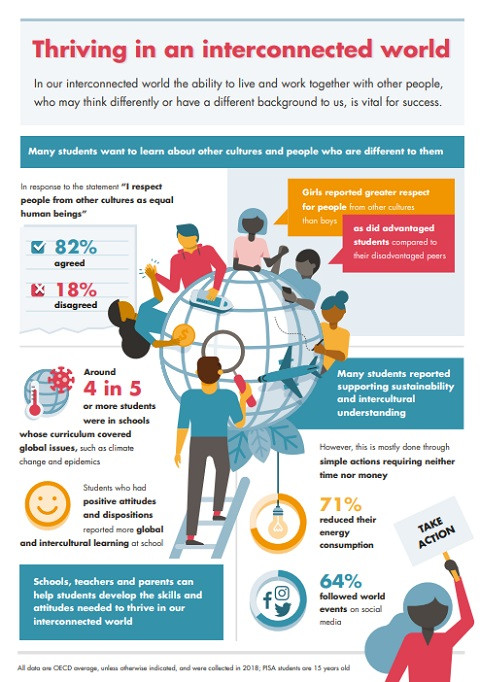 Thriving in an Interconnected World Year of publication: 2020 Corporate author: Organisation for Economic Co-operation and Development (OECD) This infographic shows how ready students are to thrive in an interconnected world. All data were collected from PISA 2018 survey.
 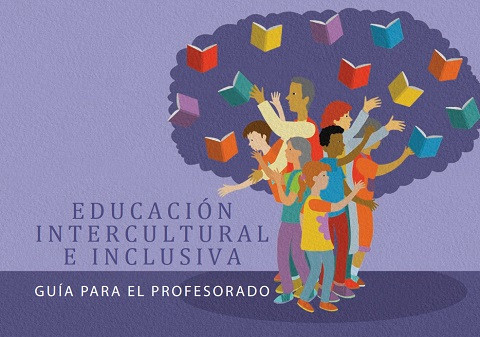 Intercultural and Inclusive Education: Guide for Teachers Year of publication: 2012 Corporate author: Federación de Trabajadores de la Enseñanza (FETE-UGT) This guide brings together some of the key questions and ideas of intercultural education, the aims of which are comprehensive training, equality and training for coexistence.
 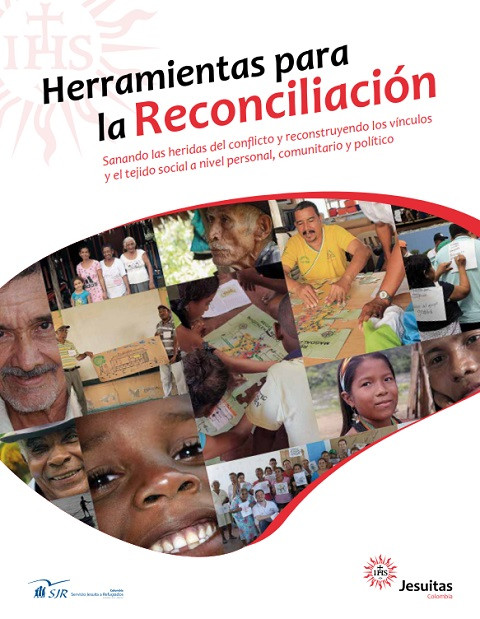 Tools for Reconciliation Year of publication: 2017 Corporate author: Compañía de Jesús | Provincia Colombiana | Servicio Jesuita a Refugiados (SJR) This book presents 10 tools for reconciliation, developed by the Jesuit Refugee Service Colombia, which seek to heal wounds from the conflict and rebuild personal, community and political ties.
 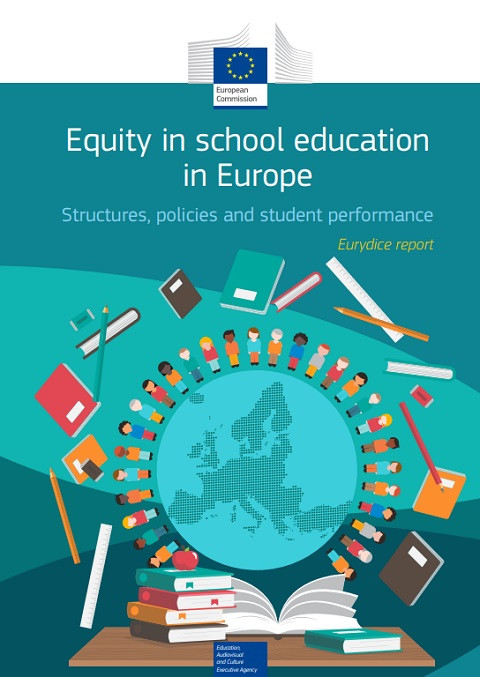 Equity in School Education in Europe: Structures, Policies and Student Performance; Eurydice Report Year of publication: 2020 Author: Teodora Parveva | Anna Horváth | Anita Krémó | Emmanuel Sigalas | Christian Monseur Corporate author: European Commission | Education, Audiovisual and Culture Executive Agency (EACEA) | Eurydice This report provides an overview of education structures and policies that influence equity in school education. It connects these system-level features to student performance in international student assessment surveys (PISA, PIRLS and TIMSS). Looking at 42 European education systems, the report identifies which policies and structures are associated with higher levels of equity in student performance. The report examines the following education system features: participation in early childhood education and care, school funding, differentiation and school types, school choice, admissions policies, tracking systems, grade repetition, school autonomy, school accountability, support for disadvantaged schools, support for low-achieving students and the opportunity to learn.
 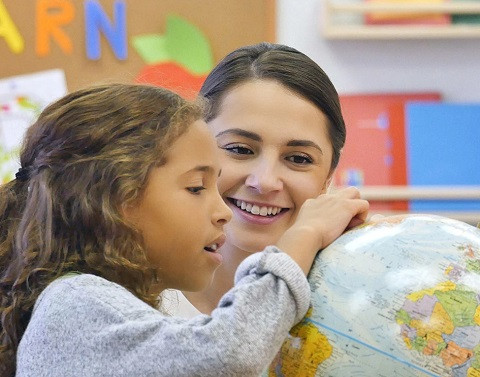 Global Education for Teachers: MOOC Year of publication: 2020 Author: Nicole Blum | Frances Hunt Corporate author: University College London (UCL) The Global Education for Teachers MOOC (Massive Online Open Course) is a three-week course for teachers (3 hours per week) around the world hosted by FutureLearn. The course has been designed specifically for teachers as an introduction to global education and related terms such as global learning / global citizenship education. It will engage teachers with key issues and debates in global education, support collaboration between teachers around the world and provide practical support on how to introduce global issues into teaching. It is intended to develop teachers’ confidence, knowledge and skills to include global education in teaching and in so doing, better prepare students to take on the global challenges they will face now and in the future.
  Inclusion of Students with Disabilities in the Regular School: The Experience of Jordan Year of publication: 2017 Author: Lama Ghoneim Corporate author: Al Fayoum Universit This paper is based on the idea of integrating students with disabilities in public schools for normal students. The researcher used the Jordanian experience to demonstrate the possibility of merging.
  Sultan Qaboos University Students’ Attitudes towards Inclusion of Their Peers with Disabilities Year of publication: 2015 Author: Ibrahim Al Qaryouti | Jokha Al Shukaili Corporate author: Sultan Qaboos University The present study aimed to identify attitudes of students of Sultan Qaboos University towards the inclusion of disabled peers. To achieve the objective of the study, the researchers used a scale to measure students’ attitudes towards inclusion. The final version of the scale consisted of 34 items after verification of validity and reliability. The results showed no significant difference between students of colleges of science and humanities in their attitudes towards the inclusion of their disabled peers. However, there were statistically significant differences in attitudes towards the inclusion of students with disabilities in terms of gender; in favor of females’ domain and the total score. There were differences in attitudes towards the inclusion of students with disabilities among males and females in the college of science, and in favor of females on all domains of the scale.Also, there was significant interaction effect (gender by academic level). Meanwhile, the results of the study did not show statistically significant differences in attitudes between male and female students in the College of Humanities the exception was in behavioral domain, where female students’ attitudes were more positive towards inclusion than male students. In light of these results, the study recommended to study the attitudes of both administration and academic staff towards the inclusion of students with disabilities in Sultan Qaboos University.
 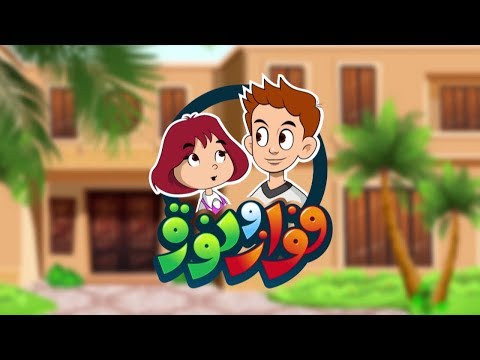 Dialogue Protocols (Fawaz and Nora Series, Episode 29) Year of publication: 2018 Corporate author: Tatweer Company | Saudi Arabia. Ministry of Education The clip is a short video that talks about etiquette of dialogue between children. The teacher enters the classroom and finds quarrels between the children and begins to teach them etiquette of dialogue.
 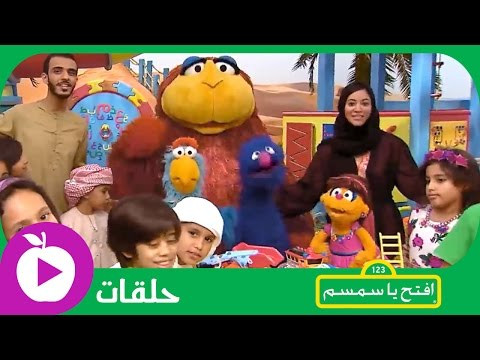 Open Sesame: The Neighbors Year of publication: 2015 Corporate author: Ahlan Simsim A wonderful video clip that captures the importance of love between neighbors, and that companionship between them is the basis for a happy, sustainable life.
  Preventive Education for Educational Institutions in Confronting Ideological Extremism Year of publication: 2015 Author: Muhammad Hassan Corporate author: Ain Shams University The problem in this study is summarized by the following question: How do educational institutions face the problem of ideological extremism through preventive education? Hence, the study aims to achieve some benefits for those interested in education and confronting extremism, such as: 1) Identifying the concepts of extremism and preventive education in facing it. 2) Identify the dangers of the phenomenon of intellectual extremism and its effects among members of society. 3) Identifying the most prominent regional challenges that have a direct impact on spreading deviant thought. 4) Standing on the educational role in confronting this phenomenon, as represented by some educational institutions. 5) Highlighting some educational requirements in preventing the dangers of intellectual extremism.This study relies on the analytical descriptive approach. After the study procedures, which included the following: Preventive education and the challenges of the times, where the concept of education, its importance, objectives and fields, and contemporary intellectual challenges affecting the subject of study were presented, and then intellectual extremism: its concept of its causes and dangers, moving to the requirements of the preventive role of education in facing intellectual extremism. The study concluded the following: Intellectual extremism does not express a situation isolated from the general social and cultural context, but rather the necessity of one of its direct or implicit results. Hence, any treatment of intellectual extremism must be aware of the reality of the family, school, university, mosque, and cultural and media production. The more treatments are directed horizontally, noting the different dimensions and elements, the more feasible and beneficial the results will be.