
Resources
Explore a wide range of valuable resources on GCED to deepen your understanding and enhance your research, advocacy, teaching, and learning.
8,363 Results found
 Research on Community Education and Citizenship Education Driven by Big Data (Journal of Hubei Adult Education Institute; No.11) Year of publication: 2019 Author: Wang Jinying | Zhang Mingyue Corporate author: Heilongjiang Education College Big data is favored by educators in line with the advantages of learners’ brain science, cognitive psychology and educational technology development rules. It has had a subversive impact on the education system and is satisfactory for people. To do a good job in education, improve the quality of the people and strengthen the construction of a learning society, community education should take the initiative to combine with big data to explore the convergence of big data collection, storage, analysis, forecasting and other functions with civic education, build a data ecological space and drive community civic education and cultivate qualified citizens in the community through “ Big Data + Co-ordination” “ Big Data + Services” and “ Big Data + Evaluation ”.
  Australian Citizenship Program and Its Experience (Contemporary Education and Culture; Vol. 11, No. 3) Year of publication: 2019 Author: Sun Hongkai | Sun Yuhua Corporate author: Northwest Normal University In Western countries, the reform of Civics and Citizenship Education is an important way to cultivate responsible citizens. The Australian Citizenship Education Program provides students with a variety of activities, and follows the principle of change, engagement and resolution of specific issues. It is committed to raising students’ awareness of engagement and has achieved outstanding results in cultivating responsible citizens. Australian Citizenship Education program is both thainee- and prantice- oriented, which sets a good example for cultivating students’ awareness and ability of engagement in China. At the same time, critical learning is a must.
 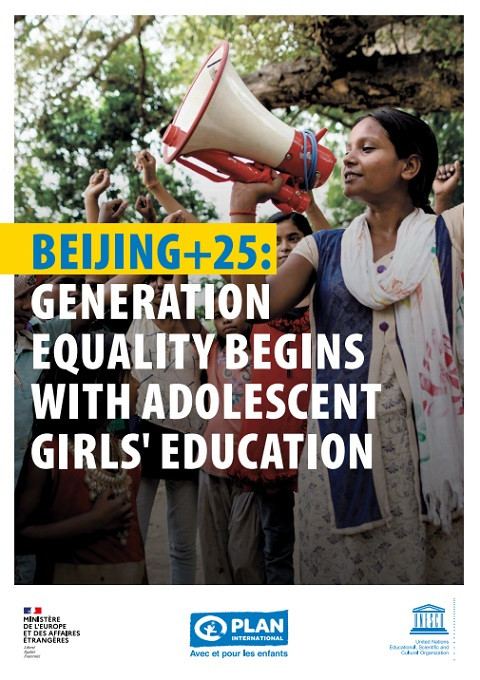 Beijing+25: Generation Equality Begins With Adolescent Girls' Education Year of publication: 2020 Corporate author: Plan International France | France. Ministry for Europe and Foreign Affairs | UNESCO This publication examines progress and persistent gaps in our efforts to achieve gender equality in and through education since the adoption of the Beijing Platform for Action 25 years ago. In 2018, 130 million girls worldwide were out of school, and only two out of three girls were enrolled in secondary education. The crisis related to the COVID-19 pandemic is likely to further widen these gaps and threatens to interrupt the education of more than 11 million girls.This publication demonstrates the importance of adolescent girls' education for the advancement of the Beijing Platform for Action’s visionary agenda, and the achievement of the Sustainable Development Goals.It provides recommendations to fast-track investments and action on adolescent girls’ education during the 2021 Generation Equality Forum, and the related Action Coalitions aiming to accelerate progress for gender equality. It promotes intersectoral approaches and multi-stakeholder partnerships, and focuses on three ‘levers of action’: comprehensive sexuality education, the involvement of adolescent girls in science, technology, engineering and mathematics education, and the development of adolescent girls’ leadership. It shares adolescent girls’ own priorities and expectations, and their vision of what is needed for an equal future for us all.
 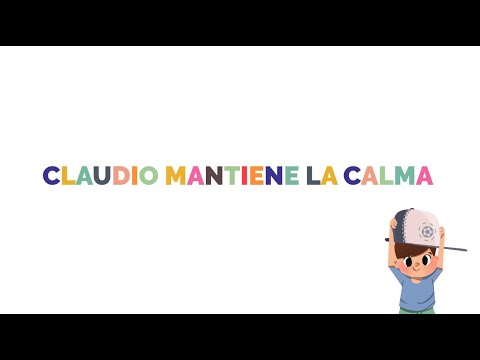 Claudio Keeps Calm Year of publication: 2020 Corporate author: Aulas en Paz This animation presents the story of Claudio and how he managed to stay calm in the face of a conflict situation. It is part of the tools of the Aulas en Paz program for the socio-emotional development of boys and girls.
  60 Proposals for Inclusive Education Year of publication: 2019 Corporate author: Secretaría de Mujer y Políticas Sociales FeSP UGT | European Union (EU) This publication presents 60 ideas for achieving an inclusive education. Although the concept has traditionally been associated with an educational response that integrates children with special abilities into schools; The term is broader, and refers to a progressive transformation of educational systems aimed at achieving a quality education that guarantees all students access to culture and provides them with basic training and education in equality and adapted to diversity that we are in the classrooms.
  Ensuring Lifelong Learning for All in Kazakhstan, Kyrgyzstan, Tajikistan and Uzbekistan: Country Evidence and Policy Recommendations Year of publication: 2020 Author: Arne Carlsen Corporate author: UNESCO Lifelong Learning is at the heart of the 2030 Agenda for Sustainable Development and its 17 goals. More speci¬cally, Sustainable Development Goal 4 is devoted to ensuring quality education and lifelong learning opportunities for all. As the lead agency for education, UNESCO is mandated to support Member States in implementing SDG 4 through the Education 2030 Framework for Action. Central Asian countries – Kazakhstan, Kyrgyzstan, Tajikistan and Uzbekistan – have all shown their commitment to achieving the SDGs by 2030, including SDG 4, and have taken several actions in this regard. This sub-regional study aims to provide a broader picture of lifelong learning in Central Asia, supported by evidence and policy recommendations in order to propose a systemic approach for future education reforms.
  Reviews of National Policies for Education: Kazakhstan, Kyrgyz Republic and Tajikistan 2009; Students With Special Needs and Disabilities Year of publication: 2009 Corporate author: Organisation for Economic Co-operation and Development (OECD) This OECD publication provides an overview of current education policies for children with special educational needs and disabilities in Kazakhstan, the Kyrgyz Republic and Tajikistan. Provides an idea of the socio-historical context, education systems and the corresponding legislation, critically analyzes the adopted views on access to education for the most vulnerable group of children in these countries. Particular attention is paid to political measures, aimed at ensuring inclusive education, procedures identification and assessment, overall coordination of educational service delivery, integration into the general education system, as well as best practices and the role of NGOs and community donors.
  Multicultural Education through ELT Textbooks: Developing a Checklist for English Materials Evaluation Based on Multiculturalism (The Journal of Curriculum and Evaluation; Vol. 20, No. 4) Year of publication: 2017 Author: Minah Kim | Doseon Eur Corporate author: Korea Institute for Curriculum and Evaluation (KICE) Multicultural education is recommended as an effort to resolve significant social challenges in Korea. This is reflected in the 2015 reform of national curriculum and instruction as it promotes cultural diversity and competence. As English textbooks are widely used in EFL classrooms in Korea by both students and teachers, it is useful to examine how much English textbooks are multiculturalism-friendly and -responsive. This study has 3 parts: 1) It makes a critical review of previous research on English textbooks evaluation checklists, 2) it then synthesizes them and proposes a new tentative multiculturalism-based criteria for English textbooks evaluation, and finally, 3) it applies the new subset of the criteria to an English textbook used in EFL classrooms in Korea to test its validity and practicality. Developing a multiculturalism-responsive criteria for English textbooks evaluation will provide multiculturalism-friendly classroom environments in which EFL learners can grow not only linguistically but also 'multiculturally'.
 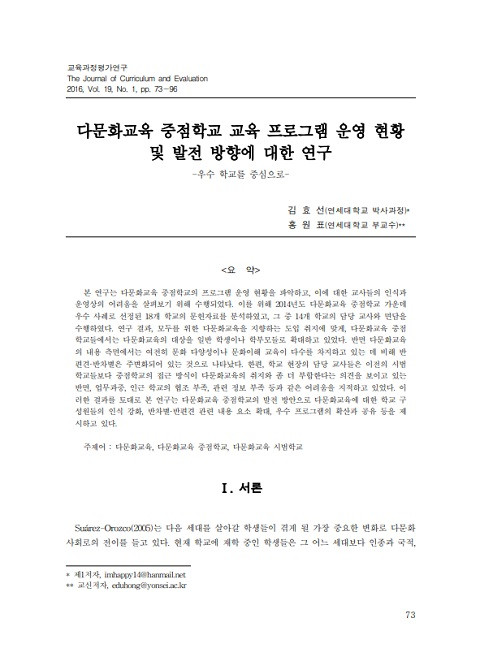 Effects and Limits of Core Schools for Multicultural Education (The Journal of Curriculum and Evaluation; Vol. 19, No. 1) Year of publication: 2016 Author: Hyosun Kim | Wonpyo Hong Corporate author: Korea Institute for Curriculum and Evaluation (KICE) This study investigates curriculum programs of core schools for multicultural education and teachers’ responses to their effects and limits. To address these topics, this study analyzes curricular documents collected from 18 elementary and secondary schools selected as exemplary cases in 2014. It also conducted in-depth interviews with 14 teachers who are in charge of planing and implementing multicultural programs in core schools. Major results support that multicultural core schools expand the targets of multicultural education to mainstream students, their parents and local residents beyond minority students and their parents. It turned out, however, that multicultural core schools still tend to untouch structural biases and discriminations, while focusing on extending students’ awareness of cultural and racial diversities. This study also reveals that participating teachers face such difficulties as heavy workloads, lack of collaboration from local schools, and lack of relevant experiences and instructional materials. Based on these results, this study suggests the sharing of successful programs, enhancing teachers awareness of the significance of multicultural education, and further supports for teachers in charge of multicultural education to achieve the targeted goals of multicultural core schools.
  PISA 2018 Results (Volume VI): Are Students Ready to Thrive in an Interconnected World? Year of publication: 2020 Corporate author: Organisation for Economic Co-operation and Development (OECD) The OECD Programme for International Student Assessment (PISA) examines what students know in reading, mathematics and science, and what they can do with what they know. It provides the most comprehensive and rigorous international assessment of student learning outcomes to date. Results from PISA indicate the quality and equity of learning outcomes attained around the world, and allow educators and policy makers to learn from the policies and practices applied in other countries. This is one of six volumes that present the results of the PISA 2018 survey, the seventh round of the triennial assessment. Volume VI: Are Students Ready to Thrive in an Interconnected World? explores students’ ability to examine issues of local, global and cultural significance; understand and appreciate the perspectives and worldviews of others; engage in open, appropriate and effective interactions across cultures; and take action for collective well-being and sustainable development. The volume explores students’ outcomes on the cognitive test and corresponding questionnaire in addition to their experiences of global and intercultural learning at school and beyond.