
Resources
Explore a wide range of valuable resources on GCED to deepen your understanding and enhance your research, advocacy, teaching, and learning.
8,363 Results found
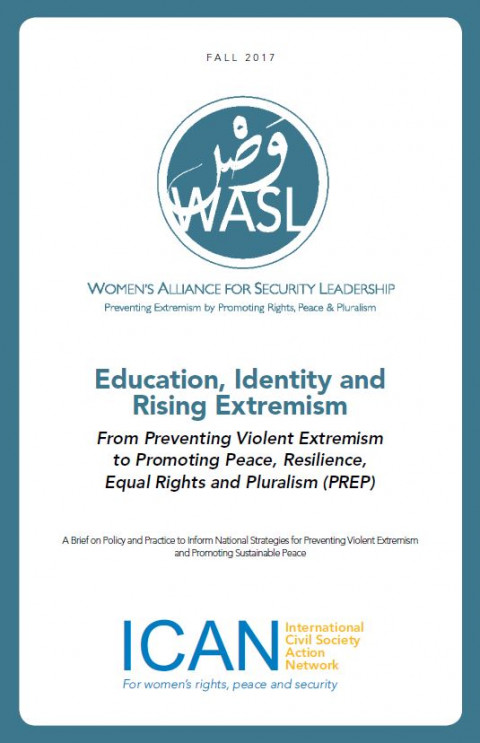 Education, Identity and Rising Extremism: From Preventing Violent Extremism to Promoting Peace, Resilience, Equal Rights and Pluralism (PREP) Year of publication: 2017 Author: Sanam Anderlini Corporate author: International Civil Society Action Network In November 2016, during ICAN’s fifth annual Women, Peace and Security forum, members of the Women’s Alliance for Security Leadership (WASL) and other women-led organizations in over 30 countries analyzed the role of formal and informal education in contributing to enabling conditions and mitigating extremist violence. They also highlighted their own practical experiences and lessons learnt in providing education to prevent violent extremism by fostering peace, resilience, equal rights and pluralism (PREP) in formal and informal spaces, including through the teachings of alternative religious narratives. Their experiences, combined with desk research on the state of current policy and practice, and the first multi-stakeholder Global Solutions Exchange (GSX) meeting on the nexus of education, gender and extremism held at the UNESCO headquarters in Paris in March 2017, inform the findings of this report.
 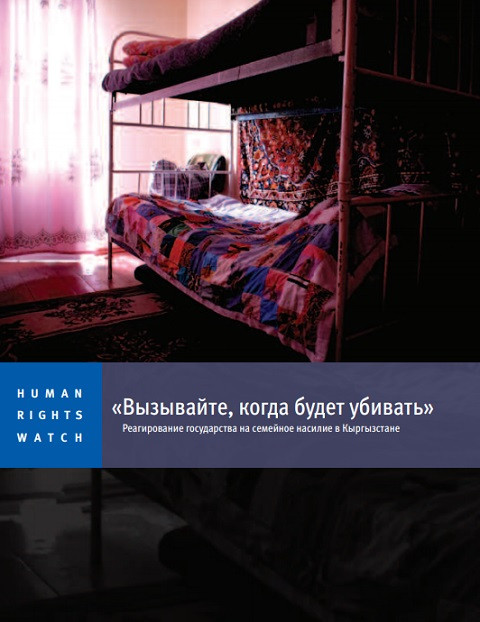 Call Me When He Tries to Kill You: State Response to Domestic Violence in Kyrgyzstan Year of publication: 2015 Corporate author: Human Rights Watch This report documents the government of Kyrgyzstan’s failure to provide survivors of domestic violence with adequate services, protection, and legal remedies. It is based on Human Rights Watch research conducted in November and December 2014 in three cities in Kyrgyzstan: Bishkek and Naryn in the north and Osh in the south. Additional meetings and interviews were conducted in Bishkek in May 2015. The report also contains a number of recommendations to the government of Kyrgyzstan.
 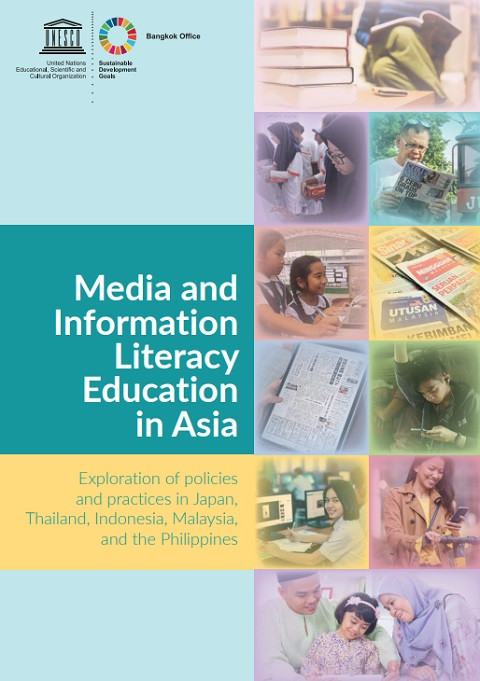 Media and Information Literacy Education in Asia: Exploration of Policies and Practices in Japan,Thailand, Indonesia, Malaysia, and the Philippines Year of publication: 2020 Author: Masato Kajimoto | Phansasiri Kularb | Bobi Guntarto | Sabariah Mohamed Salleh | Therese Patricia S. Torres | Guillian Mae C. Palcon | Ramon Tuazon Corporate author: UNESCO This book looked at the current media and information literacy education policies and teaching practices in formal and informal settings. It explores how MIL could address emerging and pressing problems such as political extremism, false news, online harassment and discrimination in Indonesia, Japan, Malaysia, the Philippines, and Thailand.
  The Foundation of the Rule of Law Consisting in Cultivating Citizens with ‘Inner Views’ (Study & Exploration; No. 7) Year of publication: 2019 Author: Wei Zhixun | Lliu Yize Corporate author: Heilongjiang Academy of Social Sciences In the process of building the rule of law in China, it is of constitutive significance to cultivate modern citizens with “inner views”. Citizens are both the beneficiaries of legal rights and the bearers of legal obligations. Only when citizens truly enjoy their rights and fulfill their obligations can the rule of law be complete. Some of the difficulties encountered in the construction of China’s rule of law lie in the defects and deficiencies in the cultivation of citizens. Under the traditional Chinese political logic and ethical hierarchy order of family-country isomorphism, civic consciousness and civic personality must be difficult to develop. Therefore, in the unique historical context of China’s rule of law construction, citizen cultivation is not only the fundamental way to promote ethnic integration and build a modern nation state, but also the only way to lay the main body and cultural foundation for the realization of the goal of rule of law, and also the inevitable choice for the country to move towards system modernization. Carrying out legal education, patriotism education and all kinds of civil practice training vigorously, with the growth of citizen’s spirits and the accumulation of social participation will contribute to training the general public gradually to be modern citizens with internal points of view and autonomy ability so as to lay a solid social cultural foundations for the rule of law in China. Therefore, the construction of the rule of law in China is logically presented as a dual structure with dual goals: the rule of law must first help to promote the revival and strength of China, and then the goal to protect civil rights earns its meaning and possibility. At the same time, it presets the inherent logic and basic path of Chinese citizens’ cultivation: training citizens in the process of system construction promotes the growth of the rule of law through citizens’ growth so as to achieve perfection.
 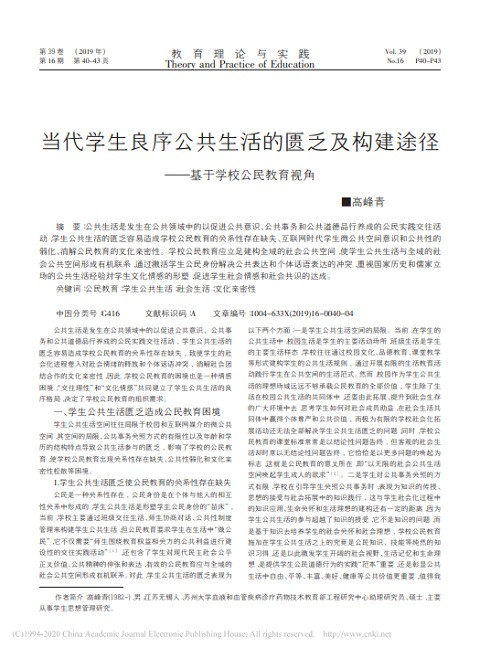 Lack of Modern Students' Well-Ordered Public Life and the Construction Way—From the Perspective of Schools' Civic Education Year of publication: 2019 Author: Gao Fengqing Corporate author: Shanxi Academy of Educational Sciences | Shanxi Educational Association Public life is a practical communication activity for citizens that takes place in the public sphere to promote public awareness, public affairs and public morality. The lack of students’ public life is likely to lead to the lack of relationship in schools’ civic education, the weakening of students’ micro-public space consciousness and publicity in the Internet age, and the removal of cultural intimacy of civic education. Schools’ civic education should be based on the construction of the whole social public space, so that students’ public life will be organically linked with the global social public space. Schools should solve the conflicts between public expression and individual discourse expression by activating the student citizenship, pay attention to the shaping of students’ cultural emotions through public life experience of national history and Confucianism, and promote the achievement of students’ social emotions and social consensus.
  Peace Education Toolkit Year of publication: 2013 Author: Luz Marfa Chapela Corporate author: UNESCO The Peace Education Toolkit is made up of a series of recommended materials for basic education students and teachers. It includes books, stories and various pedagogical tools.
  Time to Reach for the Moon: The EU Needs to Step up Action and Lead the Transformation to Sustainability; Civil Society SDG Monitoring Report Year of publication: 2020 Author: Sylvia Beales | George Gelber Corporate author: SDG Watch Europe | Make Europe Sustainable for All This report explains why the EU’s SDG reporting creates an illusion of sustainability and makes concrete proposals for meaningful monitoring to become a stronger foundation for transformative policies. The report flags up serious gaps, bringing them to life with 17 individual stories. It also offers 17 solutions, real-life examples of progressive policies, innovative initiatives and truly sustainable business models.
  The Status and Issues of Peace Education: Focussing on Its Interactions with Unification Education Year of publication: 2019 Author: Jeongah Cho | Ellie Kim | Ahyoung Moon | Boyoung Yoon Corporate author: Korea Institute for National Unification To lay the groundwork to explore the accessibility of peace education and unification education in an era of peace cooperation on the Korean Peninsula, this study takes a look at the history of peace education and the current situation and issues of both peace education and unification education. Against the backdrop of the division on the Korean Peninsula, unification education and peace education have been established as educational sectors of conflict resolution between the North and the South and of means of mediation for violence caused by the division. The two sectors have developed commonalities along the way. The origin of peace education and unification education is rooted on the division of the Korean Peninsula and the subsequent unification issues. In the current educational practices, there are different characteristics and emphasis in terms of the direction, contents, and subject of education between peace education and unification education. Efforts of creating “peace·unification education” are recently being made which focuses more on issues of peace than existing unification education. Peace education and unification education exhibit differences when it comes to the relationship between peace and unification in realizing a peaceful Korean Peninsula, whether unification is justified as an ultimate goal, how issues of ‘positive peace’ and security are handled, and how much initiatives the learners have. This study asserts that the issues between peace education and unification education should be clarified and that the two sectors should expand the overlapping areas under the principal of dealing with unification issues on the basis of value of peace.
 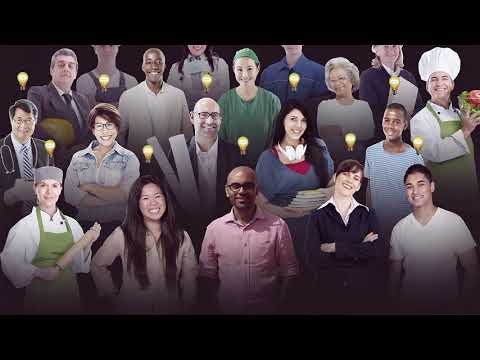 Inequality and Productivity: By Reason and Science Year of publication: 2018 Corporate author: VTRChile The series "By Reason and Science" aims to bring science and technology closer to our daily lives, focusing mainly on local scientific development. This video explores the relationship between inequality and productivity from an economic point of view as well as respect for human rights.
  Youth Participation and Global Citizenship: Challenges and Recommendations for Future Youth School Forums Year of publication: 2016 Author: Anna Jarkiewicz | Joanna Leek Corporate author: Oxfam GB | University of S odz (Poland) The overall purpose of this report is to identify the needs of the Future School Youth Forums on youth participation and global citizenship education. The study synthesizes information from Cyprus, Italy, Lithuania, Poland and the United Kingdom in order to understand similarities and differences, and compare them with wider European trends to understand transversal needs across Europe. It discusses in greater detail the current application of global citizenship youth forums and global citizenship/youth participation in each of the 5 countries – and therefore across 7 national systems (as Wales and Scotland have their own systems), and also transversally across Europe. The report will help Partners to better understand the project’s needs, so that they can design project outputs more effectively.