
Resources
Explore a wide range of valuable resources on GCED to deepen your understanding and enhance your research, advocacy, teaching, and learning.
8,363 Results found
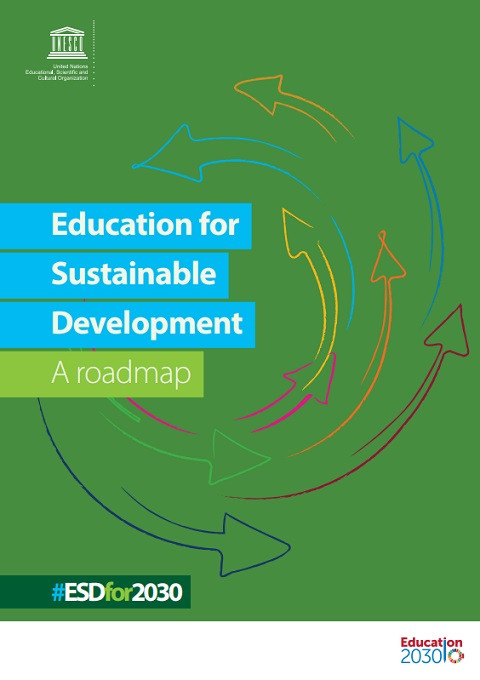 Education for Sustainable Development: A Roadmap Year of publication: 2022 Corporate author: UNESCO This roadmap sets out the urgent challenges facing the planet and underlines the implementation of the new Education for Sustainable Development: Towards achieving the SDGs (ESD for 2030) framework, which was adopted with the aim of increasing the contribution of education to building a more just and sustainable world. ESD for 2030 will step up actions on five priority action areas on policy, education environments, building capacities of educators, youth and local level action, stressing further ESD’s key role for the successful achievement of the 17 SDGs and the great individual and societal transformation required to address the urgent sustainability challenges. The roadmap also underlines the key areas of implementation of the ESD for 2030 framework. ESD is widely recognized as an integral element of Agenda 2030, in particular Sustainable Development Goal 4 (SDG 4), and a key enabler of all the other SDGs.
 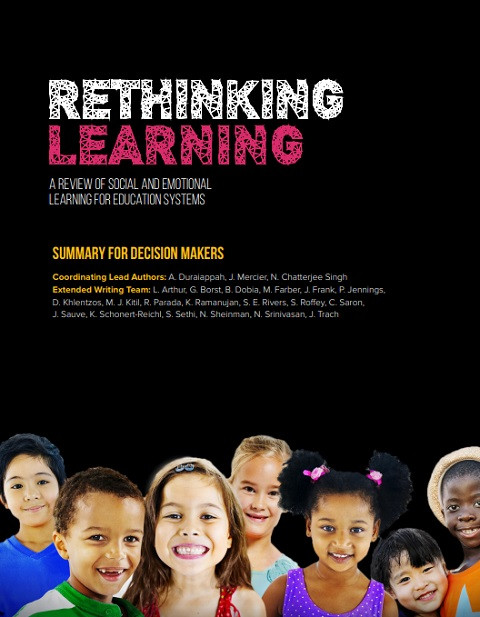 [Summary] Rethinking Learning: A Review of Social and Emotional Learning for Education Systems; Summary for Decision Makers Year of publication: 2020 Corporate author: Mahatma Gandhi Institute of Education for Peace and Sustainable Development (MGIEP) The publication, titled “Rethinking Learning: A Review of Social and Emotional Learning (SEL) for Education Systems” was worked upon from 2018 to 2020. The purpose of this publication was to review the latest research on SEL and to present scientific evidence for why SEL is key to education, and by that corollary, to achieving the United Nations (UN) Sustainable Development Goals (SDGs), specifically SDG 4, Target 7 that focuses on building peaceful and sustainable societies through education.This summary, aimed at decision makers, synthesises and integrates the main findings, challenges and recommendations from the eight chapters of the full Review. The key questions that guided the Review were: (i) What constitutes an SEL intervention; (ii) Why and when SEL interventions are necessary; (iii) The science and evidence supporting SEL interventions; (iv) How can SEL be implemented; and (iv) The cost and benefits of SEL interventions.
  Teachers’ Toolkit: UNESCO Schools Network in Canada Year of publication: 2020 Corporate author: Canadian Commission for UNESCO This toolkit draws on a variety of resources to give educators a range of activities and best practices for students of all ages. Students will learn about human rights and global citizenship, sustainable development, climate action and reconciliation with Indigenous peoples.
 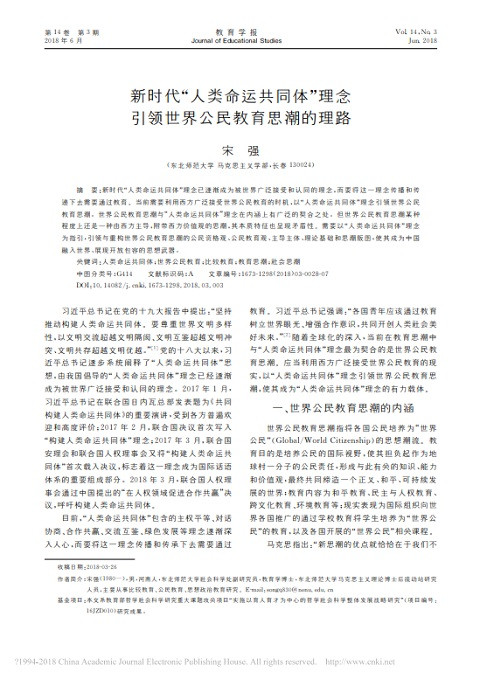 A Discussion of the Concept of ‘Community of Human Destiny’ Guiding the World Citizenship Education Ethos in the New Era (Journal of Educational Studies; Vol. 14, No. 3) Year of publication: 2018 Author: Song Qiang Corporate author: Beijing Normal University In the new era, the concept of “Community of Human Destiny” has gradually been accepted and recognized by the world, and it is necessary to spread and pass this concept by means of education. It is of significance to seize the opportunity of world citizenship education, which is widely accepted in the west, and guide the World Citizenship Education Ethos by the concept of “Community of Human Destiny”. In terms of connotation, the World Citizenship Education Ethos corresponds with the concept of “Community of Human Destiny”. However, the World Citizenship Education Ethos, to some extent, is still Western-oriented and attached with Western values. Its essential features are also presented with conflict. Based on the concept of “Community of Human Destiny”, it is of necessity to guide and reconstruct the concept of citizenship, the concept of citizenship education, the dominant party, the theoretical basis and the thought domain of the World Citizenship Education Ethos using the concept of “Community of Human Destiny”, and empower it to become an ideological weapon helping China to integrate into world and exhibit its open-mindedness and inclusiveness.
 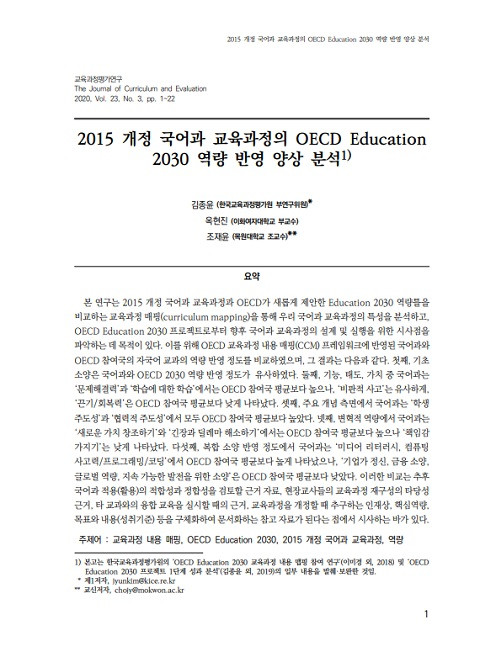 Analysis of the 2015 Revised Korean Languages Curriculum in Terms of the OECD Education 2030 Competencies (Journal of Curriculum and Evaluation; Vol. 23. No. 3) Year of publication: 2020 Author: Jongyun Kim | Hyounjin Ok | Jaeyoon Cho Corporate author: Korea Institute for Curriculum and Evaluation (KICE) The purpose of this study is to analyze the characteristics of the Korean language curriculum through curriculum content mapping (CCM) in the OECD Education 2030 project, which is later compared with the international curricular of the national languages. The CCM framework consists of a “competency code” that presents OECD competencies and a “content code” that contains the content of the curriculum. In this study, the degree of the competencies in the Korean language curriculum is analyzed and compared with the international curricular in terms of the OECD perspective. The result is analyzed as follows. First, foundational literacies of Korean were similar to the international national language curricular. Second, in the competencies of skills, attitudes and values, “problem-solving” and “learning about learning” were higher in the Korean language curriculum than the OECD average, “critic thinking” was similar to, and “persistence” was lower than the OECD average. Third, in terms of key concepts, both “student agency” and “co-agency” were higher in the Korean language curriculum. Fourth, “creating values” and “solving dilemmas” in terms of the degree of reflection of CCM framework competency related to transformational competencies, the Korean Language was higher than the average of OECD member countries in terms of “creating new values” and “resolving tensions and dilemmas” were higher but “taking responsibilities” were lower than the OECD countries. Fifth, the competencies in the compound literacies were also compared. These comparison results provide as reference materials that describes the suitability of the Korean language curriculum and contributes to future revisions of the Korean language curriculum for the students in 2030s.
  Higher Education Policy in Central Asia and Afghanistan Year of publication: 2019 Author: Emma Sabzalieva Corporate author: University of Central Asia (UCA) The purpose of this report is two-fold. Its first aim is to take stock of contemporary higher education in Central Asia, with a particular emphasis on Kyrgyzstan and Tajikistan, and Afghanistan. The second is to offer policy propositions that may support these states to make their higher education systems more innovative, with innovation also incorporating science and technology.
 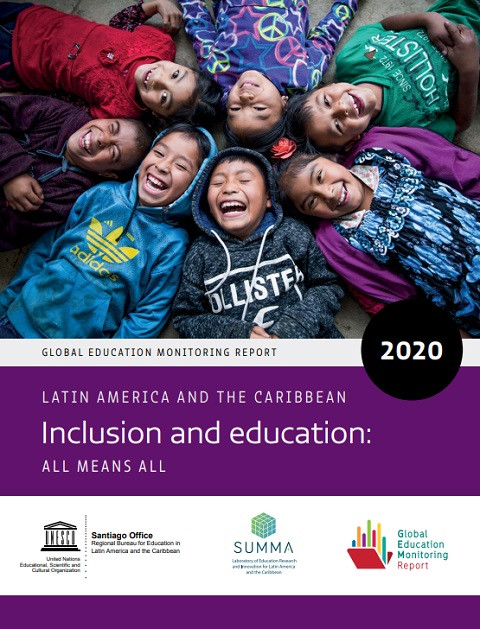 Latin America and the Caribbean 2020: Inclusion and Education; All Means All (Global Education Monitoring Report) Year of publication: 2020 Corporate author: Global Education Monitoring Report Team | UNESCO | Laboratory of Education Research and Innovation for Latin America and the Caribbean (SUMMA) Latin America and the Caribbean has the largest and most challenging socio-economic inequalities in the world, which have shaped its education systems over the decades. This report looks at everyone both in and excluded from education in the region, pinpointing barriers facing learners, especially when multiple disadvantages intersect. The report also explores challenges in education posed by COVID-19 and the need for urgent action to prevent an exacerbation of inequalities. Produced by the Global Education Monitoring (GEM) Report team, in partnership with the UNESCO Regional Bureau for Education in Latin America and the Caribbean (OREALC) and the Laboratory of Education Research and Innovation for Latin America and the Caribbean (SUMMA), the report assesses key solutions for greater inclusion through several case studies from the region. It provides in-depth analysis on challenges to inclusion in education arising from migration and displacement in Colombia and Costa Rica; remoteness in Brazil and Suriname; disability in Cuba and Nicaragua; gender in Peru and Jamaica; sexual orientation, gender identity and expression in Chile and Mexico; poverty in the Dominican Republic and Honduras; ethnicity in Bolivia and Ecuador; and incarceration in El Salvador and Uruguay. Building on the 2020 Global Education Monitoring Report, this regional edition concludes that strong laws and policies in Latin America and the Caribbean demonstrate a commitment to inclusion, but that the daily realities faced by learners suggest implementation is lagging. Recommendations are aimed at promoting more inclusive education systems to benefit all children and youth, no matter their background, identity or ability. The recommendations provide a systematic framework for identifying and dismantling barriers for vulnerable populations, according to the principle that ‘every learner matters and matters equally’.
 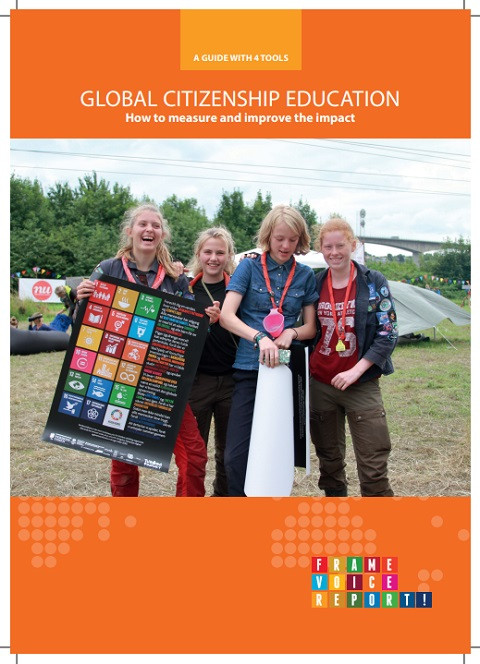 Global Citizenship Education: How to Measure and Improve the Impact Year of publication: 2020 Author: Jan Van Ongevalle Corporate author: Frame Voice Report! Project | Civil Society in Development (CISU) | European Union (EU) This guide presents 4 methods and tools that can help organisations set up an easy-to-use monitoring system for learning about the effects of global citizenship education (GCE) projects. The methods can be used for planning as well as monitoring and evaluating the changes a project has contributed to. At best the methods can keep on strengthening the project in the implementation phase thereby contributing to greater change.
 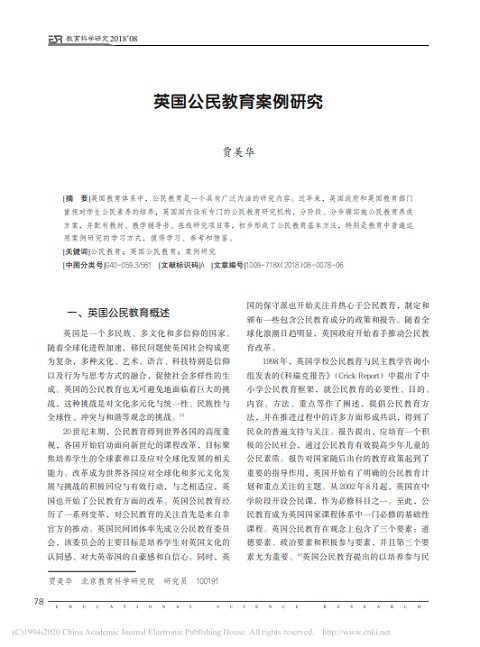 Case Study of British Citizenship Education (Educational Science Research; No. 8) Year of publication: 2018 Author: Jia Meihua Corporate author: Beijing Academy of Educational Sciences | Beijing Radio and Television University In the British education system, citizenship education is a research content with extensive connotation. In recent years, the British government and the UK education sector attention to cultivate students’ literacy of citizens, the UK has special citizen education research institutions, in stages, step-by-step implementation of civic education to develop solutions, and is equipped with teaching materials, teaching coach book, online research projects, basic method, initially formed the citizen education especially education in common use case study approach to learning, which is worthy of study and reference.
 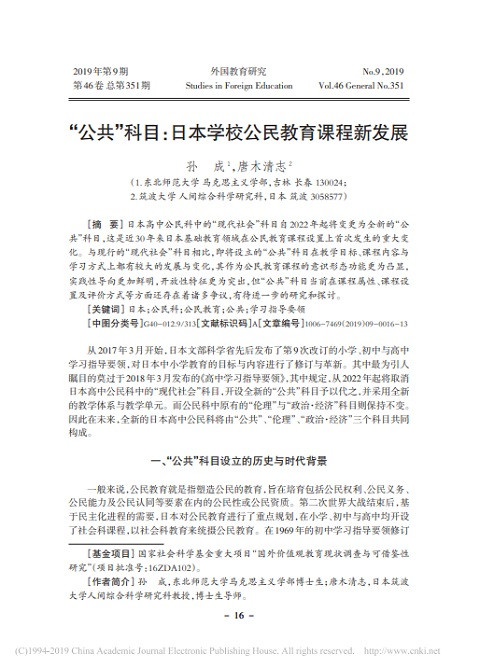 Subject of "Public": The New Development of School Citizenship Education Curriculum of Japan (Studies in Foreign Education; Vol. 46, No. 9) Year of publication: 2018 Author: Sun Cheng | Karaki Kiyoshi Corporate author: Northeast Normal University The “Modern Society” subject of the Japanese high school will be completely changed to the “public” subject since 2022. Compared with the current “modern society” subject, the upcoming “public” subject have a lot of developments and changes in the objectives, content and learning methods. As a civic education curriculum, the “public” subject’s ideological function is more prominent, the practical orientation is more distinct, and the open characteristics are more prominent. However, there are still many controversies and topics in the course attributes, curriculum settings and evaluation methods of the “public” subject, which need to be further studied and discussed.