
Resources
Explore a wide range of valuable resources on GCED to deepen your understanding and enhance your research, advocacy, teaching, and learning.
8,364 Results found
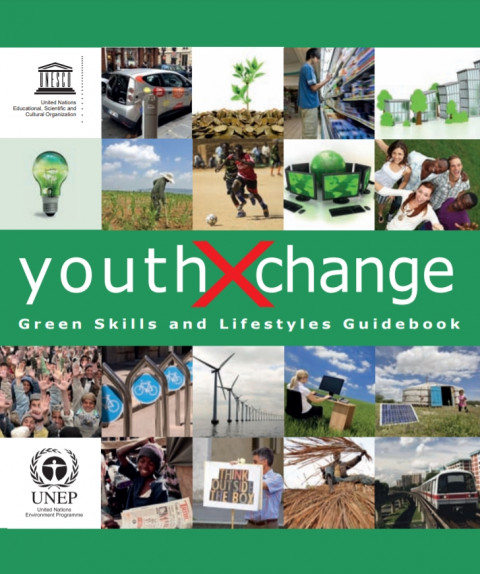 YouthXchange: green skills and lifestyles guidebook Year of publication: 2016 Author: Ryder. Guy, Steiner. Achim Corporate author: UNESCO | United Nations Environment Programme (UNEP) | UNESCO. Director-General, 2009-2017 (Bokova, I.G.) The YouthXchange Green Skills and Lifestyles Guidebook fills this gap. Developed by UNEP and UNESCO, in collaboration with the International Labour Organization (ILO), this Guidebook helps young people connect the talk about the green economy, green societies and green jobs to theirlifestyles. It focuses on the skills required to make these transitions – providing case studies and insight on green jobs and the skills they will require in terms of social innovation and entrepreneurship, the role of different stakeholders (government and private sector) and life skills. Young men and women are already driving change across the world. We must provide them with the skills they need to create new lifestyles and develop green jobs. Building a green future must start with training and education. It must start by listening to young people, by engaging their creativity and acting together.
  Refugee Education 2030: A Strategy for Refugee Inclusion Year of publication: 2019 Corporate author: UN. Office of the United Nations High Commissioner for Refugees (UNHCR) The UNHCR's 2019 Education strategy, which builds on the Global Compact on Refugees.
 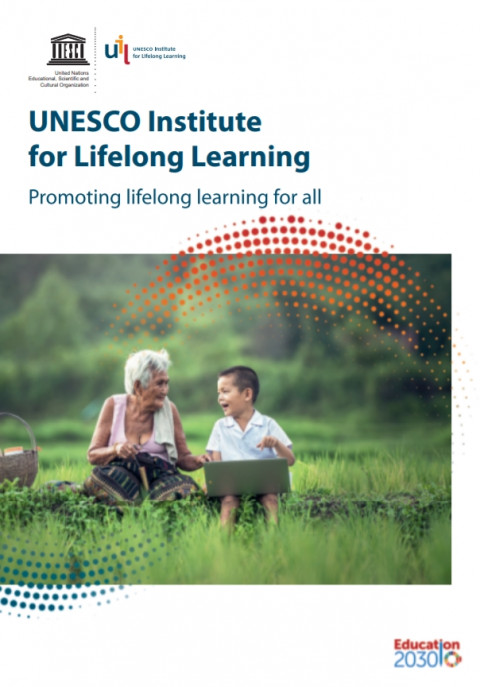 UNESCO Institute for Lifelong Learning: promoting lifelong learning for all Year of publication: 2019 Corporate author: UNESCO Institute for Lifelong Learning (UIL) The UN’s 2030 Agenda for Sustainable Development is our guide to action. Leaving no one behind is at the centre of this global planof action for people, planet and prosperity. The 2030 Agenda for Sustainable Development consists of 17 Sustainable Development Goals (SDGs). UIL has a special responsibility for supporting countries to ‘ensure inclusive and equitable quality education and promote lifelong learning opportunities for all’ (SDG 4). But we are also charged with realizing the potential contribution of lifelong learning to the other 16 SDGs. In today’s fast-changing world, where social, economic and political contexts are being constantly reshaped, learning must be continuous and lifelong, for everyone.
 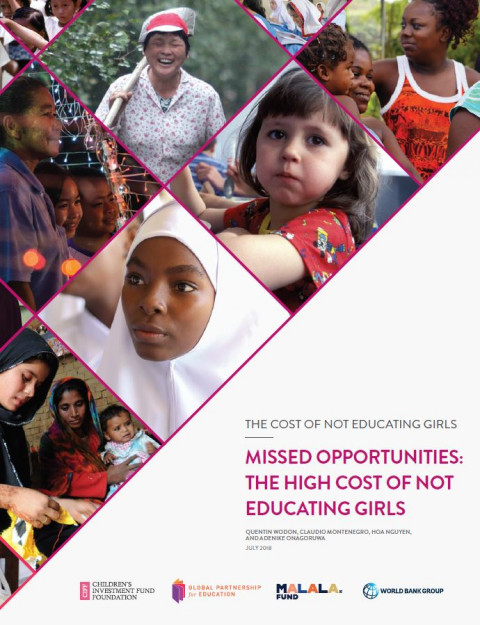 Missed opportunities: the high cost of not educating girls Year of publication: 2018 Author: Quentin Wodon | Claudio Montenegro | Hoa Nguyen | Adenike Onagoruwa Corporate author: Children's Investment Fund Foundation (CIFF) This report estimates the global impact of depriving girls of education as well as showing how educational attainment can affect their life chances and choices, and the outcomes of this at an individual, family and community level. Its findings show the transformative power of education for girls in six areas: (1) earnings and standards of living, (2) child marriage and early childbearing, (3) fertility and population growth, (4) health, nutrition and well-being, (5) agency and decision-making, and (6) social capital and institutions. Findings indicate that limited educational opportunities for girls and barriers to completing 12 years of education cost countries between $15 trillion and $30 trillion dollars in lost lifetime productivity and earnings. The report also finds that primary education is not enough. Across many indicators, benefits from primary education only are limited.
 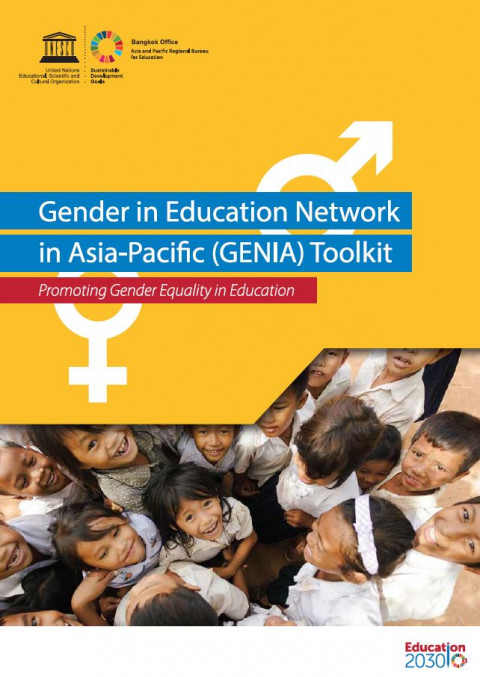 Gender in Education Network in Asia-Pacific (GENIA) Toolkit: Promoting Gender Equality in Education Year of publication: 2019 Corporate author: UNESCO Bangkok The GENIA Toolkit was originally designed in 2003 when the Gender in Education Network in Asia Pacific was established. The fifth edition of the GENIA Toolkit (25 tools) is designed for use by gender focal points and education planners and implementers. It introduces key concepts and theoretical debates, and outlines practical approaches for mainstreaming gender equality throughout the education system, and within education policy.The toolkit is designed to be used selectively, depending on the user’s needs. It can be used as a self-study tool. Readers can select topics that they have identified as priority learning areas to help them improve their own understanding and practical capacity. The toolkit can also be used by trainers to facilitate training sessions. Trainers can choose tools from the kit that best match the needs of their trainees.
 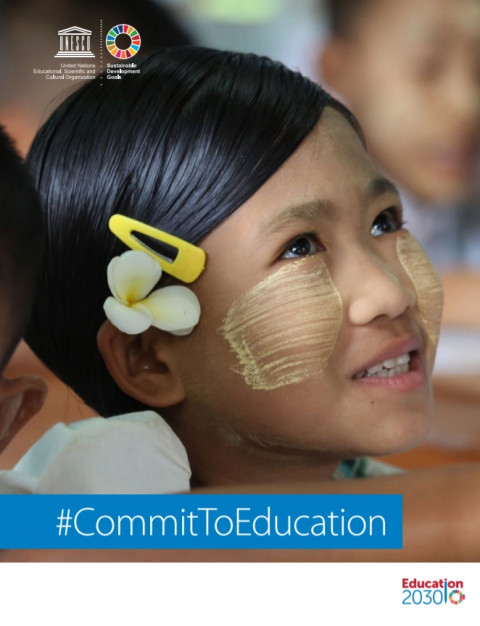 #CommitToEducation Year of publication: 2019 Corporate author: UNESCO In December 2018, building on a series of regional consultations, the education community struck a common chord at the Global Education Meeting in Brussels, the first gathering of its kind since the adoption of the 2030 Agenda. Ministers, representatives of government, multilateral organizations, civil society and other stakeholders agreed on a set of priorities for collective action. These include an overarching focus on the right to inclusive quality education; eradicating illiteracy; including migrants, displaced persons, refugees and stateless persons in education; quality gender-responsive education and training; strengthened education for global citizenship and sustainable development; more flexible and open learning systems providing a broader range of knowledge, skills and competences at all levels; qualified teachers and domestic and international resource mobilization. This set the ground for the first review of SDG 4 by the July 2019 High level Political Forum, the UN apex platform for the follow-up and review of Agenda 2030. As the UN agency responsible for the coordination of SDG 4, mandated by the World Education Forum in Incheon (Republic of Korea, 2015), UNESCO provided an analysis of where the world stands on SDG 4, how countries have taken up the goal in their policies, and made recommendations to act better, differently and collaboratively.
 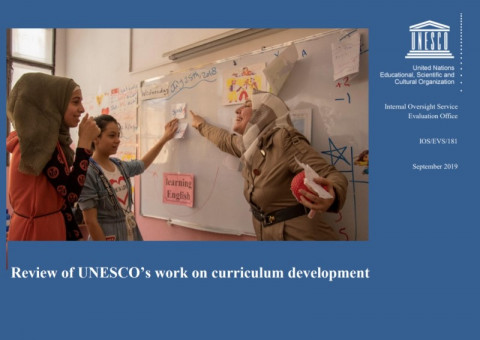 Review of UNESCO’s work on curriculum development Year of publication: 2019 Corporate author: UNESCO In response to a request from the UNESCO Executive Board in Spring 2019, the UNESCO Internal Oversight Service (IOS) Evaluation Office has undertaken this Review to provide a mapping and analysis of UNESCO’s activities in curriculum; to provide an overview of the roles typically played by other national, regional and international actors in the field of curriculum, and to assess the demand for services from UNESCO Member States and donors in the area of curriculum. The review found that curriculum is widely considered as the foundational building block of the education system, resulting from a pedagogical and political consensus with regard to what is important in learning and why, according to both the learner’s needs and societal visions. In light of challenges of the 21st century and the need to strengthen the role of the humanities in a context dominated by technology and data, the redefinition of curriculum has become one of the main concerns of national education authorities around the world. It is also widely accepted that quality curricula can support the attainment of Sustainable Development Goal 4 (SDG 4). The review concluded that curriculum, particularly curriculum development and reform processes, should remain an area of UNESCO’s education programme as it addresses a clear need from Member States. As curriculum implies both technical and political dimensions, UNESCO can act as a neutral broker, to facilitate informed and inclusive policy dialogue. It also has a long-term tradition in facilitating complex curriculum processes in often difficult and sensitive contexts. In addition, UNESCO has the capacity to serve as a platform for international exchanges and comparative research, including through networks such as UNESCO Chairs, and coordinating knowledge hubs and communities of practice. To address curriculum with added value in the future, UNESCO should focus on providing methodological technical assistance, capacity development, standard-setting and policy advice to support the curriculum processes, products and competences in Member States while ensuring a coordinated and holistic perspective. Complementary to work on curriculum from a methodological point of view, thematic Sections at Headquarters should continue elaborating content on specific crosscutting topics. Looking to the future, the review recommends (i) maintaining a specialized category 1 institute as a lead entity on curriculum development; (ii) refining the offer of technical assistance and capacity development to Member States on curriculum development and reform; (iii) developing and maintaining a knowledge base of materials and a roster of experts on curriculum; (iv) providing a platform for policy dialogue and exchange of experience among Member States; and (v) systematizing the inclusion of curriculum in standard-setting and normative work.
  Gender mainstreaming principles, dimensions and priorities for PVE Year of publication: 2019 Author: Katherine Brown | Jayne Huckerby | Laura J. Shepherd Corporate author: United Nations Entity for Gender Equality and the Empowerment of Women (UN Women) This guidance note offers comprehensive background information and resources, along with guidelines and guidance for the UN system, in supporting Member States in their efforts to prevent and counter violent extremism and terrorism (P/CVE)—with a primary focus on preventing violent extremism (PVE). It proposes a model for gender mainstreaming across PVE efforts that is human rights–compliant.The objective of this document is not to provide a single template or one-size-fits-all approach for PVE—in part because a wide range of activities potentially falls under PVE—but more significantly because, to be successful, each context requires a human rights–compliant, gender-responsive, bespoke, and locally derived set of practices and policies.
  Women and violent extremism in Tajikistan Year of publication: 2017 Corporate author: Anna Matveeva | Bakhrom Fayzullayev This study is based on a review of existing research and political literature, as well as data collection in Tajikistan, mainly provided by officials, community respondents, investigative journalists, scholars, and local civil society experts. The aim of the study is to study the role of women in countering the spread of violent extremism.
  Guide for social advocates of domestic violence victims (guidebook) Year of publication: 2016 Author: S. Korneychuk | N, Gladyr | A. Ilyasova Corporate author: S. Korneychuk | N, Gladyr | A. Ilyasova This tutorial is aimed at strengthening the professional potential of specialists directly working with cases of domestic violence in order to maximize the needs of victims.