
Resources
Explore a wide range of valuable resources on GCED to deepen your understanding and enhance your research, advocacy, teaching, and learning.
8,364 Results found
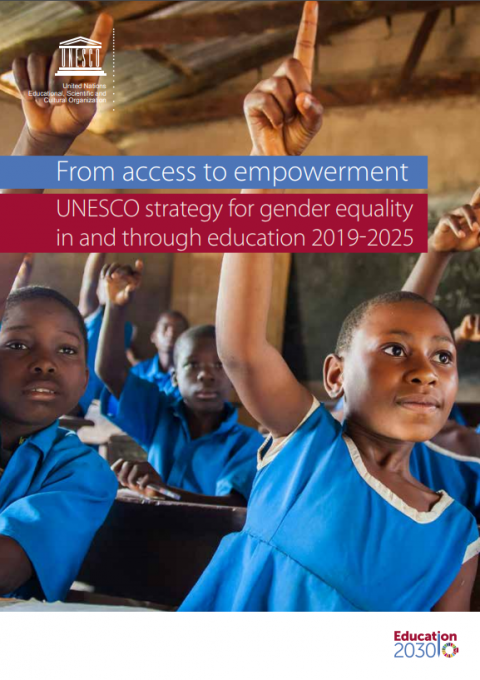 From access to empowerment: UNESCO strategy for gender equality in and through education 2019-2025 Year of publication: 2019 Corporate author: UNESCO Gender bias still permeate the entire education system in some settings and is often perpetuated rather than questionned. This includes the absence of women as leaders in textbooks, to differential expectations of boys and girls by teachers, to school policies that put pregnant girls at the door rather than respecting, protecting and fulfilling their right to education. This Strategy focuses on system-wide transformation to benefit all learners and targeted interventions to support girls’ and women’s empowerment. It offers three clear lines of action: better data to inform action for gender equality in and through education, better legal, policy and planning frameworks to advance rights, and better teaching and learning practices to empower.
 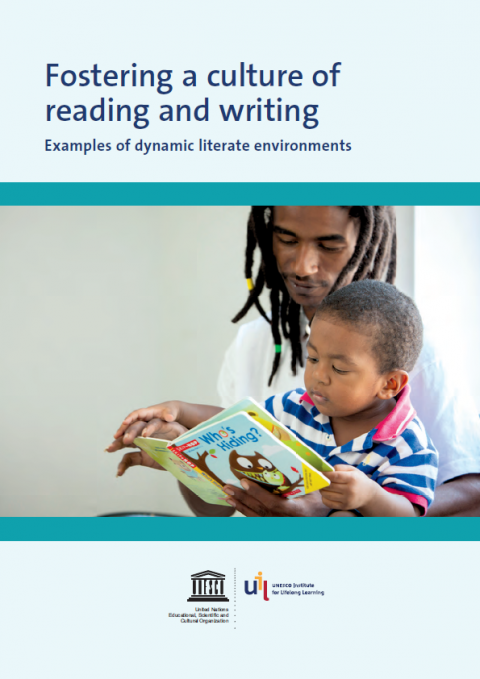 Fostering a culture of reading and writing: examples of dynamic literate environments Year of publication: 2017 Author: Hanemann, Ulrike | Krolak, Lisa Corporate author: UNESCO Institute for Lifelong Learning (UIL) The examples of literacy programmes showcased and analysed in this publication confirm the critical role of literate environments. They have been selected from UNESCO’s Effective Literacy and Numeracy Practises Database (LitBase), which UIL develops on a continuous basis. They demonstrate first and foremost how the development of literate environments can positively influence people’s motivation to (re-)engage in literacy and learning and how they can practise their newly acquired skills in their daily activities to reach sustainable skills levels. In addition, they reveal successful strategies towards a culture of reading, writing and learning in the family, community or wider society. The examples reflect different contexts, such as families, libraries and prisons, to illustrate the potential of ICTs, intergenerational approaches, and community, mobile and prison libraries to engage young people and adults in literacy and learning.
  Sustainable Development Report 2019: Transformations to Achieve the Sustainable Development Goals Year of publication: 2019 Corporate author: Bertelsmann Stiftung and Sustainable Development Solutions Network The Sustainable Development Report 2019 presents the SDG Index and Dashboards for all UN member states and frames the implementation of the Sustainable Development Goals (SDGs) in terms of six broad transformations. It was prepared by teams of independent experts at the Sustainable Development Solutions Network (SDSN) and the Bertelsmann Stiftung.
 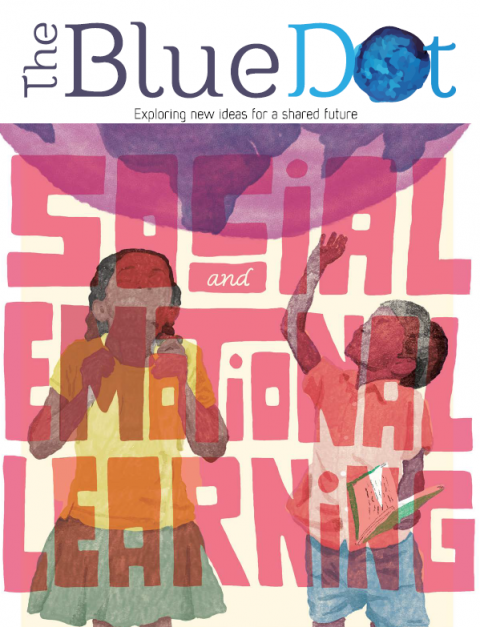 Social and emotional learning (The Blue Dot Issue 10, 2019) Year of publication: 2019 Corporate author: Mahatma Gandhi Institute of Education for Peace and Sustainable Development (MGIEP) The tenth edition of The Blue DOT focuses on different aspects of social and emotional learning, including the neurosciences, teacher training, frameworks such as CASEL and SEE Learning and systemic SEL, amongst others. The issue includes a Foreword by Dr. Richard Davidson, William James and Vilas Professor of Psychology and Psychiatry at the University of Wisconsin–Madison and the Founder and Director of the Center for Healthy Minds, and our Cover Story that focuses on how SEL can help to achieve the United Nations Sustainable Development Goals (SDGs). Additionally, it features interviews and opinions from some of the world’s most prominent SEL experts on the importance of integrating SEL in our education systems. Amongst various experts, we hear from Kimberly Schonert-Reichl on her journey in SEL, Robert W. Roeser on “Educating the Head, the Heart and the Hand in the 21st Century” as well as Roger P. Weissberg and Joseph L. Mahoney on “What is Systemic Social and Emotional Learning and Why Does it Matter”? Further, a featured article with responses to a survey by teachers from 4 countries (Bhutan, India, South Africa and Sri Lanka), following the launch of the Institute’s SEL modules on Global Citizenship in a workshop conducted in New Delhi, India in April 2019 is presented. The modules have been rendered on MGIEP’s in house Artificial Intelligence (AI) driven digital platform now called FramerSpace (formerly CHI) and allow the student to have an interactive, instantaneous feedback and immersive experience while addressing contemporary issues such as migration, nationalism and violence.
 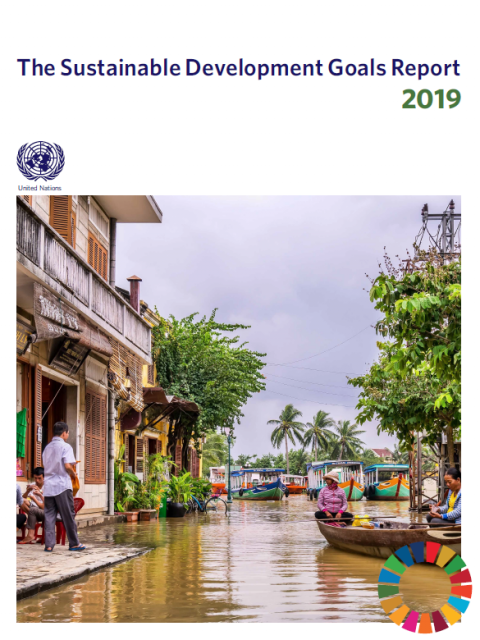 The Sustainable Development Goals Report 2019 Year of publication: 2019 Corporate author: United Nations (UN) Four years after signing the 2030 Agenda for Sustainable Development, countries have taken action to integrate the Goals and targets into their national development plans and to align policies and institutions behind them. The Sustainable Development Goals Report 2019 uses the latest available data to track global progress on the SDGs and to take stock of how far we have come in realizing our commitments. The report shows that, while advances have been made in some areas, monumental challenges remain. The evidence and data spotlight areas that require urgent attention and more rapid progress to realize the 2030 Agenda’s far-reaching vision. Member States agree that these challenges and commitments are interrelated and call for integrated solutions. It is therefore imperative to take a holistic view of the 2030 Agenda and to identify the highest impact areas in order to target interventions. The most urgent area for action is climate change. If we do not cut record-high greenhouse gas emissions now, global warming is projected to reach 1.5°C in the coming decades. As we are already seeing, the compounded effects will be catastrophic and irreversible: increasing ocean acidification, coastal erosion, extreme weather conditions, the frequency and severity of natural disasters, continuing land degradation, loss of vital species and the collapse of ecosystems. These effects, which will render many parts of the globe uninhabitable, will affect the poor the most. They will put food production at risk, leading to widespread food shortages and hunger, and potentially displace up to 140 million people by 2050. The clock for taking decisive actions on climate change is ticking. The other defining issue of our time is increasing inequality among and within countries. Poverty, hunger and disease continue to be concentrated in the poorest and most vulnerable groups of people and countries. Over 90 per cent of maternal deaths occur in low- and middle-income countries. Three quarters of all stunted children live in Southern Asia and sub-Saharan Africa. People living in fragile States are twice as likely to lack basic sanitation, and about four times as likely to lack basic drinking water services as people in non-fragile situations. Youth are three times more likely to be unemployed than adults. Women and girls perform a disproportionate share of unpaid domestic work and lack autonomy in decision-making. Just as problems are interrelated, the solutions to poverty, inequality, climate change and other global challenges are also interlinked. Valuable opportunities exist to accelerate progress by examining interlinkages across Goals. For example, tackling climate change requires a shift to clean energy, reversing the trend in forest loss, and changing our production and consumption patterns. Promoting sustainable agriculture can help reduce both hunger and poverty, since close to 80 per cent of those who are extremely poor live in rural areas. Increasing access to safe drinking water, sanitation and hygiene can save millions of lives per year and improve school attendance. Improving proficiency in reading and mathematics of some 200 million children who are falling behind in sub-Saharan Africa will help them climb out of poverty and ultimately enable the region to better compete in the global marketplace. This report also highlights the importance of investing in data for the full implementation of the 2030 Agenda. Most countries do not regularly collect data for more than half of the global indicators. The lack of accurate and timely data on many marginalized groups and individuals makes them “invisible” and exacerbates their vulnerability. While considerable effort has been made to address these data gaps over the past four years, progress has been limited. Increased investment is urgently needed to ensure that adequate data are available to inform decision-making on all aspects of the 2030 Agenda. Towards that end, the Dubai Declaration, launched at the second World Data Forum in October 2018, outlines a demand-driven funding mechanism under Member States’ oversight that will respond quickly and efficiently to the priorities of national statistical systems.
  Guidelines for education sector plan appraisal Year of publication: 2015 Corporate author: UNESCO International Institute for Educational Planning (IIEP) | Global Partnership for Education (GPE) At the World Education Forum, in Dakar in 2000, the international community pledged that no country with a credible plan to achieve the Education for All goals would be thwarted by a lack of resources. Since then, the development of an education sector plan (ESP) has become a priority in many countries. ESPs present the policies and strategies for national education reform, and are a powerful tool for coordinating partners and for mobilizing additional domestic and external resources. They have become a critical instrument for governments to signal to all potential investors that their education policies are credible, sustainable, and worthy of investment.The consensus on the need for credible ESPs is strong. However, what does a credible plan require in terms of government leadership, knowledge and data, institutional and human capacities, and dialogue among the education stakeholders? What are the criteria that establish the credibility of a plan? The purpose of these guidelines is to assist education stakeholders in appraising the soundness, relevance, and coherence that form the credibility of ESPs. The primary objective of an appraisal report is to support the finalization of a credible ESP. It provides a fair review of the ESP strengths and areas in need of improvement before the endorsement by partners which signifies their commitment to support the implementation of the ESP. These guidelines are meant to be adapted to national contexts and needs. The stakeholders should discuss the scope and the methodology of the appraisal to be used, and develop a common vision of the whole process. The appraisal process should be participatory, and grounded in the political and technical dialogue for ESP development. It should involve consultations, interviews with key stakeholders, and field visits, in addition to a desk review of the ESP and any other relevant documents. It is good practice to organize a validation workshop of the appraisal report’s findings, conclusions, and recommendations to feed into the ESP finalization. The appraisal process should occur early enough in the ESP development process to allow time for decision-makers to open consultations on these conclusions and recommendations in order to improve the final version of the ESP.
 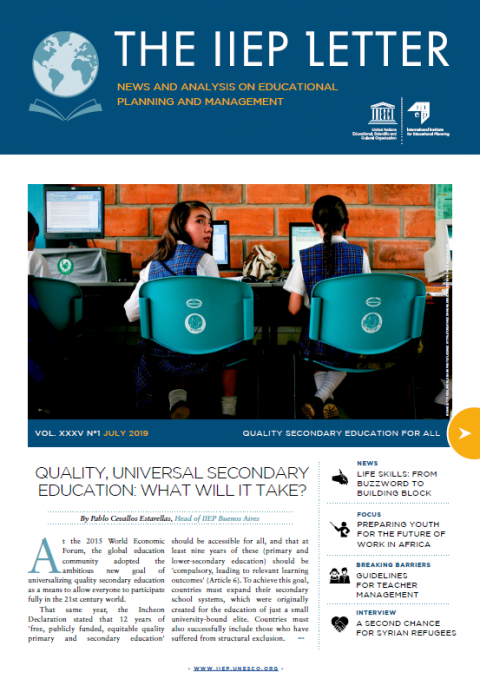 The IIEP letter: news and analysis on educational planning and management, vol. 35, no. 1 Year of publication: 2019 Corporate author: UNESCO This issue is dedicated to addressing the challenges and opportunities for quality secondary education for all. It addresses the necessary structural and curricular changes secondary education must undergo in order to address long histories of segregation and inequality. Experiences from Latin America illustrate some key takeaways on how to match commitment with meaningful change.
  Global Citizenship and its Future Horizons in the Arab World Year of publication: 2017 Author: Dalia Aljizawi In this article, the researcher is trying to illustrate the concept of global citizenship in the Arab nations. The researcher presented the development of the concept of global citizenship based on the changes that the Arab world faced in the past. The article then goes to state the relationship between the horizons of the global citizenship and nationality/belongings of people to the Arab world. Moreover, there were two indicators presented to evaluate global citizenship. In the last part of the paper, the author talks about implementing global citizenship in education through focusing on cognitive skills, socio-emotional skills and behavioral skills. The author recommends at the end of involving children through education to achieve global citizenship. The paper ends with some recommendations to make children participate in global citizenship education.
 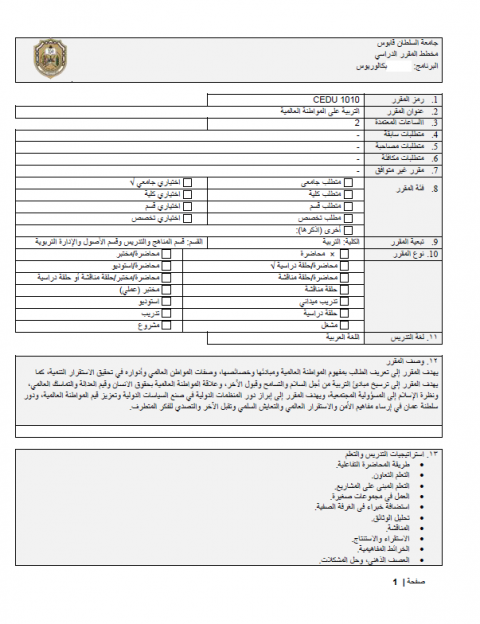 Global Citizenship Education Course Year of publication: 2019 This course was developed by a number of academicians at the College of Education at Sultan Qaboos University. The idea of offering the course came as a collaboration between Sultan Qaboos University and UNESCO Beirut as well as the Asia-Pacific Center of Education for International Understanding. The aim of the course is to introduce global citizenship concept, its focuses, basics, aims, and characteristics to students. The attributes of the global citizens and their roles in the sustainable development are also defined framed in the course. Moreover, the course is an attempt to reinforce the values of global citizenship, peace education and the acceptance of others. In more deep focus, the course outline the relationship between global citizenship and some other concepts such as justice, human rights, international understanding and peace. The course also shed light on the Islamic view of the social responsibility and the role of Islam in that. With regards to international organizations, the course focuses on the role played by international organizations in promoting global citizenship. Finally, the role of Oman as a model of tolerance, accepting others and peacefully living together will be discussed.
  The Application Degree of Human Right Principles in Education Process from the point View of Students of Basic Education Year of publication: 2014 Author: Mahmoud AlSubhi This study aimed at investigating the application degree of human right principles in the education processes from the point view of students at basic education schools. To achieve the purpose of the study, the researcher developed a 37 items questionnaire containing two dimensions (freedom of expressing views & justice and equity). The results showed that the application of human right in the schools was moderate. Also, the application of the dimension of justice and equity came higher than the dimension of the freedom of expressing views. The study recommends that there is a need for promoting the application of human right in the education processes.