
Resources
Explore a wide range of valuable resources on GCED to deepen your understanding and enhance your research, advocacy, teaching, and learning.
8,364 Results found
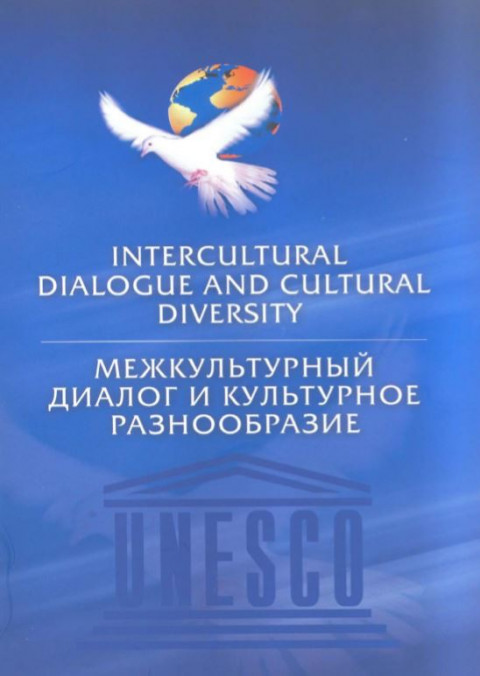 Intercultural dialogue and cultural diversity Year of publication: 2007 Corporate author: UNESCO The collection of materials of the Central Asian round table is devoted to sharing best practices in intercultural dialogue and to the UNESCO Universal Declaration on Cultural Diversity.The work highlights issues on the exchange of best practices in the field of intercultural dialogue, popularization of the UNESCO Universal Declaration on cultural diversity, the creation of a “Central Asian platform to strengthen cultural cooperation and dialogue ”, to strengthen UNESCO Chairs in Central Asia.
 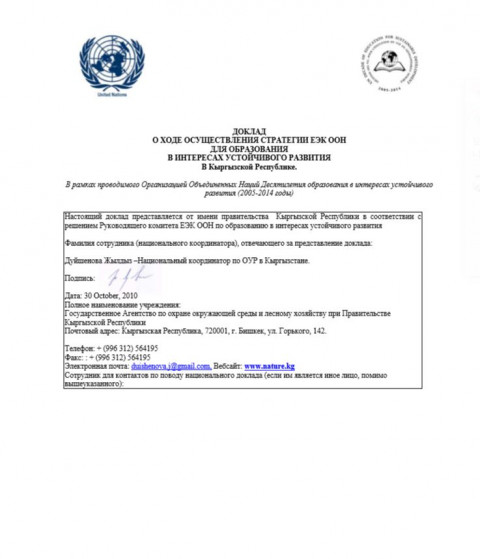 Progress Report on the Implementation of the UNECE Strategy for Education for Sustainable Development Year of publication: 2010 Corporate author: State Agency on Environment Protection and Forestry (Kyrgyzstan) This report aims to evaluate the implementation of the UNECE Strategy for Education for Sustainable Development in the Kyrgyz Republic as part of the United Nations Decade of Education for Sustainable Development (2005-2014). The report presents the results of efforts aimed at implementing ESD, current challenges with reference to socio-economic conditions and development prospects. This report has been prepared by the State Agency for Environmental Protection and Forestry of the Kyrgyz Republic with the participation of interested departments, international and local experts. In preparing the report, materials and reports of international organizations - the OSCE, were used,UNESCO, UNDP, etc.
 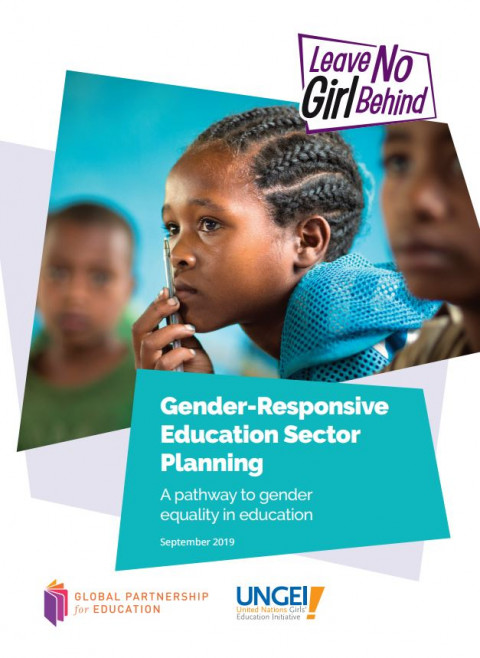 Gender-responsive education sector planning: A pathway to gender equality in education Year of publication: 2019 Corporate author: Global Partnership for Education (GPE) | United Nations Girls' Education Initiative (UNGEI) Education transforms lives. It is the surest investment to break down social and economic differences between people, unravel inequalities based on gender and accelerate progress towards the entire vision of the 2030 Agenda for Sustainable Development. Yet, despite the world’s commitment to ensure every child completes 12 years of quality education, in low-income countries only 4% of the poorest finish upper secondary school, falling to 2% among marginalized girls.Sustainable Development Goal 4, inclusive and equitable quality education for all, is about much more than education access. It calls for education policies to look beyond gender parity in school enrollment in order to put gender equality at the heart of education through gender-sensitive plans and policies. Gender-responsive education sector planning is an essential tool for advancing gender equality in and through education.
 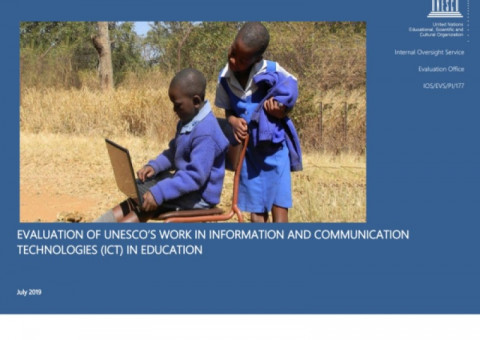 Evaluation of UNESCO's work in information and communication technologies (ICT) in education Year of publication: 2019 Author: Seán Ó Siochru and Graham Attwell Corporate author: UNESCO ICT in Education is a fast-growing area globally that offers many strategic opportunities. As the leader and coordinator of the SDG 4 – Education 2030 with the aim to “Ensure inclusive and equitable quality education and promote lifelong learning opportunities for all”, UNESCO has the mandate and expertise needed to strategically position itself as a world leader in this field. UNESCO’s work in ICT in Education aims at enhancing the quality and relevance of learning and at strengthening inclusion. While technology can facilitate wider access to education and bridge learning divides, can advance gender equality and inclusion as well as digital skills development, the rapidly changing technologies and work processes require the development of new pedagogies, both for the use of ICT for teaching and learning in the classroom and through open access and distance learning. Compared to other players, UNESCO leverages its comparative strengths in its ICT in Education interventions - especially its impartiality, convening power, and policy expertise - through an inclusive and humanistic approach to achieving quality education in coherence with Sustainable Development Agenda 2030. Its expertise across all levels of Education and its multidisciplinary potential of working across its Programme Sectors are also considered among UNESCO’s specific strengths. The evaluation revealed that UNESCO achieved important results, at the level of the learning environment, at the policy level and in institutional capacity building, but it also showed that UNESCO still needs to strengthen its positioning and visibility within the wider landscape of ICT in Education. For example, UNESCO has to continue positioning itself for producing forward-looking knowledge on ICT in Education and as a laboratory of ideas for future-oriented thinking. While the evaluation came across various specific interventions successfully addressing the needs of disadvantaged groups, the evaluation found that considerations of inclusion and gender equality were not consistently mainstreamed into policy-related and capacity building interventions. Other challenges are mainly linked to the current dispersion of resources and fragmentation of expertise across different entities within the Organization, which also leads to reduced visibility. While the key entities active in this area recognize that they are working within a common theme, collaboration and coordination still needs to be improved. The strategic measures proposed by the evaluation towards an overall organizational framework for ICT in Education aim at establishing an enabling environment for inter- and multidisciplinary approaches and greater coherence and collaboration.
 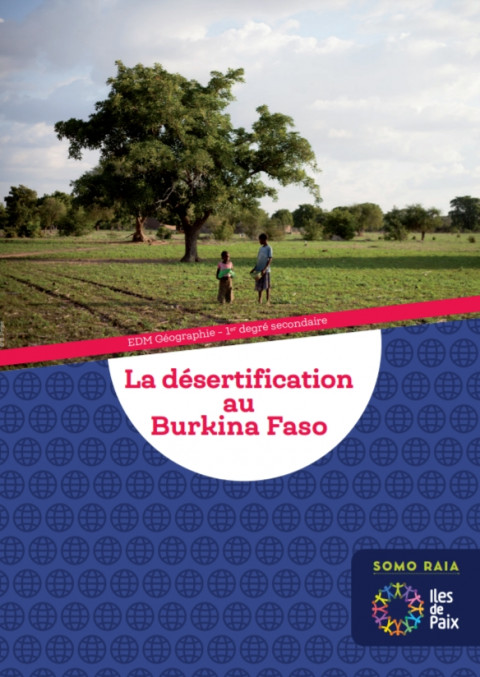 La désertification au Burkina Faso Year of publication: 2019 Corporate author: Îles de Paix Au Burkina Faso, les changements climatiques contribuent à accentuer le phénomène de désertification et à aggraver les problèmes alimentaires. L’objectif de ce dossier est que les étudiants puissent découvrir ce pays d’Afrique ainsi que les enjeux liés à la désertification. Au travers des activités, les élèves auront la possibilité d’exercer plusieurs compétences via des documents variés : chansons, documents écrits, iconographies, cartes, schémas, etc. Une partie documentaire, destinée à l’enseignant, permet d’approfondir la thématique.
  Background Information on Education Statistics in the UIS Database Year of publication: 2019 Corporate author: UNESCO Institute for Statistics (UIS) Background Information on Education Statistics in the UIS Database Data releases Data sources Population estimates Economic statistics Technical notes Country notes
  New Methodology Shows that 258 Million Children, Adolescents and Youth Are Out of School Year of publication: 2019 Corporate author: UNESCO Institute for Statistics (UIS) This fact sheet presents the latest UIS data on education available as of September 2019.Three years after the adoption of Sustainable Development Goal 4 (SDG 4) and the promise to provide universal primary and secondary education, there has been no progress in reducing the global number of out-of-school children, adolescents and youth. This fact sheet by the UNESCO Institute for Statistics (UIS) highlights the most recent statistics on trends at the global and regional levels, based on a revised calculation method that provides more precise estimates of the out-of-school population.
  A Report on Korean-Sustainable Development Goals (K-SDGs) 2019 Year of publication: 2019 Corporate author: 대한민국 환경부 지속가능발전위원회 South Korea's Commission on Sustainable Development set up the Korean Sustainable Develpment Goals(K-SDGs) in 2018 by applying the international sustainable development goal system to domestic circumstances.
 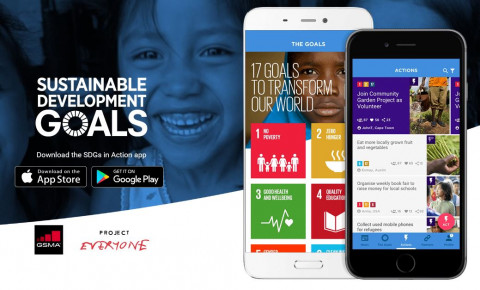 SDGs in Action app Year of publication: 2019 Corporate author: SDG | GSMA What's It All About? OVERVIEWThe SDGs in Action app has been developed to highlight the Sustainable Development Goals - the world’s to-do list to end poverty, reduce inequalities and tackle climate change. It is brought to you by the GSMA, which represents the interests of nearly 800 mobile operators worldwide, and Project Everyone, a non-profit global campaign to spread the messaging of the SDGs. APP FEATURESLearn about the 17 SDGs, get news on your favourite goals, find out what you can do to achieve them, create your own events and invite others to join you in sustainable actions and events.The SDGs in Action app features:•Detailed information about each of the 17 goals, including targets, explanatory videos, key facts and figures, and suggestions on how you can help achieve them take action.•The latest sustainable development news from around the world. See how innovation is helping to achieve the goals, interact with global citizens around the world and see the latest news.•The ability to choose what goals are important to you and receive notifications about that goal.•Access to the World’s Largest Lesson explaining each of the Sustainable Development Goals.•Find actions and events near you that you can join to support the goals.•The ability to create Actions you’re planning in your area, and invite others to join. ABOUT THE SUSTAINABLE DEVELOPMENT GOALSThe UN’s 2030 Agenda for Sustainable Development, featuring the 17 Sustainable Development Goals, was unanimously adopted by world leaders at a historic UN summit in September 2015. By aligning national priorities with the 2030 Agenda and working together with the private sector and civil society, governments have started mobilizing efforts to end poverty, address inequalities and tackle climate change by 2030.
  Global Sustainable Development Report 2019: The Future is Now Year of publication: 2019 Corporate author: United Nations (UN) The Report, requested by all countries to evaluate progress on the 2030 Sustainable Development Agenda, is the first of its kind since the landmark Sustainable Development Goals (SDGs) were adopted four years ago. Entitled “The Future is Now: Science for Achieving Sustainable Development,” the report finds that the current development model is not sustainable, and the progress made in the last two decades is in danger of being reversed through worsening social inequalities and potentially irreversible declines in the natural environment that sustains us. The scientists concluded that a far more optimistic future is still attainable, but only by drastically changing development policies, incentives and actions.The report argues that understanding the interconnections between the individual SDGs and the concrete systems that define society today will be essential to devise policies that manage difficult trade-offs.