
Resources
Explore a wide range of valuable resources on GCED to deepen your understanding and enhance your research, advocacy, teaching, and learning.
8,364 Results found
 Democratic Interference in Africa as Institution and Context Year of publication: 2014 Author: Joseph Keutcheu Corporate author: Études internationales This study describes the international intervention within states as ritualized in the context of the rise of democracy as a matter of global concern. The formation of an international benchmark for the democratic management of the state in Africa constrains « entrepreneurs of intervention » as well as the as « importers » of institutional models in this continent. The implementation of international policy instruments to promote democracy opens the possibility to observe realistic logic at work in the various forms of intervention. It also allows perceiving interventionism and reception of « institutional models » in Africa as « interaction rituals » in the sense that Goffman sees it.
  The Call for Participation: A Vision Exempt from Inequality? Year of publication: 2010 Author: Yolande Pelchat Corporate author: Nouvelles pratiques sociales Citizen participation, which is promoted by the New Public Management, conveys a high symbolic value. Citizen participation is generally associated with the consideration of others’ voices, recognition, emancipation, empowerment and well-being. In short, it carries the promise of a more just world with greater social solidarity and less hierarchic social relations. This paper proposes to leave aside this fashionable rhetoric, at least temporarily, and to search for what might have been left at its borders. This exploratory journey aims to reframe, within larger debates about democracy, the call for participation and its assumed or desired effects. The invitation to beware of losing, on the way, the radical nature of democracy, is issued.
  Citizens but not Adults? Injunction to be Responsible and Citizens in Official Coming of Age Rituals in Switzerland Year of publication: 2018 Author: Maxime Felder | Laurence Ossipow | Isabelle Csupor Corporate author: Lien social et Politiques Swiss municipalities organize ceremonies for their residents reaching the official age of full citizenship. In the six studied municipalities, local authorities invite them to a municipal council’s meeting, offer them a dinner or an aperitif, or organize them a show and a debate with role models. Speeches are central to these ceremonies, and authority representatives encourage their audience to be “good” citizens. Call to vote is the leitmotiv, but discourses reveal broader definitions of citizenship, insisting sometimes on a local commitment and volunteering, and sometimes on the necessity to fight climate change and inequalities. Comparing officials’ speeches to statements of young people participating in these events reveals “tensions”. Indeed, authority representatives address young citizens without considering them as fully adult, and they do not consider themselves as such neither. However, some of them are already involved in forms of vernacular citizenship, and are progressively leaving the municipality to study, work or travel. Ultimately, these ceremonies allow officials to stage their interest in the youth, which they consider as both uncompleted and essential to the renewal of democracy.
 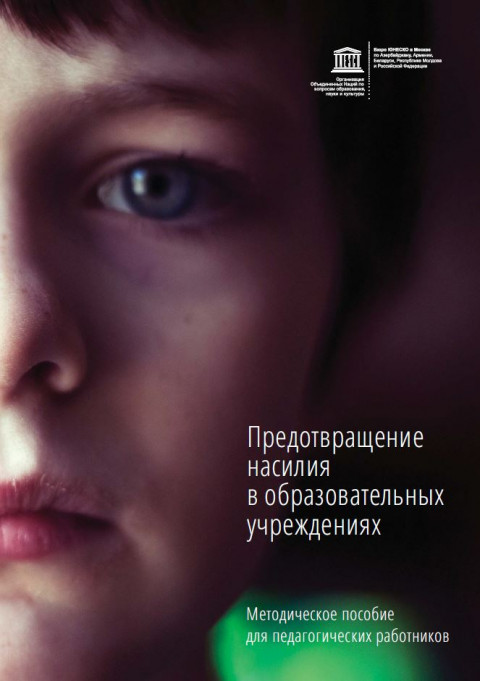 A Guide on Violence Prevention in Educational Settings in Eastern Europe and Central Asia Year of publication: 2015 Corporate author: UNESCO The emphasis is given to gender-based violence. This guide offers practical advice and proposes organizational and educational measures, as well as response schemes for the management and staff of education institutions in order to address acts of violence and provide assistance to the victims. The guide is advisory in nature: it can be used as a background material for developing a national recommendation on the prevention of violence in an education institution.Experts from the ministries of education, education institutions and public organizations of Eastern Europe and Central Asia, as well as the United Nations Educational, Scientific and Cultural Organization (UNESCO) and the United Nations Children's Fund (UNICEF) took part in discussions throughout the process of publication-writing.
 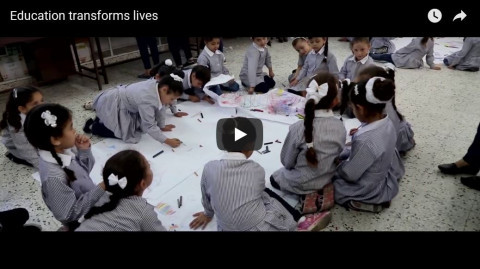 [Video] Education Transforms Lives Year of publication: 2017 Corporate author: UNESCO Education transforms lives every day and in every corner of society. This video explores the power of education and UNESCO’s role in leading and coordinating the Education 2030 Agenda, which is part of a global movement to eradicate poverty through 17 Sustainable Development Goals by 2030.Education is the right of every woman, man and child. Together, we are shaping the global citizens of tomorrow, empowered on the path of education to build a more sustainable future.UNESCO's campaign "Education transforms lives" supports the effort to build peace in the minds of men and women.
  Guidelines and Recommendations for Reorienting Teacher Education to Address Sustainability Year of publication: 2005 Corporate author: UNESCO Members of the International Network made recommendations related to reorienting teacher education to address sustainability. The recommendations are pieces of wisdom garnered through the experimentation and hard work of teacher educators.The recommendations concern ministerial and national levels to the local level. The recommendations involve curriculum, pedagogy, policy, practice, programs, rewards, research, information and computer technology, partnerships, networking, communications, etc.Members of the International Network repeatedly mentioned the urgency to act and the need for profound change. While many spoke of the enormity of the task at hand, all who participated were able to make signifi cant and positive inroads. Interested individuals operating within their own spheres of control (e.g., weaving sustainability themes into their own classroom curricula) made great headway reorienting their programs. Also, many institutions were able to develop new courses at both the undergraduate and graduate levels. Problems arose, however, when the Network members advocated for change beyond the sphere of direct control. ESD within teacher-education institutions is currently endorsed by early-adopters. However, it will take concerted effort and resources to establish ESD in curricula, programs, practices, and policies across teacher-education institutions.
  Recommendation on Adult Learning and Education, 2015 Year of publication: 2016 Corporate author: UNESCO | UNESCO Institute for Lifelong Learning (UIL) The Recommendation on Adult Learning and Education was adopted at the 38th Session of the UNESCO General Conference in November 2015. The Recommendation supports the Education 2030 Framework for Action, reflects global trends, and will guide the transformation and expansion of equitable learning opportunities for youth and adults. The 2015 Recommendation takes a comprehensive and systematic approach to ALE, defining three key domains of learning and skills: literacy and basic skills; continuing education and vocational skills; as well as liberal, popular and community education and citizenship skills.It also describes five transversal areas of action: policy; governance; financing; participation, inclusion and equity; and quality. These areas of action were already introduced to the international community in the Belém Framework for Action, adopted at CONFINTEA in 2009 as a means of guiding Member States in improving ALE. This integrative and consistent approach to ALE will help Member States to ensure inclusive and equitable quality education and promote lifelong learning opportunities for all (Sustainable Development Goal 4).
  Community-based Learning for Sustainable Development (UIL policy brief 8) Year of publication: 2017 Corporate author: UNESCO Institute for Lifelong Learning (UIL) The 2030 Agenda for Sustainable Development sets ambitious goals to transform our world, balancing the economic, social and environmental dimensions of sustainable development. To rise to the challenges posed by these goals and to ensure no one is left behind, it is critically important that local communities are involved in the planning and management of sustainable development and the promotion of sustainable lifestyles. The 2030 Agenda encompasses all aspects of our lives, which implies that learning, if it is to contribute fully to this agenda, must be seen as both lifelong and life-wide. The relevance of community-based non-formal education and informal learning for children, young people and adults, especially those not in education or from marginalized or disadvantaged parts of society, must be recognized and fostered in every country of the world if the 17 Sustainable Development Goals are to be met. This Policy Brief proposes six action principles and four policy recommendations to advance community-based lifelong learning for sustainable development. They summarize the lessons of successful community-based learning for sustainable development, drawn from around the world.
  Quick Guide to Education Indicators for SDG 4 Year of publication: 2018 Corporate author: UNESCO Institute for Statistics (UIS) This guide serves as a quick reference on how to monitor progress towards Sustainable Development Goal 4 (SDG 4) on quality education. It provides basic explanations of SDG 4 targets, their indicators, how they are created and where to find the information needed for these indicators.
  Metadata for the Global and Thematic Indicators for the Follow-up and Review of SDG 4 and Education 2030 Year of publication: 2017 Corporate author: UNESCO Institute for Statistics (UIS) This document contains standardised metadata for each of the proposed global and thematic indicators for monitoring Sustainable Development Goal 4 (SDG 4) and the Education 2030 Agenda.The metadata included in this document have been developed by the UIS and are based on the set of thematic indicators approved by the Technical Cooperation Group on SDG 4–Education 2030 Indicators, a group set up in 2016 to provide the technical platform to support the implementation of the thematic indicator framework for the follow-up and review of SDG 4 and the Education 2030 Agenda.