
Resources
Explore a wide range of valuable resources on GCED to deepen your understanding and enhance your research, advocacy, teaching, and learning.
8,364 Results found
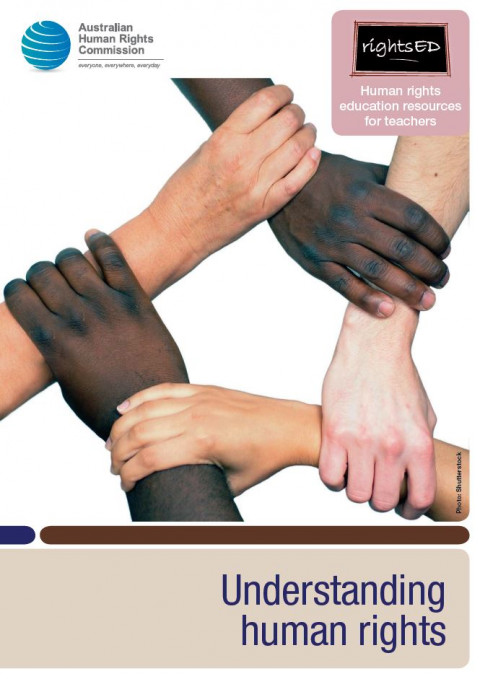 Understanding Human Rights Year of publication: 2010 Corporate author: Australian Human Rights Commission Human rights are basic to humanity. They apply to all people everywhere. An understanding of human rights is an important part of our individual status as human beings and of our collective status as members of the global community of humankind.To understand how human rights affect us in our daily lives and to acknowledge our responsibilities in recognising the need to balance those rights with the rights of others, we require an understanding of what human rights are.So what are human rights? Where did they come from? How do they impact on humanity? How do they affect me?
  Global Citizenship Education for the Rule of Law: Doing the Right Thing Year of publication: 2018 Corporate author: UNESCO | UN. Office on Drugs and Crime (UNODC) UNESCO and UNODC have established a partnership to promote the rule of law and a culture of lawfulness through education. Combining their resources and expertise, they are seeking to build the capacities of educators, teachers and policy-makers to plan and undertake educational activities that empower learners to take constructive and ethically responsible decisions in their daily lives that support justice, human rights and strong institutions to defend them.
  Research Models Laying the Foundation for the Unesco Chair: Democracy, Global Citizenship and Transformative Education (DCMÉT) Year of publication: 2018 Author: Paul R. Carr | Gina Thésée Corporate author: Chaire UNESCO Démocratie, citoyenneté mondiale et éducation transformatoire (DCMÉT) The conceptual and theoretical models presented in this document were developed over a roughly twelve-year period, starting in 2005, by the Chair (Paul R. Carr, Université du Québec en Outaouais) and Co-Chair (Gina Thésée, Université du Québec à Montréal) of the UNESCO Chair DCMÉT. These models have been published in diverse academic journals in either English or French, and have been translated and adapted herein to produce an updated and bilingual representation of the Education for Democracy research that Carr and Thésée have produced. In some cases, the models have been refined (and improved) over time, and they are presented as a means of attempting to elucidate, interrogate and highlight the meaning of the three themes that underpin the UNESCO Chair DCMÉT.
  [Video] Global Citizenship Education: Taking it Local! Year of publication: 2018 Corporate author: UNESCO | APCEIU Societies across the world have long lived according to principles that emphasize solidarity, dialogue and respect for diversity. It is from this rich well of practices that UNESCO’s Global Citizenship Education (GCED) programme draws inspiration -- to instill in learners the skills, values, attitudes and behaviors to ‘live together’ and help shape more peaceful, sustainable societies and world. GCED is not a new concept, but an aspiration long-held across the world.
 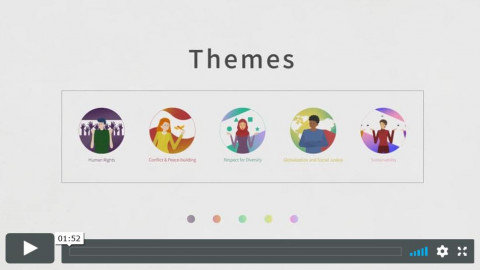 [Video] Thematic Areas and Learning Domains of GCED Year of publication: 2018 Corporate author: APCEIU Here we introduce a fast, fun, and friendly way of learning GCED.The series of bite-sized animation will take you on a journey to GCED in minutes!
  [Video] Pedagogical Principles of GCED Year of publication: 2018 Corporate author: APCEIU Here we introduce a fast, fun, and friendly way of learning GCED.The series of bite-sized animation will take you on a journey to GCED in minutes!
  [Video] What is Global Citizenship Education? Year of publication: 2019 Corporate author: APCEIU Here we introduce a fast, fun, and friendly way of learning GCED.The series of bite-sized animation will take you on a journey to GCED in minutes!
 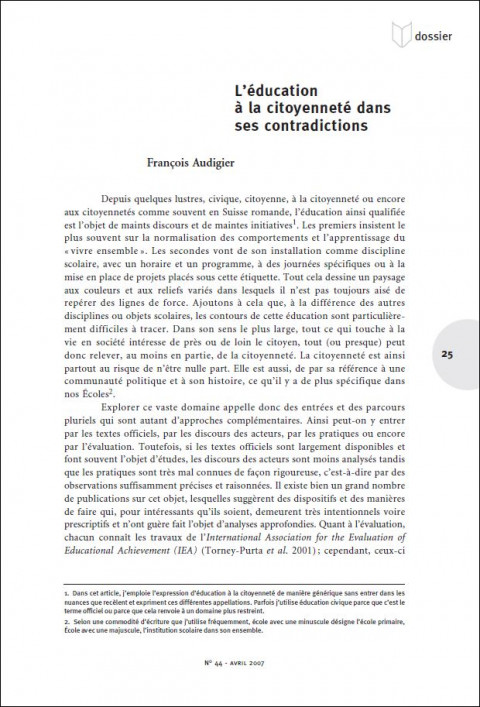 Citizenship Education and Its Contradictions Year of publication: 2007 Author: François Audigier Corporate author: Revue internationale d’éducation de Sèvres From design to implementation, citizenship education is fraught with tensions and contradictions. The concept of citizenship itself brings into play political, affective and legal aspects. Delivering citizenship education in schools raises several issues. At times treated as a subject area in its own right and at times taught using cross-disciplinary approaches, citizenship education addresses not only knowledge and skills, but also values and behaviour. The ends of citizenship education are ambitious, and often include aims that are difficult to reconcile with one another. In terms of how citizenship education is actually delivered, the once-systematic introduction to the legal and political systems has lost ground to the more recent priority of teaching students a sense of community.
 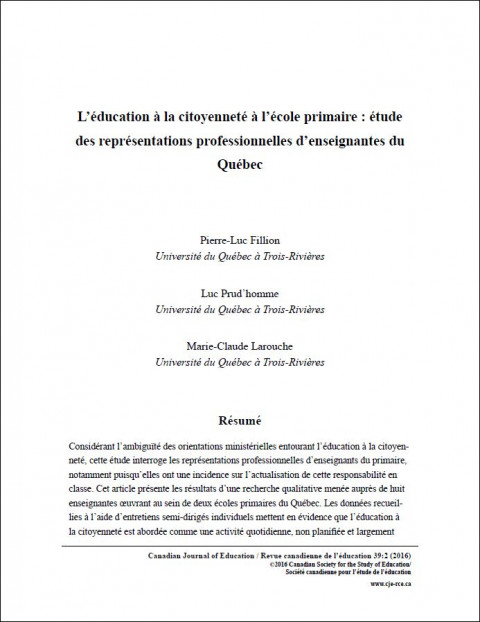 Citizenship Education in Primary School: A Study of Professional Teacher Representations in Quebec Year of publication: 2016 Author: Pierre-Luc Fillion | Luc Prud’homme | Marie-Claude Larouche Corporate author: Canadian Society for the Study of Education Considering the ambiguity of ministerial guidance relating to citizenship education, this study examines the professional representation of elementary teachers, particularly because they impact the actualization of this responsibility in the classroom. This article presents the results of a qualitative research conducted with eight teachers working in two elementary schools in Québec. The data collected through individual interviews reveal a work that is conceived as a daily, unplanned activity widely associated with the together-ness at school. The conceptualizations of the participants appear to rely on a more con-formist view of the personally responsible citizen.
 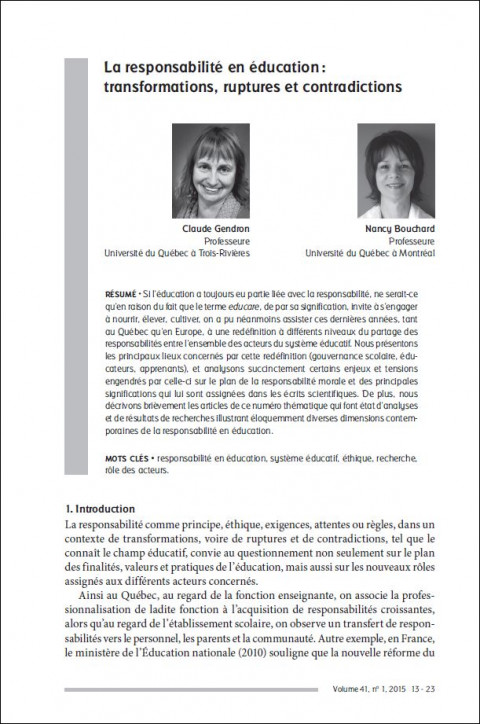 Responsibility in Education: Transformations, Ruptures and Contradictions Year of publication: 2015 Author: Claude Gendron | Nancy Bouchard Corporate author: Revue des sciences de l’éducation If education has always been connected with responsibility simply because the word educare by definition involves nourishing, raising, cultivating, the past few years have witnessed, both in Quebec and in Europe, a redefinition in various ways of the sharing of responsibilities among participants in the educational system. This text presents the principal areas concerned by this redefinition (school management, educators, learners) and briefly analyzes certain issues and tensions caused by it in terms of moral responsibility and the main meanings assigned to it in the scientific literature. Moreover, it introduces articles of this special issue that report research analyses and results which eloquently illustrate various contemporary dimensions of responsibility in education.