
Resources
Explore a wide range of valuable resources on GCED to deepen your understanding and enhance your research, advocacy, teaching, and learning.
8,370 Results found
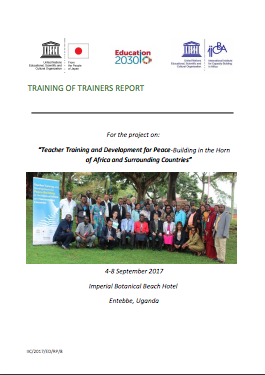 Training of Trainers Report: For the Project on: Teacher Training and Development for Peace-Building in the Horn of Africa and Surrounding Countries Year of publication: 2017 Corporate author: UNESCO International Institute for Capacity-Building in Africa (IICBA) The overall framework of this project is to create a critical mass of teachers who can implement effective teaching and learning, producing economically productive and peace-loving youth. The project has a shortterm objective of training at least 8,000 young teachers through the Training of Trainers (TOT) model. The medium-term objectives will contribute to the 2030 SDGS. The long-term objectives are in line with AU’s Agenda 2063, which promotes increased regional integration, peace and stability, and equitable economic development.
 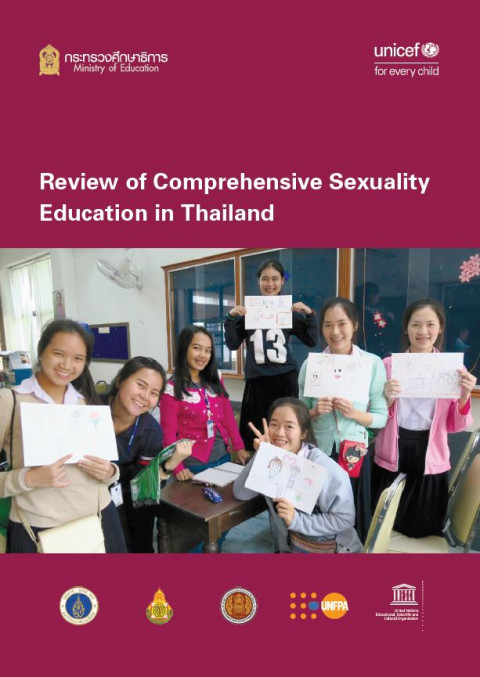 Review of Comprehensive Sexuality Education in Thailand Year of publication: 2017 Corporate author: United Nations Children's Fund (UNICEF) | Thailand. Ministry of Education This review of comprehensive sexuality education (CSE) in Thai educational institutions collected data from students, teachers, guardians, school directors and national policy advocacy stakeholders. Standard international data collection tools were used, with the hope that important information could be gathered to guide the development of school-based CSE implementation in Thailand. The review aims to increase understanding about how CSE is being implemented in Thai general secondary schools and vocational colleges and to examine the values and attitudes of teachers, school directors, students, and parents on sexuality and sexuality education. It also analyses policies relevant to current national strategies of CSE implementation and documents successes and gaps in the current provision of CSE in the country. The report, prepared by the Ministry of Education, Thailand, and UNICEF, with inputs from UNESCO Bangkok, is available in English and in Thai.
 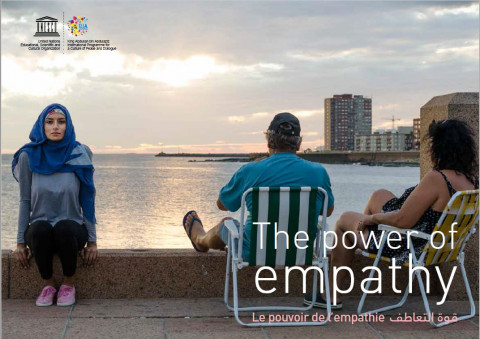 The Power of Empathy Year of publication: 2017 Corporate author: UNESCO This photobook is a tribute to the power of empathy and solidarity felt and expressed by young people. Its photographs and stories were selected from the response to the global youth contest “If I were…”, launched by UNESCO on social media in Arabic, English, French and Spanish in early 2017. UNESCO received some 837 submissions, from 117 countries, covering a wide variety of issues and experiences.Despite the gravity of the themes addressed in these beautiful pictures, hope emerges from the testaments of the young photographers which demonstrate not only a sensitivity to the situations of “others”, but, moreover, a resolve to help people recover and protect their rights and dignity.
 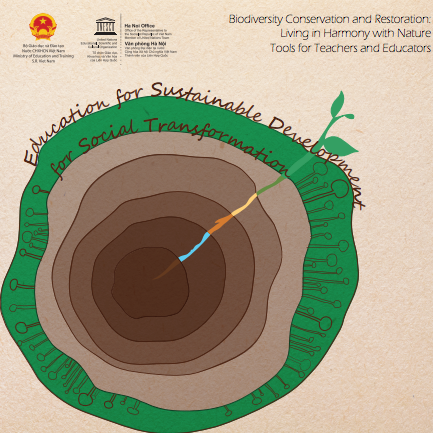 Education for sustainable development for social transformation Year of publication: 2017 Corporate author: UNESCO Hanoi | Viet Nam. Ministry of Education and Training This course on Education for Sustainable Development for Social Transformation explains the connection between sustainable development, education and the successful implementation of national and international policies and initiatives on Sustainable Development, such as the Education for Sustainable Development Framework, Global Citizenship Education and the post-2015 Development Agenda. A particular focus is placed on Viet Nam's implementation of these initiatives, including MOET's Action Plan to Implement the National Strategy on Natural Disaster Prevention, Control and Mitigation in the Education Sector in the 2011-2020 Period.The courses promote creative thinking and a holistic approach to some of our planet's most pressing issues. A contribution to sustainable development will be made by encouraging students, families, schools and communities to be bioliterate.
  UNESCO's global/regional coordination of and support for the implementation of SDG 4-Education 2030 Year of publication: 2017 Corporate author: UNESCO Pursuant to 200 EX/7, the Director-General submits to the Executive Board the report on UNESCO’s contribution to the coordination of and support for SDG 4 – Education 2030.The financial and administrative implications of this document have been covered in document 38 C/5.Action expected of the Executive Board: Proposed decision in paragraph 18.
  Jeunesse et extrémisme violent: Atelier de réflexion du Système des Nations unies et ses partenaires au Maroc Year of publication: 2017 Corporate author: UNESCO Rabat | United Nations (Morocco) Le thème proposé pour cet atelier de réflexion concerne un phénomène d’une actualité prenante qui représente un défi majeur pour les gouvernements de la région du Maghreb, comme pour ceux des autres régions du monde. Il s’agit du phénomène que la communauté internationale appelle « Extrémisme violent » dont les premières victimes sont les jeunes. Feasibility study: establishment of an international centre for the promotion of human rights at the local and regional levels in Graz, Austria, under the auspices of UNESCO Year of publication: 2017 Author: Vandenhole, Wouter On 3 November 2016, the Government of the Republic of Austria requested (annexed to this report) the Director-General of UNESCO to initiate all necessary steps for the establishment of an International Centre for the Promotion of Human Rights at the Local and Regional Levels (hereafter: ‘the Centre’) in Graz (Styria, Austria) as a UNESCO Category 2 Centre, in application of the Integrated Comprehensive Strategy for Category 2 Institutes and Centres under the Auspices of UNESCO, adopted by the General Conference at its 37th session (res. 37 C/Resolution 93). This application stems from the long-standing commitment and efforts by the Government of the Republic of Austria, the Federal State of Styria and the City of Graz to further the implementation of human rights, both within the country and globally. The Centre will contribute, through research, capacity-building, information-sharing and international collaboration, to UNESCO programmes relating to Sustainable Development Goals 10, 11 and 16 of the 2030 Agenda for Sustainable Development, as well as to urban inclusion-related commitments of the New Urban Agenda. As regards the latter, the Centre is equally expected to feed into the work of the International Coalition of Inclusive and Sustainable Cities – ICCAR and its European Chapter, as well as into UNESCO urban initiatives and platforms.
 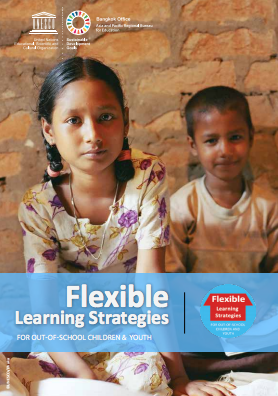 Flexible learning strategies for out-of-school children and youth Year of publication: 2017 Corporate author: UNESCO Bangkok
 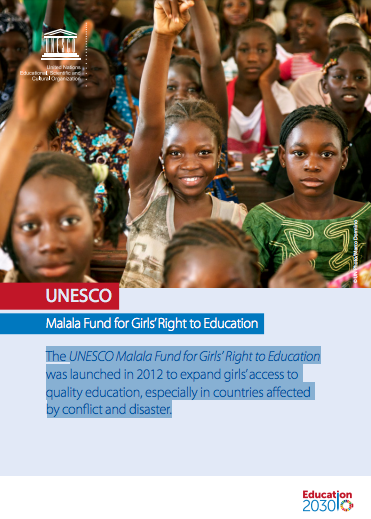 UNESCO Malala Fund for Girls' Right to Education Corporate author: UNESCO The UNESCO Malala Fund for Girls’ Right to Education was launched in 2012 to expand girls’ access to quality education, especially in countries affected by conflict and disaster.
 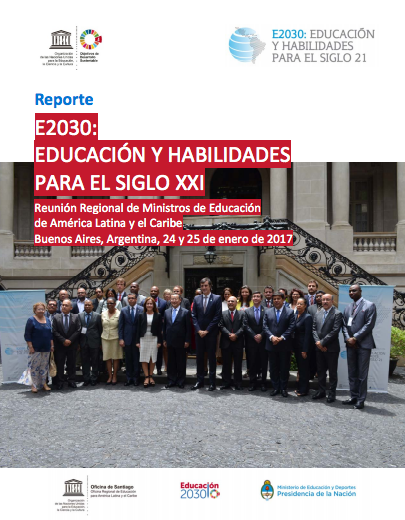 E2030: education and skills for the 21st century, report Year of publication: 2017 Corporate author: UNESCO Santiago The UNESCO Regional Bureau for Education in Latin America and the Caribbean, OREALC/UNESCO Santiago, in collaboration with the Ministry of Education and Sport of the Republic of Argentina, organized the Regional Meeting of Ministers of Education of Latin America and the Caribbean – “E2030: Education and skills for the 21st century”. Ministers of Education and high-level representatives of the education sector of the Member States of LAC; bilateral, regional and multilateral organizations; United Nations agencies; representatives of civil society; stakeholders and UNESCO experts participated in the meeting, which was held on 24-25 January 2017 in Buenos Aires, Argentina. This was the first ministerial meeting to be organized within the framework of the 2030 Agenda for Sustainable Development and its 17 Sustainable Development Goals (SDGs), in particular SDG 4 – “Ensure inclusive and quality education for all and promote lifelong learning”. It provided a space for dialogue between ministers of education and other stakeholders to debate SDG 4 in the context of the 2030 SDG Agenda. Discussions and information sharing on various topics related to the SDG 4 targets, and on the coordination mechanisms and monitoring instruments conducive to the achievement of E2030 enabled LAC Member States to reach a common vision and understanding of E2030 in the region. This joint approach on E2030 for the region is laid down in the Declaration of Buenos Aires, which ministers adopted at the end of the meeting.