
Resources
Explore a wide range of valuable resources on GCED to deepen your understanding and enhance your research, advocacy, teaching, and learning.
8,363 Results found
 The Impact of COVID-19 on Early Childhood Education in the Asia-Pacific and Sub-Saharan Africa: Insights From the Results of Rapid Regional Personnel Survey Year of publication: 2021 Author: Yoshie Kaga | Kyungah Bang Corporate author: UNESCO Bangkok Declared a global pandemic on 11 March 2020 by the World Health Organization (WHO), COVID-19 has had far-reaching impacts on every facet of life around the world, exacerbating pre-existing inequalities and negatively impacting on vulnerable and disadvantaged populations the most. Learning continuity has been disrupted by school closures, generating an unprecedented situation worldwide. According to UNESCO Institute for Statistics (UIS) data collated in July 2020, over 18.6 million children in pre-primary education in forty-eight Sub-Saharan African countries and 4.4 million pre-primary teachers – eighty- five per cent of whom were women – in twenty-four countries in the Asia-Pacific region were affected by school or centre closures. Recognizing the possible severe and detrimental impact that COVID-19 might have on ECE personnel and their practices, UNESCO Bangkok and Dakar teamed up with several partners to undertake regional surveys in the Asia-Pacific and Sub-Saharan Africa from April to July 2020. Based on the regional surveys, this report features eight key findings and three key messages to better understand ECE personnel’s needs and to identify possible responses to support them.
  Attacks With Chemical Agents as a Form of Extreme Violence Against Women in Colombia (Revista Temas Socio Jurídicos; Vol. 36 No. 73) Year of publication: 2017 Author: Camila Alejandra Villalobos Araujo Corporate author: Universidad Autónoma de Bucaramanga (UNAB) This text aims to analyse different contexts from which the extreme violence can be seen and the elements that describe it, in order to articulate this concept to the phenomenon of acid attacks. In other words, the text seeks to determine and explain why such attacks are configured as an act of extreme violence, specifically to women, taking into account the stories and testimonies of surviving victims in Colombia. From it, the text seeks to make visible the obligation of the State to prevent and reduce these attacks, proposing solutions in the medium and long term, from the legislative, judicial and executive power.
  Preventing Youth Violence: An Overview of the Evidence Year of publication: 2015 Corporate author: World Health Organization (WHO) Every year about 200.000 adolescents and young people between the ages of 10 and 29 die, which places homicide in fourth place in the world as cause of death in young population. Several million adolescents and young people suffer from acts of violence, and trauma that require urgent medical and psychological treatment. The emotional imprints that youth volence leaves on its survivors and their loved ones are often profound. Youth violence destroys lives and its consequences have very high economic costs, both for society and for the families of young people. The goal of this manual is to provide a scientific framework that allows us to understand why some people have a greater tendency to be involved in acts of youth violence and how to prevent it.
  Bilingualism: A Key Tool in the University Context Year of publication: 2013 Author: Carmen Beatriz Araujo Quiroz Corporate author: Rev. hist.edu.latinoam This study constitutes a critical reflection from a sociocultural approach on the need to rethink the bilingualism in higher education. Its main purpose is focus on the understanding of the current education as a multilingual practice in the context of the knowledge society
 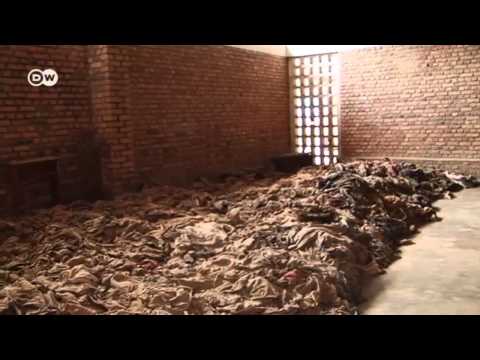 20 Years of the Rwandan Genocide Year of publication: 2014 Corporate author: DW Español The rainy season in Rwanda recalls how 20 years ago the extermination of the tutsi population began by part of the hegemonic Hutu goverment of Rwanda in 1994.
  Becoming a Global Citizen: Proceedings of the International Symposium on Competencies of Global Citizens (Espoo, Finland, 5-7th October 2011) Year of publication: 2011 Author: Liisa Jääskeläinen | Taina Kaivola | Eddie O’Loughlin | Liam Wegimont Corporate author: Global Education Network Europe (GENE) | Finnish National Board of Education (FNBE) The international symposium on competences of global citizens, entitled Becoming a Global Citizen, was held in Espoo, Finland on 5 – 7. October, 2011. The symposium was organized by the Finnish National Board of Education (FNBE), the Finnish Ministry for Foreign Affairs, GENE (Global Education Network Europe) and the Hanasaari Swedish- Finnish Cultural Centre.The symposium focused on three main questions, namely:• what is global education?• what are key competences of global citizens in general education?• how can the priorities of global education be supported nationally?This publication contains the proceedings and main information gathered in the symposium. From Finland’s point of view the Symposium provided a substantial contribution to the publication called Schools Reaching out to a Global World. The publication comprises several articles on competencies of global citizens serving the next curricular reform of the entire general education sector for Finland, to be fully implemented by 2016. From the international perspectives the Symposium meant a most relevant input into the pan-European debate on perspectives for Global Education.
  Why the Fundamental Vision of Education Is Civil Education Year of publication: 2007 Author: Jin Shenghong Corporate author: NanJing Normal University This paper discusses the importance of citizenship in modern world. It also stresses the unique role of education in cultivating citizens.
  Imagining Transformation Otherwise: Case Studies of Learning Practices Year of publication: 2021 Author: Rene Suša Corporate author: Bridge 47 This publication is written by Rene Suša, on behalf the Bridge 47 project. It features ten case studies of organizations and initiatives from around the world that are committed to bringing about positive changes in society and strive to do that in different ways. Working in diverse social, cultural and political contexts, the organizations and initiatives presented in this publication seek to address the systemic inequalities, injustices and harm they perceive as important. They strive to do that in ways that correspond to their analysis of the problems, their respective theories of change and their available means and resources. Although highly diverse in the ways they approach social change, these organizations and initiatives emphasize the importance of learning and unlearning in their work. This applies in equal measure to those initiatives with an explicitly education-oriented mission and to those that work on other approaches to social change, such as different practices of (internal) organizational transformation.
 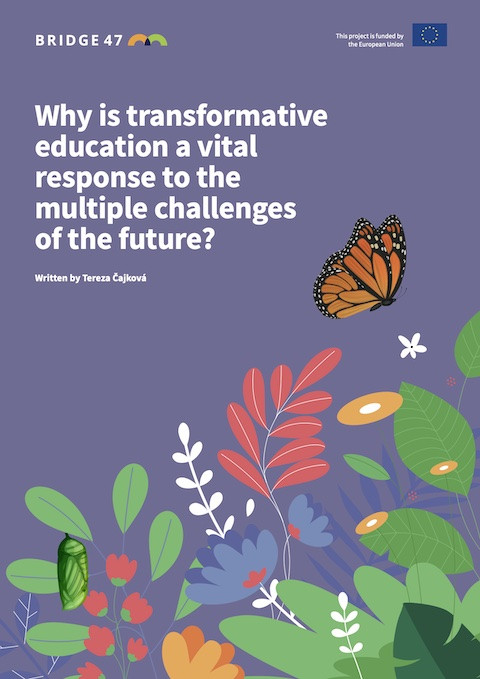 Why Is Transformative Education a Vital Response to the Multiple Challenges of the Future? Year of publication: 2021 Author: Tereza Čajková Corporate author: Bridge 47 This report explores the role of transformative education as described in SDG Target 4.7 in responding to the global challenges, risks and trends of the future, and is split into three sections: Part 1 sets the context based on several foresight reports, suggesting that the physical effects of climate change are likely to intensify during the next two decades as humanity looks unlikely to meet the goal of limiting global warming to under 2°C. The burden of climate disruption and environmental decline is already felt by everyone, but disproportionately by the most vulnerable populations. Social challenges described in foresight reports reflect increasing levels of uncertainty, precarity, fragility and complexity. The future world will likely be more connected, yet more fragmented, characterised by multiple changes taking place at an unprecedented pace.Part 2 reflects on the role of education in times of social and ecological transformation. There is currently increasing momentum for questioning established education approaches in terms of whether they are able to equip future generations to cope with the multiple crises the foresight reports warn us of. Transformative education can contribute to this process given that preparing learners to address future challenges is one of its core commitments. Part 3 provides an insight into the types of learning which may be more suited to coping with these numerous challenges. Transformative learning develops the cognitive abilities to learn from the social and historical shortcomings of the dominant world-view and to address the driving forces responsible for degradation of life on the planet. It can support development of dispositions enabling learners to relate to each other and the world in a radically different way, understanding that we cannot separate humanity from the planet and all other living beings and that humanity may need to learn how to live in, and with the world, without occupying its centre.
 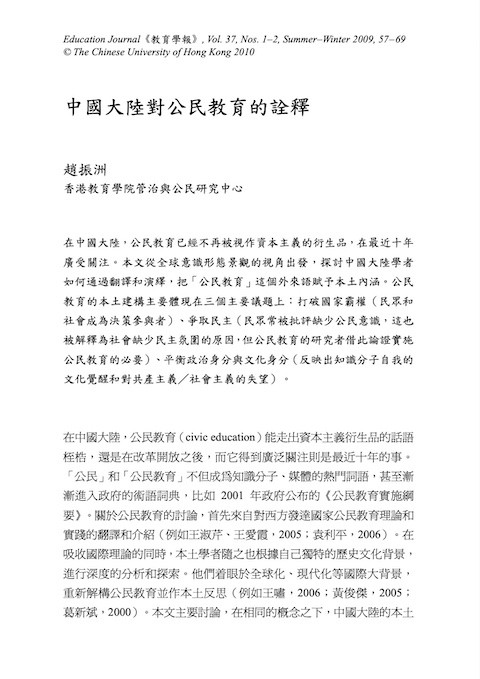 Conceptualization of Citizenship Education in the Chinese Mainland (Education Journal 《教育學報》; Vol. 37) Year of publication: 2010 Author: Zhao Zhengzhou Corporate author: Chinese University of Hong Kong This paper discusses how Chinese academics conceptualised Citizenship Education. It provides a local perspective on this issue, including breaking state hegemony, struggling for democracy and balancing political identity and cultural identity.