
Resources
Explore a wide range of valuable resources on GCED to deepen your understanding and enhance your research, advocacy, teaching, and learning.
8,363 Results found
 Ethnic Diversity in Iraq: The Sociology of Pluralism in Unity Year of publication: 2014 Author: Rasoul Mutlaq Corporate author: Baghdad University This study deals with the phenomenon of multiculturalism in Iraq by focusing on three axes, which are the concept, ethnic composition, and ways to get rid of difference and ethnic discrimination. The study concludes that pluralism rejects intolerance and that pluralism in Iraq must be respected.
  Guidelines for Data Collection to Measure SDG 4.7.4 and 4.7.5 Year of publication: 2021 Author: Andres Sandoval-Hernandez | Maria Magdalena Isac | Diego Carrasco | Daniel Miranda Corporate author: UNESCO Institute for Statistics (UIS) This document provides guidance to apply a recently developed strategy to assess two indicators that embody tolerance, respect and sustainable development, namely:Indicator 4.7.4: Percentage of students in lower secondary education showing adequate understanding of issues relating to global citizenship and sustainabilityIndicator 4.7.5: Percentage of students in lower secondary education showing proficiency in knowledge of environmental science and geoscienceFollowing a thorough review and endorsement by the UIS’ Technical Cooperation Group on the Indicators for SDG 4-Education 2030 (TCG), the measurement strategy has since been applied to the last cycles of TIMSS, PISA and ICCS to produce scores to measure Indicators 4.7.4 and 4.7.5 for 60 countries. While this marks a significant achievement, it is important to acknowledge that two- thirds of UN members have yet to participate in these assessments. To promote wider participation among UN members, this document serves as a robust and easy-to-use set of guidelines offering detailed technical guidance for countries on how to collect the data necessary to produce the information to measure and monitor SDG Indicators 4.7.4 and 4.7.5. Notably, these guidelines will aid in the production of information that is comparable with that of the 60 countries for which this data already exists.
 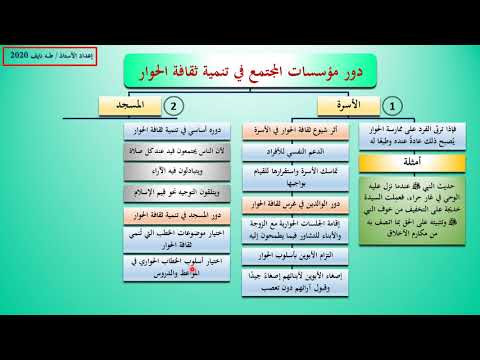 The Fifth Lesson: The Culture of Dialogue Year of publication: 2020 Author: Taha Nayef In this video, the teacher tries to explain to students the concept and etiquette of dialogue. The teacher reviews the roles of the family, educational institutions and other community institutions in the formation of the interlocutor. The lesson is filled with vivid examples of dialogue etiquette from everyday life.
  Course: Dialogue and Dialogue Etiquette Year of publication: 2017 Author: Fath Omar Corporate author: Majmaah University The course includes two topics of dialogue and disagreement. It seeks to form the Muslim to be a tactful interlocutor and able to manage the conflict between him and his society and his counterparts. The course deals with one of the important pillars of global citizenship issues, which is dialogue.
  Methods of Teaching People with Special Needs "Specialization in Science" Year of publication: 2010 Author: Marwa El-Baz Corporate author: Port Said University This report contains the scientific material used in the teaching methodology for people with special needs course "Specialization Science". The course was divided into multiple topics that familiarize the learner with people with special needs and methods of teaching them.
  Mind the Gap: The State of Girls’ Education in Crisis and Conflict Year of publication: 2021 Corporate author: Inter-agency Network for Education in Emergencies (INEE) This report summarizes progress, gaps, challenges and opportunities in improving education and training for girls and women affected by conflict and crisis. The report aims to support the Charlevoix Declaration on Quality Education’s commitment to enhance the evidence base and monitor progress toward gender-equitable education in crises. The report draws from data on 44 crisis-affected countries, from recent research, and from a set of case studies of interventions in a range of crisis-affected contexts.
  10 Myths About... Inequality Worldwide: Sorting Facts From Fiction Year of publication: 2021 Author: Colm Regan Corporate author: Irish Aid | DevelopmentEducation.ie This material explores 10 common myths about market economics, women’s empowerment and the technology divide. This pocket-size booklet includes: Why does thinking about inequality matters 10 short myths about the economics, gender equality and the role of technological solutions to inequalities Links to the Sustainable Development Goals References per each myth following a fact/fiction and explainer approach
  Freedom & Creativity: Defending Art, Defending Diversity; Special Edition Year of publication: 2020 Author: Laurence Cuny Corporate author: UNESCO In anticipation of the third edition of Re|Shaping Cultural Policies, this special edition of the Global Report series that monitors the implementation of the 2005 Convention on the Protection and Promotion of the Diversity of Cultural Expressions, focuses on one of the Convention’s overarching goals: the promotion of human rights and fundamental freedoms and, in particular, artistic freedom. Freedom of expression, information and communication, as well as the ability of individuals to choose cultural expressions is a prerequisite for the protection and promotion of the diversity of cultural expressions.Building on the recommendations put forth in the 2018 Global Report, this special edition provides an overview of current advances and challenges in the legal protection of artistic freedom, the protection of the social and economic rights of artists and cultural professionals and the monitoring of artistic freedom at the national, regional and international levels.By producing new evidence and valuable analysis, the 2005 Convention Global Report series is intended as a reference tool for cultural policymaking and advancing creativity for development.
 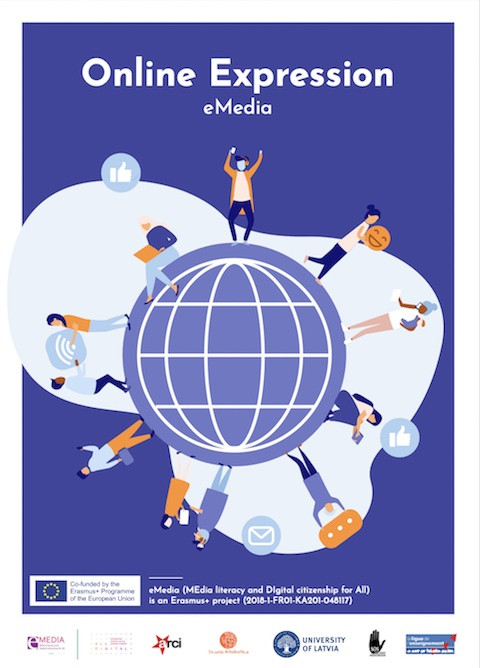 Online Expression: eMedia Year of publication: 2021 Corporate author: e-Media project Consortium | Erasmus+ The handbook on Online Expression gives an insight on what is online expression, and intends to promote a more creative, active and wise use of the web, exploring the opportunities given not only by social media and blogs. The aim of the handbook is to help teachers guide young people to hone their online expression skills by explaining how to be proactive in their online expressions and less reactive, to become a digital prosumer and not a consumer. The hanbook focuses on the following elements that characterizes online active participation: The creation of relationships; The building of a community or the fact of representing a community; The collective interest; The intention to produce a change, to influence society.
 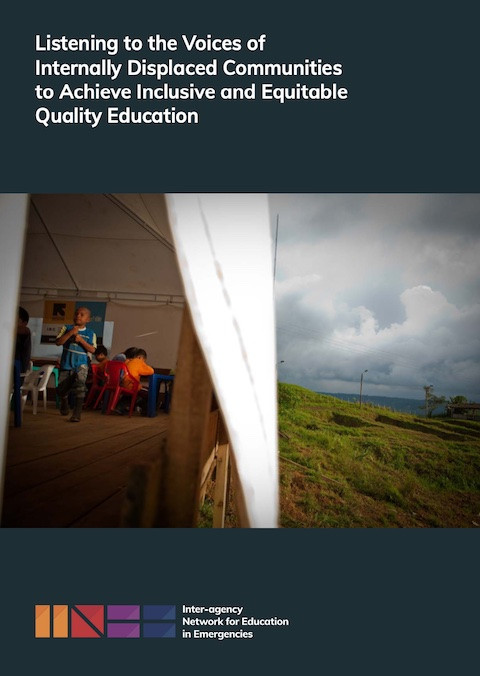 Listening to the Voices of Internally Displaced Communities to Achieve Inclusive and Equitable Quality Education Year of publication: 2021 Author: Caroline Keenan Corporate author: Inter-agency Network for Education in Emergencies (INEE) This paper outlines the real-life day-to-day challenges young IDPs experience when seeking access to quality education, which is fundamental to their healthy development and future life chances. It reflects the perspectives of teachers who have been displaced, and the challenges they have faced both personally and professionally in attempting to support the learning of children and young people in their communities. Young IDPs and internally displaced teachers shared these experiences in a series of five roundtable events hosted by the Inter-agency Network for Education in Emergencies (INEE) in March and April 2021. The paper also provides insights from other roundtable participants, including education in emergencies (EiE) practitioners, government representatives, United Nations (UN) staff, members of international non-governmental organizations (INGOs) and local civil so- ciety, and other stakeholders who are working to support access to education in displaced communities. They all are calling for taking urgent and concrete action to ensure access to quality education for internally displaced children and young people. The United Nations Secretary-General’s High-Level Panel has a unique opportunity to influence the changes needed to achieve this. The recommendations made in the panel’s final report to the Secretary-General and United Nations Member States will be critical to the future outcomes of millions of children and young people around the world.