
Resources
Explore a wide range of valuable resources on GCED to deepen your understanding and enhance your research, advocacy, teaching, and learning.
8,363 Results found
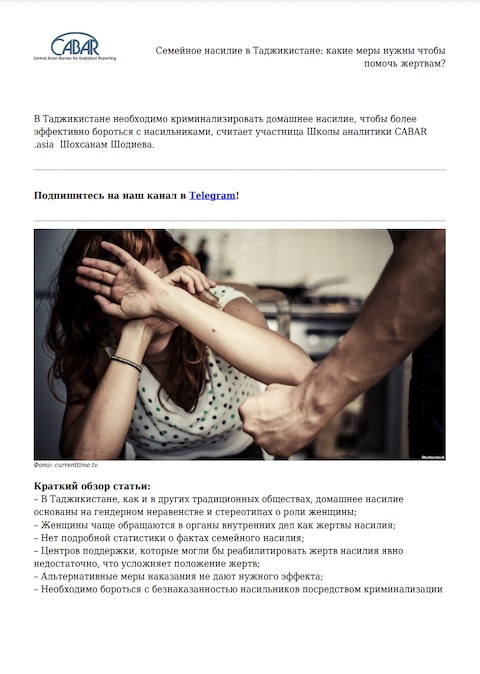 Domestic Violence in Tajikistan: What Measures Are Needed to Be Taken in Order to Help Victims? Year of publication: 2021 Author: Shokhsanam Shodiyeva Corporate author: Central Asian Bureau for Analytical Reporting (CABAR) In this article, the author discusses the current state of affairs in Tajikistan in the field of preventing domestic violence, and the measures taken. In addition, according to the authore, it is necessary to criminalize domestic violence in order to more effectively deal with rapists.
 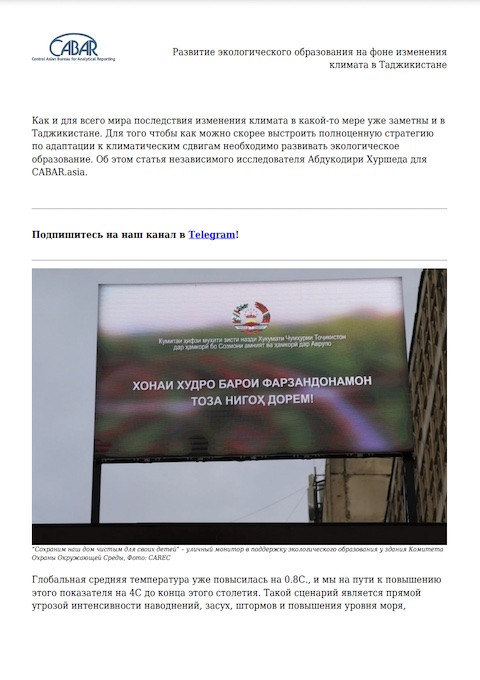 Development of Environmental Education Against the Background of Climate Change in Tajikistan Year of publication: 2021 Author: Khurshed Abdukodiri Corporate author: Central Asian Bureau for Analytical Reporting (CABAR) As well as for the whole world, the consequences of climate change are to some extent already noticeable in Tajikistan. In order to build a full-fledged strategy for adaptation to climate change as soon as possible, it is necessary to develop environmental education.
 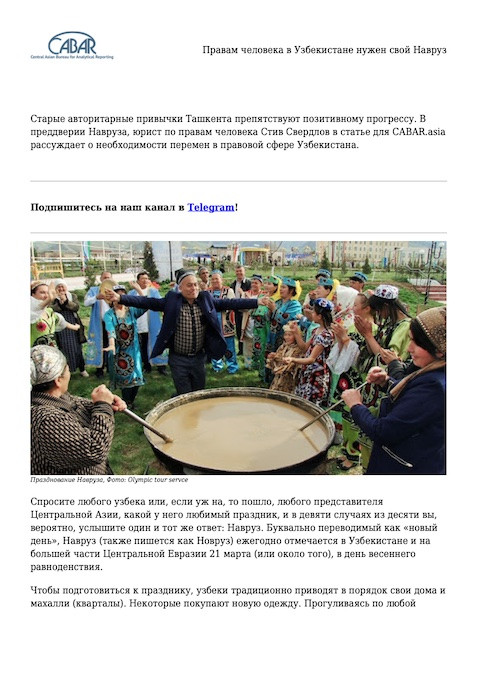 Human Rights in Uzbekistan Need Their Own Navruz Year of publication: 2021 Author: Steve Swerdlow Corporate author: Central Asian Bureau for Analytical Reporting (CABAR) Tashkent's old authoritarian habits hinder positive progress. On the eve of Navruz, human rights lawyer Steve Swerdlov, in an article for CABAR.asia, discusses the need for changes in the legal sphere of Uzbekistan.
 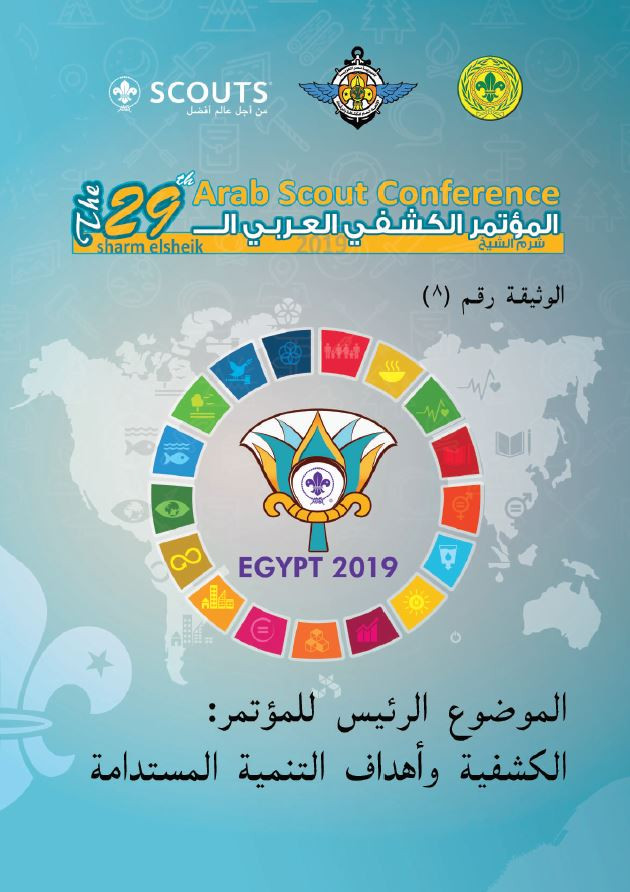 The 29th Arab Scout Conference Year of publication: 2019 Corporate author: Arab Scout Organization The conference book reviews scouting and the sustainable development goals. The book deals with a range of issues in the field of Scouting and its role in achieving the Sustainable Development Goals.
 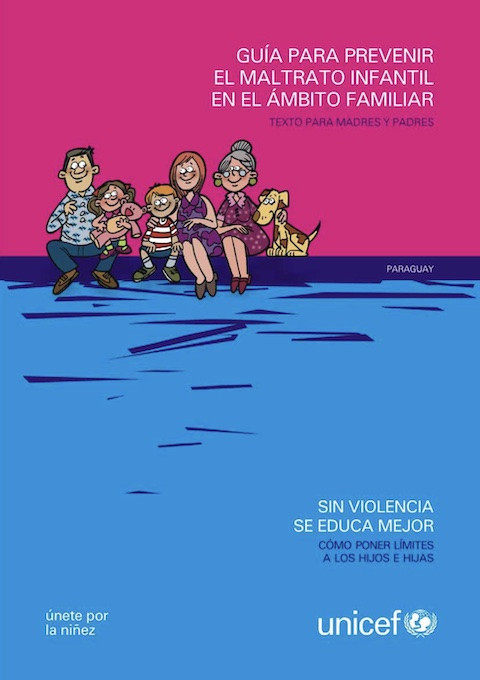 Guide to Prevent Child Abuse in the Family Year of publication: 2010 Author: Cecilia Sirtori Corporate author: United Nations Children's Fund (UNICEF) This guide seeks to point out a path that leads to cultural change, in which it is possible to replace the deep tradition of using physical and verbal violence for the purpose of setting limits to boys and girls by others methods of discipline. This guide is based upon the principle that humiliating treatment does not educate.
  Sexual Violence Against Boys and Girls: Child Sexual Abuse and Exploitation; Guide to Basic Material for the Training of Professionals Year of publication: 2012 Author: Liliana Orjuela López | Virginia Rodríguez Bartolomé Corporate author: Save the Children This document highlights the importance of protecting children from sexual violence, such as abuse, sexual exploitation, child pornography and human trafficking. It presents the ways in which you can intervene with regard to child abuse and exploitation.
  Voices Against Violence Year of publication: 2006 Author: Benjamin Bond Corporate author: Save the Children Violence against children has become a crisis that affects every country in the world. In this document, Save the children makes an urgent call to governments to commit themselves to eradicating violence against children.
  Children's Rights Are They Necessary? Year of publication: 2017 Corporate author: CuriosaMente This video rises the question about the need for children´s rights. It describes the historical perspectives of childhood and how their rights were developed, stressing their importance.
 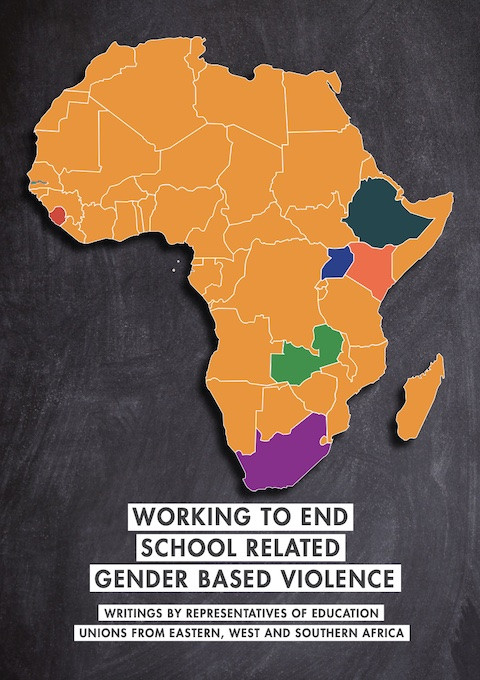 Working to End School Related Gender Based Violence: Writings by Representatives of Education Unions From Eastern, West and Southern Africa Year of publication: 2019 Author: Shamim Meer Corporate author: Gender at Work | Labour Research Service (LRS) | Global Affairs Canada (GAC) | United Nations Girls' Education Initiative (UNGEI) | Education International (EI) School Related Gender Based Violence (SRGBV) is violence that undermines the bodily integrity, human rights, and gender equality of all those involved in the school but primarily that of the school child.In 2016, 7 teacher unions i.e. SADTU and NAPTOSA from South Africa, BETUZ and ZNUT from Zambia, UNATU from Uganda, ETA from Ethiopia and KNUT from Kenya and in 2018, SLTU from Sierra Leone, GTU from the Gambia and the staff from the Ghana-based Education International Regional Africa Office - actively engaged in a Gender at Work - Gender Action Learning Process (GAL).The main aim of this specific GAL process was to create a participatory EI pilot program in Southern, East and West Africa focusing on individual teachers’ and teacher unions’ capacity to address SRGBV. With the support of Gender at Work facilitators, participants strengthened their understanding of gender inequality and gender based violence in the context of the school. Throughout the GAL Process participants spoke from their hearts, sharing inspirational stories of change.
  Strategies to End School-Related Gender-Based Violence: The Experience of Education Unions in Africa Year of publication: 2019 Author: Rex Fyles Corporate author: Education International (EI) | United Nations Girls' Education Initiative (UNGEI) | Gender at Work This document draws on the experience of nine EI member organisations in seven African countries committed to combatting SRGBV in their contexts. It presents the wide range of actions and strategies education unions can initiate to confront the challenges SRGBV poses to their students, members, organisations and societies. This collection of union experiences is intended to inform and inspire education unions and their members to test their own approaches to eliminating SRGBV. The document will also inform other stakeholders in the education sector interested in learning more about the unique strengths and specific roles education unions can play as partners in collective efforts to end SRGBV.The document is divided into two parts. The first section focuses on actions these unions have taken internally to adapt decision- making structures, update policies and deploy resources to empower their members to act. The second section looks at how education unions have reached out to other stakeholders – legislators, ministries, civil society organisations, traditional leaders, parents, media and learners – to pursue coordinated strategies for change.