
Resources
Explore a wide range of valuable resources on GCED to deepen your understanding and enhance your research, advocacy, teaching, and learning.
8,363 Results found
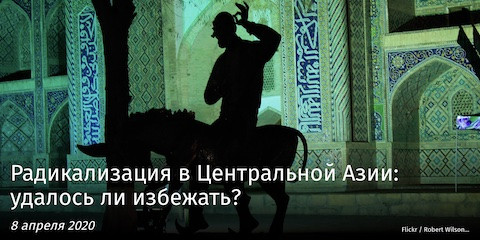 Radicalization in Central Asia: Have We Managed to Avoid It? Year of publication: 2020 Author: Milan Lazovic Corporate author: Russian International Affairs Council Central Asia is a very multifaceted, multi-ethnic, multi-confessional region, where many cultures, national traditions and ways of life intersect, united by a common factor - religious. The authors of the chapter on the role of religion in Central Asia in the book "Religion, Conflict, and Stability in the Former Soviet Union", prepared by the analytical center "RAND Corporation", touched upon a very important, significant and influential topic on the region. Experts note that, despite the success of Central Asia's attempts to avoid large-scale radicalization, there is a risk of its expansion today.
 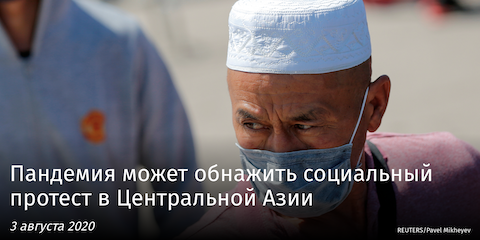 Pandemic May Expose Social Protest in Central Asia Year of publication: 2020 Author: Alexey Malashenko Corporate author: Russian International Affairs Council The coronavirus has become a serious test of the strength of the political systems of Central Asian countries. Despite the severe socio-economic impact of the pandemic, stability has been ensured. But in the long run, quarantines and tight restrictions will remind of themselves and expose old problems. Among the most acute are unemployment and the threat of violent extremism. Moreover, both problems are related.
 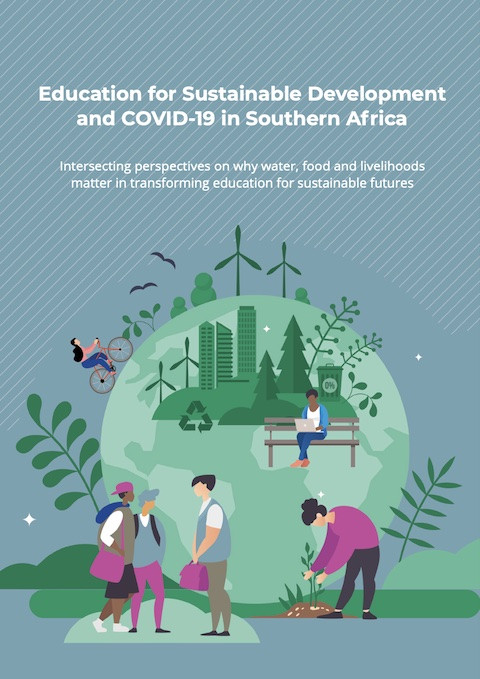 Education for Sustainable Development and COVID-19 in Southern Africa: Intersecting Perspectives on Why Water, Food and Livelihoods Matter in Transforming Education for Sustainable Futures Year of publication: 2021 Author: Heila Lotz-Sisitka | Injairu Kulundu | Rachel Neville | Anna James | Ayanda Buhlebenkosi Moyo | Esthery Kunkwenzu | Domingos Carlos Mirione | Gibson Mphepo | Kgosietsile Velempini | Lwanda Maqwelane | Phila Dyantyi | Rutendo Mushishi | Selemani Abdul Makwita | Yeukai Musariri | Zenani Mhlanga Corporate author: JET Education Services | Rhodes University The main question of this book is ‘What can we learn from this intersecting crisis for transforming education for sustainable futures in southern African countries’.The research process will generate a few additional questions including, but not limited to:Can stronger school-community-government partnerships help to reduce risks and challenges such as those being faced now under the COVID-19 crisis?What can our governments do better?What can communities and parents do?What can educators and learners do?What systems need to be generated to ensure an alternative, transformed future and what is the role of education in this story?
 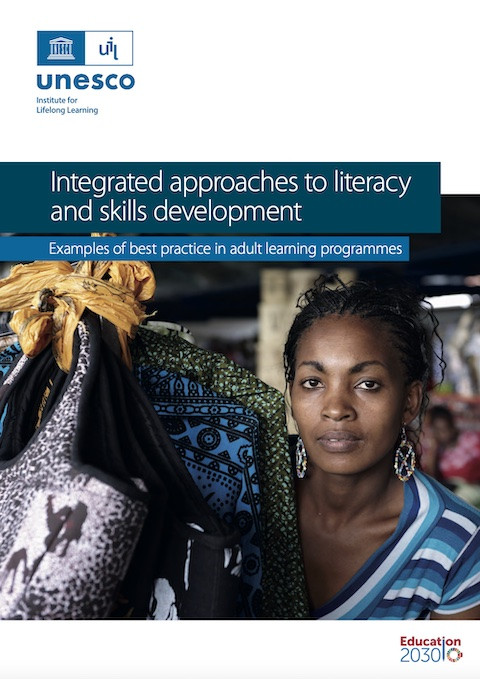 Integrated Approaches to Literacy and Skills Development: Examples of Best Practice in Adult Learning Programmes Year of publication: 2021 Corporate author: UNESCO Institute for Lifelong Learning (UIL) Since the first coronavirus case was reported to the World Health Organization in December 2019, millions of youth and adults around the globe – especially those with low literacy skills – have faced increased challenges to securing meaningful work and safeguarding their livelihoods. A more integrated approach to youth and adult learning and education, combining basic literacy, vocational and life skills, is needed now more than ever.This publication showcases selected examples of integrated youth and adult learning and education programmes featured in the UNESCO Effective Literacy and Numeracy Practices Database, also known as LitBase. Implemented in various social, cultural and economic contexts around the world, the programmes featured herein reveal not only the transformative potential that enhancing the quality of youth and adult learning and education can have, but also lay bare the hurdles and potential pathways to consider when planning effective integrated programmes.Integrated approaches to literacy and skills development: Examples of Best Practice in Adult Learning Programmes is useful not only for policy-makers, providers and educators who plan to implement integrated adult education programmes but also for those trying to help the most vulnerable groups reach their highest potential.
  Best Practices in TVET Policies Coping with COVID-19 Crisis: UNEVOC Network East and Southeast Asia Cluster Countries Year of publication: 2020 Author: Jihee Choi | Hanbyul Lee | Kunjoo Lim | Hyunsik Choi | Jongtaek Han Corporate author: UNESCO International Centre for Technical and Vocational Education and Training (UNEVOC) | Korea Research Institute for Vocational Education and Training (KRIVET) This book presents the best practices with regard to TVET policies to cope with COVID-19 crisis. It includes 8 cases of manuscripts from 6 countries in total. The topics covered range from the national TVET policies responding to COVID-19 crisis to open and digital learning, migrant female workers, and TVET strategies to deal with youth unemployment.
  Global Citizenship Education Policy and Recommendations Report: Reflections and proposals for the SICA region Year of publication: 2021 Author: Daniel Abreu Corporate author: Central America Coordination Bureau for Education and Culture (CECC) | Central American Integration System The CECC/SICA Council of Ministers has proposed to the Ministries of Education, in the Contingency Plan for the SICA region, to prioritize some approaches and curriculum content. One area of particular relevance is education for the exercise of citizenship, a dimension especially challenged in these times when citizens have seen their principles, values and daily practices critically demanded by the special circumstances of living together in society.The Report explains how Global Citizenship Education is implemented in SICA countries and provides recommendations for strengthening it in different as- pects of policy and teaching practice.
 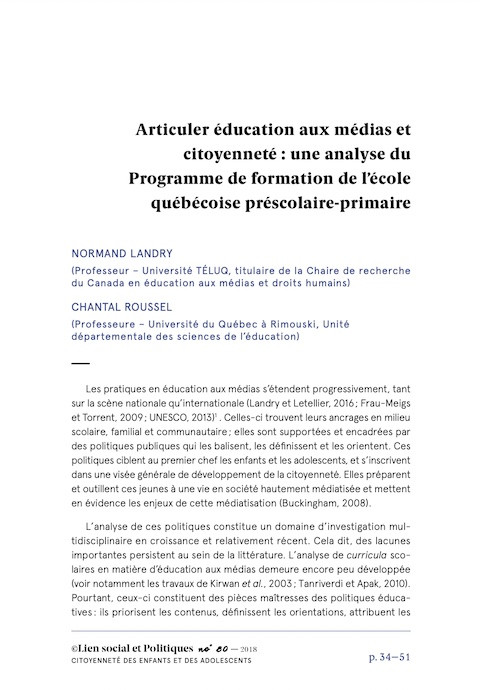 Media Education and Citizenship: An Analysis of the Quebec Preschool and Elementary Education Program (No. 80) Year of publication: 2018 Author: Normand Landry | Chantal Roussel Corporate author: Lien social et Politiques In Canada, the limited level of knowledge on media education content that is conveyed by academic curricula hinders its critical evaluation. This article presents the ways in which media education is introduced in the Quebec Education Program (QEP) at the preschool and elementary level. More specifically, it highlights the connections at work between media education, childhood and citizenship in the program. Our method tracks and extracts a set of statements related to information and communications technologies (ICTs) and the media, then conducts their automated classification into four principal categories: speech, verbs used that reflect the actions undertaken by categories of actors (school, pupils, teachers), learning objectives and suggestions. A subsequent classification allows for the emergence of verbs and learning objectives associated to the notion of citizenship. The latter are then subject to speech analysis. Our analysis intends to demonstrate the message conveyed by the QEP on media and ICTs. It highlights the roles, tasks and responsibilities of its various actors in relation to the acquisition of knowledge and skill development. In addition, it features the actions taken by these actors to operationalize the academic goals of the program. Our conclusion indicates a low subject implementation of the statements associated to media education and citizenship, relevant content, although thematically limited, along with the conception of students as capable of a reflection and critical thinking process.
  Guinea Pig VF (S. Prijot) Year of publication: 2015 Corporate author: Îles de Paix In Peru, the guinea pig is bred for its protein-rich flesh. For a long time, they grew up within the family itself, without any particular precaution in terms of hygiene and the care to be provided to them. Thanks to the intervention of Iles de Paix, a hundred women were trained in the breeding of these animals, thus making it possible to improve the quality and the quantity of the production. Through this action, many families have seen their food enriched considerably and for some, their income improved.
  SANS TABOU, Debate Between Edgar Morin and Régis Debray on "Citizenship" Year of publication: 2016 Corporate author: ESSEC Business School Debate "Without Taboo" between Edgar Morin and Régis Debray on the theme of "Citizenship", moderated by Jean-Michel Blanquer, Managing Director of Essec at the Maison de d'Amérique Latine on November 17, 2016 and organized by the chair Edgar Morin on the complexity of Essec directed by Professor Laurent Bibard.
  Women in Higher Education: Has the Female Advantage Put an End to Gender Inequalities? Year of publication: 2021 Author: Daniele Vieira do Nascimento | Takudzwa Mutize | Jaime Felix Roser Chinchilla Corporate author: UNESCO Regardless of encouraging statistics on women access to higher education, women still encounter obstacles when seeking to occupy key academic positions in universities, to be involved with relevant research, and to take leadership roles.Women are overrepresented among teaching staff at lower education levels, while their presence is markedly lower in tertiary education (vertical segregation). The same is true in school management and education policymaking. Women are also still underrepresented as senior faculty and in higher education decision-making bodies in many countries.In the area of research, men publish on average more articles than women showing there is a gender publication gap. Differences in men ́s and women ́s academic publication persist and are most pronounced for publications in top journals.STEM (science, technology, engineering, and mathematics) areas of study show a heavy underrepresentation of female students in most countries. This underrepresentation of female students is closely linked to the underrepresentation of female researchers in those areas. Globally, the percentage of females studying engineering, manufacturing and construction or ICT (information and communications technology) is below 25% in over two- thirds of countries.During the first wave of the COVID-19 pandemic, although submission of academic papers for publication increased in all months during the lockdown period, the rate of increase in submissions by female researchers was significantly less than those by male researchers. This deficit was also found to be especially pronounced among younger cohorts of female academics.