
Resources
Explore a wide range of valuable resources on GCED to deepen your understanding and enhance your research, advocacy, teaching, and learning.
8,363 Results found
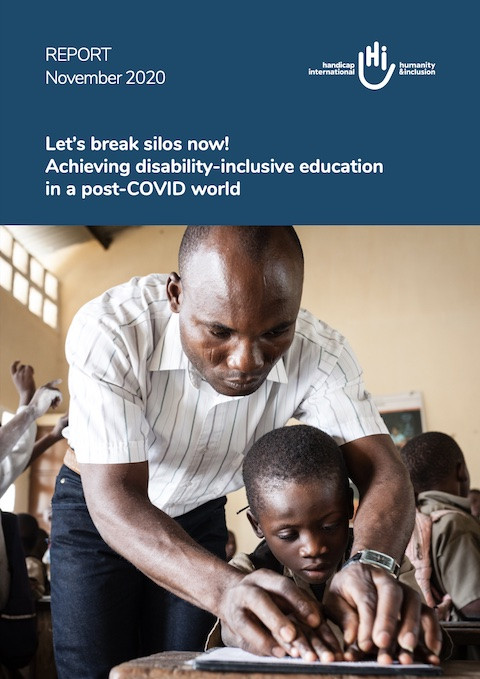 Let’s Break Silos Now!: Achieving Disability-Inclusive Education in a Post-COVID World Year of publication: 2020 Author: Aurélie Beaujolais | Blandine Bouniol | Francesca Piatta | Julia McGeown | Sandra Boisseau | Sandrine Bohan Jacquot | Valentina Pomatto Corporate author: Humanity & Inclusion This is a report on the difficulties children with disabilities face in accessing education in the world’s poorest countries. The report draws specifically on Humanity & Inclusion and its partners’ extensive global experience and learning around education and disability. More recently, this includes the impact of the COVID-19 pandemic on education for children with disabilities.
  COVID 19, Technology-Based Education and Disability: The Case of Bangladesh; Emerging Practices in Inclusive Digital Learning for Students With Disabilities Year of publication: 2021 Author: Vashkar Bhattacharjee | Shahriar Mohammad Shiblee Corporate author: UNESCO This study sheds light on Bangladesh’s initiatives in the area of disability-inclusive education. The particu- lar focus is on the role of its Accessible Reading Materials (ARM) initiative and how this has contributed to ensuring disability-inclusive and accessible education during the COVID-19 pandemic in Bangladesh. ARM is a government-led initiative that was launched in 2014 by the then Access to Information (a2i) programme of the Prime Minister’s Office, now the Aspire to Innovate Programme of the Information and Communica- tion Technology (ICT) Division of the Government of Bangladesh. It was launched in recognition of the need for solutions to ensure virtual, as well as regular reading access for all students, including children and young people with barriers to reading. ARM is aimed at satisfying the educational needs of all students including students with print and learning disabilities.
  Foundations for Building Forward Better: An Education Reform Path for Lebanon Year of publication: 2021 Corporate author: World Bank Human capital development is a critical determinant of economic growth, equity, and prosperity, but outcomes in this domain are worryingly low inLebanon, risking the future of generations of children. Lebanese children lag behind their peers in human capital development—measured accordingto the World Bank (2020c) Human Capital Index—suggesting that the future productivity of the labor force and the country’s trajectory for equitablegrowth is at risk (World Bank 2020b). The Human Capital Index indicates that children born in Lebanon today will reach, on average, only 52 percentof their potential productivity when they grow up. This is lower than the average estimates for the Middle East and North Africa (MENA) region(57 percent) and upper-middle-income countries (56 percent). Lebanon’s poor performance on the Human Capital Index is largely attributed to theeducation outcomes calculated for the index. If actual years of schooling, which average approximately 10.2 years in Lebanon, are adjusted for actual learning, effective years of schooling are 40 percent less—on average, only 6.3 years of actual learning (World Bank 2020b). The most recent school closures were due to the COVID-19 pandemic, with schools being closed over 75 percent of the school year between January 2020 and February 2021.1 This will likely lead to a further and significant decrease in learning: effectively, students are facing a lost year of learning (Azevedo et al. 2021).
  Global Citizenship Education in the Draft Social Studies K-6 Curriculum Year of publication: 2021 Corporate author: Alberta Council for Global Cooperation (ACGC) This document is the Alberta Council for Global Cooperation’s (ACGC) response to the Draft Social Studies K-6 Curriculum released by the Government of Alberta on March 29, 2021. ACGC conducted the analysis of the draft social studies curriculum to better understand the alignment of the draft with global citizenship education (GCE) best practices.Global citizenship is a lens through which to see the world. ACGC understands global citizenship as “an ethos” primarily concerned with fostering “a sense of belonging to the global community and common humanity” (UNESCO, 2013). This not only involves members experiencing solidarity and collective identity themselves, but also necessitates collective responsibility to take local and global action for a better world.Following the analysis, ACGC strongly recommends that the draft curriculum be rewritten to reflect international best practices in global citizenship education. There are significant gaps in the draft when held against the suggested learning outcomes of UNESCO’s guide, Global Citizenship Education: Topics and Learning Objectives. Furthermore, the Alberta government’s Guiding Framework for the Design and Development of Kindergarten to Grade 12 Provincial Curriculum released in December 2020 provides an opportunity for GCE if the draft curriculum more closely aligns with our understanding of the Guiding Framework. Ultimately, the best path forward is rewriting the draft curriculum to include cognitive, socio-emotional, and behavioural learning outcomes that foster active global citizenship and prepare Alberta students to contribute to and thrive within a sustainable, interconnected world.
 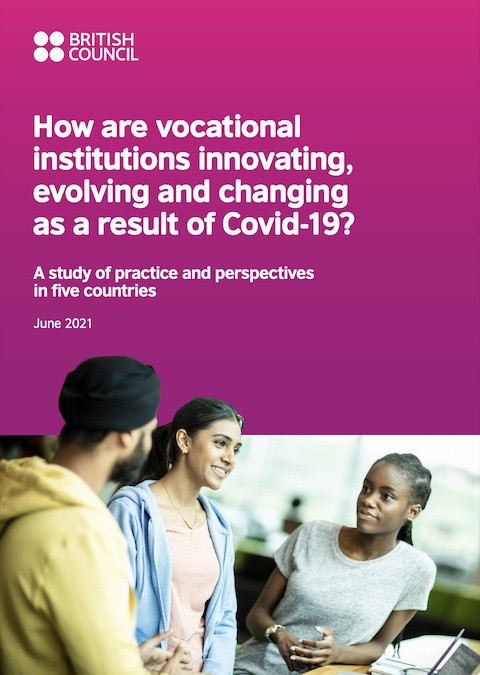 How Are Vocational Institutions Innovating, Evolving and Changing as a Result of COVID-19?: A Study of Practice and Perspectives in Five Countries Year of publication: 2021 Corporate author: British Council As an international problem, Covid-19 requires international cooperation. The social, economic and educational recovery from the pandemic can be enhanced by knowledge transfer and exchange. This research brought together 15 technical and vocational education and training (TVET) institutions from the five countries in the British Council’s I-WORK Programme (Improving Work Opportunities - Relaying Knowledge) to explore innovation, evolution and change stemming from the pandemic. TVET practitioners and leaders from Ghana, India, Malaysia, South Africa and the UK were asked to reflect on five key questions: How are institutional policy and structures likely to change to reflect the changing situation? Is this different for private institutions? What changes are proposed to the curriculum/ occupational areas to reflect the rapidly changing demand and how are they identifying this demand? How will learners get the practical and work-based experience they need and what changes to work- based learning and apprenticeships are needed? What changes are needed to the skills and type of staff in the teaching institution? How can new delivery models and ways of working promote more inclusive practice? The research took place as institutions approached almost a year of adapting their teaching, learning and support to localised lockdowns and the restrictions of the pandemic. The national policy context may have been different in each country, but the research findings pointed to a single conclusion: that across the board, the move to digital learning and teaching had brought benefits, opportunities and challenges that might not otherwise have been realised.
  United Nations Strategy and Plan of Action on Hate Speech Year of publication: 2019 Corporate author: United Nations (UN) In response to the alarming trend of rising hate speech around the world, Secretary-General António Guterres launched the United Nations Strategy and Plan of Action on Hate Speech, on 18 June 2019.Seeking to enhance the UN’s response to the global phenomenon of hate speech, this strategy is the outcome of close collaboration between 16 entities under the UN Working Group on Hate Speech and is coordinated by the United Nations Special Adviser on the Prevention of Genocide.The Strategy makes a firm commitment to step up coordinated action to tackle hate speech, both at global and national levels.
 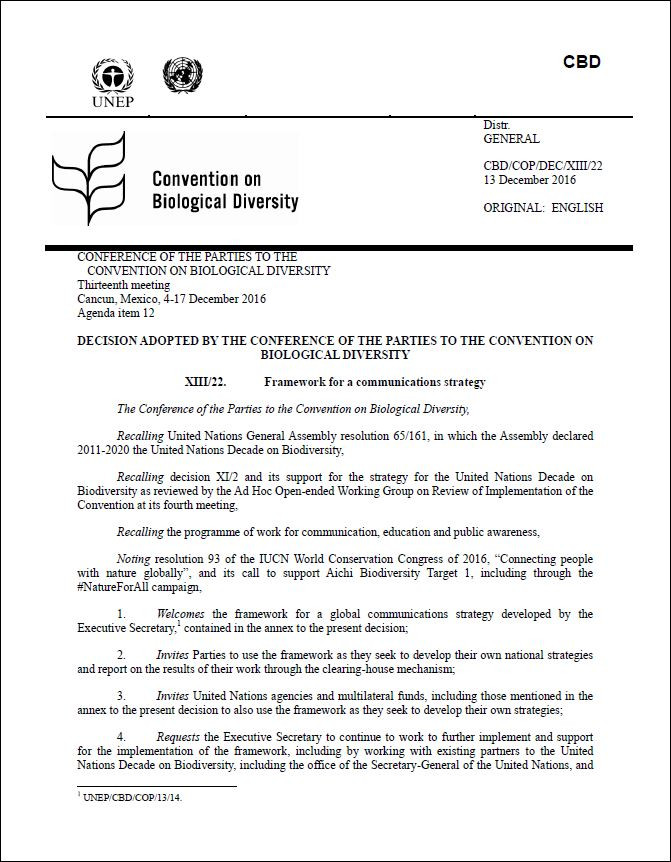 Convention on Biological Diversity: Framework for a Communications Strategy Year of publication: 2016 Corporate author: United Nations Environment Programme (UNEP) | United Nations (UN) The document contains the Convention on Biological Diversity.It is a decision adopted by the Conference of the Parties to the Convention on Biological Diversity.
  On the International Day for Tolerance: Calls for Coexistence and the Rejection of Intolerance Year of publication: 2020 Author: Wijdan Alrubai Corporate author: Awraas TV On the International Day for Tolerance, the broadcaster on the TV program hosts some specialists to speak about tolerance and reject intolerance in the Arab world. Through the program, the difference in the concept of tolerance among the speakers is shown and raised as an issue in the Arab world.
 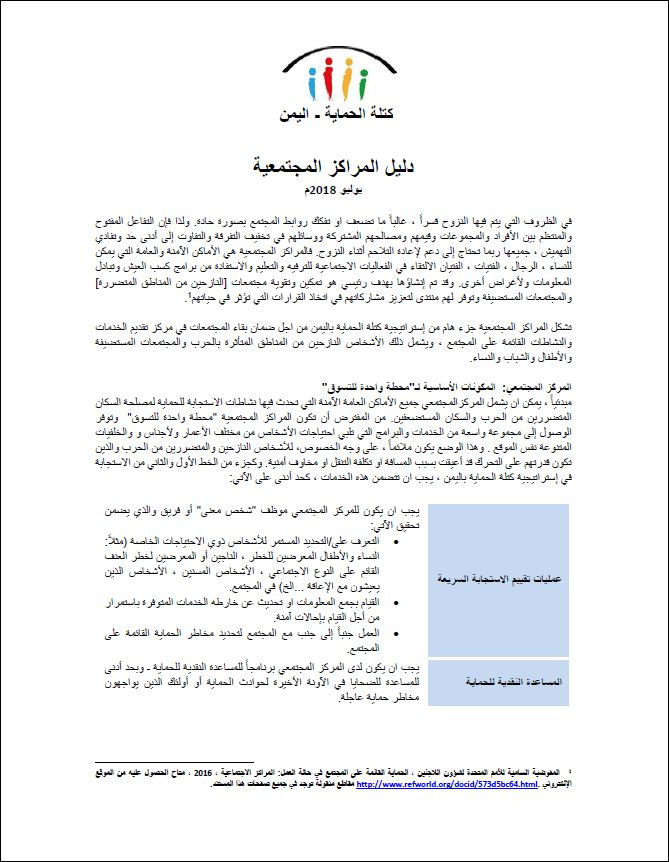 Community Centers Guide Year of publication: 2018 Corporate author: Protection Cluster Yemen Community centers are an important part of the Protection Cluster strategy in Yemen in order to ensure that communities remain at the center of providing services and community-based activities, including those displaced from war-affected areas and host communities and children, youth and women.
 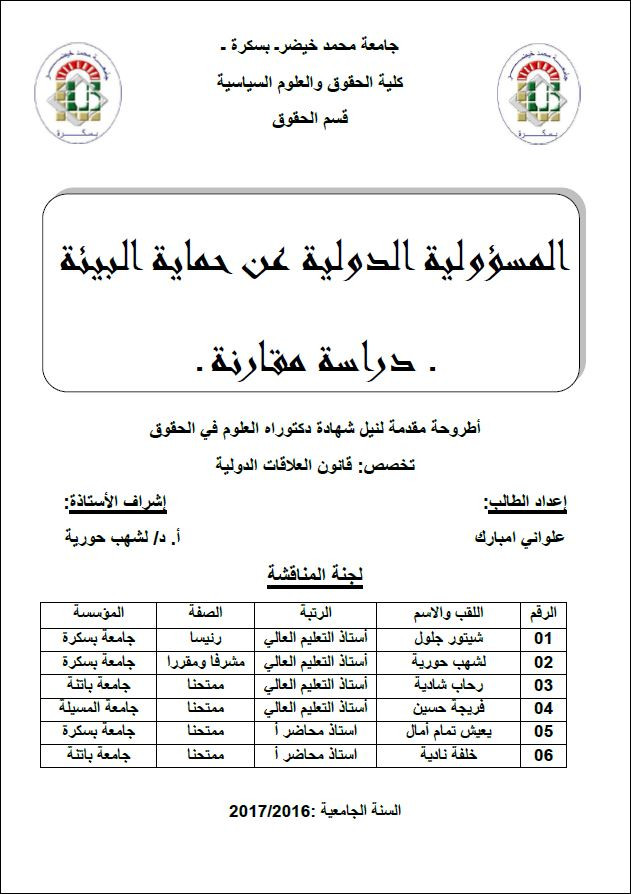 International Responsibility for Environmental Protection: A Comparative Study Year of publication: 2017 Author: Alwani Mubarak Corporate author: University Mohamed Khider Biskra The study sought to answer the following questions: What is the role that the United Nations and its affiliated organizations have played towards the environment? Have the countries' internal domestic laws been affected by global and regional agreements? What is the role of civil and criminal liability in protecting the environment? How can the criminal liability of a legal person be determined and methods of resolving disputes?