
Resources
Explore a wide range of valuable resources on GCED to deepen your understanding and enhance your research, advocacy, teaching, and learning.
8,363 Results found
 Learning to Live Together in Community: Training of Trainers Program for Community Organization; Guide 1 Year of publication: 2007 Author: Adolfo Aguilar Ávuila | María Consulo Sánches Plazas Corporate author: Columbia. Ministry of the Interior and Justice | National Pedagogical University The purpose of this guide is to generate conditions that contribute to identifying conceptual and methodological elements that contribute to the strengthening, integration and creation of an environment of coexistence in the community organization, so that it can be projected with greater probability of success.
  Caribbean Sheroes Initiative: Civil Society Organizations Advancing Gender Equality; Methods & Tools Year of publication: 2021 Author: Joan Andrea Hutchinson Corporate author: Institute for Gender and Development Studies (IGDS) | UNESCO This Toolkit recognizes the achievements and commitment of women activists that engage in Civil Society Organizations (CSOs). It documents the practice and lessons learned of twelve Jamaican Civil Society Organizations that have worked relentlessly to advance women’s rights and social justice, fostering a less violent society and more equal gender relations grounded on human rights.
  Advancing Arabic Language Teaching and Learning: A Path to Reducing Learning Poverty in the Middle East and North Africa Year of publication: 2021 Author: Laura Gregory | Hanada Taha Thomure | Amira Kazem | Anna Boni | Mahmoud Abduh A. Elsayed | Nadia Taibah Corporate author: World Bank The purpose of the present report is to identify and explore the evidence on factors that are leading to high rates of learning poverty in MENA countries. In addition, the report proposes a path for countries of the region to make the teaching and learning of the Arabic language—which are critical foundations for children in Arabic-speaking countries—more effective. The intended audience of the report is education stakeholders in the MENA region, including officials in ministries of education across the region, those responsible for education decision-making, teachers, academics, education administrators, parents, and nongovernmental organizations, as well as World Bank and partner organization staff tasked with supporting countries in their efforts to raise learning and human capital.The intention of the report is not to provide an Arabic literacy strategy for each country since countries of the region differ and each would need to have their own national dialogue. Instead, the report collates the relevant literature from the region and beyond, as well as local and regional initiatives, and offers guidance to countries to advance the teaching and learning of MSA. As such, the report does not focus on the broader issues of language use within each country. As part of the process of developing the report, a summary of the emerging evidence and recommendations was shared with a small group of teachers from two countries across the region in advance of a focus group discussion to explore local views. Unanimous agreement on the key findings and recommendations were expressed by these teachers. Further discussions on the topics raised in this report are expected to take place during the dissemination of this report and in the months and years to come, leading to greater consensus across stakeholders on the best ways to advance Arabic language teaching and learning.The report is structured in a way that first explores the incidence of learning poverty in the MENA region, followed by international evidence on the science of learning to read, and factors that are influencing Arabic language learning outcomes. The report then looks at some of the national strategies, policies, and initiatives already in place for Arabic language education, and proposes a path for advancing Arabic language teaching and learning, along with suggestions for regional collaboration efforts that could further support MENA countries.
 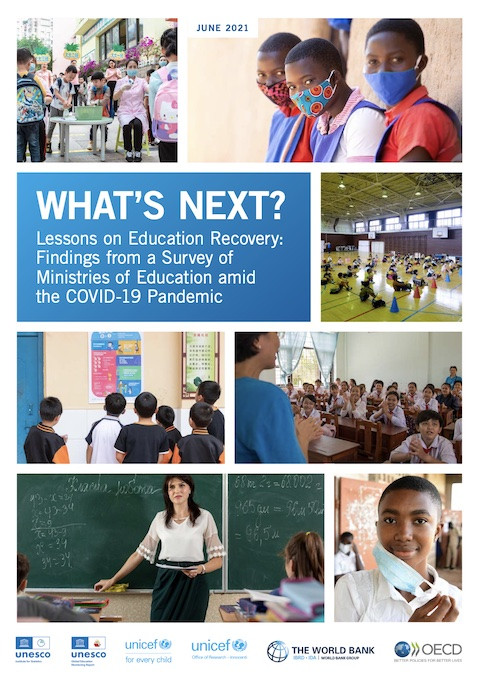 What’s Next? Lessons on Education Recovery: Findings From a Survey of Ministries of Education Amid the COVID-19 Pandemic Year of publication: 2021 Corporate author: UNESCO | United Nations Children's Fund (UNICEF) | World Bank | Organisation for Economic Co-operation and Development (OECD) United Nations Educational, Scientific and Cultural Organization (UNESCO), the United Nations Children’s Fund (UNICEF), the World Bank and the Organisation for Economic Co-operation and Development (OECD) have collaborated in the third round of the Survey on National Education Responses to COVID-19 School Closures, administered by the UNESCO Institute for Statistics (UIS) and OECD to Ministry of Education officials. The questions covered four levels of education: preprimary, primary, lower secondary and upper secondary. While the first two rounds of the survey were implemented during the periods May–June and July–October 2020, respectively, the third round was implemented during the period February–June 2021. In total, 143 countries responded to the questionnaire. Thirty-one countries submitted responses to the OECD (“OECD survey”) and 112 countries responded to the UIS (“UIS survey”). Seven countries responded to both surveys. In these instances, the more complete set responses were used in analysis.
 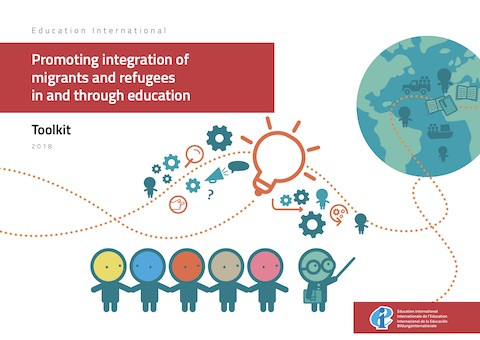 Promoting Integration of Migrants and Refugees in and Through Education: Toolkit Year of publication: 2018 Corporate author: Education International (EI) The past years have seen large numbers of refugees moving to Europe. This, and the rise of populist movements in Europe and North America, has led unions to develop activities engaging schools, local communities, authorities, etc. to promote the rights of migrants and build inclusive schools and communities.With the support of Education International (EI), exchange visits, information sharing and peer-learning activities allowed education unions to inspire each other and explore synergies across borders. This toolkit aims to build on these experiences and facilitate education unions to develop their work in this area. It also assists unions by exploring the issues around integrating migrants and refugees in education and sharing what others have been doing in this domain.
  The Debunking Handbook 2020 Year of publication: 2020 Author: Stephan Lewandowsky | John Cook Corporate author: Center for Climate Change Communication | George Mason University The Debunking Handbook 2020 summarises the current state of the science of misinformation and its debunking. It was written by a team of 22 prominent scholars of misinformation and its debunking, and it represents the current consensus on the science of debunking for engaged citizens, policymakers, journalists, and other practitioners.
 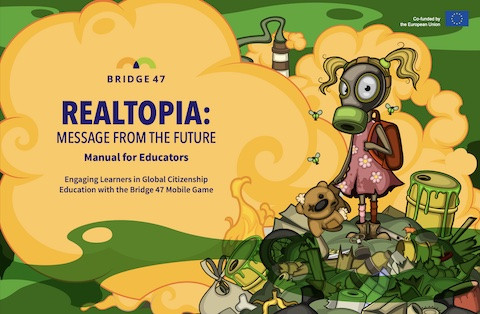 Realtopia: Message From the Future, Manual For Educators; Engaging Learners in Global Citizenship Education With the Bridge 47 Mobile Game Year of publication: 2021 Author: Jakub Žaludko | Kristine Liepina | Gillion Vaughn | Jana Stahl | Timo Holthoff Corporate author: Bridge 47 Realtopia is a game that displays a post-apocalyptic future, a scenario that humanity possibly faces if it does not change its current trajectory. It raises awareness about the urgency and sever- ity of the real challenges we encounter and at the same time tries to convey that a different future is possible if we all actively dream and work towards it. It aims to motivate and empower players to take real action in the present to navigate humanity towards a more positive future path.This manual gives insights into the development process, a detailed tutorial of how to play the game and some ideas and methods for using it as an educational tool in different settings, both online and hybrid.
 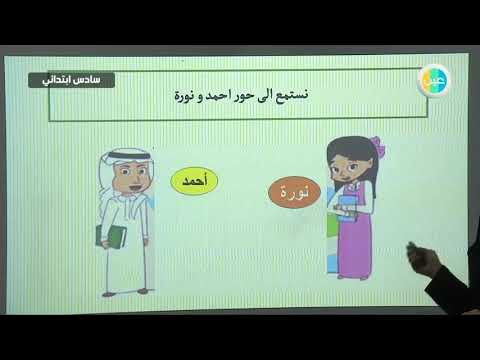 iEN Social Studies and Citizenship Lessons: Personality Enhancement Program - Sixth Primary Year of publication: 2020 Author: Fawzia Alghamdi Corporate author: iEN National Education Portal The teacher explains a sixth grade lesson on character development and enhancement. The lesson for students of the Kingdom of Saudi Arabia in a social studies course. With the Coronavirus pandemic, lessons explaining across platforms have emerged.
 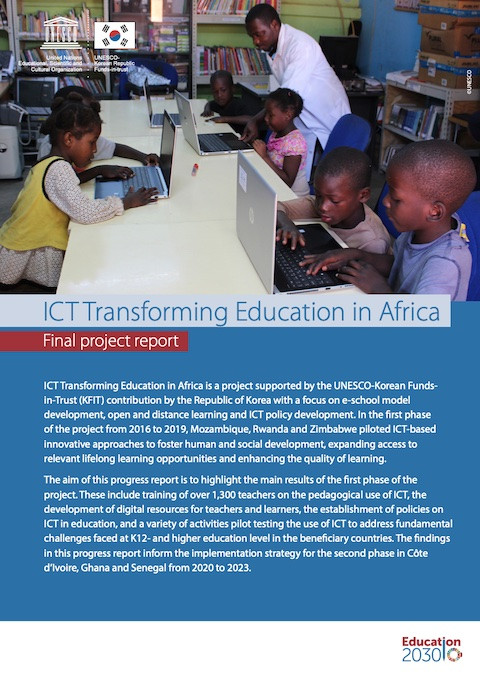 ICT Transforming Education in Africa: Final Project Report Year of publication: 2020 Corporate author: UNESCO ICT Transforming Education in Africa is a project supported by the UNESCO-Korean Funds- in-Trust (KFIT) contribution by the Republic of Korea with a focus on e-school model development, open and distance learning and ICT policy development. In the first phase of the project from 2016 to 2019, Mozambique, Rwanda and Zimbabwe piloted ICT-based innovative approaches to foster human and social development, expanding access to relevant lifelong learning opportunities and enhancing the quality of learning.The aim of this progress report is to highlight the main results of the first phase of the project. These include training of over 1,300 teachers on the pedagogical use of ICT, the development of digital resources for teachers and learners, the establishment of policies on ICT in education, and a variety of activities pilot testing the use of ICT to address fundamental challenges faced at K12- and higher education level in the beneficiary countries. The findings in this progress report inform the implementation strategy for the second phase in Côte d’Ivoire, Ghana and Senegal from 2020 to 2023.
  Cyberbullying among Adolescents: A Study Applied to a Sample of Middle School Students Who Used the Game of Fortnite Year of publication: 2019 Author: Moudi Al-Anzi Corporate author: Qassim University The study aimed to identify the personal causes of cyberbullying and the role of the family and school climate in cyberbullying. The study used the game Fortnite as an example to recognize bullying that occurs through electronic games. A questionnaire was used to collect data.