
Resources
Explore a wide range of valuable resources on GCED to deepen your understanding and enhance your research, advocacy, teaching, and learning.
8,363 Results found
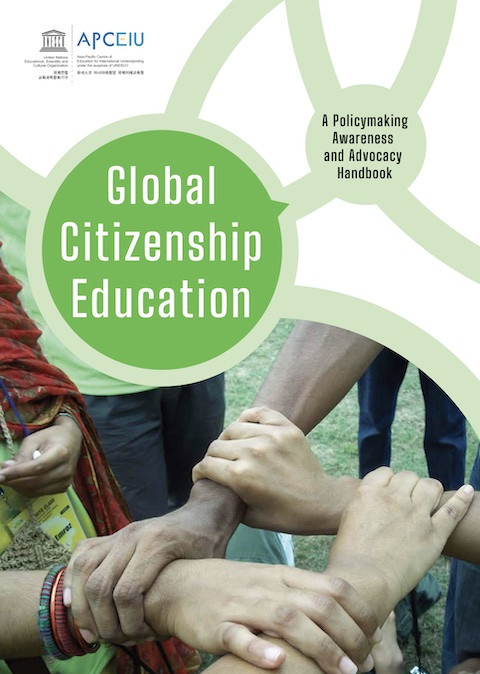 Global Citizenship Education: A Policymaking Awareness and Advocacy Handbook Year of publication: 2021 Corporate author: APCEIU | UNESCO Bangkok GCED is critical for learners and countries to reach the SDG-Education 2030 targets. Many countries have GCED elements, either explicitly or implicitly, within their education policies. However, to fully realize SDG target 4.7 and to enable our learners to achieve the knowledge, skills, values and attitudes needed to succeed in an ever-changing and adaptable world, countries may need to explicitly build these components directly into various education policies. This policymakers’ handbook provides some guidance on how policymakers can develop and adapt local level policies in order to strengthen GCED learning.
 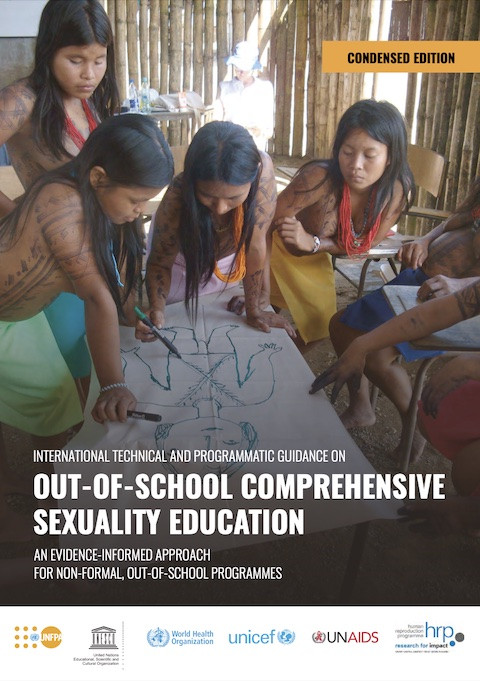 International Technical and Programmatic Guidance on Out-of-School Comprehensive Sexuality Education: An Evidence-Informed Approach for Non-Formal, Out-of-School Programmes Year of publication: 2020 Corporate author: United Nations Population Fund (UNFPA) This Guidance complements and refers to the International Technical Guidance on Sexuality Education published in 2018. Informed by evidence and grounded in a human-rights approach, this out-of-school edition provides concrete guidelines and recommendations to ensure that the most vulnerable young people receive information that enables them to develop the knowledge and skills they need to make informed choices about their sexual and reproductive health.
  Life Skills Through Drama: Equipping Adolescent Girls With Key Knowledge and Skills to Help Them to Mitigate, Prevent and Respond to Gender Based Violence Year of publication: 2021 Corporate author: International Rescue Committee (IRC) The Life Skills through Drama curriculum aims at promoting the protection of Syrian and Lebanese adolescent girls from Gender Based Violence and enhancing their psychosocial wellbeing. This curriculum addresses the basic life skills that adolescent girls living in difficult conditions in any similar cultural context could need. The curriculum relies on active learning through experience, practice, reflection and discussion. And it has been designed based on drama techniques. Varied creative drama techniques were used to serve the objectives including techniques from Theater of the Oppressed. You may find some familiar games and activities that have been modified or developed to suit the intended objectives, and you may also find innovated games and activities by the author such as “Fruit Festival”.
 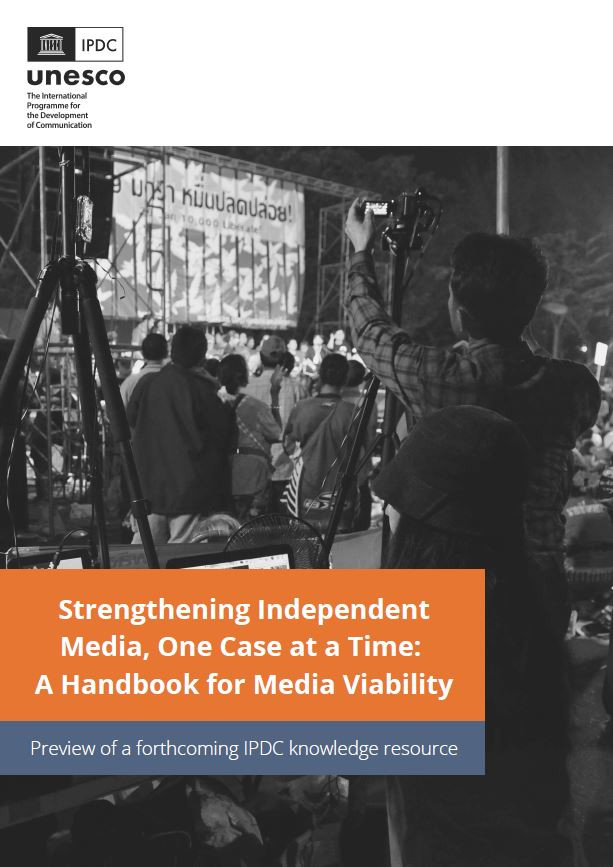 Strengthening Independent Media, One Case at a Time: A Handbook for Media Vability; Preview of a Forthcoming IPDC Knowledge Resource Year of publication: 2021 Corporate author: UNESCO “Strengthening Independent Media, One Case at a Time: A Handbook for Media Viability” will include case studies of innovative ideas from a wide variety of news media companies, mostly in the developing world, that are succeeding in difficult times and have lessons to share with others who are struggling. The handbook project was announced during the 65th meeting of the Bureau of the Intergovernmental Council of the International Programme for the Development of Communication (IPDC).This brochure includes highlights of some of the cases to be included, from community media in South Africa to a pure-play digital success in Indonesia, to a fact-checking network in Brazil to a covid response in Pakistan, and much more. The Handbook will be published in September 2021 and will be available for free on the website of the IPDC.
  Education Sector Analysis: Methodological Guidelines (Vol. 3) Year of publication: 2021 Corporate author: UNESCO International Institute for Educational Planning (IIEP) | United Nations Children's Fund (UNICEF) | Global Partnership for Education (GPE) | Foreign, Commonwealth & Development Office (UK) This present volume is the third in a series of education sector analysis (ESA) guidelines following two volumes published in 2014. The series provides methodologies and applied examples for diagnosing education systems and informing national education policies and plans. This volume proposes guidelines to strengthen national capacities in analyzing education systems in four areas: inclusive education system for children with disabilities, risk analysis for resilient education systems, functioning and effectiveness of the educational administration, and stakeholder mapping and problem-driven analysis (governance and political economy).
 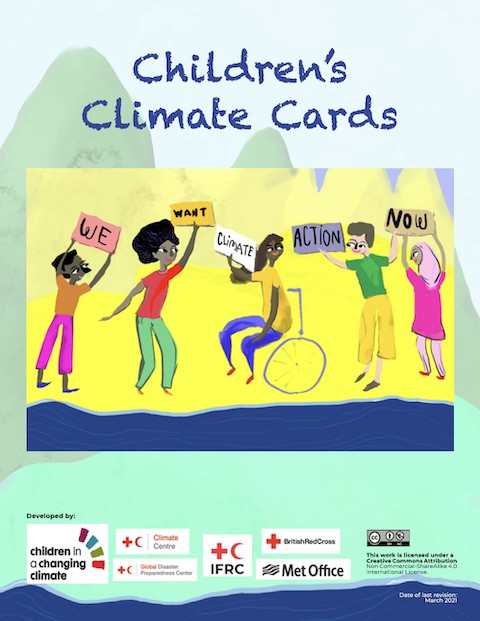 Children's Climate Cards Year of publication: 2021 Corporate author: Plan International These children’s climate cards provide a series of inspiring and interactive activities to engage children on the climate change agenda and call for climate action.
 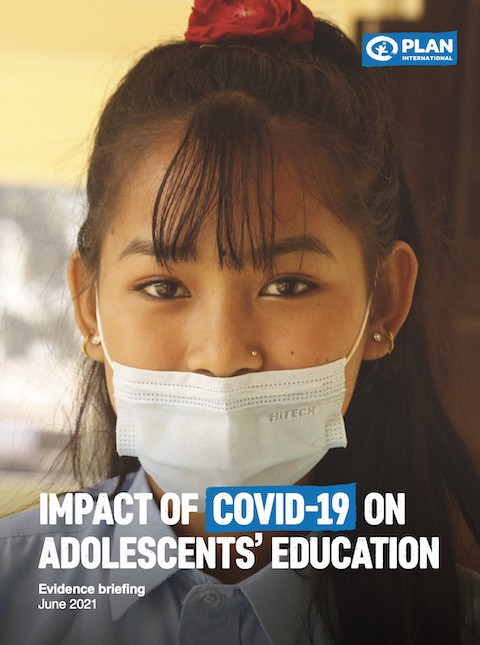 Impact of COVID-19 on Adolescents’ Education: Evidence Briefing Year of publication: 2021 Author: Adrienne Monteath-van Dok | Anthony Davis | Nicholas Frost Corporate author: Plan International UK This paper highlights the impact of COVID-19 on the education of adolescent girls and boys.
 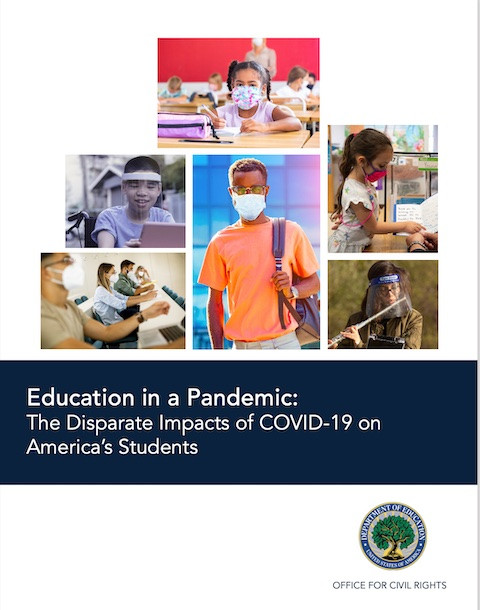 Education in a Pandemic: The Disparate Impacts of COVID-19 on America’s Students Year of publication: 2021 Corporate author: USA. Department of Education. Office for Civil Rights (OCR) The U.S. Department of Education’s Office for Civil Rights published, Education in a Pandemic: The Disparate Impacts of COVID-19 on America’s Students, in response to President Biden’s Executive Order on Supporting the Reopening and Continuing Operation of Schools and Early Childhood Education Providers. The report explores how the impacts of COVID-19 are falling disproportionately on students who went into the pandemic with the fewest educational opportunities, many of whom are from marginalized and underserved communities, with early research showing disparities based on race, ethnicity, LGBTQ+ identity, and other factors.
 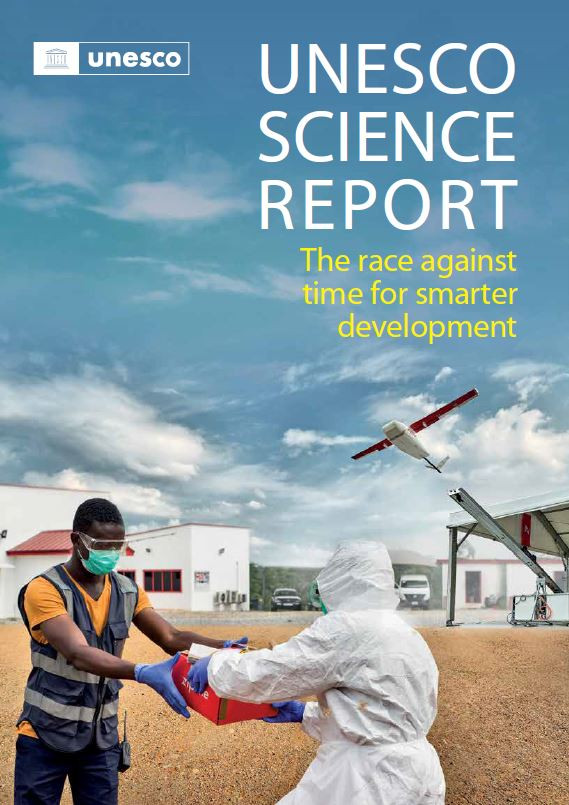 UNESCO Science Report: The Race Against Time for Smarter Development Year of publication: 2021 Author: Susan Schneegans | Tiffany Straza | Jake Lewis Corporate author: UNESCO This seventh edition of the report monitors the development path that countries have been following over the past five years from the perspective of science governance. It documents the rapid societal transformation under way, which offers new opportunities for social and economic experimentation but also risks exacerbating social inequalities, unless safeguards are put in place.The report concludes that countries will need to invest more in research and innovation, if they are to succeed in their dual digital and green transition. More than 30 countries have already raised their research spending since 2014, in line with their commitment to the Sustainable Development Goals. Despite this progress, eight out of ten countries still devote less than 1% of GDP to research, perpetuating their dependence on foreign technologies.
  Methods of Social Upbringing and Its Role in the Social and Democratic Interaction of Children: A Field Study on a Sample of Second-grade Students of Basic Education in Al-Marj City Year of publication: 2018 Author: Nabil Musa | Adel Abdul-Karim Corporate author: University of Benghazi The study focused on the subject of "methods of socialization and its role in the social interaction of children." A field study was conducted on a sample of students in the second part of basic education in Al-Marj city. The study was applied to a sample of 60 students. Since the distribution of the sample items was done using the random stratified random sampling procedure, the ratio was randomly selected from the study community. However, the selection of the four sample items was done through The researchers used the questionnaire as a tool to collect the study data. Since the study in question is considered an exploratory study, the single tables and percentages were used to analyze the study data.The study resulted in a number of results, the most important of which are the following: 1. The study confirmed the existence of a set of methods used within the society of the study to raise children. However, the most prevalent is the authoritarian style, which is the method that depends on the punishment and the threat in dealing with children, as it reached 45% of the total methods used within the study community. 2. The study revealed that 72% of the sample members do not care about their families' actual participation in discussing some issues related to the family. This may lead to the growth of the withdrawal personality pattern, which is characterized by irresponsibility. This is especially dangerous if we know that 78% Their parents are not interested in taking their opinions even in acquiring their own needs.