
Resources
Explore a wide range of valuable resources on GCED to deepen your understanding and enhance your research, advocacy, teaching, and learning.
8,364 Results found
 Countering Online Hate Speech Year of publication: 2015 Author: Iginio Gagliardone | Danit Gal | Thiago Alves | Gabriela Martinez Corporate author: UNESCO The present report provides a global overview of the dynamics characterizing hate speech online and some of the measures that have been adopted to counteract and mitigate it, highlighting good practices that have emerged at the local and global levels. While the study offers a comprehensive analysis of the international, regional and national normative frameworks developed to address hate speech online, and their repercussions for freedom of expression, it places particular emphasis on social and non-regulatory mechanisms that can help to counter the production, dissemination and impact of hateful messages online.
 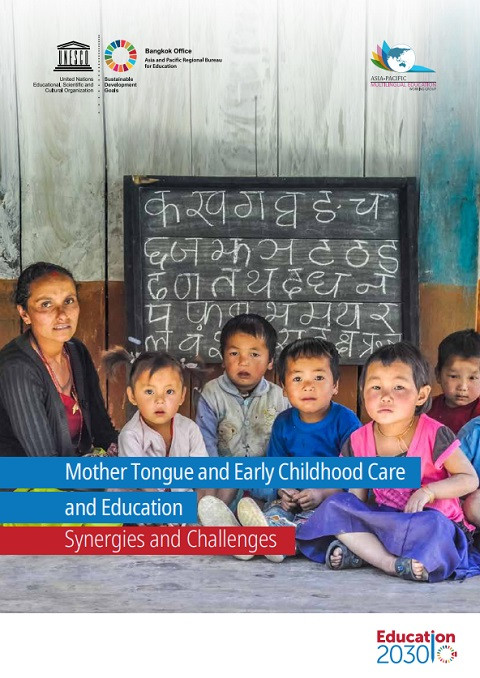 Mother Tongue and Early Childhood Care and Education: Synergies and Challenges Year of publication: 2020 Author: Sheldon F. Shaeffer Corporate author: UNESCO Bangkok Evidence tells us that learning first in one’s MT leads to better outcomes in the future – for individuals, cultures, and nations. But MT is used rarely in ECCE programmes and the early grades of primary school so that many children are forced to learn in a language they poorly understand, and in an environment which neglects and even represses their cultural identity and the language which “carries” it. Evidence also tells us that good quality ECCE programmes enhance the well-being of young children. But many governments spend few resources on ECCE and put very little effort into creating a developmentally and linguistically appropriate curriculum and pedagogy for young pre-school children. The challenge is that while the most disadvantaged children benefit the most from ECCE programmes, these children participate in them the least. Thus, for both cultural and educational reasons, and as a child’s right, ECCE and initial literacy should be provided in a child’s MT, and actions can be taken at both macro- and micro-levels to ensure that this is achieved. In other words, the long and often difficult process of revitalising, maintaining, and further developing endangered languages of indigenous peoples must begin first in families and communities – but then must continue into ECCE programmes and into the wider education system. Without this, indigenous, minority languages and cultures will never thrive – and many will not survive.
  First National Voluntary Review on Sustainable Development Goals 2019: Iraq (The Triumph of National Will) Year of publication: 2019 Corporate author: Iraq. Ministry of Planning This national review is part of the first National Voluntary Report (NVR) as a national effort and a necessary step to monitor the progress toward the SDFs, using a participatory approach and assisted by national consultations (workshops and forums) organized in various Iraqi areas to discuss the development challenges facing Iraq in the upcoming stages. The Voluntary National Reviews (VNRs) constitute a key tool to monitor the progress of the National Development Plan (NDP) and promote it locally. The VNRs also contribute to presenting the country’s experience, expertise and lessons to be shared with other countries.
  Research Design of Chinese Civic Morality Education (Proceeding of 3rd International Conference on Information, Business and Education Technology) Year of publication: 2014 Author: Zhang Ting Corporate author: International Conference on Information, Business and Education Technology The civic morality is closely linked with the issue of the social life of people. The practice of civil morality is based on the social morality philosophy. The civic morality philosophy is the value and spiritual prop of civil society. By comparing the subject morality, class morality and citizen's morality, the paper presents the basic guidelines for the research design of civic morality education in the development of Chinese civil society.
 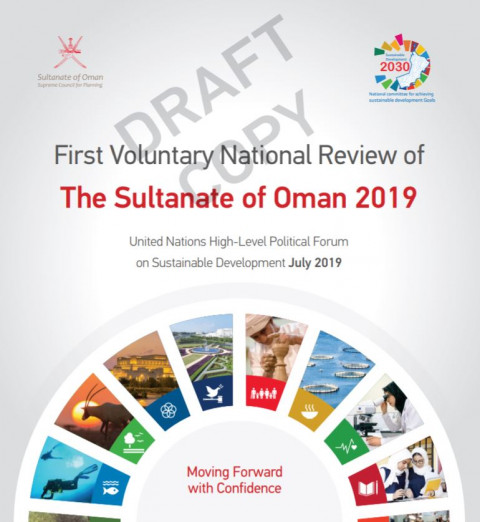 First Voluntary National Review of the Sultanate of Oman 2019: United Nations High-Level Political Forum on Sustainable Development July 2019 Year of publication: 2019 Corporate author: Supreme Council for Planning | National Committee for the Achievement of the Sustainable Development Goals This voluntary national report reviews the Sultanate of Oman's progress in achieving the seventeen sustainable development goals. The report deals with the national strategies and plans that were specially developed to advance the achievement of development goals. The report also sheds light on national practices and initiatives and monitors the challenges facing the government in order to achieve the goals.
  Getting Started With the SDGs in Universities: A Guide for Universities, Higher Education Institutions, and the Academic Sector (Australia, New Zealand and Pacific Edition) Year of publication: 2017 Author: Tahl Kestin | Marjan van den Belt | Leanne Denby | Katie Ross | John Thwaites | Martine Hawkes Corporate author: Sustainable Development Solutions Network (SDSN) Australia/Pacific | Australasian Campuses Towards Sustainability (ACTS) | Sustainable Development Solutions Network (SDSN) Getting started with the SDGs in universities outlines the key roles universities – and the higher education and academic sectors more generally – have in contributing to the United Nations (UN) Sustainable Development Goals (SDGs) and the benefits of becoming engaged. It provides practical guidance on how to get started with deepening contributions.
 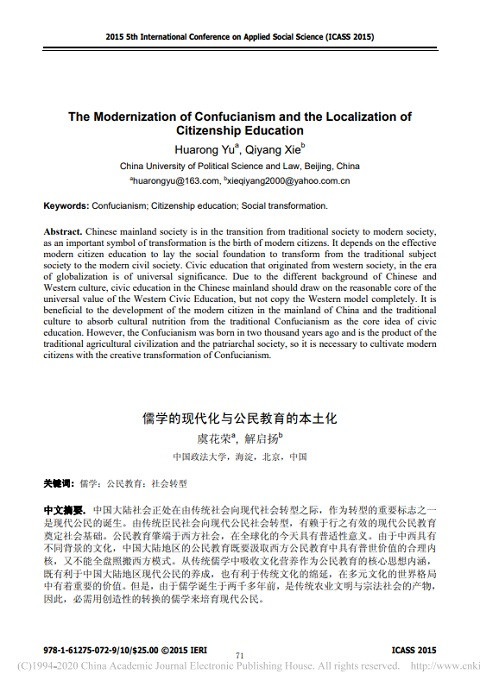 The Modernization of Confucianism and the Localization of Citizenship Education (Proceedings of 2015 5th International Conference on Applied Social Science) Year of publication: 2015 Author: Huarong Yua | Qiyang Xie Corporate author: International Conference on Applied Social Science Chinese mainland society is in the transition from traditional society to modern society, as an important symbol of transformation is the birth of modern citizens. It depends on the effective modern citizen education to lay the social foundation to transform from the traditional subject society to the modern civil society. Civic education that originated from western society, in the era of globalization is of universal significance. Due to the different background of Chinese and Western culture, civic education in the Chinese mainland should draw on the reasonable core of the universal value of the Western Civic Education, but not copy the Western model completely. It is beneficial to the development of the modern citizen in the mainland of China and the traditional culture to absorb cultural nutrition from the traditional Confucianism as the core idea of civic education. However, the Confucianism was born in two thousand years ago and is the product of the traditional agricultural civilization and the patriarchal society, so it is necessary to cultivate modern citizens with the creative transformation of Confucianism.
 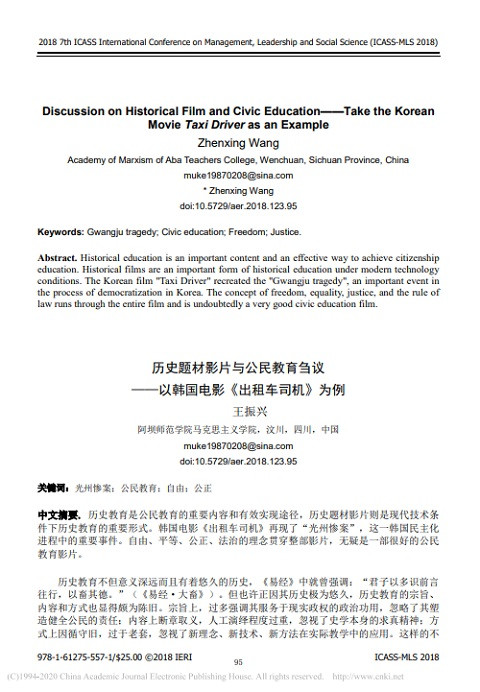 Discussion on Historical Film and Civic Education: Take the Korean Movie Taxi Driver as an Example (Proceedings of 2018 7th ICASS International Conference on Management, Leadership and Social Science) Year of publication: 2018 Author: Zhenxing Wang Corporate author: ICASS International Conference on Management, Leadership and Social Science Historical education is an important content and an effective way to achieve citizenship education. Historical films are an important form of historical education under modern technology conditions. The Korean film "Taxi Driver" recreated the "Gwangju tragedy", an important event in the process of democratization in Korea. The concept of freedom, equality, justice, and the rule of law runs through the entire film and is undoubtedly a very good civic education film.
  The Impact of COVID-19 on Education: Insights From Education at a Glance 2020 Year of publication: 2020 Author: Andreas Schleicher Corporate author: Organisation for Economic Co-operation and Development (OECD) OECD Director for Education and Skills Andreas Schleicher gives his insights and interpretations from the OECD’s Education at a Glance 2020 report – the go-to source for information on the state of education around the world. This brochure focuses on a selection of indicators from Education at a Glance, selected for their particular relevance in the current context. Their analysis enables the understanding of countries’ response and potential impact from the COVID-19 containment measures.
  Education at a Glance 2020: OECD Indicators Year of publication: 2020 Corporate author: Organisation for Economic Co-operation and Development (OECD) Education at a Glance is the authoritative source for information on the state of education around the world. It provides data on the structure, finances and performance of education systems across OECD countries and a number of partner economies. More than 100 charts and tables in this publication – as well as links to much more available on the educational database – provide key information on the output of educational institutions; the impact of learning across countries; access, participation and progression in education; the financial resources invested in education; and teachers, the learning environment and the organisation of schools.The 2020 edition includes a focus on vocational education and training, investigating participation in vocational education and training at various levels of education, the labour market and social outcomes of vocational graduates as well as the human and financial resources invested in vocational institutions. Two new indicators on how vocational education and training systems differ around the world and on upper secondary completion rate complement this topic. A specific chapter is dedicated to the Sustainable Development Goal 4, and investigates the quality and participation in secondary education.