
Resources
Explore a wide range of valuable resources on GCED to deepen your understanding and enhance your research, advocacy, teaching, and learning.
8,364 Results found
 The Theory of Civic Education in the Context of Key Competence (Educational Science Research) Year of publication: 2017 Author: Wang Min Corporate author: Beijing Open University From quality-oriented education to key competence, Chinese education has always been committed to cultivating “well-rounded people” who meet the needs of individual lifelong development and social development. In the context of key competence, it is necessary to clarify the logical relationship between key competence and civic education. On the basis of understanding the essence of quality education, the pursuit of key competence and the connotation of civic education, this paper attempts to answer the question of “who to train” in civic education through theoretical reflection on the legal, educational and practical provisions of “qualified citizen”. Through thinking about the subject orientation, curriculum implementation and evaluation system of civic education, this paper seeks the way of “how to train people”.
 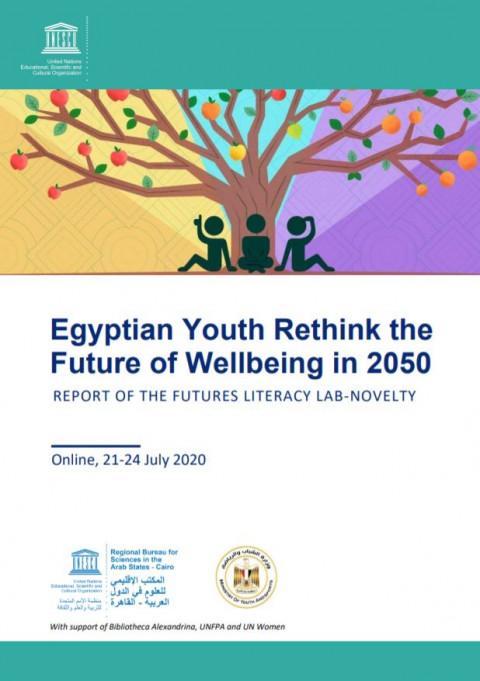 Egyptian Youth Rethink the Future of Wellbeing in 2050: Report of the Futures Literacy Lab-novelty; Online, 21-24 July 2020 Year of publication: 2020 Corporate author: UNESCO Cairo The UNESCO (Cairo Office and Research, Policy and Foresight Section) and the Egyptian Ministry of Youth and Sport, with support of Bibliotheca Alexandrina, UNFPA and UN Women, organized a Futures Literacy Laboratory - Novelty (FLL-N) entitled “Egyptian Youth Rethink the Future of Wellbeing in 2050”. Held online during 21-24 July 2020, and deploying the latest advances in anticipatory systems thinking and collective intelligence processes, the Lab brought together around 30 persons from across Egypt for 8-hours intensive work spread over a week’s time.Thirty young participants explored the topic of ‘wellbeing’ in Egypt in 2050 using a tool called the Futures Literacy Lab-Novelty (FLL-N). Wellbeing is an open concept that invites many different ways of defining what it means to ‘live well’. The participants engaged in learning-by-doing activities that exercised their imaginations, exploring questions like, how do people in 2050 in Egypt describe ‘wellbeing’? What is daily life like such that people in 2050 believe that they have achieved ‘wellbeing’? By working together to imagine the future this Lab provided an opportunity to better understand the origins of what we imagine, why and how we create the images of the future, and crucially the powerful influence such images have on our fears and hopes, perceptions and choices.
  International Environmental Politics and Critical Approach to Global Citizenship Education (International and Comparative Education; No. 8) Year of publication: 2017 Author: Zheng Fuxing Corporate author: Beijing Normal University The research and practice of global citizenship education have thrived since 1990s, but the effectiveness of global citizenship education is limited. The researcher cannot avoid the problematic premise of the possibility of global citizenship education. The identity predicament of global citizen and alienation of local implementing make probability of the global citizenship education problematic. The practical predicament of the global citizenship education manifests that the nation state is the key factor of policy implementation. Environmental question, which is about global common good, attracts the attention from the government of most of nations, and becomes the good case for exploring the feasibility of global citizenship education. Environmental politics explain the inequality and injustice in the globally environmental governance which made the global citizenship education critical. The critical ecopedagogy becomes the new form of global citizenship. The practice of the global citizenship education becomes viable by hybrid activism generated by dialectical movement between local and global in the limit of nation-state.
  The Necessity and Path Selection for the Construction of Modern Citizen Moral Education System (Theory and Practice of Education; Vol. 37, No. 4) Year of publication: 2017 Author: Feng Yong-gang Corporate author: Shanxi Education Association Social modernization calls for modern citizen moral education. As the organic composition of modern education, development quality of citizen moral education directly relate and determine the country’s modernization level, have the far- reaching significance in promoting the growth and development of the civil society. The strengthen of the construction of modern citizen moral education system which can help build a healthy civil society, should base on the current social background and era demand, enhance the consciousness of citizen moral education, enrich the content of citizen moral education, optimize the process of citizen moral education, improve the network system of citizen moral education, perfect the safeguard mechanism of citizen moral education.
  A Report on Education for Democratic Citizenship and Human Rights Education Policy and Practice in Six Eastern Partnership Countries: Promoting Human Rights Education and Democratic Citizenship in Eastern Partnership Countries Year of publication: 2017 Author: Ralph Edward Huddleston | Karine Harutyunyan | Ulviyya Mikayilova | Irina Fursa | Shorena Gharibashvili | Cezar Gavriliuc | Polina Verbytska Corporate author: Council of Europe This report has been produced within the framework of the EU/CoE Joint Programme “Supporting Education Policies in Democratic Citizenship and Human Rights Education in 6 Eastern Partnership countries”. The Programme embraces the six countries of the EU’s Eastern Partnership: Armenia, Azerbaijan, Belarus, Georgia, Moldova and Ukraine. Its aim is to support integration and/or further develop of education for democratic citizenship and human rights education in national education systems (including school curriculum) in Eastern Partnership countries, in accordance with the Council of Europe Charter on Education for Democratic Citizenship and Human Rights Education. The report draws on the results of a research exercise designed to map the most important initiatives and priorities in the area of Education for Democratic Citizenship and Human Rights Education (EDC/HRE) in the six countries. The research exercise was carried out 2015-16 by local experts within each country. It resulted in six individual country reports outlining the current situation in relation to the integration of the principles of EDC/HRE within the national education system, and identifying opportunities for further development.
  Together Alberta: Mapping Alberta’s Contribution to the Sustainable Development Goals Project Year of publication: 2019 Corporate author: Alberta Council for Global Cooperation (ACGC) Together Alberta: Mapping Alberta’s Contribution to the Sustainable Development Goals project (Together Alberta) is a public engagement initiative conducted by ACGC to bring together Albertans who are contributing to the Sustainable Development Goals (SDGs), communicate their efforts, and drive further action.
  Global Citizenship Education in a Secondary Geography Course: The Students’ Perspectives (Review of International Geographical Education Online; Vol. 4, No. 2) Year of publication: 2014 Author: Kyle Massey Corporate author: Eskisehir Osmangazi University Global citizenship education is increasingly appreciated in Ontario, Canada, as an important component of formal schooling. Although all disciplinary areas have a role to play in global citizenship education, geography provides an especially relevant context in which to foster the values and attitudes often cited as important for global citizenship. This study investigates how Grade 12 students, who had recently completed the course “Canadian and World Issues: A Geographic Analysis”, conceive of the concept of global citizenship, and experienced its values within this course. Qualitative data was collected through interviews with seven students. The interviews revealed four major themes relating to how the students conceptualized global citizenship: global awareness, belonging, caring, and commitment to action. It revealed students’ personal involvement with the concepts studied helped them learn to be global citizens, as did the rich discussions of global issues they experienced in class. Careful analysis of both students’ conceptions of global citizenship and how they experienced global citizenship in the curriculum exposed an uncritical perspective – one which emphasizes acts of charity and volunteerism rather than a commitment to social justice. The findings are valuable to teachers and teacher candidates seeking to better engage their students in global issues and equip them with global thinking strategies, and to curriculum developers wishing to effectively incorporate values and topics concerning global citizenship within school curricula.
  Progress on the Sustainable Development Goals: The Gender Snapshot 2020 Year of publication: 2020 Corporate author: United Nations Entity for Gender Equality and the Empowerment of Women (UN Women) This document brings together the latest available evidence on gender equality across all 17 Goals, underscoring the progress made, but also taking stock of areas where progress has been disrupted, as a result of COVID-19.
 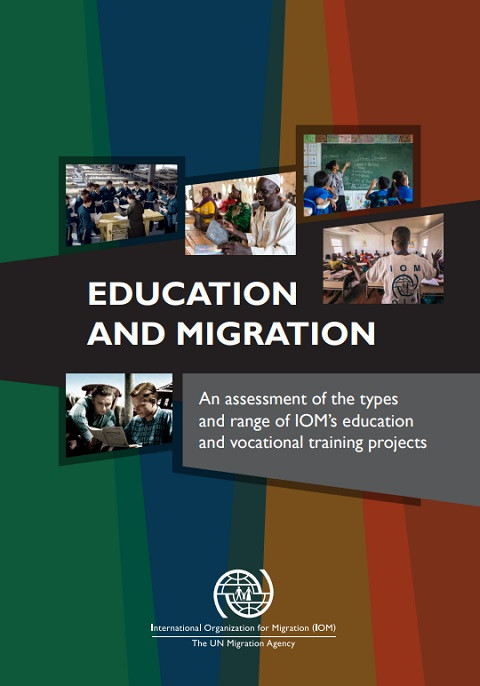 Education and Migration: An Assessment of the Types and Range of IOM’s Education and Vocational Training Projects Year of publication: 2018 Author: Rocio Sanz Corporate author: International Organization for Migration (IOM) This report presents the results of the assessment of the range and types of IOM’s education and vocational training programmes as of December 2017. Within an overall framework of reviewing the Organization’s role in supporting the development and implementation of migration policy, the purpose of this assessment is to understand how these programmes contribute to education and vocational training outcomes, especially in the specific context of SDG 4 (Quality Education) of the 2030 Agenda for Sustainable Development.
  The Connective “Public” and the Chinese Logic of Citizenship Education (Journal of Educational Studies; Vol. 13, No. 2) Year of publication: 2017 Author: Qiu Kunshu | Yan Yajun Corporate author: Beijing Normal University Cultural tradition has pre-conditionality on citizenship education. From the point of view of cultural tradition, the “public” in citizenship education has different meaning in China and the West: Chinese “public” is mainly a kind of connective “public”, while the western “public” mainly means domanial “public”. This lead to the difference in Chinese and modern western main stream values. The former emphasizes the common goodness of the whole society, social responsibility and virtue which is favorable to harmony, while the later emphasizes individualist rights and priority of freedom. They represent two kinds of ethics language and position. It is essential to maintain high cultural awareness for the implementation of citizenship education in China and the localization of exotic “citizenship education”. Guided by Marxism and rooted in Chinese cultural tradition, Chinese citizenship education should be based on “people in relation”, use the actual support of “state-society” cooperation, and offer ultimate concern to “the free and comprehensive development of human”.