
Resources
Explore a wide range of valuable resources on GCED to deepen your understanding and enhance your research, advocacy, teaching, and learning.
8,364 Results found
 Mapping Digital Literacy Policy and Practice in the Canadian Education Landscape Year of publication: 2015 Author: Michael Hoechsmann | Helen DeWaard Corporate author: MediaSmarts This paper Mapping Digital Literacy Policy and Practice in the Canadian Landscape draws on policy and curriculum documents from across Canada to synthesize key concepts and best practices in current digital literacy education.
 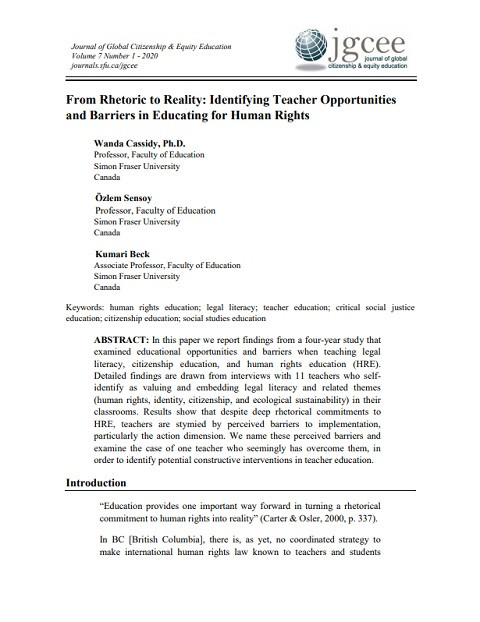 From Rhetoric to Reality: Identifying Teacher Opportunities and Barriers in Educating for Human Rights (Journal of Global Citizenship & Equity Education; Vol. 7, No. 1) Year of publication: 2020 Author: Wanda Cassidy | Özlem Sensoy | Kumari Beck Corporate author: Centennial College In this paper we report findings from a four-year study into legal literacy that examined educational opportunities and barriers when teaching about legal literacy, citizenship education, and human rights education. Detailed findings are drawn from interviews with eleven teachers who self-identify as valuing and embedding legal literacy and related themes (human rights, identity, citizenship, and ecological sustainability) in their classrooms. Results show that despite deep rhetorical commitments to human rights education, teachers are stymied by perceived barriers to implementing HRE, particularly the action dimension. We name these perceived barriers and examine the case of one of the teachers who seemingly has overcome them, in order to identify potential constructive interventions in teacher education.
  Human Rights Stories: Tales of Human Rights Defenders for Primary Schools Year of publication: 2012 Author: Claire Glavey | Fiona O’Shea | Valeria Navarro Corporate author: Amnesty International Ireland | Irish Aid This resource pack has been developed by Amnesty International Ireland in consultation with an advisory and piloting group of primary school teachers. The concept for the resource pack originated with primary school teachers who identified storytelling as a powerful medium through which a range of concepts and topics can be introduced in the classroom. Human rights issues can appear daunting, distant and theoretical. Through the familiar medium of storytelling, human rights situations can be explored on a level at which children can encounter the real life impact of human rights in practice. Engaging with stories through discussion, creative thinking and character exploration develops the skill of empathy. This brings about the realisation that human rights belong to everyone and that we all have a role to play in ensuring that human rights are protected locally and globally.
 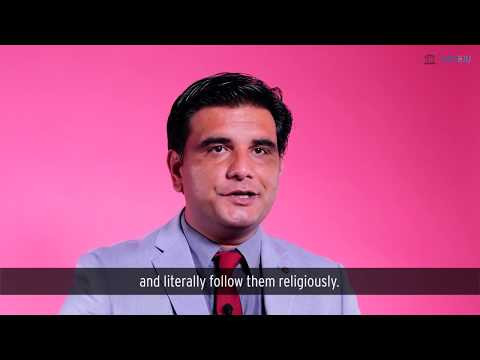 Why Contextualization is Critical for Global Citizenship Education Year of publication: 2019 Author: Waqar Shams Corporate author: APCEIU This video is an interview on "Why contextualization is Critical for Global Citizenship Education". It is also under UNESCO's APCEIU "Meet the Global Citizens" series.Do you want to know why Contextualization is Critical for GCED? Check out what Waqar has to say. This is a story of Waqar Shams from Pakistan.In this video you will learn why Contextualization is Critical for GCED and through it, learn to think globally but act locally.
 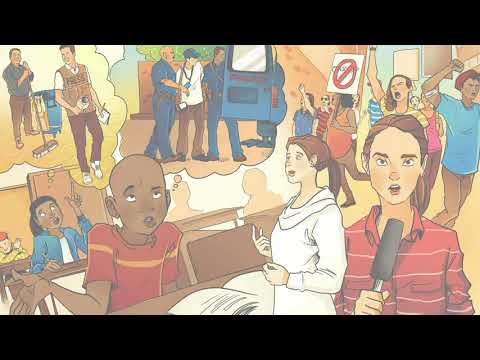 What Does the Rule of Law Have to Do With Me? Year of publication: 2020 Corporate author: UNESCO Using fun, interactive pedagogical tools and a classroom setting, this video explains to young people the basic concept of the rule of law and how they can engage in building a society on just laws which protect the fundamental rights of the individual and promote citizenship (https://en.unesco.org/themes/gced).In simple engaging language with real life examples and interaction with pupils, it explains 'accountability', 'freedom of expression', the characteristics of good law and equality before the law.The video describes the UNESCO-UNODC partnership on education for the rule of law (https://en.unesco.org/themes/gced/rul...) which works to bridge the gap between education and justice and supports Sustainable Development Goals 4 (in particular target 4.7) and 16. The partnership has developed interactive handbooks for schools and guidance for policy-makers.
 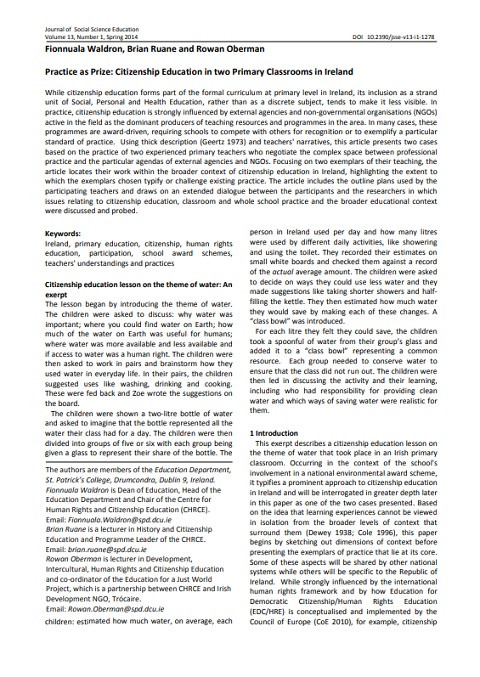 Practice as Prize: Citizenship Education in Two Primary Classrooms in Ireland (Journal of Social Science Education; Vol. 13, No. 1) Year of publication: 2014 Author: Fionnuala Waldron | Brian Ruane | Rowan Oberman Corporate author: Bielefeld University While citizenship education forms part of the formal curriculum at primary level in Ireland, its inclusion as a strand unit of Social, Personal and Health Education, rather than as a discrete subject, tends to make it less visible. In practice, citizenship education is strongly influenced by external agencies and non‐governmental organisations (NGOs) active in the field as the dominant producers of teaching resources and programmes in the area. In many cases, these programmes are award‐driven, requiring schools to compete with others for recognition or to exemplify a particular standard of practice. Using thick description (Geertz 1973) and teachers' narratives, this article presents two cases based on the practice of two experienced primary teachers who negotiate the complex space between professional practice and the particular agendas of external agencies and NGOs. Focusing on two exemplars of their teaching, the article locates their work within the broader context of citizenship education in Ireland, highlighting the extent to which the exemplars chosen typify or challenge existing practice. The article includes the outline plans used by the participating teachers and draws on an extended dialogue between the participants and the researchers in which issues relating to citizenship education, classroom and whole school practice and the broader educational context were discussed and probed.
 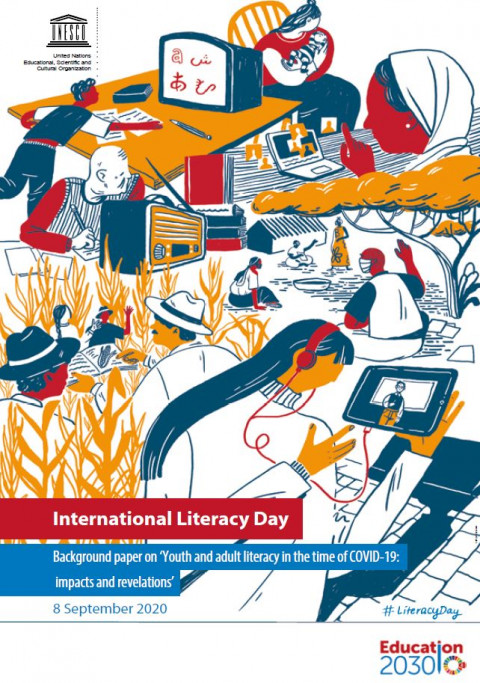 International Literacy Day: Background Paper on 'Youth and Adult Literacy in the Time of COVID-19; Impacts and Revelations' Year of publication: 2020 Corporate author: UNESCO Specially prepared on the occasion of International Literacy Day 2020, this background paper illustrates the impact of the COVID-19 crisis on youth and adult literacy, based on the limited information that is currently available. It provides five regional snapshots and identifies preliminary lessons learned thus far, while aiming to inspire continued reflection and subsequent action. It also makes the case for the ongoing importance of advancing youth and adult literacy, a priority that was already neglected even before the pandemic but which deserves all our attention. ILD 2020 thus seeks to trigger reimaginations of literacy teaching and learning in the COVID-19 crisis and beyond, with a particular focus on the role of educators.
 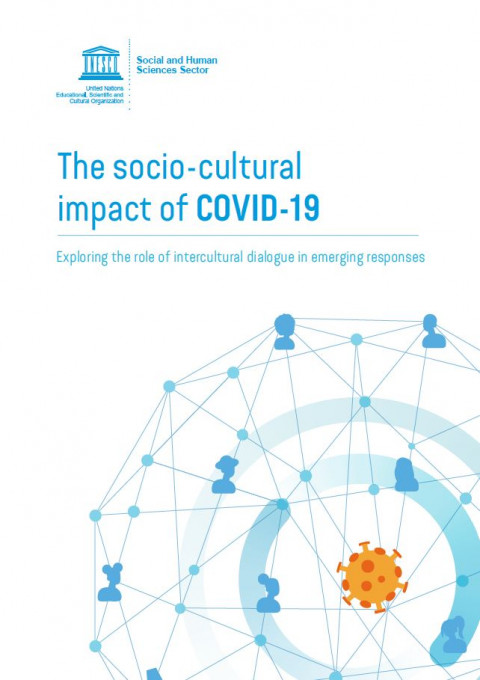 The Socio-Cultural Impact of COVID-19: Exploring the Role of Intercultural Dialogue in Emerging Responses Year of publication: 2020 Author: Fethi Mansouri Corporate author: UNESCO This brief illustrates, proponents and practitioners of ICD were quick to adapt to this crisis situation and shifted much of their activities online in order to mitigate the negative impacts of the pandemic. The shift has ensured that cross-cultural exchange, mutual support and intergroup solidarity, all key dimensions of the ICD approach, can be maintained in safe online contexts and thus continue to play a key role within the socio-cultural response to COVID-19.Through inductive exploration of authentic, local, community responses to the COVID-19 crisis, this brief aims to shed light on the new context in which the ICD agenda is being pursued, complementing the many existing quantitative analyses of the socio-cultural impact of the pandemic.
  Initial Teacher Education in Citizenship in Latin America: A Comparative Analysis of Six Countries Year of publication: 2017 Corporate author: UNESCO Santiago This document reports on a study of initial teacher education in citizenship education in Latin America undertaken as an initiative of the OREALC-UNESCO Regional Strategy on Teacher Policies. Its purpose is to examine citizenship education in the teacher education curricula of six countries in the region –Argentina, Chile, Colombia, Guatemala, Mexico and Peru – researching the general contents of the programs, their organization, and the topics covered, and analyzing teacher preparation in this crucial dimension of the formative experience provided.
  Annual Report 2019: UNESCO Institute for Lifelong Learning Year of publication: 2020 Corporate author: UNESCO Institute for Lifelong Learning (UIL) This report shows how, in 2019, UIL worked to fulfil its mission, with a focus on youth and adults and a special emphasis on UNESCO’s priority areas of Africa and gender equality. UIL’s vision is for all children, young people and adults to benefit from quality lifelong learning opportunities, within the framework of sustainable development and peace. We promote lifelong learning as the leading educational paradigm for inclusive and sustainable learning societies in the context of the United Nations’ 2030 Agenda for Sustainable Development, which provides an ambitious set of goals and targets for Member States that together form a coherent, universal framework of reference for our activities. Working to this framework, and recognizing lifelong learning’s important transversal role not only with respect to Sustainable Development Goal (SDG) 4 on education but across all 17 SDGs, UIL has made an impact across a range of fronts, including in the areas of policy advice, capacity development, research, monitoring, and networking and advocacy.