
Resources
Explore a wide range of valuable resources on GCED to deepen your understanding and enhance your research, advocacy, teaching, and learning.
8,364 Results found
 A New Approach to Civic Spirit Education in Universities (Jiangsu Higher Education; No. 2) Year of publication: 2017 Author: Yang Sihai | Cheng Qian Corporate author: Jiangsu Education Press The civic spirit has the characteristics of The Times and should be constructed on the basis of inheritance. At present, the education of civic spirit in universities should include the spirit of cosmopolitanism, the idea of cooperation and the value of collectivism. The new development of civic spirit requires the corresponding educational path: First, the spirit of cosmopolitanism should be infiltrated into the curriculum; Second, to shape and strengthen the public life conducive to the cultivation of the concept of citizen cooperation; Thirdly, casting the collectivism practice platform that embodies the orientation of civic responsibility.
  Education Disrupted Education Reimagined: Responses from Education’s Frontline During the COVID-19 Pandemic and Beyond Year of publication: 2020 Corporate author: WISE | Salzburg Global Seminar | Diplomatic Courier The special edition E-Book you are reading about today was produced in real time, as WISE, in partnership with Salzburg Global Seminar, convened key stakeholders and education leaders from over 98 countries in a three-part series of global conferences aimed at bringing the global education community together. The result is a contemporary historical record of how schools, NGOs, governments, and international organizations responded to school closures during the crisis and how they are attempting to use this crisis as a springboard to reimagine—and even transform—education in their communities and countries.The E-Book offers an opportunity to a global audience to make sense of what happened but it also offers a breeding ground of ideas from some of the world’s top education thinkers. It is the editors’ sincere hope that through this publication we provide the education community with a reference point from the crisis from which future research, policy, and innovation can grow.
  Migration and the 2030 Agenda: A Guide for Practitioners Year of publication: 2018 Author: Elisa Mosler Vidal Corporate author: International Organization for Migration (IOM) This guide is designed to serve government actors, both national and local, involved in any process of Sustainable Development Goal implementation, including those working specifically in migration, and those working in other sectors who are interested in integrating migration. It is also for government actors working in the migration field who wish to integrate the SDGs into their work.The focus of this guide is to help policymakers implement the migration aspects of the SDGs. Policymakers can use this guide to integrate migration into local or national development planning, by designing and implementing interventions that relate to migration in the context of the SDGs. These interventions may take the form of legislation, policies, programmes, projects or other activities, and may relate to core migration topics or integrate migration into activities in another sector. For example, policymakers may use this guide to design interventions that directly address human trafficking, as well as interventions in the health sector that help protect victims of trafficking.For actors with experience in migration mainstreaming, this guide offers a new approach that is based on the 2030 Agenda. For those with no experience in migration mainstreaming, it offers an introduction on how migration and development are linked in the context of the SDGs, and how to take action around these connections.
  Sustainable Development Goals Progress Chart 2020 Year of publication: 2020 Corporate author: United Nations (UN) The Sustainable Development Goals Progress Chart 2020 presents a snapshot of global and regional progress by the end of 2019. It covers selected targets under the 17 Goals of the 2030 Agenda for Sustainable Development. At the beginning of 2020, the Secretary-General launched the Decade of Action, calling for accelerated solutions by national and local governments, civil society organizations and the private sector to achieve the Sustainable Development Goals by 2030. The progress chart shows how far we have come in realizing our commitments, and which areas require urgent attention. It also shows that, for most Goals, the pace of progress has been insufficient and substantial acceleration is needed.
  Schooling Disrupted, Schooling Rethought: How the Covid-19 Pandemic is Changing Education Year of publication: 2020 Author: Fernando Reimers | Andreas Schleicher Corporate author: Organisation for Economic Co-operation and Development (OECD) This report looks at how the Covid-19 pandemic is changing education and is based on a survey conducted between 25 April and 7 May 2020 that received responses from government officials, education administrators, teachers, and school administrators in 59 countries.
 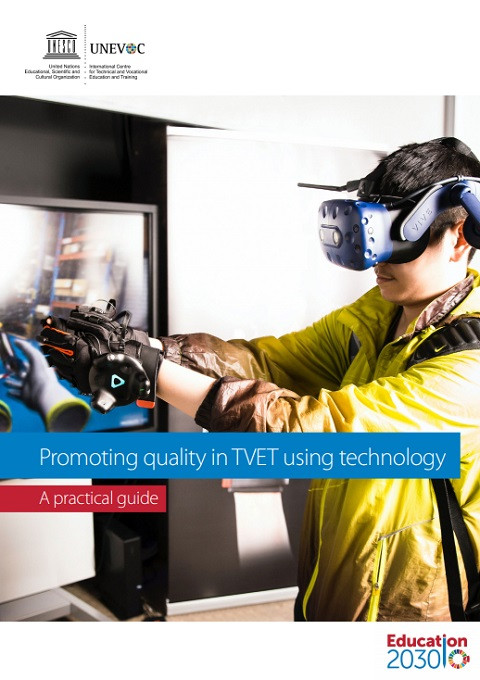 Promoting Quality in TVET Using Technology: A Practical Guide Year of publication: 2020 Corporate author: UNESCO International Centre for Technical and Vocational Education and Training (UNEVOC) Technology has altered many aspects of life, including education and training. As a result of technological developments, technical and vocational education and training (TVET) has become more accessible to students, and the quality of education and training has improved too. Teachers and trainers can use digital tools to manage their tasks effectively and engage learners in digital rich environments. Learners can also use technology to learn new skills and to collaborate and interact with teachers and trainers. The COVID-19 pandemic has however underlined the current difficulties in effectively integrating technologies in the delivery of education and training. Institutions need to make constant assessments of their capacity and readiness to provide technology-rich environment for learning. At the same time, teachers’ and trainers’ readiness is also of particular importance to adopt appropriate pedagogic approaches with technology. This practical guide addresses institutions and teachers and trainers. It helps TVET institutions to understand the organizational plans to build up their capacity to stimulate digital learning. It also guides teachers that want to develop their competencies, improve their pedagogical strategies with use of technology, and learn from existing practice. By showing how technology is used in an integrated instruction model and providing helpful resources, this guide helps teachers and trainers to effectively plan their own tasks and delivery of instruction with the right technology tools.
  The Digital Transformation of Education: Connecting Schools, Empowering Learners Year of publication: 2020 Author: Ana Sepúlveda | Doreen Bogdan-Martin | Alex Wong | Chris Fabian | Borhene Chakroun | Anna Polomska | Samantha O’Riordan | Miguel Alcaine | Istvan Bozsoki | Vladimir Daigele | Jose Maria Diaz Batanero | Hani Eskandar | Aminata Amadou Garba | John Garrity | Farid Nakhli | Sylvia Poll Ahrens | Martin Schaaper | Christine Sund | Nancy Sundberg | Sandeep Taxali | Cleveland Thomas | Frank McCosker | James Lo | Fengchun Miao | Jaime Archundia | Janice Dean | Sophia Farrar | Sunita Grote | Aditi Poddar | Naroa Zurutuza | Nanjira Sambuli | Kavita Gupta Corporate author: International Telecommunication Union (ITU) | UNESCO | United Nations Children's Fund (UNICEF) This report looks into school connectivity and introduces a methodology and framework for mapping and connecting primary and secondary schools to the Internet. It aims to help governments, their partners and interested stakeholders to develop more holistic school connectivity plans. The analysis of this report provides a better understanding of the school connectivity landscape and requirements, to evaluate the benefits of different technologies for different environments, and to analyze business and financial models, as well as suitable content articulating connectivity with quality, safe, and inclusive learning.
  The Citizens’ View of Multiculturalism and Its Education (Theory and Practice of Education; Vol. 37, No. 22) Year of publication: 2017 Author: Zhang Jiajun | Tang Min Corporate author: Shanxi Education Association Under the wave of world war II and immigration, national consciousness is awakening gradually. With the awakening of it, minority subculture groups and ethnic minority put forward new demands for their existence and development continuously. As a kind of trend to moderate ethnic and national contradictions, Multiculturalism, promotes development of political equality, respects for cultural differences, balances the relationship between national identity and ethnic identity, highly tolerates heart “open self”citizens. In order to develop this kind of citizens, Multiculturalism also puts forward its own education proposals——In terms of educational values, educational objectives, educational contents, educational methods and the implementation of education. It aims to cultivate students to be able to respect differences, and be good at dealing with national or cultural conflicts and conflicts of qualified citizens.
  In the Age of Lifelong Education, a Study on the Meaning of Teachers: Focused on the Plato’s Thought (The Journal of Korean Teacher Education; Vol. 36, No. 3) Year of publication: 2019 Author: 허지숙 Corporate author: 한국교원교육학회 The purpose of this study is to explore the essential meaning and role of teachers through Plato's educational thought. For this purpose, based on the four principles of UNESCO Lifelong Education, we examine how changes in and out of school and the role of teachers are required. Then, after reviewing Sophist, Socrates, Plato's Philosopher, and the metaphors of Cave from Plato's point of view, it reveals what meaning and value of the teacher image presented by Plato in today's lifelong education.Research shows that the role of teachers in the age of lifelong education is becoming more and more important, but this does not mean simply changing roles as guides and advisors. the changed face of the teacher is an ethical trainer to enrich their lives from a knowledge transferer, a collaborative learner through conversations and discussions outside the teacher-student relationship, a practitioner of inclusive teaching among learning alienation, learning inequality, a teacher as a lifelong learner who loves wisdom. This suggests implications for teachers 'new possibilities and meanings beyond the existing teacher' s role in the fall of the ruling right and the right of learning.
 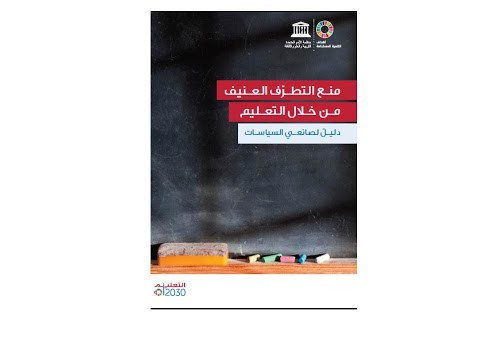 Preventing Extremism Through Education: A Safe and Supportive School Environment Year of publication: 2020 Author: Mohammad Madbouli This video talks about preventing extremism in schools. The presenter uses the UNESCO guide for policy-makers published in 2018 as framework for discussing preventing extremism. The presenter speaks about safe and supportive environment for students in schools.