
Resources
Explore a wide range of valuable resources on GCED to deepen your understanding and enhance your research, advocacy, teaching, and learning.
8,363 Results found
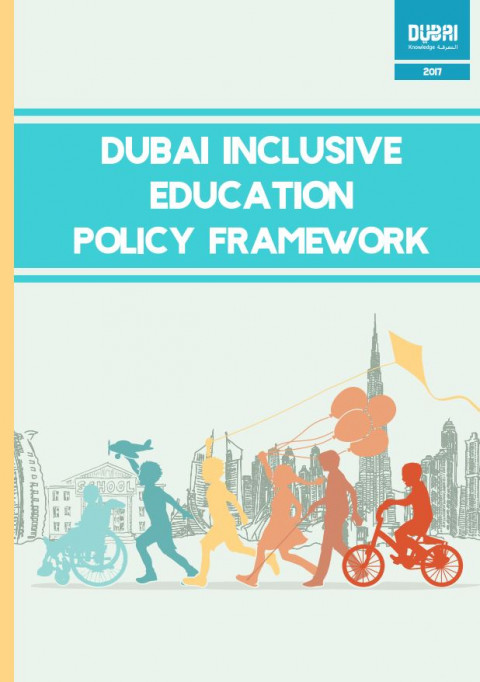 Dubai Inclusive Education Policy Framework Year of publication: 2017 Corporate author: Knowledge and Human Development Authority The policy framework has been developed in partnership with a diverse range of stakeholders. It is based on international evidence of successful inclusive practices in education. It is also the culmination of an international benchmarking literature review, a participatory research process, based on extensive consultation with many stakeholders and an environmental scan of the enablers and barriers to inclusive education.Based on international best-practice and research, the policy framework purposefully offers definitions of key terms with the intention of informing a clear, common language and approach. This policy framework also takes into account the complexity and the uniqueness of the education landscape of Dubai, which hosts schools from all over the world, collectively delivering over 17 different curricula. This landscape is characterised by a diverse range of different education settings including schools, early learning centres, higher education providers and special education centres.
 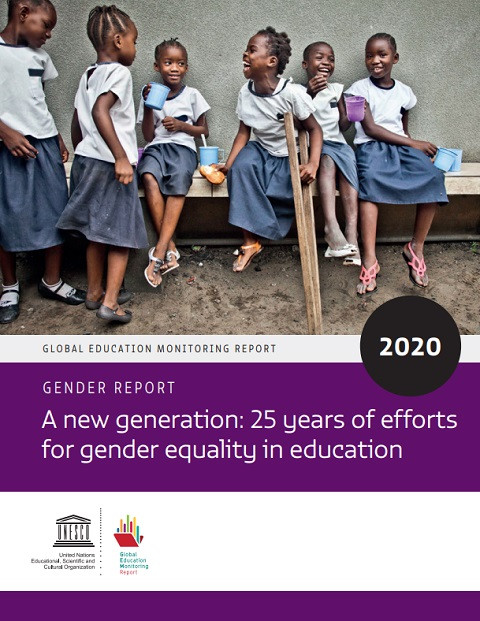 Gender Report 2020: A New Generation; 25 Years of Efforts for Gender Equality in Education (Global Education Monitoring Report) Year of publication: 2020 Corporate author: UNESCO | Global Education Monitoring Report Team Building on the 2020 Global Education Monitoring Report, this report investigates how inclusion in education can advance gender equality in and through education, which is critical to make progress towards gender equality in society. The goal of gender equality is, of course, not new. It was enshrined in the 1979 Convention on the Elimination of All Forms of Discrimination Against Women and was at the core of the 1995 Beijing Declaration and Platform for Action, whose 25th anniversary is marked in 2020.
  Global Education (International) and Teaching Social Subjects: Applications and Models from Previous Research and Studies Year of publication: 2018 Author: Asmaa Al-Ahdal | Iman Eida Corporate author: King Abdulaziz University A lecture from a Saudi university, dealing with what is international education as a science, and its applications in social studies curricula. The two lectures discuss the concept of international education, its characteristics and the history of its inception as a science.
 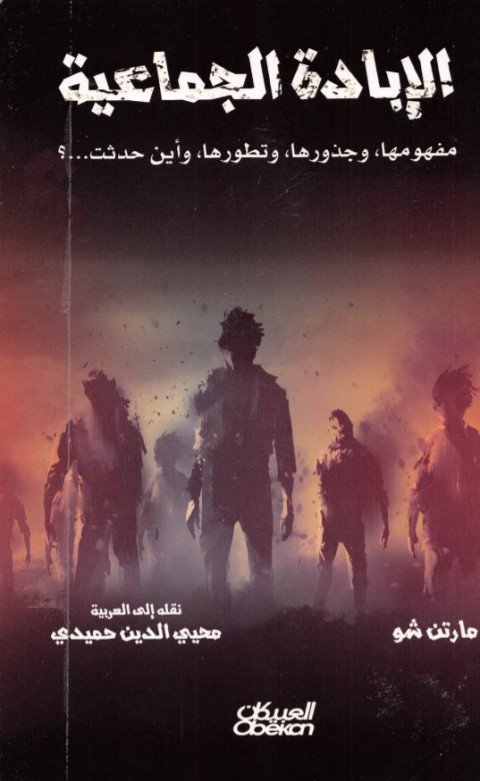 What is Genocide? (Arabic Edition) Year of publication: 2017 Author: Martin Shaw Corporate author: Obeikan Publishing This book translated into Arabic, written by Martin Shaw, in which he talks about genocide, its roots and where it occurred. The book is an original reference in matters of genocide.This fully revised edition of Martin Shaw’s classic, award-winning text proposes a way through the intellectual confusion surrounding genocide. In a thorough account of the idea’s history, Shaw considers its origins and development and its relationships to concepts like ethnic cleansing and politicide. Offering a radical critique of the existing literature on genocide, he argues that what distinguishes genocide from more legitimate warfare is that the ‘enemies’ targeted are groups and individuals of a civilian character. He vividly illustrates his argument with a wide range of historical examples - from the Holocaust to Rwanda and Palestine to Yugoslavia - and shows how the question ‘What is genocide?’ matters politically whenever populations are threatened by violence.
  Human Dignity and Its Prospects in Islamic Law 2: Human Rights Year of publication: 2012 Corporate author: Ahlulbayt E-learning Organization (AELO) This video talks about the human being and how the Lord created him with dignity. The video talks in details about human dignity and rights according to the Islamic law.
 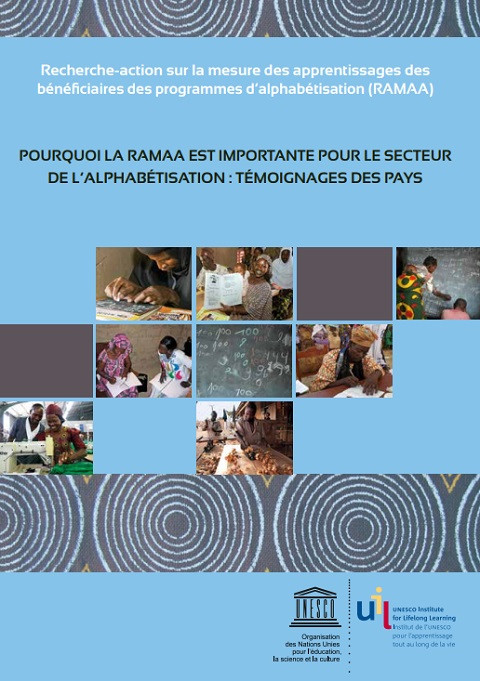 Why RAMAA Is Important for Literacy: Testimonies From Participating Countries; Action Research on Measuring Literacy Programme Participants’ Learning Outcomes (RAMAA) Year of publication: 2016 Corporate author: UNESCO Institute for Lifelong Learning (UIL) The RAMAA action research, launched at the initiative of the UNESCO Institute for Lifelong Learning (UIL), and piloted in partnership with local UNESCO offices, responds to this vital need to assess the quality of literacy programmes by taking the learning effectively acquired by the beneficiaries at the end of their training as an objective variable.The first phase of RAMAA involved five countries, now twelve countries are participating in the second phase of RAMAA – Benin, Burkina Faso, Cameroon, Côte d'Ivoire, Central African Republic, Democratic Republic of Congo, Morocco, Mali, Niger, Senegal, Chad and Togo. The countries’ commitment throughout the implementation of the second phase of RAMAA and the integration of the results into the national systems are key to the project.
  SDGs in the Arab States Year of publication: 2020 Corporate author: Alaraby TV Evaluation plays a fundamental role in monitoring and achieving the sustainable development goals that we seek in Arab countries, so what are these goals? How is it assessed?
  The Person Beyond Migration: Psychosocial Intervention Manual With Migrants Year of publication: 2010 Author: Luisa Melero Valdéz Corporate author: Compromiso Social Bancaja This book collects different views on psychosocial intervention around the issue of migration and provides theoretical and practical tools to work on this topic.
  Cultivating Ecological Citizens: Education for Building Ecological Civilization (Research in Educational Development; No. 12) Year of publication: 2019 Author: Liu Xia Corporate author: Shanghai Academy of Educational Sciences | Shanghai Higher Education Mankind is heading for a new era of ecological civilization. The construction of ecological civilization requires education to cultivate the ecological citizens of the times. This requires the traditional citizenship theory to accept the challenge of Eco-Citizenship theory, from dealing with the relationship between people and the state to the relationship between man and nature, from focusing only on the public sphere to the private sphere of citizen life, citizen exchanges also need to expand from the nation-state to the human community. Education needs to cultivate eco-citizens with ecological awareness, ecological thinking, ecological virtues, and ecological action with ecological literacy.
  Global Citizenship Education: Confusion and Clarification (International and Comparative Education; No. 3) Year of publication: 2019 Author: Rao Shuqi Corporate author: Beijing Normal University As a debatable and controversial area, global citizenship education has not been elevated to the center of practical agenda due to three confusion surround the term. From the aspect of regarding citizenship as status, the absence of global political community makes global society unimaginable. However, as the legal status of global citizen originates from the confirmation of intimate interpersonal relationship, global citizenship education enjoys legitimacy. From the aspect of conceiving citizenship as rights, the absence of global political community leads to global citizenship vacuous in essence. However, as the landscape of rights and responsibilities has been transformed, the contents of global citizenship education are enriched by pervasive human rights and responsibilities. From the aspect of considering citizenship as identity, global identity runs a risk of diminishing the need for national identity. However, given the consensus concerning the discourse of multidimensional identity, global identity should be developed on the basis of national identity. The perception of global citizenship education should not be confined within the traditional nation-state framework. Global citizenship education is not an alternative to national citizenship education.