
Resources
Explore a wide range of valuable resources on GCED to deepen your understanding and enhance your research, advocacy, teaching, and learning.
8,364 Results found
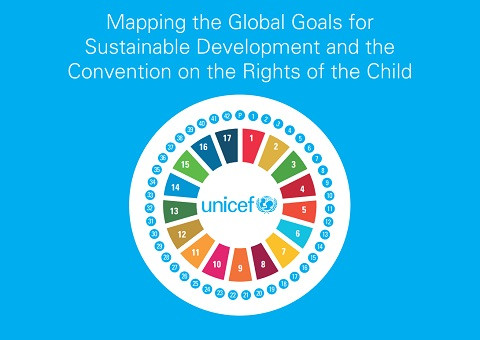 Mapping the Global Goals for Sustainable Development and the Convention on the Rights of the Child Year of publication: 2016 Author: Marie Wernham Corporate author: United Nations Children's Fund (UNICEF) This interactive document aims to encourage an in-depth and broad-based exploration of the links and synergies between the Global Goals for Sustainable Development and the Convention on the Rights of the Child.
  Issue to Action: Modern Languages; Teaching Toolkit for a Fairer World Year of publication: 2020 Author: Megan Clark | Irina Gancheva | Laura Morris | Peigi Morrison Corporate author: Scotdec | European Union (EU) Global Citizenship Education is essential in enabling young people to access and participate in shaping modern society. All teachers and subjects have a role to play in educating young people to enable them to participate as fully as possible in building a fair and just world for all. A Global Citizenship approach to Modern Languages enable young people to gain insights into other ways of thinking and other views of the world. With a focus on diversity and equality, the many and varied Spanish and French speaking cultures in Africa and South America, can provide a rich learning context. The materials in this resource have been written by Modern Languages teachers and tested in Scottish classrooms. They provide an opportunity to learn common vocabulary in new contexts and consider global issues such as migration and gender equality from different perspectives.
  Trends in Adult Learning and Education in the Arab States: Findings from the Fourth Global Report on Adult Learning and Education Year of publication: 2020 Corporate author: UNESCO Institute for Lifelong Learning (UIL) This report reveals that adult learning and education in the region is strongly focused on literacy, with less attention given to other areas of adult learning, such as continuing education and professional development, and citizenship education. This suggests that, while further progress is needed in achieving basic education for all, the other dimensions of adult learning need to be given adequate attention to ensure provision that is comprehensive and relevant to the diverse needs of adult and youth learners. Furthermore, the report suggests that good governance, supportive political will and adequate funding are key to fully realizing the potential of adult learning and education for economic, social, technological, and societal transformation. It is hoped that this report can provide some benchmarks and be a source of inspiration for policy-makers and stakeholders in Arab countries to further enhance the provision, quality and relevance of adult learning and education in order to build a sustainable and resilient future.
  Analysis of the Education for Democratic Citizenship Policies in Norway (Global Education; No. 5) Year of publication: 2013 Author: Yang Tingting Corporate author: East China Normal University There are growing concerns about Islamophobia and far-right and anti-democratic movements across Europe. Norway’s vulnerability was not perceived until the July 2011 attacks happened in Norway in which 77 people died. This paper will examine education for democratic citizenship policies in the context both of extreme right political activity happened nationally and inter- nationally, considering ways in which it supports the national identity, cultural diversity, social cohesion, seeking the value orientation, core content and weaknesses of education for democratic citizenship policies in Norway.
  Global Citizenship and Multimedia: Guidelines for Teachers and Educators Year of publication: 2019 Author: Giorgia Bailo | Mirca Ognisanti | Simona Bruni | Adriana Aralica | Sandra Oliveira | Fernando Catarino | Celia Quico | Maria Leonida | Dimitra Deroyiannis | Alessandro Soriani | Charlot Cassar Corporate author: WeWorld Onlus | European Union (EU) The objective of this book is to strengthen and systematize the effectiveness of global citizenship education through the use of new technologies, within and outside the school context. The aim is to provide theoretical basis and specific tools that can be used directly in educational activities, to promote critical thinking and the active involvement of young people in topics such as human rights, migration, climate change and the Sustainable Development Goals. Both the theoretical and practical sections have been laid out starting from the good practices already tested in several European countries, and the proposed educational methodologies intend to foster technology as an inclusive tool, therefore as an incentive for participation and dialogue between different cultures.
 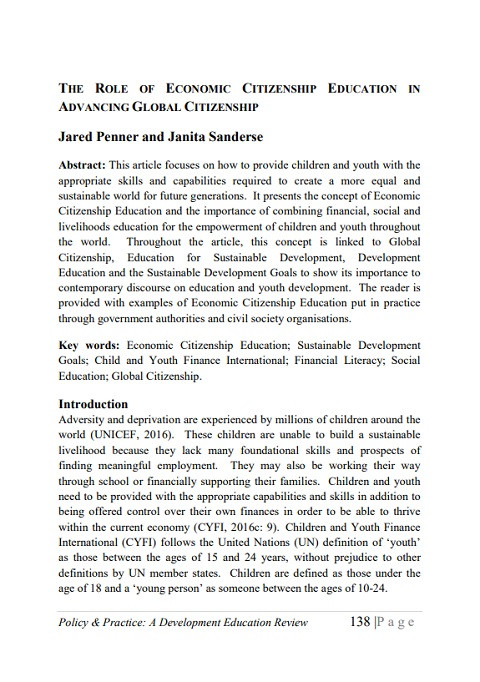 The Role of Economic Citizenship Education in Advancing Global Citizenship (Policy & Practice: A Development Education Review; Vol. 24, Spring) Year of publication: 2017 Author: Jared Penner | Janita Sanderse Corporate author: Centre for Global Education (CGE) This article focuses on how to provide children and youth with the appropriate skills and capabilities required to create a more equal and sustainable world for future generations. It presents the concept of Economic Citizenship Education and the importance of combining financial, social and livelihoods education for the empowerment of children and youth throughout the world. Throughout the article, this concept is linked to Global Citizenship, Education for Sustainable Development, Development Education and the Sustainable Development Goals to show its importance to contemporary discourse on education and youth development. The reader is provided with examples of Economic Citizenship Education put in practice through government authorities and civil society organisations.
  Balancing Act: Countering Digital Disinformation While Respecting Freedom of Expression Year of publication: 2020 Author: Kalina Bontcheva | Julie Posetti Corporate author: UNESCO | Broadband Commission for Sustainable Development. Working Group on AI Capacity Building | International Telecommunication Union (ITU) This report provides stakeholders with a rich suite of sector-specific recommendations, as well as a helpful 23-point framework that can be used for assessing any particular response to disinformation in the context of freedom of expression challenges. This research will help the widest range of key actors to better understand this phenomenon, and especially the way the world is responding to it, and where the gaps are.At the heart of this knowledge product is the need to balance responses to disinformation with respect for freedom of expression. The research shows us that this can be done.
 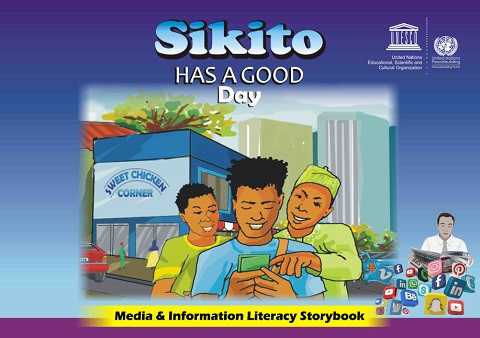 Sikito Has a Good Day: Media & Information Literacy Storybook Year of publication: 2019 Corporate author: UNESCO Dakar | Association of Communication Scholars & Professionals of Nigeria (ACSPN) Today's world is shaped by the quality of information produced, accessed and consumed at individual and social levels. This determines the quality of our decisions and actions. Increasingly, current digital realities and their social media manifestations, have enabled more opportunities for expression. Increased access to the internet is promoting freedom, with consequences for peace and conflict. Students will learn responsible online communication and media information &l literacy from the story.
 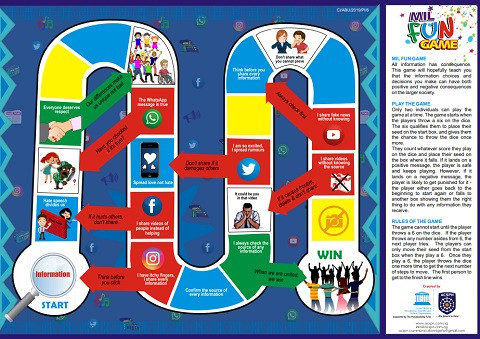 Media and Information Literacy: Fun Game Year of publication: 2019 Corporate author: UNESCO Dakar | Association of Communication Scholars & Professionals of Nigeria (ACSPN) This game will teach you that the information choices and decisions you make can have both positive and negative consequences on the larger society.
 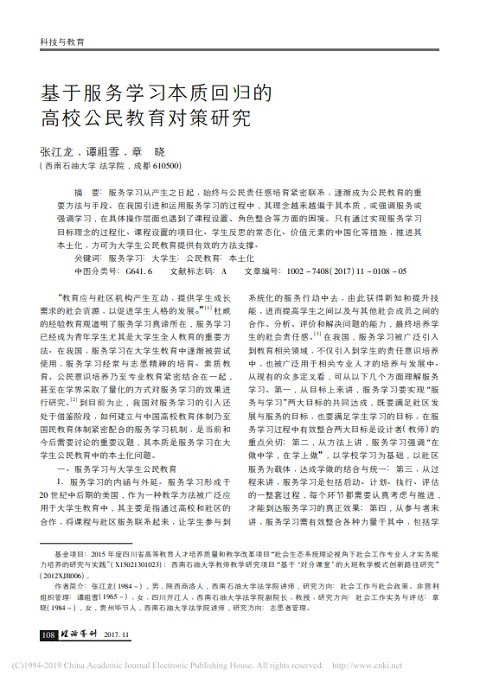 Research on Countermeasures of College Citizenship Education Based on the Return of Service Learning Essence (Journal of Socialist Theory Guide) Year of publication: 2017 Author: Zhang Jianglong | Tan Zuxue | Zhang Xiao Corporate author: Shaanxi Provincial Party School of the Communist Party of China Service learning has always been closely related to the cultivation of civic sense of responsibility since its birth, and has gradually become an important method of civic education. In the process of introducing and applying service learning in our country, its concept is more and more biased to its essence, or emphasizes service or learning, and it also encounters the dilemma of curriculum setting, role integration and other aspects at the specific operation level. Only by implementing the process of service learning objectives and concepts, the project of curriculum setting, the normalization of students’ reflection, the Sinicization of value elements and other measures, and promoting its localization, can we provide effective method support for college students’ civic education.