
Resources
Explore a wide range of valuable resources on GCED to deepen your understanding and enhance your research, advocacy, teaching, and learning.
8,364 Results found
 The Teaching of Regional and Minority Languages in Schools in Europe: Eurydice Report Year of publication: 2019 Corporate author: European Commission This Eurydice report provides a short overview of policy efforts made across Europe in support of the teaching of regional or minority languages in schools. It firstly presents the reference made to regional or minority languages by top-level education authorities in official documents. It then illustrates some of the policies and measures related to the teaching of regional or minority languages that are in place in the different European education systems. This is followed by an overview of some of the EU-funded projects and initiatives aiming to support the teaching of regional or minority languages in schools in Europe.
  What's in a Word? The Problem with 'Development' with Dr Karen Pashby Year of publication: 2020 Author: Karen Pashby Corporate author: Bridge 47 Dr Karen Pashby is a Reader at Manchester Metropolitan University and is also part of Bridge 47's Knowledge Exchange Partnership.In this episode, Karen explores development through a post/de-colonial lens, discussing how development is viewed in public discourse and how these effects the field of Development Education.
  Raising a Child for Sustainable Development: Problems and Solution Year of publication: 2019 Author: Fathy Mohamed Corporate author: Assiut University This paper aims to study the problems that hinder raising a child for sustainable development. After discussing the problems, the paper ends with a vision to activate education for sustainable development in kindergarten institutions.
  Education for Sustainable Development: The Tunisian Experience as an Example Year of publication: 2006 Author: Fatima Al-Tarhouni Corporate author: Federation of the Universities of the Islamic World The author in this article is giving analytical description of education for sustainable development. She uses the Tunisian experience as an example of implementing education for sustainable development.
 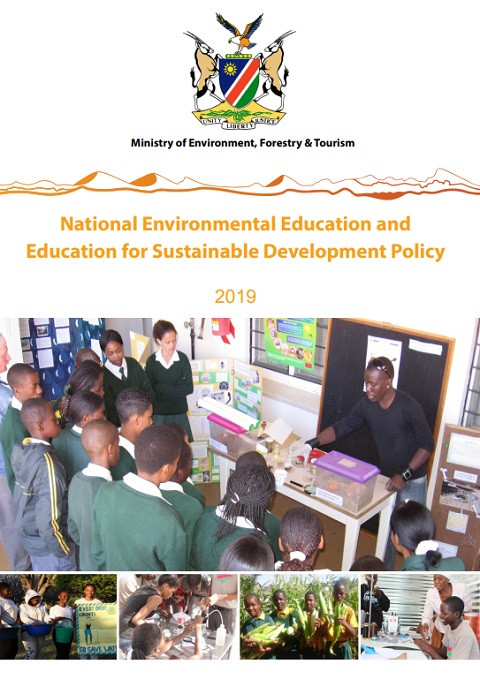 National Environmental Education and Education for Sustainable Development Policy Year of publication: 2019 Corporate author: Namibia. Ministry of Environment, Forestry and Tourism Namibia has become the first country in the SADC region to have a stand-alone National Environmental Education (EE) and Education for Sustainable Development (ESD) Policy. The development of the policy was a long time collaboration between government ministries and civil society. UNESCO through the Sustainability Starts with Teachers programme also supported the process.The vision of the national EE/ESD Policy is an “educated and empowered Namibia with environmentally literate people taking responsibility and action for a sustainable future”.The policy is designed to support EE and ESD in formal, non-formal and informal education processes across all sectors of the Namibian society including higher education, teacher education, technical and vocational education institutions, and general education. It gives Namibia the much-needed foundation to work towards ESD for 2030 and the sustainable development goals (SDGs).
  Indigenous Peoples Glossary Year of publication: 2018 Corporate author: International Fund for Agricultural Development (IFAD) The purpose of this glossary is to ensure consistency and accuracy of terminology in English, French and Spanish, and standardize the terminology used in relation to indigenous peoples in official documentation and publications, and in all aspects of meeting preparations. It is intended for use by IFAD staff, indigenous peoples' organizations and other interested parties. Terms and definitions are accompanied by details of the source document and its date of publication.
 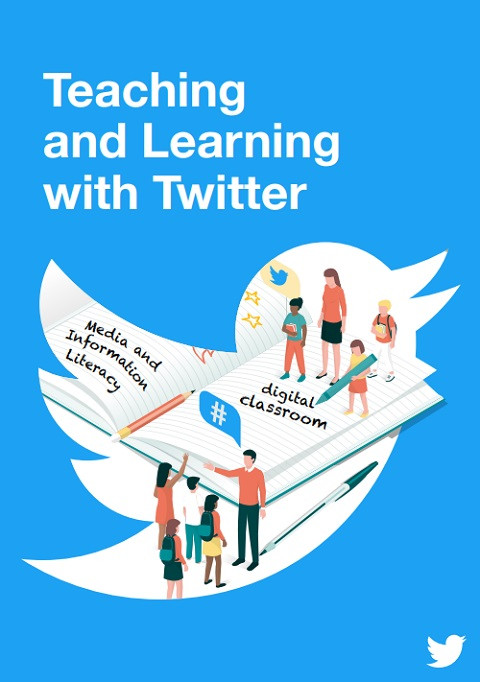 Teaching and Learning With Twitter Year of publication: 2019 Corporate author: Twitter | UNESCO This resource is for educators who want to design lessons around media and information literacy and how it relates to global citizenship and digital citizenship education. Whether your focus is on media and information literacy (MIL) or nurturing good online habits, or other social competencies, there’ll be something here for you.
 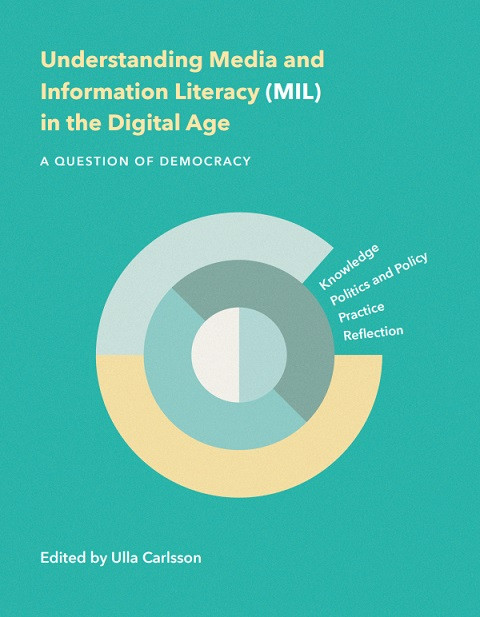 Understanding Media and Information Literacy (MIL) in the Digital Age: A Question of Democracy Year of publication: 2019 Author: Ulla Carlsson Corporate author: University of Gothenburg | UNESCO This book consists of three parts. In the first part, a number of articles of a more general nature discuss media and information literacy (MIL) in a variety of contexts as well as courses of development on national, regional and global levels. The focus in the second part is on Sweden, the host the UNESCO Global MIL Week Feature Conference 2019. The articles in this part present current research findings, policy decisions and political initiatives, and some examples of ‘best practices’ in the MIL area. The third part presents a new approach to MIL in a context of social change and Agenda 2030.
  Education for Sustainable Development Year of publication: 2016 Author: Altayeb Ahmed Corporate author: National Center for Curriculum and Educational Research This paper addresses education for sustainable development. It opens by discussing the concept of education for sustainable development. The author clearly links how education is looking at environment and how we should preserve it.
  The Art of Inclusive Exclusions: Educating the Palestinian Refugee Students in Lebanon (Refugee Survey Quarterly, Vol. 33, No. 2) Year of publication: 2014 Author: Maha Shuayb Corporate author: Centre for Arab Unity Studies For more than 65 years, Palestinian refugees have been living in Lebanon in a “temporary” State in over-crowded camps, deprived of basic rights such as the right to have a professional job. It has been argued that these restrictions have had a major effect on the fair provision and quality of education, an effect manifested in the increasing number of Palestinian students who are dropping out of school. This article examines the quality of education offered in United Nations Relief and Works Agency for Palestine Refugees schools and the impact of Lebanese legal restrictions on students’ educational motivation and aspirations.A quantitative survey of the educational experiences and aspirations of 404 secondary students and 48 teachers in five secondary schools of the United Nations Relief and Works Agency for Palestine Refugees was carried out. An in-depth study of a primary school also took place. The findings revealed that Palestinian refugee students are confronted by a paradox: forced inclusion because of having to learn the Lebanese curriculum, but exclusion because of simultaneously being pushed to the periphery of Lebanese society as a result of the Lebanon’s discriminatory laws and regulations.