
Resources
Explore a wide range of valuable resources on GCED to deepen your understanding and enhance your research, advocacy, teaching, and learning.
8,364 Results found
 Instructional Design Based on Ecological Multiple Citizenship for Elementary Social Studies Classroom: Focusing on National Citizenship, Global Citizenship and Sustainable Development Education (Social studies education; Vol. 55, No. 1) Year of publication: 2016 Author: Kwangtaek Sim Corporate author: Korean Social Studies Association An instructional model for national citizenship, global citizenship, and sustainable development education was developed. Four lesson plans in the elementary 5thgrade social studies were suggested to show the practice of the instructional model. Three outcomes are reported. First, identity as a citizen of a nation, global citizenship, communications are interrelated. National citizenship and communications in the network society can result in a stronger vision of one’s global citizenship. This is especially the case when the wellbeing and happiness of people in neighboring countries who live across the national boundary are viewed within the domain of community- economy- ecology. Each prepares citizens through knowledge and skills that enable them to empathize, criticize constructively, and live together sustainably. The educational methods recommended to attain global citizenship perspectives are critical thinking, comparative studies, and teaching controversial issues. Those methods tend to result in a commitment to guarantee of non-domination freedom and tolerance of others. Second, discussions regarding sustainable development focused largely on deliberative engagement as a teaching method. Issues discussed were: speculative banking and its regulation; medical treatment and education as value goods; the steps necessary for households and businesses to attain sustainability; and environmental justice and social equity. The educational methods recommended to live together sustainably are planning and practice for grassroots democratic communities’ solidarity by applying back-casting strategy and systematic thinking. Thirdly, social studies classrooms intent on to enhance national citizenship, global citizenship, and sustainable development have a five step task. They, should emphasize comparison and critique→ discussion→ empathy→ planning and lastly the engagement of learners in content critical to ecological multiple citizenship.
  The Role of English in Global Citizenship (Journal of Global Citizenship & Equity Education; Vol. 7, No. 1) Year of publication: 2020 Author: Claire Cavanagh Corporate author: Centennial College Despite scholars’ attempts to define and conceptualise global citizenship, the literature tends to ignore the role of English as the global lingua franca. In this paper, the author argues that ignoring English as the global lingua franca is a gross oversight, particularly in internationalised higher education where global citizenship is often presented as an aspiration for students. Websites of two South Korean universities were analysed regarding how the respective institutions intend to develop global citizens. Twenty students enrolled in the universities participated in interviews regarding their conceptualizations of global citizenship and how they frame their relationship with global and Korean identities. The findings reveal that global citizenship is generally conceived in terms of English with a strong adherence to fluency norms and in opposition to Korean identity. This influences how the students position themselves in relation to a global community and affects their conception of national identities. The paper ends with both theoretical and practical recommendations regarding the role of English in global citizenship.
  The Impact of Short-term Study Abroad on Global Citizenship Identity and Engagement (Journal of Global Citizenship & Equity Education; Vol. 7, No. 1) Year of publication: 2020 Author: Paul Sherman | Brianna Cofield | Neve Connolly Corporate author: Centennial College Higher education has increasingly realized the importance of engaging students in global citizenship learning opportunities to be more globally informed, prepared, responsible, and competent. Study abroad in higher education is rapidly becoming recognized as an effective experiential learning platform for fostering intercultural exchanges. This article reports on research that examined study abroad as a learning platform for integrating classroom-acquired knowledge with real-world experience. The study explored the value of short-term study abroad in the facilitation of students’ global awareness and knowledge, their identification as global citizens and endorsement of prosocial values associated with global citizenship, and their participation as globally engaged citizens. Participation in study abroad was found to significantly strengthen one’s affiliation with global citizenship, endorsement of prosocial values and motivation to engage in global citizenship activities. Our findings have implications for the design and implementation of global citizenship education curricula in higher education.
 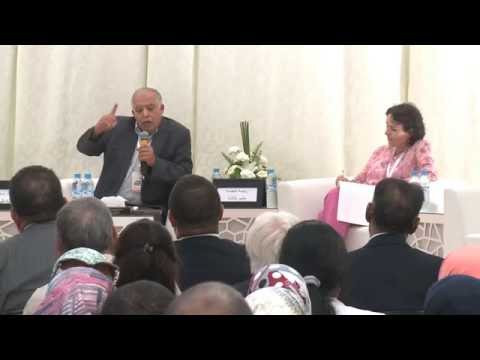 Education and Citizenship: Summer University 2016 Year of publication: 2016 Author: Abdullah Saaf Corporate author: General Delegation for Prison Administration and Reintegration (DGAPR) This video is a lecture given to women prisoners in Morocco, and it is a rehabilitation program. The lecture by Dr. Abdullah Sa`f talks about citizenship and inclusion in society, and discusses the relationship between education and citizenship.
  Education, Citizenship and National Integration Year of publication: 2014 Author: Radwa Ammar Corporate author: Social Contract Center This research paper is an introduction that explains the role of citizenship education as a basis for building a cohesive society capable of facing challenges. The paper reviews various international concepts and experiences to shed light on the importance of conducting in-depth field studies to discuss the relationship between citizenship education and national integration among members of society. It also aims to identify the most important topics, and ways of offering that It is compatible with the targeted communities by these educational programs, and to develop a strategy for educational institutions in the country to adopt this type of studies.
 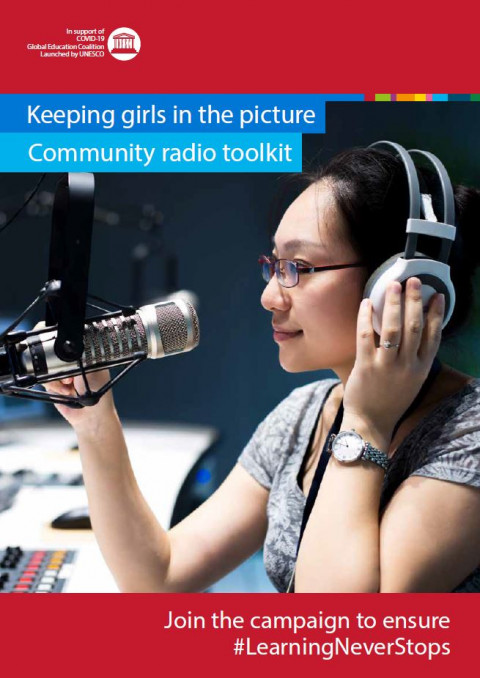 Keeping Girls in the Picture: Community Radio Toolkit Year of publication: 2020 Corporate author: UNESCO | Global Education Coalition This toolkit is to help you to get stories and messages about this vital issue out to your audience. We want it to make an impact on people’s lives. We hope this toolkit will support you in creating exciting and memorable content for community radio programmes wherever you are.This toolkit contains the messages and facts from the global campaign. It has not been tailored for any specific region, country or area. We count on you to consider how to make this campaign most relevant to your audiences - drawing on local data and voices from your communities.The toolkit suggests several types of shows that community radio stations can create. If you want to include specific facts and statistics about your country, area or community, please work with organizations in your local network that can help.
 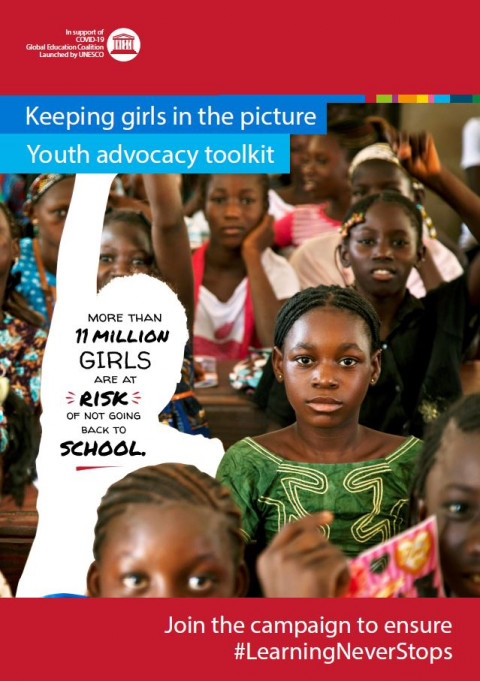 Keeping Girls in the Picture: Youth Advocacy Toolkit Year of publication: 2020 Corporate author: UNESCO | Global Education Coalition The COVID-19 pandemic has caused the largest school closures and education disruption in history, with more than 1.5 billion students affected at the height of the crisis. Over 767 million of these students were girls.Now, another major challenge is looming. Over 11 million girls – from pre-primary to tertiary education - may not return to school in 2020. This alarming number not only threatens decades of progress made towards gender equality, but also puts girls around the world at risk of adolescent pregnancy, early and forced marriage, and violence. For many girls, school is more than just a key to a better future. It’s a lifeline.This is why UNESCO and members of the Global Education Coalition’s Gender Flagship are launching a new #LearningNeverStops campaign focusing on ‘keeping girls in the picture.’The campaign calls for efforts to safeguard progress made on girls’ education, ensure girls’ learning continuity during school closures, and promote girls’ safe return to school once these reopen. It also sheds light on the 130 million girls who were already out of school before the pandemic, and calls on the international community to urgently work together to guarantee their right to education.
  Adult Learning and Gender: EAEA Background Paper Year of publication: 2020 Author: Agatha Devlin Corporate author: European Association for the Education of Adults (EAEA) Gender sensitivity in adult learning and education (ALE) is about more than trying to improve targeted outreach programmes for men and women who seem to be slipping through the gaps. By providing gender sensitive education opportunities, people are not only more likely to engage but also more likely to get the most out of their experiences. This background paper explores the problems that gender sensitive adult education could attempt to solve, good practices and examples to help make current structures more gender sensitive, and the wider benefits of gender sensitivity in ALE.This background paper takes various subtopics or examples of gender sensitivity in adult education and analyses them as individual areas, making its content easier to navigate according to the reader’s interests or concerns.
  Culture Diversity: Intercultural Education Guide in Secondary Classrooms Corporate author: Federación de la Enseñanza de UGT Extremadura Pedagogical material that accompanies the campaign carried out by the FETE-UGT so that, in all the centers of Extremadura, the fight against racism and intercultural education are a strategy to achieve equal opportunities and world citizenship education, preventing violent, racist, homophobic or intolerant behavior. It is aimed at young people between 12 and 16 years old and includes games and activities to do with young people.
 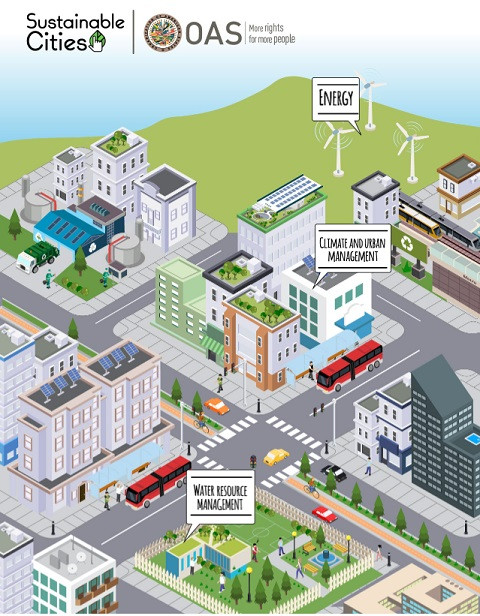 Sustainable Cities Year of publication: 2017 Corporate author: Organization of American States (OAS) Portal with multimedia content about six fundamental components of a sustainable city, proposed by the Sustainable Cities program of the OAS: - Alternative energy sources - Sustainable urban transport - Resilience to natural disasters - Waste management - Management of water resources - Climate and urban management.