
Resources
Explore a wide range of valuable resources on GCED to deepen your understanding and enhance your research, advocacy, teaching, and learning.
8,364 Results found
 Diversity and Interculturality: Identity and Rights; Ethical and Civic Education (2nd year) Year of publication: 2018 Corporate author: Buenos Aires Ciudad This document is part of the series of materials Deepening the NES, which presents different teaching proposals including both the contents - concepts, skills, abilities, practices, values and attitudes - defined in the Curriculum Design of the New Secondary School of the Autonomous City of Buenos Aires, and new ways of organizing spaces, times and teaching methods.
  Participation for the Construction of Democratic Citizenship: Ethical and Civic Education (1st year) Year of publication: 2018 Corporate author: Buenos Aires Ciudad This document is part of the series of materials Deepening the NES, which presents different teaching proposals including both the contents - concepts, skills, abilities, practices, values and attitudes - defined in the Curriculum Design of the New Secondary School of the Autonomous City of Buenos Aires, and new ways of organizing spaces, times and teaching methods.
  Rights as a Product of Struggles and Demands Throughout History: The Political Rights of Women; Ethical and Civic Education (1st year) Year of publication: 2018 Corporate author: Buenos Aires Ciudad This document is part of the series of materials Deepening the NES, which presents different teaching proposals including both the contents - concepts, skills, abilities, practices, values and attitudes - defined in the Curriculum Design of the New Secondary School of the Autonomous City of Buenos Aires, and new ways of organizing spaces, times and teaching methods.
 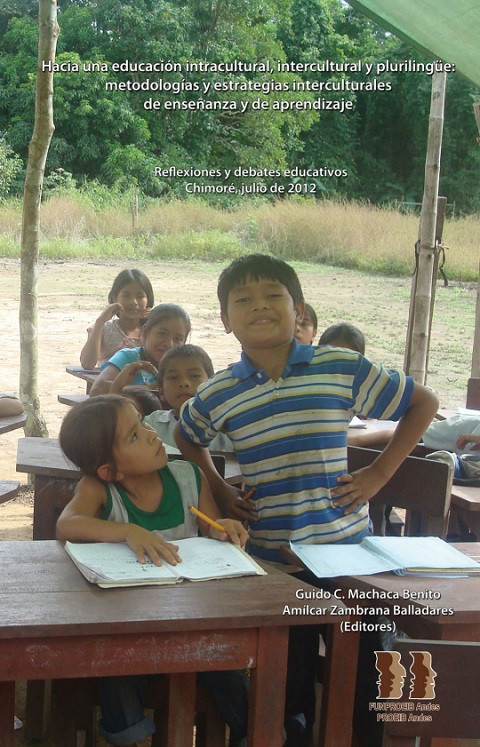 Towards an Intracultural, Intercultural and Multilingual Education: Intercultural Teaching and Learning Methodologies and Strategies Year of publication: 2013 Author: Guido C. Machaca Benito | Amílcar Zambrana Balladares Corporate author: FUNPROEIB Andes This document presents the memories of the seminar - workshop "Towards an intracultural, intercultural and multilingual education: intercultural teaching and learning methodologies and strategies" held in Chimoré, Cochabamba in July 2012.
 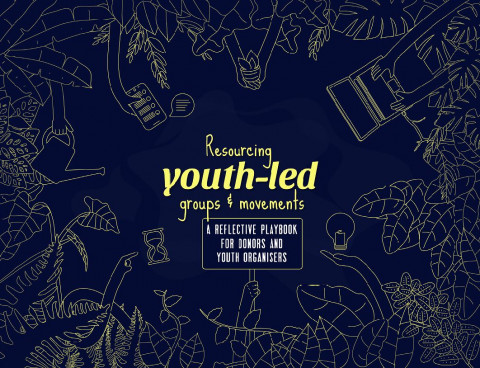 Resourcing Youth-led Groups & Movements: A Reflective Playbook for Donors and Youth Organisers Year of publication: 2020 Author: Gioel Gioacchino Corporate author: CIVICUS | Recrear International Are you part of a youth-led social movement and looking for ideas about how to resource your work? Or a donor, philanthropist, or institution championing youth power? If so - this space is for you! Here you will find tools, connections, and new ideas for both youth activists and their allies.This Resourcing Youth-led Groups and Movements playbook resulted from a year of research. We listened to what activists, donors, youth allies and other enabling organisation said about realities, trends and potential solutions for mobilising funding and non-financial resources for young activists, especially in the global south.Read or listen to the stories of Lebo, Amanda, Dumsio, Priscilla, Elena, Christian, and Bonnie, as they share their experiences and challenges sustaining their work, echoed by young leaders across Latin America and Africa. You will find creative exercises you can use, that invite youth and donors to rethink worldviews and principles around resourcing civil society in the 21st century.
 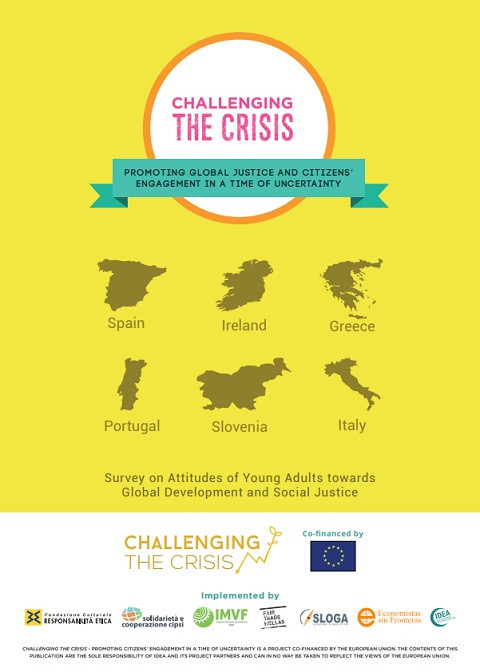 Challenging the Crisis: Promoting Global Justice and Citizens’ Engagement in a Time of Uncertainty; Survey on Attitudes of Young Adults Towards Global Development and Social Justice Year of publication: 2015 Corporate author: Irish Development Education Association (IDEA) This report outlines the views of young people, aged 15-34 from Portugal, Ireland, Italy, Greece, Spain and Slovenia, on international development, and their understanding of related concepts and issues. The aim of the research was to assess whether global solidarity and development aid are priorities for European youth in a time of economic and political crisis and high unemployment.
 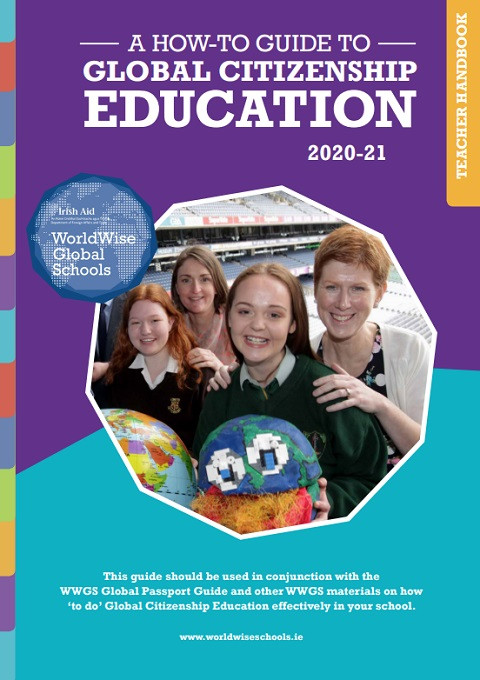 A How-To Guide to Global Citizenship Education: Teacher Handbook; 2020-21 Year of publication: 2020 Corporate author: WorldWise Global Schools (WWGS) | Irish Aid This guide is for post-primary schools that are working to embed Global Citizenship Education (GCE) into their school community, and are part of the WorldWise Global Schools (WWGS) Programme. It aims to support schools to integrate Global Citizenship Education and create global citizens in their schools. Whether you are just starting to explore, or you are experienced in Global Citizenship Education, this handbook will help to guide your GCE practice and offer some suggestions as to how you can approach your GCE work and engage with the WWGS programme.
  An Exploratory Study on Applying Cooperative Learning in Global Citizenship Education (Journal of Education for International Understanding; Vol. 13, No. 1) Year of publication: 2018 Author: Jonghun Kim Corporate author: Korean Society of Education for International Understanding (KOSEIU) The purpose of this study is to explore the validity of cooperative learning as an effective teaching and learning model of Global Citizenship Education(GCED) and to suggest lesson plan that can be used in an educational setting. With the inclusion of GCED as part of global education agenda through the UN SDG 4.7, its role and importance has been highlighted globally and many countries started to reflect GCED into their national curriculum. However, there is lack of practical research on the appropriate teaching and learning model of GCED that can be applied in primary and secondary school education. Therefore, this study, through theoretical review, analyzed and identified that cooperative learning is more appropriate in fostering global citizenship in comparison with other teaching and learning models because of its efficient learning structure which includes positive interdependence, individual accountability, group processing, promotive interaction, interpersonal and small group social skills as its essential elements. On the basis of this, jigsaw model, among various cooperative learning models, was applied and a lesson plan on GCED based on UNESCO World Heritage, an important repository of the history of humankind and nature, was developed and presented. The proposed lesson plan would strengthen learners’ ability to shape identities, understand others, raise sense of responsibility, link knowledge and action related to issues affecting interaction and connectedness of communities at local, national and global levels in an educational setting, and thus it will be useful in actualizing the learner-centered transformative objective of GCED.
 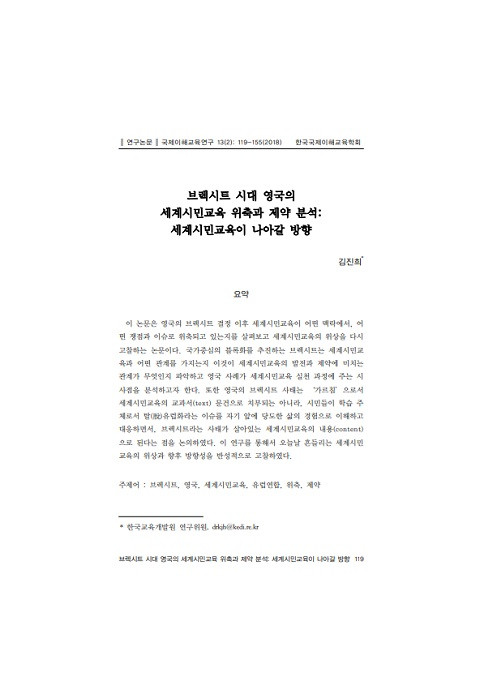 Critical Understanding on Shrinkage and Limitation of UK’s Global Citizenship Education in the Era of Brexit (Journal of Education for International Understanding; Vol. 13, No. 2) Year of publication: 2018 Author: Jinhee Kim Corporate author: Korean Society of Education for International Understanding (KOSEIU) This study aims to analyze the shrinkage and limitation of Global Citizenship Education in the epoch of Brexit. It also attempts to examine a feature of positioning and direction of Global Citizenship Education which is confronted with a sceptical criticism of its' educational impact. In this vein, the major findings and arguments showed the practice and implementation of Global Citizenship Education under the pressure of Brexit faces complicated challenges across Europe including UK, since Brexit highly pursues national centred hegemony and nationalistic bloc. It could hinder the structural restriction of implementing of Global Citizenship Education in UK. Apparently, this study indicated that the phenomenon of Brexit and it's impact is functioning as dynamic learning contents, not for a teaching-learning resource. It has been discussed that Citizens of UK have strived to deal Brexit as a learning experience in life-world. Finally, this study suggests a direction to move forward of Global Citizenship Education in an ever-shrinking world of Brexit.
  Embracing a Culture of Lifelong Learning: Contribution to the Futures of Education Initiative Year of publication: 2020 Corporate author: UNESCO Institute for Lifelong Learning (UIL) This report, a contribution to UNESCO's Futures of Education initiative, reflects on the potential contribution of lifelong learning both in transforming the field of education and in creating a more sustainable, healthy and inclusive future. Drawing on the insights of 12 distinguished experts from different disciplines and countries, the report presents a compelling vision for lifelong learning and the values and principles that must underpin it. It calls on the international community to acknowledge the social and private dimensions of education, and to recognize lifelong learning as a new human right. Realizing this vision, it argues, requires adopting a transdisciplinary approach that can effectively grasp the complex, multidimensional nature of the challenges faced by humanity. The report outlines the main features of the ‘enabling environment’ needed to make lifelong learning the governing principle of education policy and to offer people opportunities to learn throughout life, whatever their background or context. It concludes with a set of key messages, complemented by specific action points and a discussion of selected policy measures.