
Resources
Explore a wide range of valuable resources on GCED to deepen your understanding and enhance your research, advocacy, teaching, and learning.
8,364 Results found
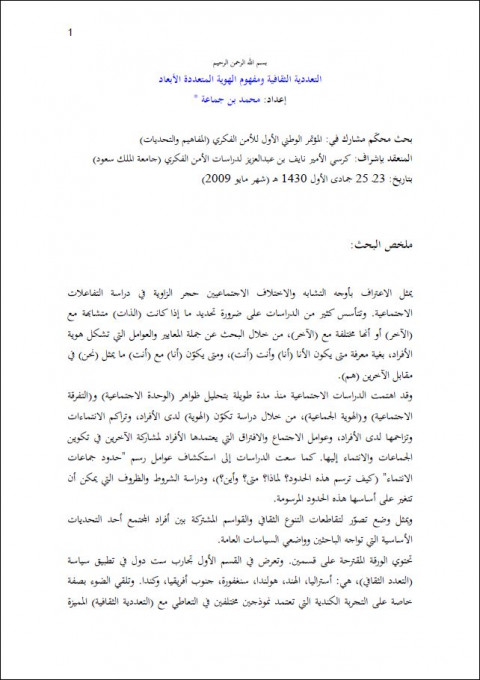 Multiculturalism and the Concept of Multi-Dimensional Identity Year of publication: 2009 Author: Mohamed Ben Jemaa Corporate author: King Saud University A conference paper discussing multiculturalism and contains two parts, where the first part discusses multiculturalism policies in 6 countries. While the second part shows the multi-dimensional identity.
  Basic Elements of Forgiveness and Reconciliation Theory Year of publication: 2018 Author: Leonel Narváez Gómez Corporate author: Fundación para la Reconciliación This text presents the theoretical bases for forgiveness and reconciliation that support the pedagogy and actions of the Foundation for Reconcilation.
 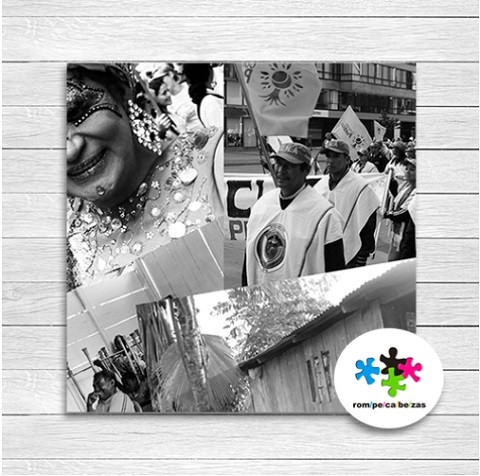 Human Rights Defense in Colombia: A Bet in the Midst of Adversity Year of publication: 2015 Author: Petrit Baquero | Nancy Arévalo | Claudia Erazo Corporate author: Center for Research and Popular Education / Program for Peace (CINEP/PPP) This podcast analyzes the panorama of human rights in Colombia and the protection of its defenders, in a context full of challenges and threats to their lives.
  What Does Peace Sound Like? Reconciliation, an Exercise for Everyone Year of publication: 2015 Author: Leonel Narváez | Magda López | María Angéliza Bueno Corporate author: Center for Research and Popular Education / Program for Peace (CINEP/PPP) This podcast analyzes the concept of reconciliation and the challenges that Colombia faces in a possible post-agreement scenario with the FARC guerrilla. What contributions should be made from public policy to continue seeking paths for reconciliation? What is the role of citizens to carry out this process successfully? Are we ready to reconcile?
 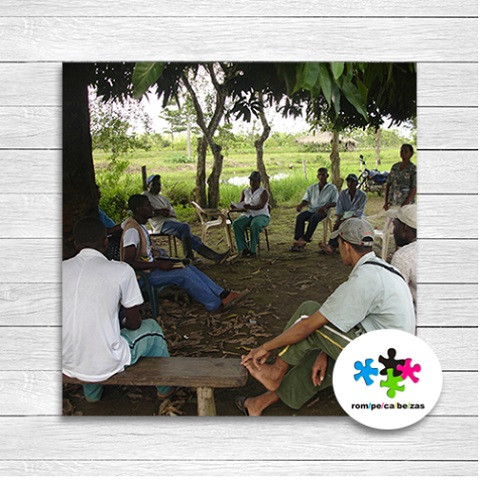 What Does Peace Sound Like? Education for Coexistence Year of publication: 2015 Author: María Del Carmen Muñoz | Marco Fidel Vargas Corporate author: Center for Research and Popular Education / Program for Peace (CINEP/PPP) This podcast discusses education for peace in Colombia and how it contributes to overcoming violence and promoting coexistence.
  The International Experience and Enlightenment of Global Citizenship Education In the New Century (Journal of Shanghai Education Research) Year of publication: 2019 Author: Wuxi | Thomas Tse Corporate author: Shanghai Educational Research Since the beginning of the new century, international or regional organizations such as UNESCO and Oxfam have been actively carrying out teaching practices related to global citizenship education, highlighting similar orientation characteristics and providing important reference value for the implementation of global citizenship education in formal education. They emphasize cognition, skill, value and action as the training direction, take diversity, criticalness and action as the core topic, learn objective from simple description to critical analysis, and take integrated systematic teaching as the main practice mode.
  The Theoretical Foundation and Ideological Background of the Citizenship Curriculum Reform in England (Studies in Foreign Education; Vol. 46, No. 7) Year of publication: 2019 Author: Chen Lin Corporate author: Northeast Normal University Citizenship became part of the compulsory courses of secondary schools in England in 2002. The guideline was revised in 2014. Fierce academic debates shaped the curriculum reform. Political theory of political conflict mediation and political participative equality played an important role in promoting the legalization of Citizenship education. The wide acceptance of social capital theory also helps to win the necessary support. The current curriculum is a mixture of various ideologies such as socialism, republicanism and communitarianism. This multi-feature provides both pragmatic conditions for the curriculum’s legalization and challenges for its implementation.
  Do the Conditions in Chinese Secondary School Education Imply a Need for Global Citizenship Education? an Exploration of Six Secondary Schools in Jiangsu (Asia Pacifc Education Review; Rev. 21) Year of publication: 2020 Author: Yi Hong Corporate author: Seoul National University. Education Research Institute Global citizenship education (GCE), an educational advocacy for students to attain the competencies of being aware of and actively engaged in defending social justice, equity and sustainable development at both local and global levels, is difficult to achieve in practice. The failure can be attributed to inadequate knowledge of different effects of GCE when it is used to meet specific needs of local schools. Identifying local schools’ needs for GCE may help educators put GCE to good use. However, few studies explore and justify the role of a local insight in assisting in GCE implementation, especially regarding the situation in China where inconsistencies are found across curriculum documents, research and educational practices. The present study fills the gap by investigating the schools’ needs for GCE at secondary level within the Chinese education system. With the assistance of principals (n = 6) and teachers (n = 10) from six participating schools in an anonymous city in Jiangsu province, data were collected through semi-structured interviews and then analysed abductively using the grounded theory approach. Analysis was initially framed by employing criteria from a curriculum development method, namely situational analysis, based on which further analysis was conducted to synthesise more abstract themes. As a result, four general conditions emerged from the data, including three restrictive conditions that may prevent GCE integration (i.e. ‘compliance and commitment’, ‘social mobility’ and ‘administrative constraints’) and one condition that can encourage GCE implementation (i.e. ‘competency-based education’). Since GCE is a complex idea linked to many possible applications, the four key conditions revealed from the small sample in the present study can enrich researchers’ understanding of the potentiality of GCE implementation in similar moderately developed cities on the east coast of China.
  Critical Analysis of World Geography and Travel Geography Curriculum through the Viewpoints of Global Citizenship Education (Journal of Education for International Understanding; Vol. 13, No. 2) Year of publication: 2018 Author: Kyeonghan Yi Corporate author: Korean Society of Education for International Understanding (KOSEIU) In this study I analysed world geography and travel geography curriculum through neo-liberal and critical viewpoints of global citizenship education(GCED). They have many contents about the understanding of diversity which deals in GCED importantly. Two geography curriculums provide many contents of GCED with neo-liberal viewpoint. World geography includes critical viewpoint based on regional conflicts, desertification problems, regional separation movements, righteous distribution of resources etc. The critical viewpoint of GCED in world geography emphasizes the critical understanding of disputes, regional issues, distribution etc. with structural aspect, and guides the realization of justice with problems solutions of these. Travel geography guides students’ identification about unfairness and injustice of travel, and emphasizes travelers’ responsibility, fairness and alternatives. But this travel geography is in circle of neo-liberalism viewpoint mainly. The understanding of diversity in two geographies provides important contents for GCED in schools. Geography make a understanding of diversity with other’s perspectives objectively, but it can neglect the critical and structural understanding about diverse landscape, culture, environment, issues, and travel etc. So geography is necessary to deal critical viewpoint also, because geography has mainly neo-liberal viewpoint. Geography teachers should have the harmony of neo-liberal viewpoint and critical viewpoint to contribute on development of global citizens. Geography teachers should critically re-conceptualize geography curriculum and reconstruct the contents of textbook. And students is necessary to aim transformative learning to understand global diversity and critically participate with global issues in everyday life.
 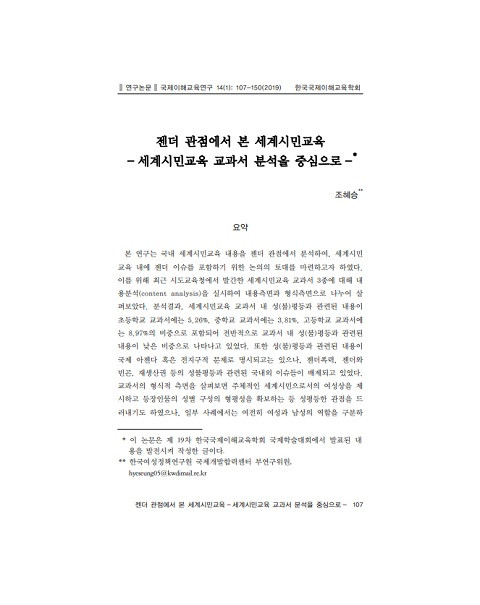 Integrating Gender into Global Citizenship Education (Journal of Education for International Understanding; Vol. 14, No. 1) Year of publication: 2019 Author: Hyeseung Cho Corporate author: Korean Society of Education for International Understanding (KOSEIU) The purpose of this study is to explore the contents of global citizenship education(GCE) from a gender perspective, and to lay the theoretical foundation to integrate gender issues into GCE. To this end, this research analyzes GCE textbooks published by four Metropolitan City Offices of Education employing content analysis. As results, GCE textbooks rarely include contents related to gender (in)equality by representing 5.26%, 3.81%, and 8.97% of the textbooks of elementary, middle and high school respectively. In terms of topics, although a word of gender (in)equality is mentioned as an international agenda or a global problems in textbooks, the specific concept of it or various worldwide gender inequalities issues such as gender-based violence, women in poverty, reproductive rights were excluded. In terms of format aspects of the textbooks, the textbooks present gender perspective by describing woman as an independent global citizen, and by ensuring the equality of gender composition of characters. In some cases, however, the roles of women and men in textbooks are still divided, and gender stereotype was recognized through sex=segregated activities. Based on these results, this research argues that it is required to expand the contents of GCE by including the importance of gender equality and global structural gender inequality problems, and that it is necessary to review the discourse and practice of GCE in Korea from a gender perspective.