
Resources
Explore a wide range of valuable resources on GCED to deepen your understanding and enhance your research, advocacy, teaching, and learning.
8,364 Results found
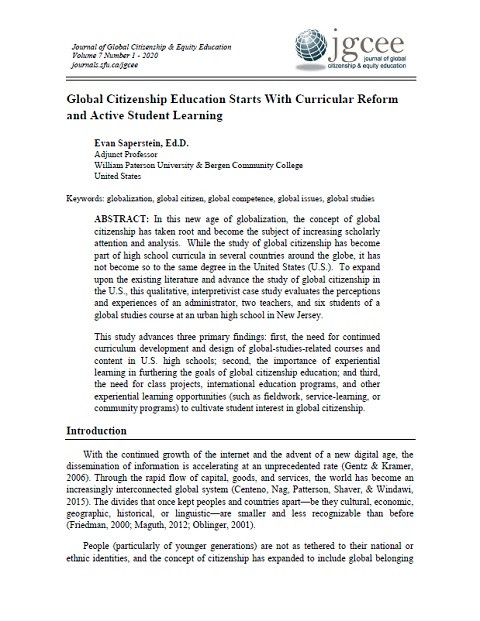 Global Citizenship Education Starts With Curricular Reform and Active Student Learning (Journal of Global Citizenship & Equity Education; Vol. 7, No. 1) Year of publication: 2020 Author: Evan Saperstein Corporate author: Centennial College In this new age of globalization, the concept of global citizenship has taken root and become the subject of increasing scholarly attention and analysis. While the study of global citizenship has become part of high school curricula in several countries across the globe, it has not to the same degree in the United States. To expand upon the existing literature and advance the study of global citizenship in the United States, this qualitative, interpretivist case study evaluates the perceptions and experiences of an administrator, two teachers, and six students of a global studies course at an urban high school in New Jersey. The study included interviews of the participants, as well as analysis of the course curriculum, syllabus, and student assignments.This study advances three primary findings. First, the need for continued curriculum development and design of global studies related courses and content in U.S. high schools. Second, the importance of experiential learning, among other forms of pedagogy and instructional practices, in furthering the goals of global citizenship education. Third, the need for class projects, international education programs, and other experiential learning opportunities (such as fieldwork, service-learning, or community programs) to cultivate student interest in global citizenship. Based on these findings and the prevailing literature, this study is proposing that U.S. high schools offer an elective course on global citizenship with ten units: 1) Introduction to Global Citizenship; 2) Sustainable Development; 3) Poverty and World Hunger; 4) Global Health Issues; 5) Child Mortality; 6) Peace and Conflict; 7) Human Rights and Gender Equality; 8) Universal Education; 9) Liberal Democratic Governance and Rights; 10) Global Citizenship Action Plan.
 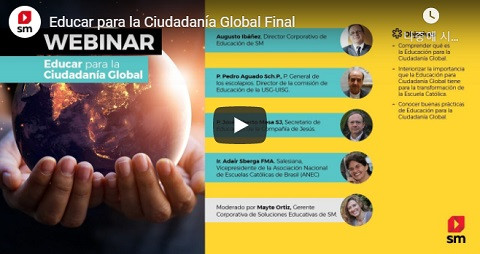 Educate for Global Citizenship Year of publication: 2020 Author: Augusto Ibañez | Pedro Aguado | José Alberto Mesa | Adair Sberga Corporate author: Grupo SM This video seeks to understand the concept of global citizenship and its importance for the transformation of Catholic education, as well as to present good practices in education for global citizenship.
  The Relationship Between the Culture of Care and Global Citizenship Year of publication: 2020 Author: Bernardo Toro | José Laguna | Zenovia Gamarra | Jackson Almonte Corporate author: Grupo SM This video explores the relationship between the culture of care and education for global citizenship with references to Catholic education.
 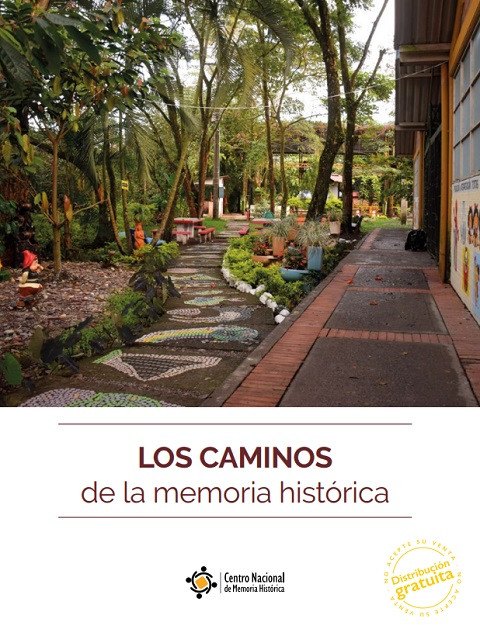 The Paths of Historical Memory Year of publication: 2018 Corporate author: Centro Nacional de Memoria Histórica This book introduces the Historical Memory Toolbox and presents its contents. In addition to the prologue, the acknowledgment to teachers and students who have been part of this process and the account of the construction of the Toolbox since 2012, includes a text that collects the theoretical and conceptual foundations of the Tool Box, "Keys to navigate through historical memory" and another text with the pedagogical proposal that underlies all the materials in the Box, called "Pedagogy of historical memory: route to work in school".
  My Migrant Object Corporate author: Museo de la Memoria y los Derechos Humanos Educational material developed by the Museum of Memory and Human Rights from objects associated with stories of exile during the dictatorship of Augusto Pinochet in Chile.
 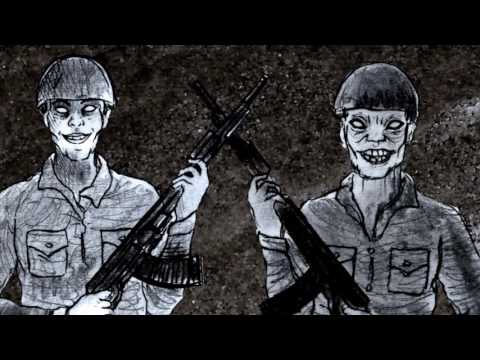 Traces of Memory 2: Short Film Year of publication: 2017 Corporate author: Londres 38 Second part of the short film based on stories related to London 38, a house used as a place of detention and torture of opponents of the Augusto Pinochet dictatorship. The voices of the protagonists were given to young cartoonists and illustrators for the making of this film.
 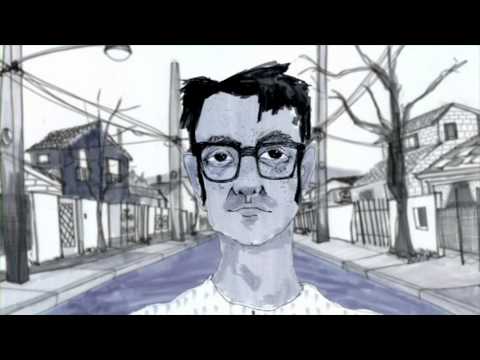 Traces of Memory: London 38 Short Film Year of publication: 2012 Corporate author: Londres 38 This short film is based on six stories related to London 38, a house used as a place of detention and torture of opponents of the Augusto Pinochet dictatorship. The voices of the protagonists were given to young cartoonists and illustrators for the making of this film.
  Global Citizenship Education and the Discourse Environment in the University Setting: Focused on the Organizing Process of Course of Studies (Literature and Environment; Vol. 19, No. 2) Year of publication: 2020 Author: Bongjun Cha | Shinhyung Seong | Yunyoung Han Corporate author: Association for the Study of Literature & Environment Education plays an important role on responding to the global issues caused by the globalization phenomenon during the late 20th century. One of them is the discourse of ‘Global Citizenship Education,’as many researchers focus on the educational goal and curriculum about this discourse from elementary to college education levels in Korea. This study examines the curriculum development and its operating status in each education levels based on the revised curriculum of elementary, middle and high school education since 2015. In particular, this study analyzes mainly on the organizing curriculum of environmental issues and sustainable development. In addition, this research explores college education system in order to develop this discourse as concentrating on the eight universities’ Global Citizenship Education curricula, initiated by Asia-Pacific Centre of Education for International Understanding under the auspices of UNESCO (APCEIU) in Korea. Lastly, this study suggests the importance of the discourse environment for elevating the sense of global citizenship through this study.
 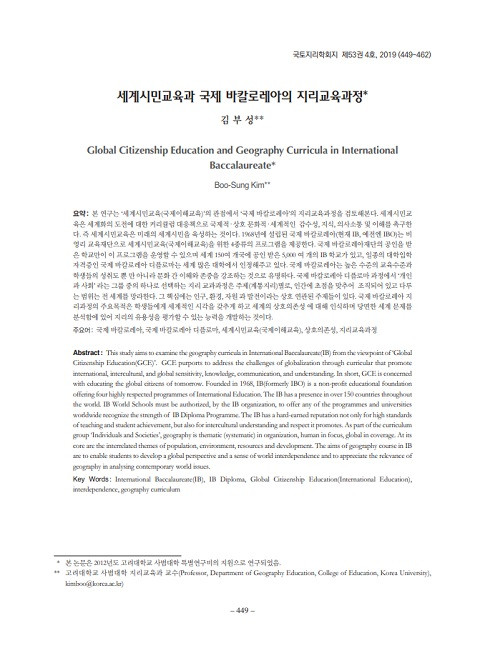 Global Citizenship Education and Geography Curricula in International Baccalaureate (Geographical Journal of Korea; Vol. 53, No. 4) Year of publication: 2019 Author: Boosung Kim Corporate author: Korean Association of Professional Geographers This study aims to examine the geography curricula in International Baccalaureate(IB) from the viewpoint of ‘Global Citizenship Education(GCE)’. GCE purports to address the challenges of globalization through curricular that promote international, intercultural, and global sensitivity, knowledge, communication, and understanding. In short, GCE is concerned with educating the global citizens of tomorrow. Founded in 1968, IB(formerly IBO) is a non-profit educational foundation offering four highly respected programmes of International Education. The IB has a presence in over 150 countries throughout the world. IB World Schools must be authorized, by the IB organization, to offer any of the programmes and universities worldwide recognize the strength of IB Diploma Programme. The IB has a hard-earned reputation not only for high standards of teaching and student achievement, but also for intercultural understanding and respect it promotes. As part of the curriculum group ‘Individuals and Societies’, geography is thematic (systematic) in organization, human in focus, global in coverage. At its core are the interrelated themes of population, environment, resources and development. The aims of geography course in IB are to enable students to develop a global perspective and a sense of world interdependence and to appreciate the relevance of geography in analysing contemporary world issues.
  Why Is Target 4.7 So Important to the Sdgs? With Paul Bradley, SCVO Year of publication: 2020 Author: Paul Bradley Corporate author: Bridge 47 In this Bridge 47 Network Story, Paul Bradley of The Scottish Council for Voluntary Organizations eloquently talks about why Target 4.7 and Global Citizenship Education is crucial to Achieving the United Nations's SDGs (Sustainable Development Goals).